Industry Briefing
A single destination for timely, editor-curated robotics news from around the world.
OpenAI Launches Jalapeño Chip, Leveraging LLMs for Accelerated Design Process
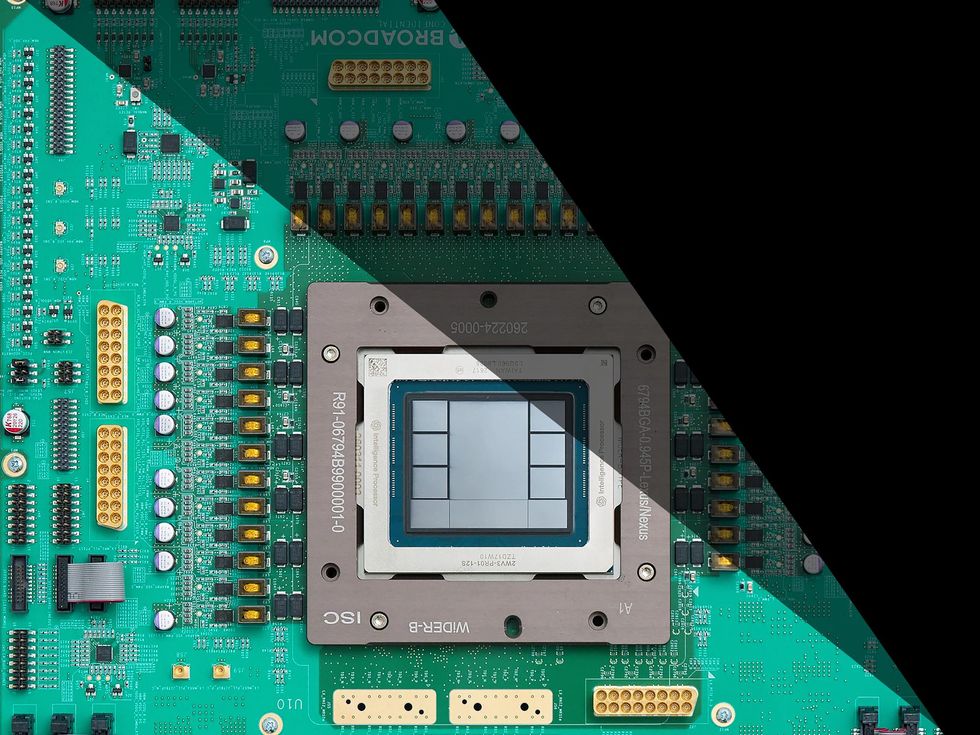
On August 25, OpenAI introduced Jalapeño, its first AI accelerator chip, achieving up to 13.4 petaflops of 4-bit compute and accessing 232 gigabytes of advanced memory at 15.4 terabytes per second. Jalapeño reportedly reduces end-to-end latency by up to 3.6 times compared to Nvidia's GB300 while consuming less power. The significance of Jalapeño lies not only in its performance metrics but also in the innovative design process, which was expedited using OpenAI's large language models (LLMs). The chip's development timeline spanned under 20 months, with only nine months from the first RTL code to tapeout, showcasing the potential of LLMs in chip design. Looking ahead, OpenAI's collaboration with Broadcom and the integration of LLMs into chip design tools could lead to even faster development timelines. As LLM capabilities improve, the industry may witness a transformation in how chips are designed and manufactured, with OpenAI at the forefront of this evolution.
Openai Llms Chip-design
X-energy Advances 6-Gigawatt SMR Fleet in the UK Regulatory Review Process
X-energy, an American reactor designer, has made significant progress in exporting its advanced small modular reactor (SMR) technology to the UK. The company has entered the UK’s regulatory review process for its Xe-100 system, which is now part of the Generic Design Assessment. This step is crucial for assessing reactor designs before they can be licensed and constructed. The Xe-100 reactor is a high-temperature gas-cooled system that utilizes TRISO-X particle fuel, known for its safety and ability to withstand extreme heat. Each unit can generate 80 megawatts of electricity or provide 200 megawatts of thermal heat. X-energy aims to deploy a fleet capable of delivering up to 6 gigawatts of power across the UK, enhancing the applications of nuclear technology in various sectors. Looking ahead, the UK review process is expected to take about three years, with regulators from both the UK and the US collaborating on safety assessments. X-energy is also preparing for its first commercial installation in the US alongside Dow Inc., while expanding its fuel-manufacturing capabilities in Tennessee to support its growing operations.
Energy
SpaceX's Starmind Project: Supplier Strategy and Chip Manufacturing Plans for 2026
SpaceX's Starmind project, aimed at deploying up to 1 million AI satellites, was filed with the FCC on January 30, 2026. The initiative is designed to minimize reliance on external suppliers, with CEO Elon Musk stating that current chip production capabilities only meet 2% of the projected needs. The first satellite, AI1, is set for prototype launches in early 2027, featuring a 70-meter wingspan and a modular payload system that allows for interchangeable chips from various suppliers. The significance of Starmind lies in its ambitious supply chain strategy, which seeks to transition from external hardware suppliers to a fully integrated Musk-owned facility by 2028. The Gigasat manufacturing site in Bastrop, Texas, is expected to be operational by the end of 2027, with plans for high-volume production of the D3 chip, specifically designed for space applications. This approach aims to consolidate chip manufacturing processes under the Terafab joint venture, which has an estimated initial investment of $55 billion. Looking ahead, the next milestone for Starmind is the launch of AI1 prototypes in early 2027, while the full-scale chip production at Terafab is projected to ramp up significantly thereafter. However, analysts express skepticism regarding the feasibility of achieving Musk's ambitious compute goals, which may require substantial investment and time to establish the necessary manufacturing capabilities.

China unveils world’s first automated AI-based processor chip design system “Qi Meng”
The Chinese Academy of Sciences has unveiled “Qi Meng,” the world’s first fully automated AI-based processor chip design system. This groundbreaking technology facilitates end-to-end automation, covering everything from chip hardware to foundational software. According to the developers, the designs produced by Qi Meng meet or exceed the performance of human experts across various critical metrics. By utilizing advanced AI models, the system is engineered to automatically generate optimized chip designs, marking a significant advancement in the field of semiconductor technology.
News FeedRobotics needs a service framework.
RSF defines a common language for robot service capability, lifecycle operations, certification pathways, and service-provider networks.
Join the RobotToday community on LinkedIn
Daily robotics news, in-depth analysis, conference highlights, and discussions with professionals worldwide.