Industry Briefing
A single destination for timely, editor-curated robotics news from around the world.
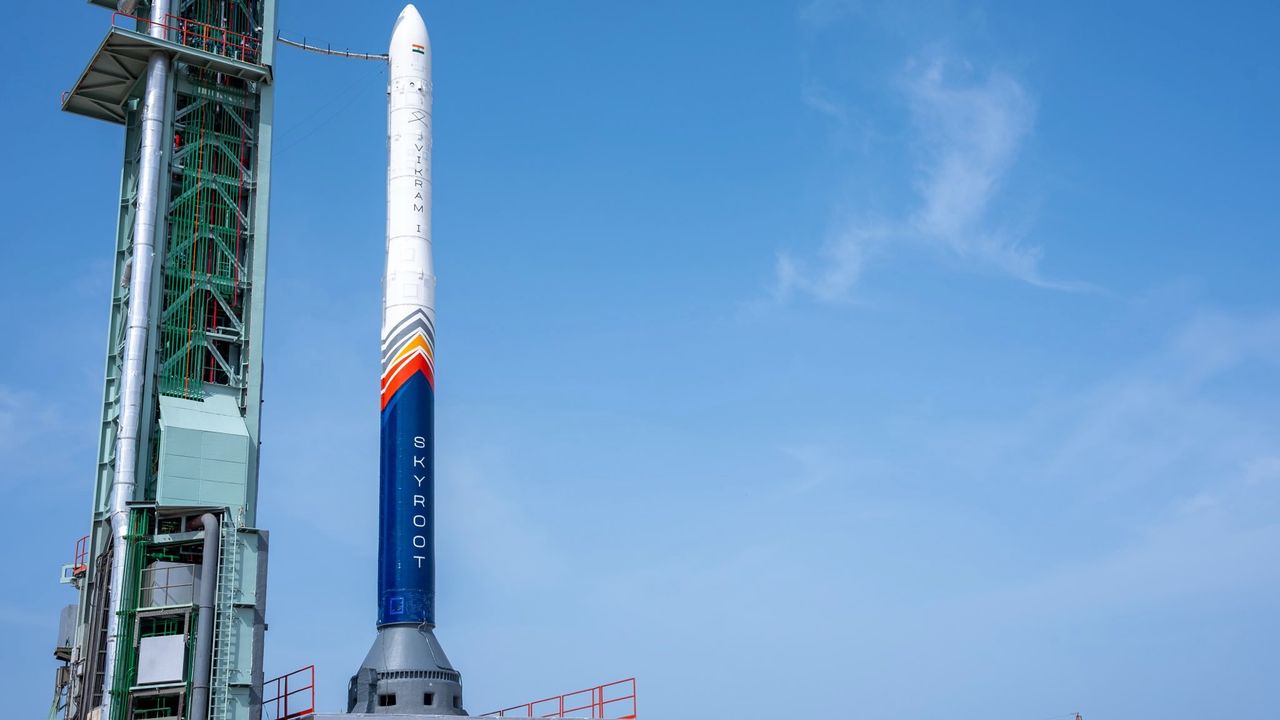
Skyroot Aerospace to Launch Vikram-1, India's First Private Orbital Rocket on July 18
Skyroot Aerospace is set to launch its Vikram-1 rocket on July 18 from the Satish Dhawan Space Centre in Sriharikota, marking a historic milestone as India's first privately built orbital rocket. The launch is scheduled for 2 a.m. EDT (0600 GMT; 11:30 a.m. IST) and will be streamed live. This launch is significant as it represents a new era for India's commercial spaceflight capabilities, following Skyroot's previous achievement with the Vikram-S suborbital rocket. The Vikram-1 is designed to carry small satellites, with a payload capacity of approximately 770 pounds (350 kilograms) to low Earth orbit, addressing the growing demand in the small satellite launch market. The test flight, named Aagaman, aims to evaluate the rocket's systems during flight while also deploying several customer payloads, including technology demonstrations and a robotic arm for space debris capture. No further timeline was disclosed at the time of publication.
Launches & Spacecraft Space Exploration
SpaceX Proposes 1 Million AI Satellites to Address Ground Data Center Constraints
On January 30, 2026, SpaceX filed with the FCC to launch up to 1 million AI compute satellites, positioning orbital data centers as a solution to the increasing demand for AI computing power. Ground data centers are facing significant challenges, with energy consumption projected to reach approximately 1,050 TWh in 2026, making them the fifth-largest electricity consumer globally. The demand for new data center capacity is outpacing the growth of power generation infrastructure, leading to a critical bottleneck in the grid system. The significance of this initiative lies in the structural constraints faced by ground data centers, including power delivery limitations, high water consumption, and local opposition to new projects. The Uptime Institute's 2026 outlook identifies power as the primary constraint on data center growth, with capacity clearing prices in the PJM grid skyrocketing to $329.17/MW, driven by data center expansion. Additionally, cooling requirements are becoming increasingly unsustainable, with facilities consuming vast amounts of water, further complicating their operational viability. Looking ahead, SpaceX's orbital AI compute initiative aims to circumvent these challenges by leveraging the advantages of space, such as continuous solar power and minimal local opposition. The first AI prototypes are expected to launch in early 2027, with operational deployments planned for 2028. No further timeline was disclosed at the time of publication.
Northrop Grumman's New MRV Spacecraft Launches Today Amid Offensive Capability Questions
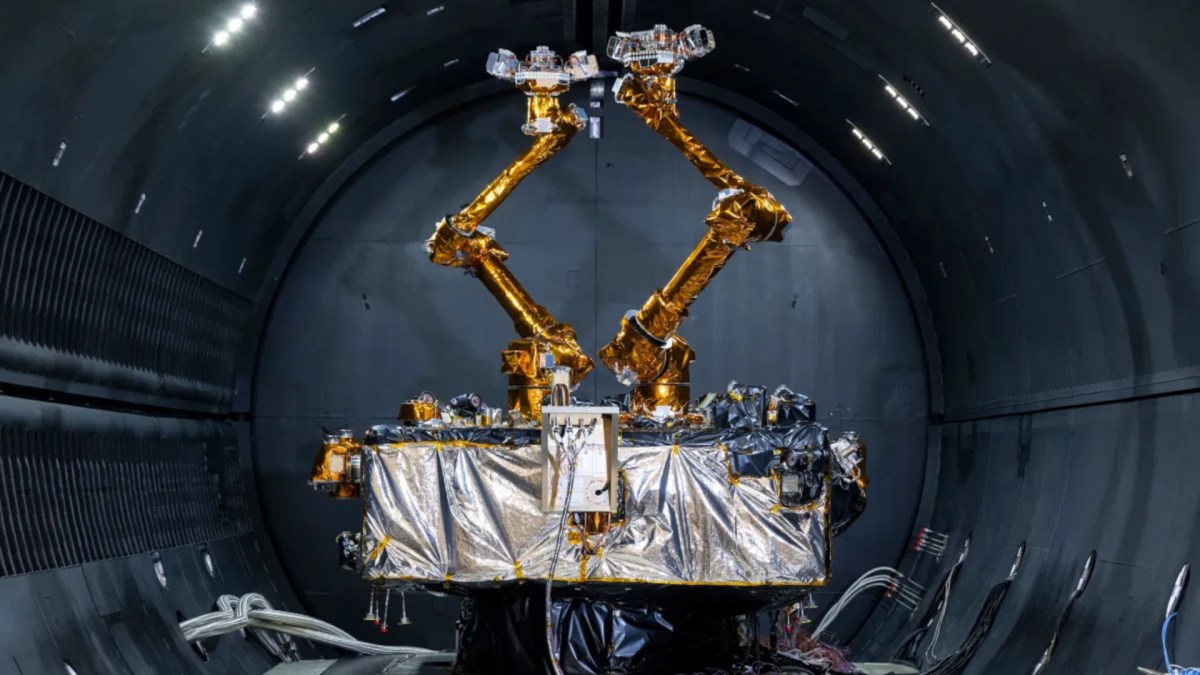
Northrop Grumman is set to launch its Mission Robotic Vehicle (MRV) today, equipped with two robotic arms designed for satellite servicing. While the primary purpose of the MRV is to refuel and repair satellites in geosynchronous orbit, discussions have emerged regarding its potential use in offensive operations against enemy satellites. The U.S. Space Force is exploring offensive capabilities to protect its assets, raising questions about the MRV's dual-use potential. The MRV's launch is significant as it represents a step forward in commercial satellite servicing, with the ability to install life extension jetpacks on satellites, potentially prolonging their operational life by up to eight years. Northrop Grumman's CEO, Kathy Warden, emphasized the spacecraft's capabilities during a recent earnings call, indicating that the company is prepared to offer options for technology deployment to clients, including the U.S. government. Looking ahead, the MRV is scheduled to launch aboard a SpaceX Falcon 9 rocket from Cape Canaveral, with a window starting at 5:15 PM ET. The mission will involve rendezvousing with satellites from commercial telecommunications providers Optus and SES, showcasing the MRV's versatility in on-orbit servicing and inspection. No further timeline was disclosed at the time of publication.
Space Anti-Satellite Capabilities News & Features Orbital Systems War In Space
Managing traffic in space
Associate Professor Richard Linares is addressing the growing challenge of satellite navigation in congested orbits. As the number of satellites in space continues to rise, the risk of collisions increases, making safe navigation crucial for space operations. Linares, an expert in aerospace engineering, is developing innovative strategies and technologies to enhance the safety and efficiency of satellite movements. His work is particularly timely, given the rapid expansion of satellite constellations and the increasing interest in space exploration and commercial ventures. By leveraging advanced algorithms and data analysis, Linares aims to create systems that can predict potential collisions and facilitate safer maneuvering of satellites in crowded orbital paths. This initiative not only aims to protect existing satellites but also to ensure the sustainability of space activities for future generations.
Profile Faculty Satellites Pollution Aeronautical and astronautical engineering automation
Startup Wants to Run AI Inference From Space
The rapid growth of large language models is driving a global surge in energy demand for data centers, prompting operators to seek alternative power sources. Among them is Orbital Inc., a Los Angeles-based startup that recently emerged from stealth mode to announce plans for space-based data centers. Backed by venture capital firm Andreessen Horowitz, Orbital aims to utilize solar energy from a constellation of small satellites in low Earth orbit to power AI inference workloads, such as chatbots. Orbital's founder and CEO, Euwyn Poon, emphasizes the limitations of terrestrial energy sources, stating, “There simply isn’t enough capacity here [on Earth], and the only way is up.” The company envisions a network of up to 10,000 satellites, each equipped with GPU server racks powered by solar panels. The first test of this concept is scheduled for 2027, with a prototype satellite launch aboard a SpaceX Falcon 9 rocket. While Orbital's approach aims to reduce launch costs and improve efficiency, it faces significant engineering challenges, including radiation effects on GPUs, thermal management in space, and maintenance difficulties. Experts like Dr. Amit Verma from Texas A&M University caution that the operational feasibility of such systems will depend on the specific applications they support. Despite these hurdles, Orbital plans to finalize its satellite designs by 2026 and establish a manufacturing facility by 2028, with the goal of tapping into major AI firms as customers. Poon remains optimistic about overcoming technical challenges, asserting that their engineering efforts will pave the way for the future of space-based data processing.
Data-center Space Ai Inferencing
GITAI Selected by U.S. Space Force for Space-Based Interceptor Program
GITAI has unveiled its latest innovation, a satellite platform equipped with a robotic arm designed for on-orbit operations. This development, which showcases GITAI's commitment to advancing space technology, aims to enhance the efficiency and capabilities of satellite missions. The announcement was made in October 2023, highlighting the company's ongoing efforts to revolutionize the way satellites are operated in space. By integrating robotic technology into satellite systems, GITAI seeks to address the growing demand for more versatile and autonomous operations in the increasingly crowded orbital environment. The platform is expected to facilitate a range of tasks, from maintenance to assembly, thereby reducing the need for human intervention and lowering mission costs. This breakthrough positions GITAI at the forefront of the aerospace industry, as it continues to push the boundaries of what is possible in space exploration and satellite management.
Robotics needs a service framework.
RSF defines a common language for robot service capability, lifecycle operations, certification pathways, and service-provider networks.