

Industry Briefing
A single destination for timely, editor-curated robotics news from around the world.

DeKra Micro Introduces Wireless Millimeter-Wave Solutions for Enhanced Robot Joints
DeKra Microelectronics (Shenzhen) Co., Ltd. has unveiled innovative millimeter-wave wireless slip rings and non-contact interconnect solutions designed for robotic joints. These products address critical issues such as wire entanglement, contact wear, and maintenance frequency, which affect the long-term stability and efficiency of robotic systems. The introduction of these solutions is significant as robotic joints serve not only as motion execution units but also as vital nodes for data transmission, control coordination, and power connections. Traditional wired connections face challenges in dynamic operations, necessitating a shift towards more reliable and integrated wireless solutions that enhance operational stability and reduce maintenance needs. Looking ahead, DeKra Micro's millimeter-wave wireless slip rings and interconnect modules support various communication protocols and are designed for seamless integration into existing joint structures. The company aims to advance the reliability and integration of robotic connectivity technologies, catering to the growing demands of the robotics industry for enhanced performance and flexibility.
Millimeter-Wave Technology Robotic Joints Wireless Communication Automation Solutions
Meta and Microsoft Drive Tech Stocks Higher Amid Rising Bond Yields
Last week, tech stocks experienced a notable increase, led by Meta and Microsoft, despite surging Treasury yields. The Nasdaq rose by 2%, while the S&P 500 and Dow Jones Industrial Average gained 1% and 0.3%, respectively. The rise in Treasury yields, reaching multidecade highs, was fueled by strong economic data and expectations for Federal Reserve rate hikes. The significance of this trend lies in the dual pressures of rising rates and inflation, which typically hinder stock performance. However, Meta's recent announcements regarding its AI agent, Muse, and Microsoft's strong Azure growth have provided a counterbalance. Meta's shares surged approximately 13% last week, reflecting investor confidence in its potential to monetize AI technology, while Microsoft saw a more than 4% increase, driven by positive analyst sentiment. Looking ahead, investors should monitor the ongoing developments in the tech sector, particularly how Meta and Microsoft leverage their AI capabilities amidst economic challenges. No further timeline was disclosed at the time of publication.
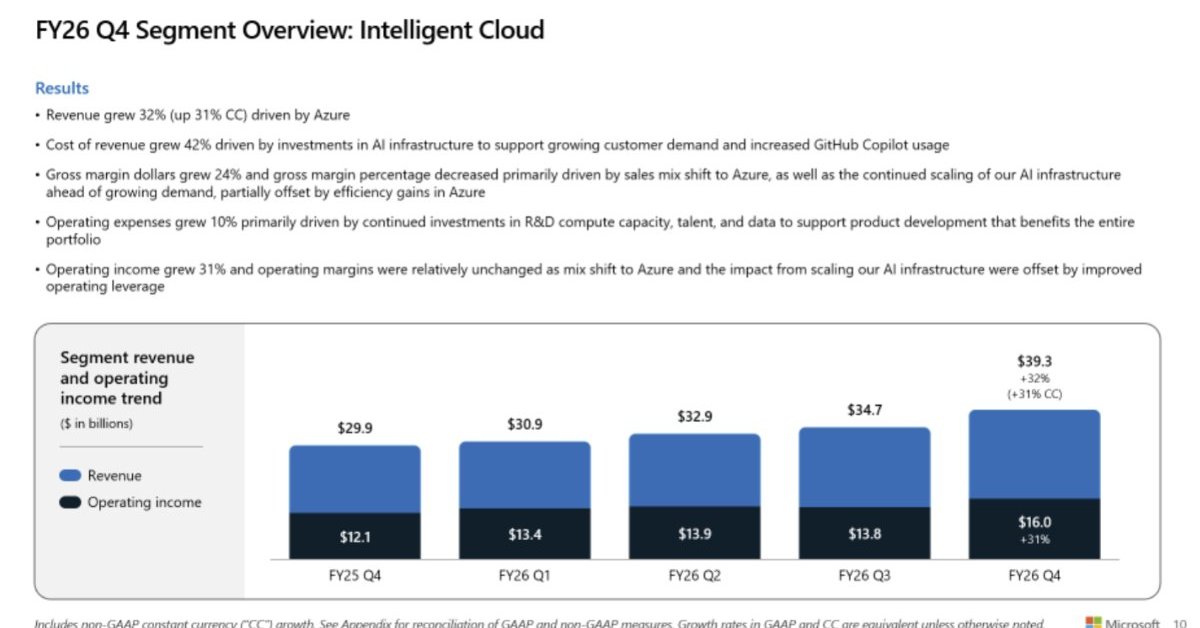
Microsoft Reports Increased Revenue and Profit Driven by Azure and AI Demand, Copilot Seats Exceed 30 Million
On July 29, 2023, Microsoft announced its Q4 fiscal results for 2026, reporting an 18% increase in revenue to $90.07 billion and a 31% rise in GAAP net income to $35.77 billion. Excluding the impact of investments in OpenAI, non-GAAP net income increased by 22% to $35.29 billion. CEO Satya Nadella highlighted that Azure revenue surpassed $100 billion for the first time, with Microsoft 365 Copilot seats exceeding 30 million, reflecting customer trust in AI transformation. The results are significant as they demonstrate Microsoft's strong performance in the cloud sector, particularly with a 27% increase in Microsoft Cloud revenue to $59.3 billion. The Intelligent Cloud segment saw a 32% revenue increase, driven by a 43% rise in Azure and other cloud services. The overall fiscal year 2026 results showed an 18% revenue increase to $331.84 billion, with Azure revenue exceeding $100 billion, indicating robust demand for cloud services beyond frontier model companies like OpenAI and Anthropic. Looking ahead, Microsoft forecasts Q1 2027 revenue between $89.85 billion and $90.95 billion, a 16-17% year-over-year increase. The company plans to invest over $50 billion in capital expenditures in Q1, including the impact of lease reclassifications. No further timeline was disclosed at the time of publication.

Innovative Dual-Core GaN Drive Solution Addresses Robotics Joint Challenges
In 2026, humanoid, quadruped, and logistics robots are expected to achieve mass production, yet manufacturers face significant challenges. Heavy joints compromise battery life, while high costs of joint actuators threaten profitability, with 70% of a robot's cost attributed to these components. The industry struggles with traditional silicon-based drive control boards that are bulky and limit torque output. A new solution, the CT-Unite dual-core GaN drive system from domestic semiconductor firm ZK Wireless, aims to resolve these issues by offering lightweight, cost-effective, and high-torque outputs. Leading robotics manufacturers have already validated this solution. The CT-Unite system utilizes only four core chips to manage all motion control and power drive functions, significantly reducing the size of the control board and the overall weight of the robot. This innovation promises to lower hardware costs by at least 40%, making mass production more feasible. No further timeline was disclosed at the time of publication.
Robotics GaN Technology Drive Solutions Cost Reduction Lightweight Design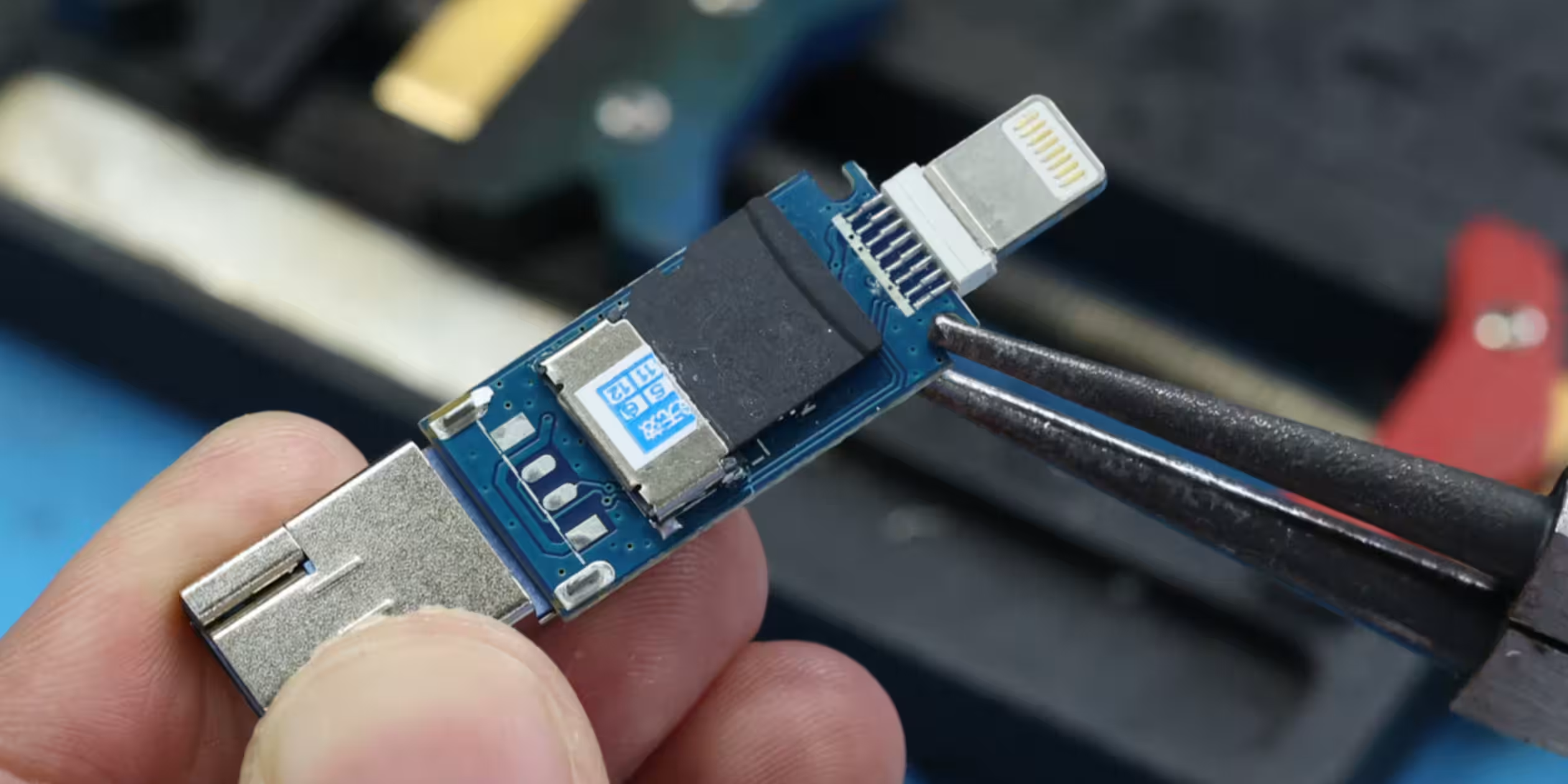
Nikkei Analysis Reveals Fake Storage in 50% of Inexpensive USB Drives from China
A recent investigation by Nikkei uncovered that 50% of low-cost USB flash drives purchased from e-commerce platforms contained less storage capacity than advertised. These devices, primarily manufactured in China, were found to utilize microSD cards instead of dedicated memory chips, raising concerns about data integrity and consumer trust in budget electronics. The examination took place in Tokyo and was published on July 10, 2026. This finding is significant as it highlights a growing issue in the electronics market, where consumers are increasingly vulnerable to misleading product claims. The prevalence of counterfeit storage capacities can lead to data loss and security risks, particularly in sensitive applications. With a reported 20% complaint rate regarding fake storage on platforms like Amazon, this trend poses a challenge for both consumers and regulatory bodies aiming to ensure product reliability. Looking ahead, stakeholders in the electronics industry should monitor the response from regulatory authorities and e-commerce platforms regarding these findings. No further timeline was disclosed at the time of publication, but potential measures could include stricter quality controls and enhanced consumer awareness campaigns to combat fraudulent products in the market.
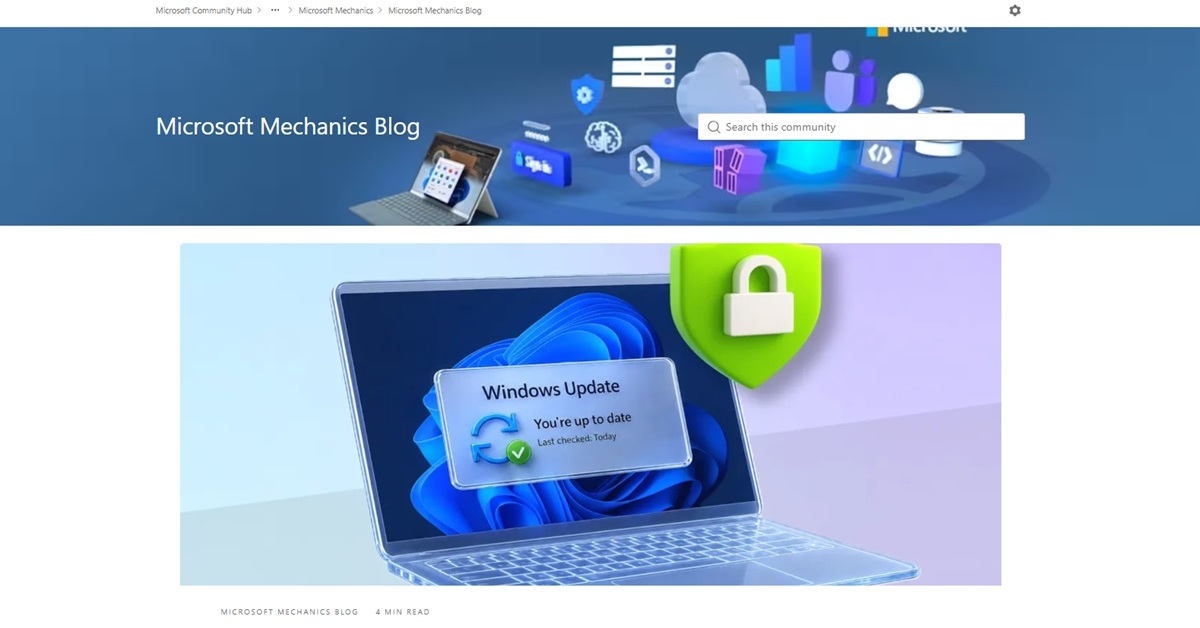
Microsoft Recommends Deploying Windows Updates Within Three Days to Combat AI-Driven Threats
Microsoft has updated its guidance for deploying Windows updates, recommending that organizations implement updates within three days of release. This change is in response to the rapid exploitation of software vulnerabilities, which can now be targeted within hours due to advancements in AI technology. The new policy aims to enhance security and reduce the risk of attacks during the delay in applying patches. The increase in vulnerabilities, with 206 reported in June 2026 alone, highlights the urgency for IT departments to adapt their update processes. Microsoft encourages organizations to rethink their security strategies and implement new policies that facilitate quicker deployment of patches to all devices, thereby minimizing exposure to potential threats. To assist IT departments in managing this transition without increasing workload, Microsoft has proposed three key steps: automating update policies, utilizing cloud management tools, and implementing conditional access for non-compliant devices. These measures are designed to streamline the update process while maintaining operational efficiency and security integrity. No further timeline was disclosed at the time of publication.
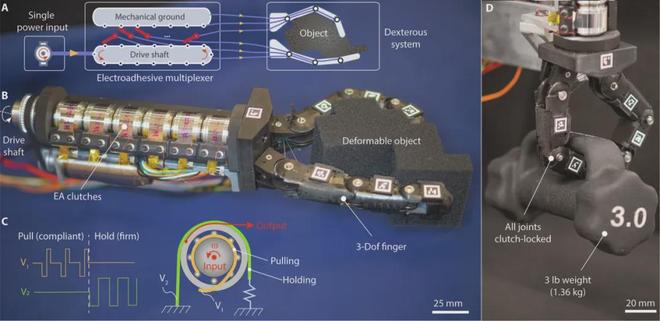
Breakthrough in Robotic Hands: One Motor Drives Six Joints, Capable of Gentle Foam Handling and Lifting 3 Pounds
A research team at Northwestern University has unveiled an innovative robotic hand that operates using a single motor to control six joints, thanks to a groundbreaking electric adhesive clutch system. This design enables the robotic hand to seamlessly transition between gentle and strong gripping, enhancing its versatility in robotic manipulation. The development aims to improve the functionality of robotic systems, making them more adaptable for various tasks.
Robotic Hands Electric Adhesive Clutch Soft Robotics Robotics Technology
20,000 job cuts at Meta, Microsoft raise concern that AI-driven labor crisis is here
Meta has announced a significant reduction in its workforce, cutting 10% of its employees amid a broader trend in the tech industry. This decision comes on the heels of Microsoft revealing its first-ever employee buyout program in its 51-year history, signaling a shift in corporate strategies as companies navigate economic challenges. The layoffs at Meta reflect ongoing efforts to streamline operations and adapt to changing market conditions, as the company seeks to enhance efficiency and reduce costs. These developments highlight the increasing pressures faced by major tech firms, prompting them to reconsider their workforce strategies in response to fluctuating demand and economic uncertainties.
Movable Anchor Cable‐Driven Parallel Robot and Its Application in Ground Microgravity Experiment for Long‐Span Flexible Manipulators
In May 2026, researchers published a significant study in the Journal of Field Robotics, focusing on advancements in robotic technology. The study, appearing in Volume 43, Issue 3, spans pages 2069 to 2089 and highlights innovative developments in the field of robotics that could enhance various applications, including industrial automation and autonomous vehicles. The research was conducted by a team of experts aiming to address the growing demand for more efficient and intelligent robotic systems. By integrating advanced algorithms and machine learning techniques, the team demonstrated how these improvements could lead to increased operational efficiency and safety in robotic applications. This publication is part of a broader effort to push the boundaries of robotics, responding to the challenges posed by complex environments and tasks that require high levels of precision and adaptability. The findings are expected to influence future research directions and practical implementations in robotics, contributing to the evolution of the industry.
RESEARCH ARTICLE
Cable‐Driven Hyper‐Redundant Manipulator With Pitch‐Twist Joints: Mechatronic Design, Kinematics Analysis, and Prototype
In a recent study published in the Journal of Field Robotics, researchers have unveiled significant advancements in robotic navigation systems. This groundbreaking research, conducted by a team of engineers and computer scientists, focuses on enhancing the autonomy and efficiency of robots in complex environments. The findings, which were released in May 2026, highlight innovative algorithms that enable robots to better interpret and navigate their surroundings, thereby improving their performance in tasks ranging from search and rescue operations to industrial automation. The research team, based at a leading technology institute, aimed to address the challenges faced by robots in dynamic and unpredictable settings. By integrating machine learning techniques with traditional navigation methods, the researchers developed a system that allows robots to learn from their experiences and adapt to new situations in real-time. This approach not only increases the reliability of robotic systems but also broadens their applicability across various fields. The implications of this research are far-reaching, as it paves the way for more sophisticated robotic applications that can operate autonomously in environments that were previously deemed too complex for machines. As industries increasingly turn to automation, these advancements could lead to significant improvements in efficiency and safety. The study serves as a crucial step toward realizing the full potential of robotics in everyday tasks and critical operations alike.
RESEARCH ARTICLE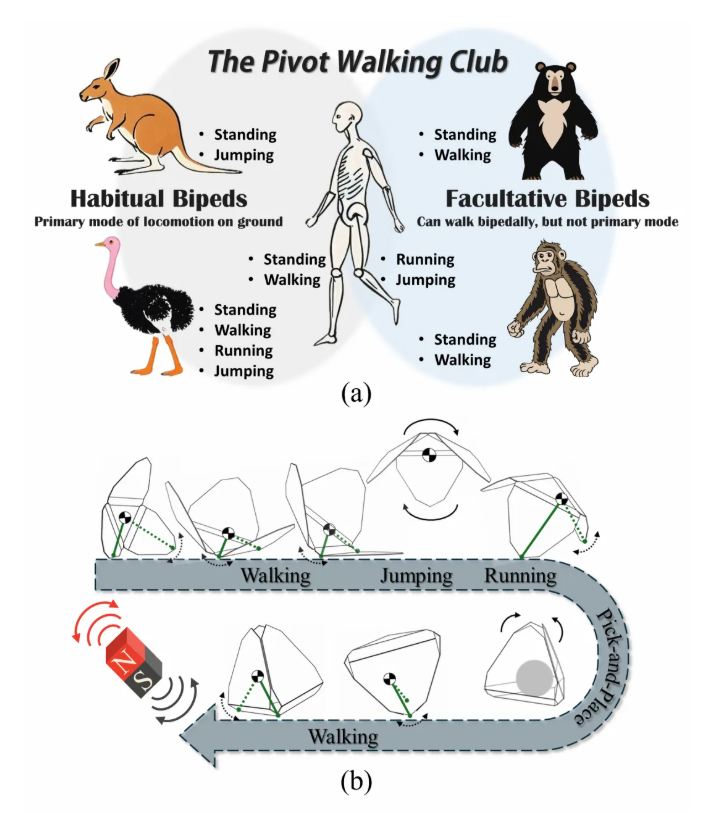
Micro Grippers with Parkour Abilities? BIT Team Proposes New Mechanism for Magnetic-Driven Microrobots Integrating Morphology and Function!
A research team at the Beijing Institute of Technology has unveiled an innovative magnetic-driven microrobot that demonstrates autonomous decision-making and adaptive movement capabilities in challenging environments. Drawing inspiration from natural organisms, this microrobot can seamlessly transition between various movement modes, allowing it to navigate efficiently and execute tasks effectively. The development of this technology aims to enhance robotic performance in complex terrains, potentially expanding its applications in fields such as search and rescue, environmental monitoring, and medical assistance. The team's work represents a significant advancement in robotics, showcasing how nature-inspired designs can lead to improved functionality and versatility in robotic systems.
Magnetic Microrobots Autonomous Robotics Soft Robotics Biomedical Applications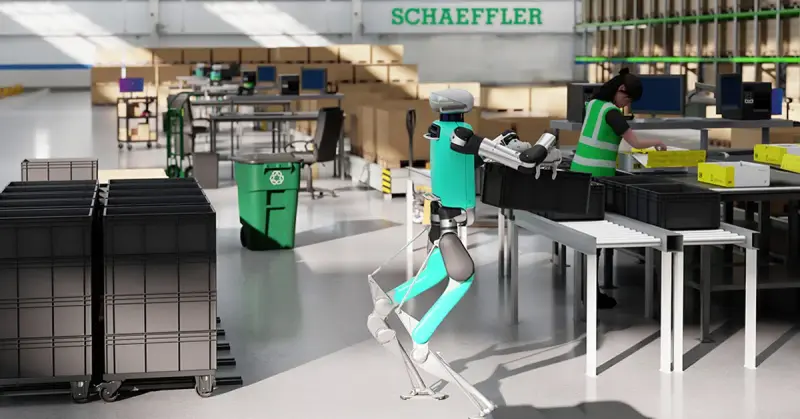
Schaeffler Explores AI-Driven Factories and Humanoid Co-Workers with Accenture, NVIDIA, Microsoft
Schaeffler has announced a strategic partnership with Accenture, NVIDIA, and Microsoft to enhance future factory operations through the implementation of digital twins on the NVIDIA Omniverse platform. This collaboration aims to simulate a range of automation scenarios, incorporating advanced humanoid robots such as Agility's Digit and Sanctuary AI's Phoenix. By utilizing Microsoft Fabric for data analysis, the partners seek to effectively connect virtual testing environments with real-world performance metrics. This initiative reflects a growing trend in the manufacturing sector to leverage cutting-edge technology for improved efficiency and innovation in production processes.
phoenix NVIDIA Microsoft HM25 Schaeffler DigitRobotics needs a service framework.
RSF defines a common language for robot service capability, lifecycle operations, certification pathways, and service-provider networks.
Join the RobotToday community on LinkedIn
Daily robotics news, in-depth analysis, conference highlights, and discussions with professionals worldwide.







