

Industry Briefing
A single destination for timely, editor-curated robotics news from around the world.

MIT Chosen to Lead New NSF Materials Research Science and Engineering Center
The National Science Foundation (NSF) has appointed MIT to establish and lead a new Materials Research Science and Engineering Center (MRSEC) dedicated to advancing materials technologies for medical imaging, sustainable metals production, and next-generation semiconductors. The center is expected to receive $18 million in funding over six years, uniting 16 research groups from nine departments across four institutions, including five MIT departments and three collaborating universities. This initiative is significant as it aims to enhance medical diagnostics through improved X-ray detectors, which could lead to better cancer detection and reduced radiation exposure. Additionally, the center will investigate high-temperature sulfur-based molten materials to innovate metal and semiconductor production, potentially increasing efficiency and access to critical materials. The funding will also support a shared laboratory for testing magnetic materials under extreme conditions, available to both academic and industry users. Looking ahead, the MRSEC is part of a broader $108 million NSF investment in six research centers exploring various scientific challenges. The center builds on nearly 60 years of interdisciplinary materials research at MIT, fostering collaboration across disciplines to address complex issues in materials science and engineering. No further timeline was disclosed at the time of publication.
Research Funding Materials science and engineering Chemistry Physics Earth and atmospheric sciences
MIT Lincoln Laboratory Researchers Explore Arctic Under-Ice Sounds and Communication Technologies
Researchers from MIT Lincoln Laboratory have been analyzing under-ice sounds in the Arctic, utilizing commercial sensors deployed during the U.S. Navy's Operation Ice Camp (OIC). Their work aims to understand sound propagation through ice, which is crucial for monitoring environmental changes and military activities in the region. The significance of this research lies in its potential to enhance predictive capabilities regarding the acoustic signatures of fracturing ice. This understanding can inform geopolitical strategies and bolster resilience in coastal communities as Arctic sea ice continues to melt, opening new maritime routes. Looking ahead, the team plans to further develop low-cost sensors for continuous Arctic monitoring. The challenges faced during OIC 2026, including severe weather conditions, highlight the difficulties of conducting research in this inhospitable environment. No further timeline was disclosed at the time of publication.
Research Sensors Magnets Robotics Security and military studies International initiatives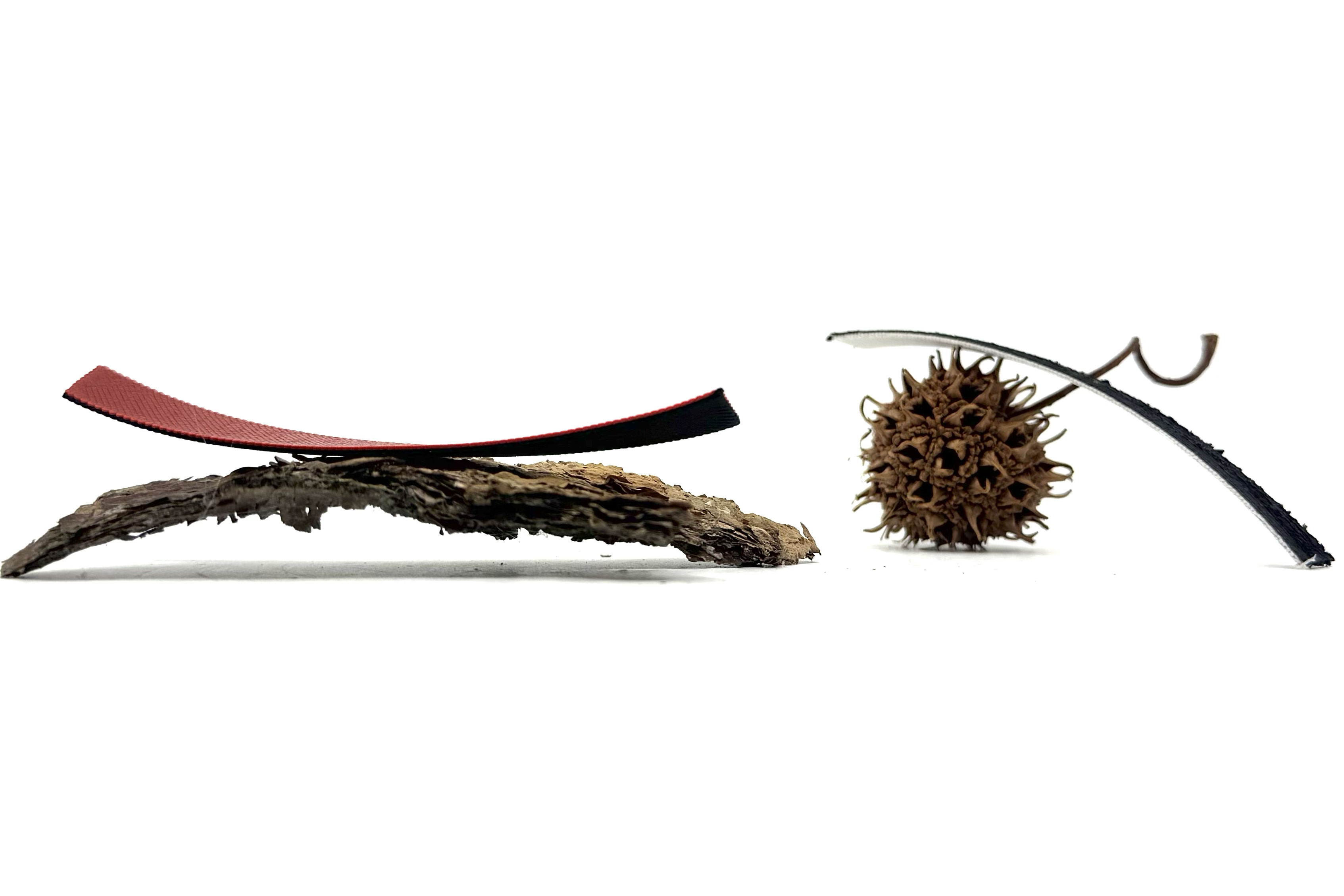
MIT Researchers Develop Framework for Designing Adaptive Materials Inspired by Pine Cones
MIT researchers have created a mathematical framework that simplifies the design of bioinspired materials, such as moisture-responsive shingles. This framework captures the mechanisms across various length scales in natural systems, like those found in pine cones, and translates them into engineered systems that can be 3D printed. The significance of this work lies in its potential to streamline the development of adaptive materials, reducing costs and time associated with failed prototypes. By moving beyond mere bio-inspiration to what is termed 'bio-derivation,' engineers can systematically translate natural behaviors into synthetic structures, paving the way for innovations like soft robotic grippers and morphing airplane wings. Looking ahead, the framework's application could extend to more complex systems, enhancing the ability of engineers to create materials that respond dynamically to environmental changes. No further timeline was disclosed at the time of publication.
Research Bioinspiration Materials science and engineering Algorithms Design Biology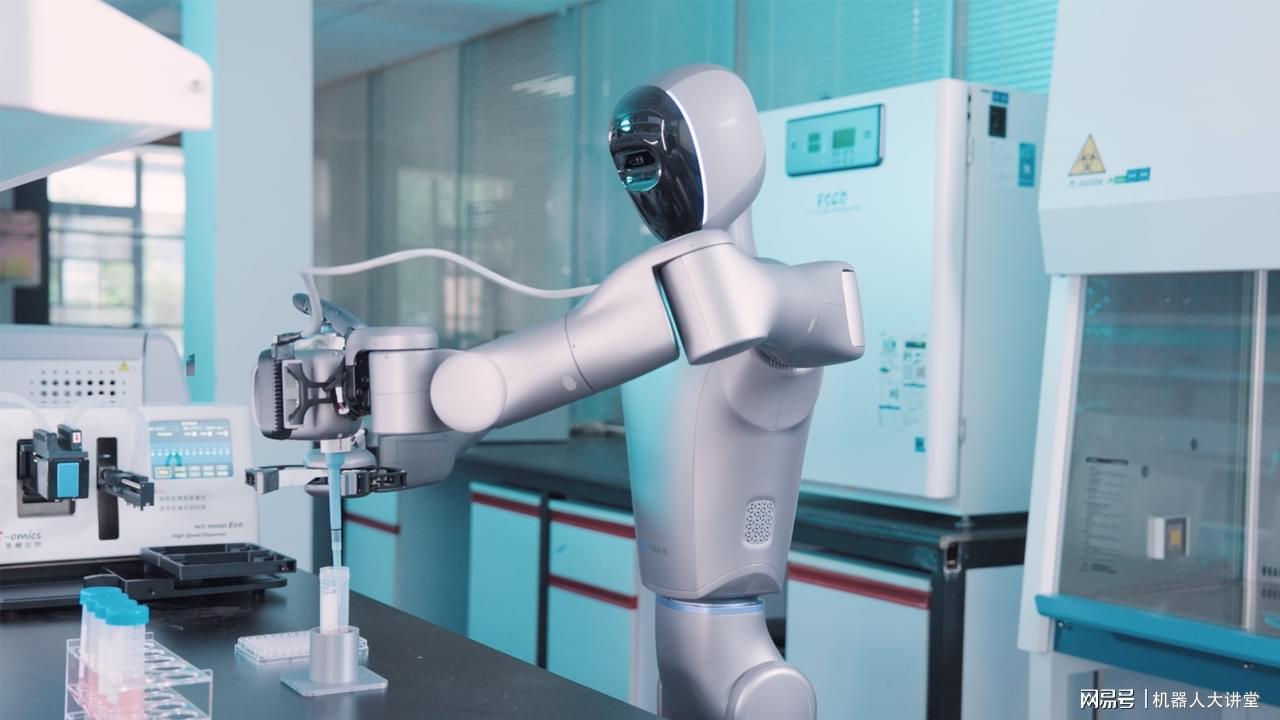
Yuanluo Technology Unveils First Autonomous Laboratory Utilizing Object-Centric Physics Model
Yuanluo Technology has successfully launched the world's first autonomous laboratory on a national research platform, marking a significant advancement in embodied intelligence. The laboratory's robotic system can autonomously perform over 40 operations, including nucleic acid extraction and cytotoxicity testing, with a precision of less than one millimeter. This achievement demonstrates the robot's capability to execute complex, multi-step tasks continuously for over three hours, addressing challenges in throughput and consistency in biochemical research. This development is crucial as it signifies a shift from demonstration to practical application of embodied intelligence in the biochemical and material science sectors. The Object-centric Physics Native Model (OPN), developed by Yuanluo, enables the robot to understand and adapt to the dynamic conditions of a real laboratory environment. By integrating visual, tactile, and force feedback, the robot can make real-time adjustments, ensuring stable execution of intricate experimental workflows across multiple devices. Looking ahead, the successful implementation of this autonomous laboratory sets the stage for further advancements in research and development processes across various industries, including public health and advanced manufacturing. The next milestones will involve expanding the capabilities of the OPN model and integrating it into more complex industrial systems. No further timeline was disclosed at the time of publication.
Autonomous Laboratories Embodied Intelligence Biochemical Research Robotics AI
Brookhaven National Laboratory and Stony Brook University Achieve Quantum Link Over 13 Miles
Researchers at Brookhaven National Laboratory and Stony Brook University have successfully demonstrated a quantum link across 13 miles in open air. This achievement marks the first of its kind in the United States and adds a wireless component to the nation’s longest quantum network, which spans 161 miles and connects eight nodes. The significance of this development lies in overcoming the limitations of fiber-optic cables, which can hinder the transmission of fragile quantum information over long distances. By utilizing laser technology to send quantum states of light through the atmosphere, the researchers have addressed the challenges posed by conventional wireless technology, which is unsuitable for preserving delicate quantum signals. Looking ahead, the integration of telescope technology and adaptive optics to counteract atmospheric turbulence is a noteworthy advancement. This innovative approach could pave the way for more robust quantum communication systems. No further timeline was disclosed at the time of publication.
Science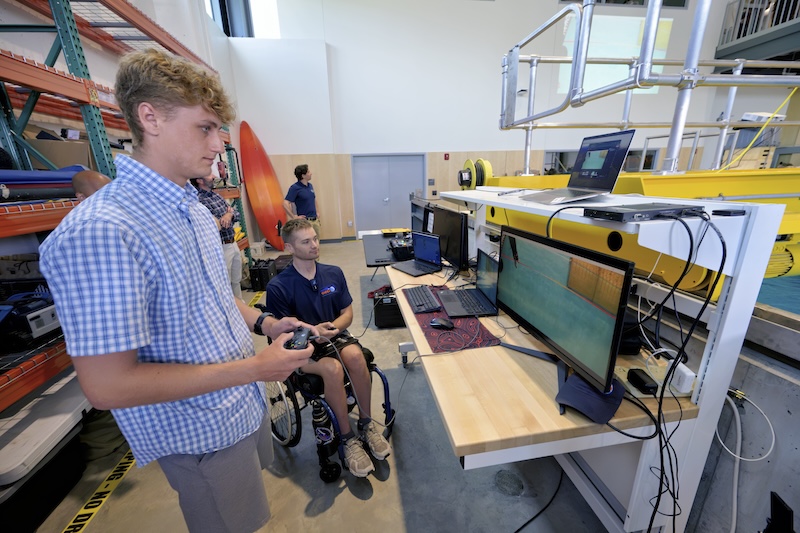
University of Rhode Island opens advanced Ocean Robotics Laboratory for autonomous marine research
Event marked milestone for Narragansett Bay Campus The University of Rhode Island celebrated a major milestone in the $300 million, multi-phase revitalization of the Narragansett Bay Campus with an underwater ribbon cutting ceremony for the new Ocean Robotics Laboratory on June 25. Students Elliot Roman and Jake Bonney piloted URI’s remotely operated vehicle Rhody to […]
Features Robotics Science autonomous systems autonomous underwater vehicles blue economy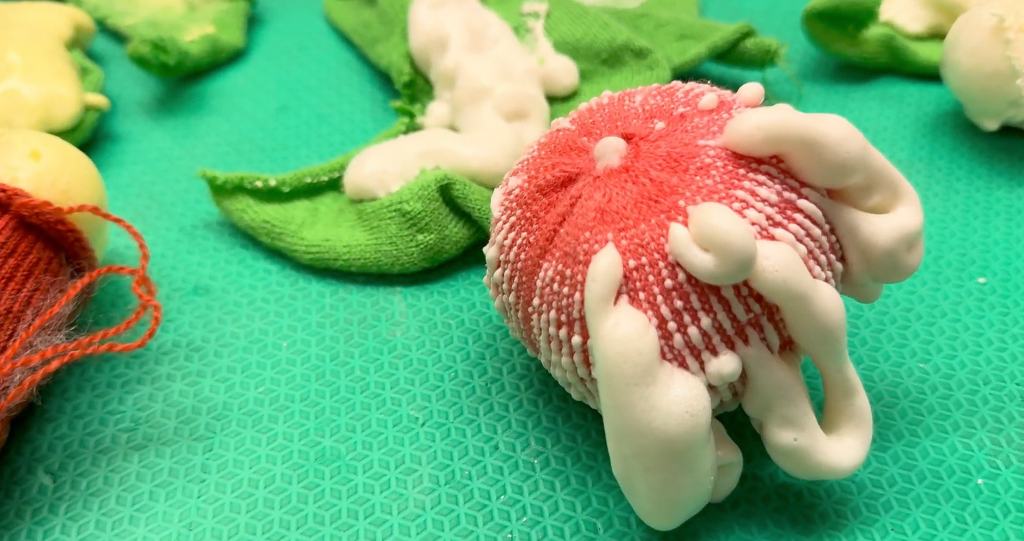
CMU Researchers Blend Materials at “Hard Textiles” Jam
On March 7, the Textiles Lab at Carnegie Mellon University's Robotics Institute held a “Hard Textiles” lab jam, led by Associate Professor Jim McCann. This event highlighted the innovative intersection of textiles and technology, offering insights into potential future research directions. It also provided an opportunity for the campus community to engage with the lab's work and explore the unique applications of materials in robotics and design. The lab jam aimed to foster collaboration and creativity among participants, showcasing how advancements in textile technology can influence various fields.
Research UncategorizedRobotics needs a service framework.
RSF defines a common language for robot service capability, lifecycle operations, certification pathways, and service-provider networks.
Join the RobotToday community on LinkedIn
Daily robotics news, in-depth analysis, conference highlights, and discussions with professionals worldwide.







