

Industry Briefing
A single destination for timely, editor-curated robotics news from around the world.

AI won’t replace you but someone using AI might
A recent study conducted by researchers at the University of Vaasa highlights the rapid transformation of workplaces due to generative AI technologies. The research, led by Zhe Zhu, indicates that the primary challenge employees face is not the emergence of AI itself, but rather the risk of not adapting to its use effectively. The findings reveal that employees who view AI tools, such as ChatGPT and Gemini, as supportive collaborators instead of threats to their jobs exhibit higher levels of engagement, adaptability, and optimism regarding their career prospects. This underscores the importance of fostering a positive mindset towards AI integration in the workplace to harness its full potential.

Someone out-Trumped the Trump phone
The ongoing mystery surrounding the whereabouts of the so-called "Trump phone" continues to capture attention, with inquiries being made weekly. This week, the focus has shifted as the elusive device, associated with former President Donald Trump, remains unaccounted for. As the search persists, concerns have also arisen regarding other missing phones, including those linked to robotic technology. The situation highlights the ongoing intrigue and speculation surrounding Trump's communications and the implications of missing devices in the current political landscape.
Gadgets Mobile Phones Tech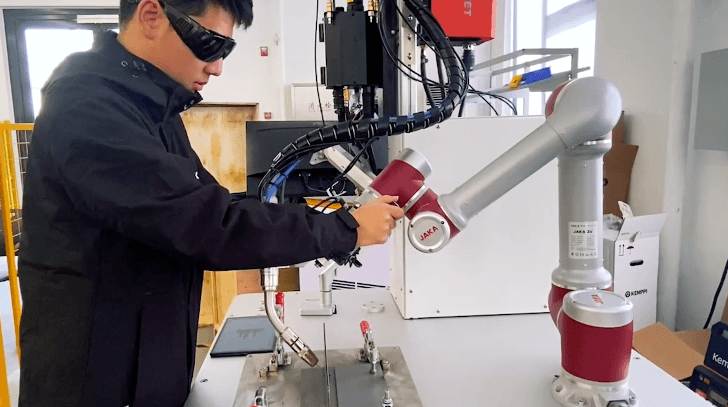
How Does Someone Control a Robot Arm?
JAKA Robotics is revolutionizing the interaction between humans and industrial machinery by simplifying the control of robotic arms. Traditionally, operating these systems required extensive knowledge of complex coding and strict safety protocols. However, JAKA's innovative approach now enables operators with diverse technical skills to manage high-precision movements through user-friendly interfaces. The company has introduced several methods for controlling collaborative robots, including handheld teach pendants and tablet-based graphical user interfaces (GUIs) that allow users to create action sequences by dragging and dropping command blocks. One of the standout features is direct teaching, where operators can manually guide the robot arm to desired positions, which the system records in real-time, streamlining tasks like gluing and polishing. Additionally, advancements in IoT and wireless technology have made it possible for operators to control robotic arms remotely via smartphones or laptops, facilitating efficient management in smart factory settings. JAKA's Zu30 and AL series arms can be programmed using standard tablets, supporting a "Drag-and-Graphic Programming" feature that simplifies the control process. By prioritizing accessibility and flexibility, JAKA Robotics aims to eliminate the barriers of traditional automation, catering to everyone from small workshop owners to large manufacturers. The company also supports various programming languages and ROS integration for advanced users, combining safety features with intuitive control methods to foster a collaborative environment between humans and machines.
Robotics needs a service framework.
RSF defines a common language for robot service capability, lifecycle operations, certification pathways, and service-provider networks.
Join the RobotToday community on LinkedIn
Daily robotics news, in-depth analysis, conference highlights, and discussions with professionals worldwide.







