Industry Briefing
A single destination for timely, editor-curated robotics news from around the world.

Generative AI Develops New Bacteriophage Genomes to Combat E. coli Resistance
A generative AI has successfully created novel bacteriophage genomes, leading researchers to identify 16 functional phages. This breakthrough demonstrates a promising AI-driven strategy to address the growing issue of bacterial resistance, particularly against E. coli. The significance of this development lies in its potential to enhance treatment options for infections caused by antibiotic-resistant bacteria. As bacterial resistance continues to rise, innovative solutions like AI-generated bacteriophages could play a crucial role in public health and medical treatments. Looking ahead, the focus will be on further validating the effectiveness of these bacteriophages in clinical settings. No further timeline was disclosed at the time of publication.

Deepfake Detection Dataset Aims to Keep Up With Generative AI
A collaborative effort involving researchers from Microsoft, Northwestern University, and the non-profit organization Witness has led to the development of a new dataset aimed at enhancing the detection of AI-generated media. Announced in a study published on April 10 in IEEE Intelligent Systems, the Microsoft-Northwestern-Witness (MNW) deepfake detection benchmark is designed to address the growing challenge of distinguishing real from fake content in an era where generative AI technology is rapidly advancing. The dataset includes a diverse array of AI-generated images, audio, and videos, reflecting the current landscape of generative AI. Thomas Roca, a principal research scientist at Microsoft, emphasized the increasing sophistication of AI-generated media, which can easily be produced by anyone using accessible applications. This proliferation raises significant concerns, including identity fraud and the creation of harmful content. The MNW benchmark aims to improve the effectiveness of detection systems by providing a wider variety of AI-generated materials, including those that have undergone post-processing manipulations. Researchers acknowledge that while this dataset could potentially be misused to develop new evasion techniques, it is crucial for enhancing the ability to assess the authenticity of media as generative AI continues to evolve. The team plans to update the dataset biannually to incorporate the latest developments in generative AI and detection challenges, with the goal of fostering transparency and raising standards in the fight against deepfake content.
Deepfakes Generative-ai Artificial-intelligence Microsoft Journal-watch
Generative AI improves a wireless vision system that sees through obstructions
Researchers have developed an innovative technique that enables robots to more accurately detect hidden objects and interpret indoor environments by utilizing reflected Wi-Fi signals. This advancement, which leverages existing wireless technology, could significantly enhance the capabilities of robots in various applications, including search and rescue operations, home automation, and security surveillance. The technique was unveiled in October 2023, showcasing the potential for robots to navigate and understand complex indoor spaces without the need for additional sensors. By analyzing how Wi-Fi signals bounce off objects, the robots can create a detailed map of their surroundings, improving their situational awareness and object recognition skills. This breakthrough not only promises to make robots more efficient but also opens new avenues for integrating smart technology into everyday life.

ImportAI 449: LLMs training other LLMs; 72B distributed training run; computer vision is harder than generative text
As artificial intelligence continues to evolve, experts are raising concerns about its potential to disrupt political systems globally. A recent discussion among political analysts and technologists highlighted the possibility of an unprecedented political interregnum driven by AI advancements. This conversation gained momentum in October 2023, as various stakeholders, including policymakers and industry leaders, began to assess the implications of AI on governance and societal structures. The rapid integration of AI technologies into everyday life is prompting fears that traditional political frameworks may struggle to adapt, leading to instability and uncertainty. Analysts argue that the increasing reliance on AI for decision-making processes could undermine democratic institutions, as algorithms may not reflect the complexities of human values and ethics. In response to these concerns, experts are advocating for proactive measures to ensure that AI development aligns with democratic principles. They emphasize the need for transparent regulations and ethical guidelines to mitigate potential risks associated with AI's influence on political landscapes. The discourse around AI's role in shaping future governance is expected to intensify as the technology continues to advance, prompting a reevaluation of how societies govern themselves in an increasingly automated world. As the debate unfolds, the urgency for a collaborative approach among technologists, policymakers, and civil society becomes clear, aiming to harness the benefits of AI while safeguarding democratic integrity and social cohesion.

Generative AI analyzes medical data faster than human research teams
In a recent study, researchers explored the capabilities of generative AI in analyzing complex medical datasets, comparing its performance to that of human experts. The findings revealed that in certain instances, the AI not only matched but also surpassed the effectiveness of teams that had dedicated months to developing prediction models. By utilizing precise prompts to generate usable analytical code, the AI significantly decreased the time required for processing health data. This advancement suggests a promising future where artificial intelligence could accelerate the transition from data analysis to scientific discovery, potentially transforming research methodologies in the medical field.

How to Get Started With Visual Generative AI on NVIDIA RTX PCs
AI-powered content generation has become an integral part of daily tools such as Adobe and Canva, as numerous agencies and studios increasingly adopt this technology into their workflows. This shift, which has gained momentum over recent months, allows for the creation of photorealistic images and videos, enhancing the quality and efficiency of digital content production. The integration of AI into these platforms is driven by the need for faster turnaround times and improved creative capabilities, enabling users to produce high-quality visuals with ease. As the technology continues to evolve, it is reshaping the landscape of content creation, making advanced tools accessible to a broader range of users.

Italy Enters the Chat: Generative Bionics Raises €70M to Bring "Physical AI" to Industry
A new spinoff company, emerging from the renowned Italian Institute of Technology, has officially entered the competitive humanoid robotics sector. This initiative is supported by significant investments from AMD and Tether, reflecting a strong commitment to transforming two decades of research into practical applications. The company aims to leverage advanced technologies and innovations developed over the years to create humanoid robots that can meet industrial needs. With the backing of established tech giants, the spinoff is poised to make a substantial impact in the field, potentially revolutionizing how humanoid robots are integrated into various industries.
Generative Bionics Europe Tether
Using generative AI to diversify virtual training grounds for robots
Researchers have developed a new system called "steerable scene generation," designed to create digital environments such as kitchens, living rooms, and restaurants. This innovative technology allows engineers to simulate various real-world interactions and scenarios involving robots. The system aims to enhance the training and performance of robotic systems by providing realistic settings for testing and development. The advancements in generative AI play a crucial role in this process, enabling the creation of dynamic and adaptable scenes that can be tailored to specific needs. This breakthrough could significantly improve how robots are trained to navigate and interact within diverse environments, ultimately leading to more effective and versatile robotic applications.

Myinfo Copilot: Teradyne’s domain-specific generative AI chatbot
Teradyne has announced the launch of MyInfo Copilot, a new generative AI tool designed to enhance everyday workflows within the company. This development is part of Teradyne's broader AI strategy aimed at integrating advanced technology into its operations. The announcement comes as the company seeks to maintain its competitive edge in the rapidly evolving tech landscape. MyInfo Copilot is tailored to meet specific domain needs, reflecting Teradyne's commitment to leveraging AI for improved efficiency and productivity. The tool is expected to be implemented across various departments, streamlining processes and facilitating better decision-making. With this initiative, Teradyne aims to not only keep pace with industry advancements but also to position itself as a leader in the adoption of innovative AI solutions.
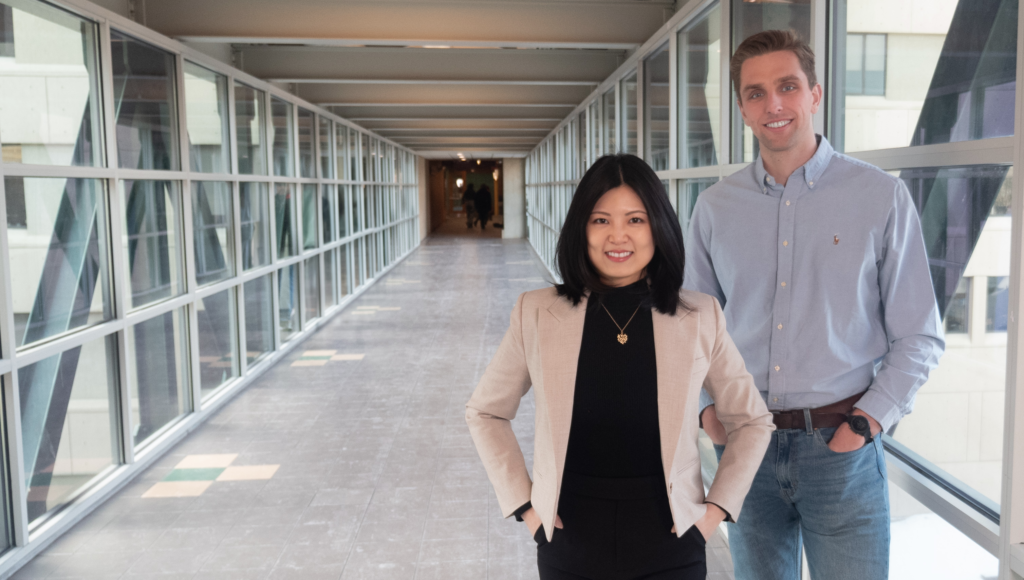
Two RI Ph.D. Students Receive Generative AI in Healthcare Fellowship
Carnegie Mellon University's Center for Machine Learning and Health has announced the recipients of the 2024 Generative AI in Healthcare Fellowship, recognizing seven individuals for their innovative contributions to the field. Among the awardees are Angela Chen and Bardienus (Bart) Duisterhof, both Ph.D. students from the Robotics Institute. Their research focuses on leveraging artificial intelligence to enhance healthcare solutions. This fellowship aims to support and promote the integration of generative AI technologies in healthcare, fostering advancements that could significantly improve patient outcomes.
Awards Uncategorized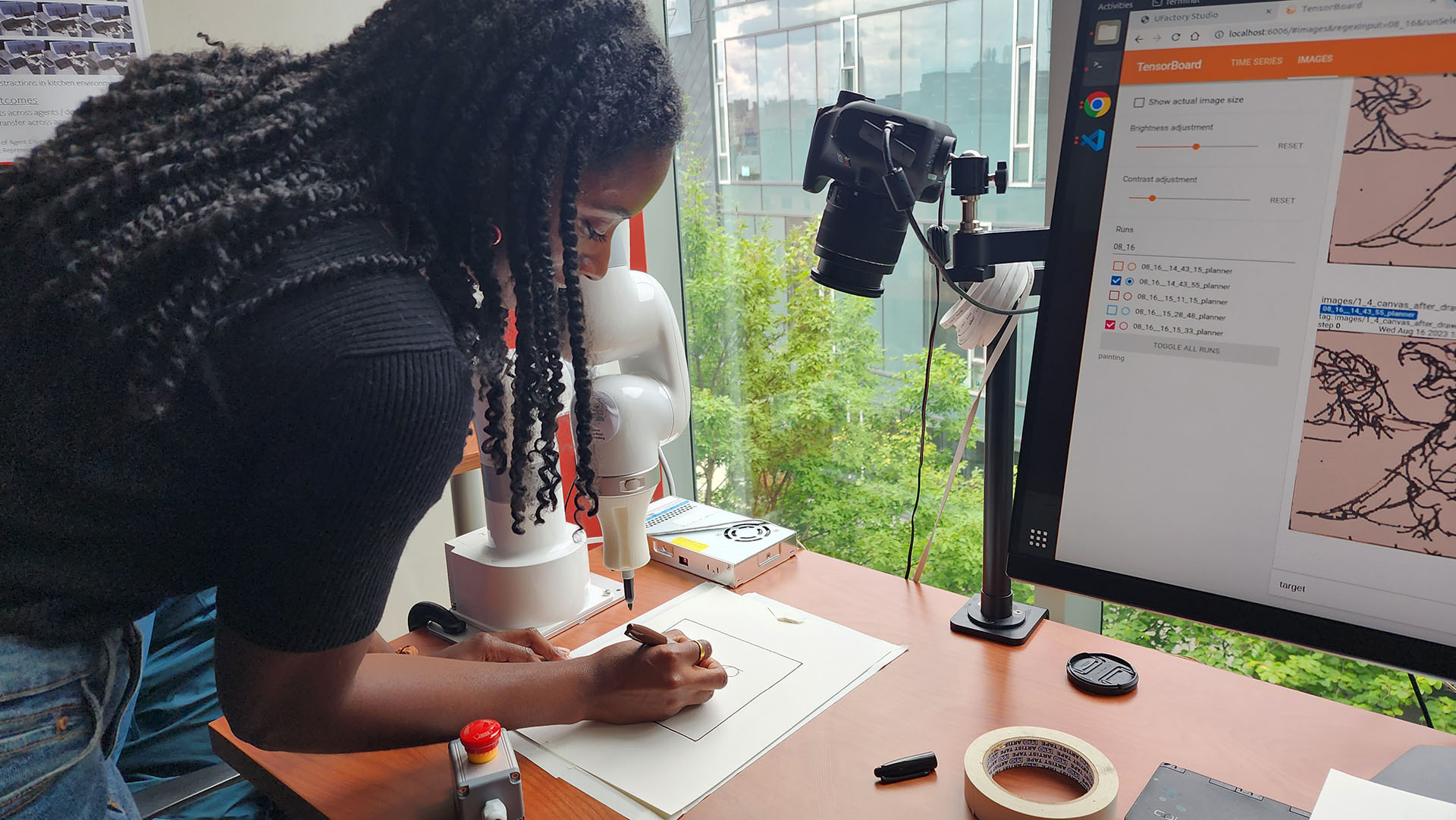
RI Research Brings Together Humans, Robots and Generative AI To Create Art
Researchers at Carnegie Mellon University's Robotics Institute have introduced a groundbreaking robotic system designed for interactive art creation. Named Collaborative FRIDA (CoFRIDA), this innovative technology allows individuals of all artistic skill levels to engage in collaborative painting. The system serves as a creative partner, akin to a writing prompt, encouraging users to explore their artistic potential alongside a robotic counterpart. This development highlights the intersection of human creativity and robotics, aiming to enhance the artistic experience in real-world settings.
UncategorizedRobotics needs a service framework.
RSF defines a common language for robot service capability, lifecycle operations, certification pathways, and service-provider networks.
Join the RobotToday community on LinkedIn
Daily robotics news, in-depth analysis, conference highlights, and discussions with professionals worldwide.