Industry Briefing
A single destination for timely, editor-curated robotics news from around the world.
Gartner Reveals Four Key AI Trends Transforming Warehouse Operations
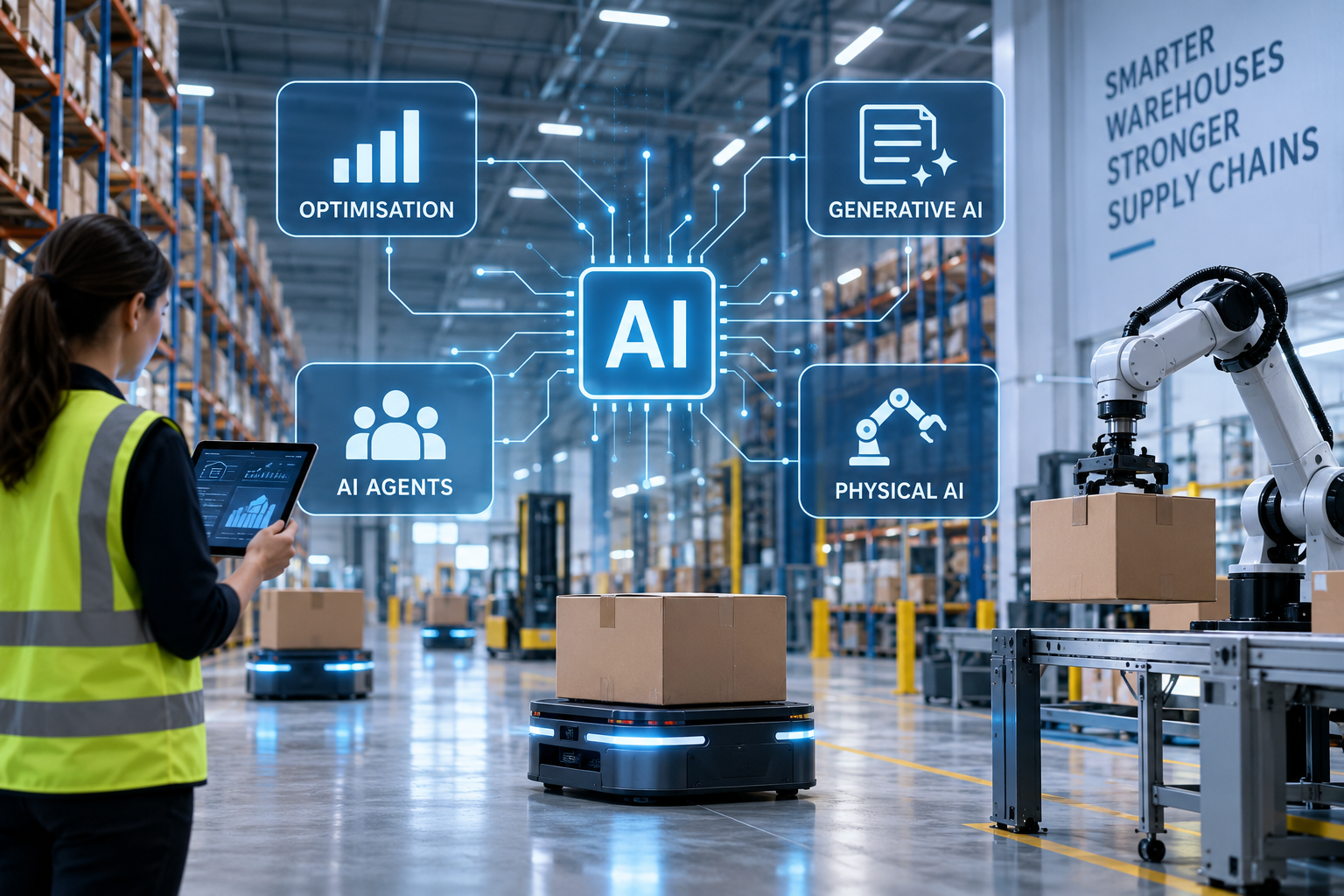
Gartner has identified four significant AI trends that are reshaping warehouse operations as of September 17, 2026. These trends emerge from three driving forces: ongoing labor constraints, evolving capital models for automation, and the growing maturity of AI technologies. The trends range from enhanced optimization techniques to the deployment of physical AI agents capable of executing warehouse tasks. The first trend focuses on the evolution of traditional AI-based optimization, which now utilizes real-time data and advanced algorithms for applications like demand forecasting and inventory management. The second trend highlights operational-driven generative AI, which transforms unstructured data into actionable insights, enhancing decision-making processes within warehouses. The third trend introduces suggestive and semiautonomous agents that facilitate greater automation while keeping humans involved in decision-making. Lastly, the fourth trend integrates AI with robotics and sensing technologies, enabling physical AI agents to perform tasks such as picking and packing. Gartner advises supply chain leaders to adopt a pragmatic approach, starting with established applications before exploring more advanced AI solutions.
AI Automation Systems and Shuttles IT in Logistics Warehousing AI agents AI in warehousing
Gartner Reveals Key Strategic Predictions for 2027 and Future Trends
Gartner has announced its leading strategic predictions for the year 2027 and beyond, focusing on three main categories: the proliferation of robots, the relationship between cost and value, and the concept of unknown unknowns. These predictions aim to guide organizations in navigating future challenges and opportunities in technology and business. The significance of these predictions lies in their potential to shape strategic planning for enterprises across various sectors. By emphasizing the importance of robots in everyday operations, Gartner highlights the increasing integration of automation and robotics in business processes, which can drive efficiency and innovation. Looking ahead, stakeholders should monitor how these predictions influence investment and technology adoption strategies. The insights provided by Gartner could serve as a roadmap for organizations aiming to leverage emerging technologies and adapt to the evolving landscape of business and automation. No further timeline was disclosed at the time of publication.

Gartner Survey Reveals Only 22% of Organizations Have Scaled AI Across Business Units
A recent survey conducted by Gartner, Inc. indicates that only 22% of organizations have effectively scaled artificial intelligence across various business units or embraced an AI-first strategy. This statistic highlights the challenges many companies face in integrating AI into their operations. The findings are significant as they underscore the slow adoption of AI technologies in the corporate landscape. With only a small fraction of organizations successfully implementing AI at scale, it raises questions about the barriers to adoption and the readiness of businesses to leverage AI for competitive advantage. Looking ahead, it will be important to monitor how organizations address these challenges and whether they can increase their AI adoption rates. No further timeline was disclosed at the time of publication.

Gartner: AI Expected to Become More Embedded in Supply Chains
A recent report has highlighted several emerging technologies poised to transform supply chains in the upcoming year. Among these innovations are autonomous AI software, advanced robotics, and interconnected data systems. These technologies are anticipated to enhance efficiency and streamline operations within the logistics sector. As businesses increasingly seek to optimize their supply chain management, the integration of these tools is expected to play a crucial role in meeting evolving market demands. The findings underscore the importance of technological adaptation in maintaining competitiveness in a rapidly changing economic landscape.
Locus Robotics Recognized in Multiple 2025 Gartner® Hype Cycle™ Reports Across Key Categories
Locus Robotics has been recognized for its innovative contributions to the logistics and supply chain industry, as the company announced its inclusion in five 2025 Gartner® Hype Cycle™ reports. This recognition highlights Locus Robotics' advancements in automation and robotics technology, which are reshaping how businesses manage their warehousing and fulfillment processes. The announcement comes as the company continues to expand its influence in the market, aiming to enhance operational efficiency and reduce costs for its clients. By being featured in these influential reports, Locus Robotics underscores its commitment to driving technological progress and meeting the evolving needs of the industry. The Gartner Hype Cycle reports serve as a critical resource for organizations seeking to understand emerging technologies and their potential impact on business strategies.
Robotics needs a service framework.
RSF defines a common language for robot service capability, lifecycle operations, certification pathways, and service-provider networks.
Join the RobotToday community on LinkedIn
Daily robotics news, in-depth analysis, conference highlights, and discussions with professionals worldwide.