

Industry Briefing
A single destination for timely, editor-curated robotics news from around the world.

JD Cloud to Establish 100,000-GPU Computing Cluster Utilizing Moore Threads Technology
JD Cloud has announced plans to construct a computing cluster featuring 100,000 general-purpose GPUs from Moore Threads. This initiative was unveiled during JD's 2026 Global Technology Explorers Conference and aims to enhance capabilities in large-model training, inference, and embodied AI, making computing resources accessible to various industries. The significance of this project lies in its potential to establish a robust computing infrastructure leveraging Chinese hardware, marking a pivotal step towards integrating physical AI into commercial applications. JD Cloud emphasizes that this will be the first instance of deploying Chinese GPUs in a 100,000-GPU core computing cluster by a major domestic AI cloud provider. Looking ahead, industry stakeholders should monitor the development of this ambitious project, as it could reshape the landscape of AI computing in China. No further timeline was disclosed at the time of publication.
News Feed
Nscale Partners with Figure to Provide $3.5 Billion in AI Cloud Computing Capacity
Nscale has entered into a significant agreement to provide a minimum of $3.5 billion in AI cloud computing resources to the robotics startup Figure. This partnership not only enhances Figure's technological capabilities but also signifies Nscale's commitment to supporting innovative robotics solutions. The collaboration is crucial as it allows Figure to leverage Nscale's extensive cloud infrastructure, which is essential for developing advanced robotic technologies. This investment underscores the growing importance of AI and cloud computing in the robotics sector, enabling startups like Figure to scale their operations and enhance their product offerings. Looking ahead, industry observers will be keen to see how this partnership evolves and the impact it has on Figure's growth trajectory. No further timeline was disclosed at the time of publication.

NVIDIA and MediaTek Strengthen Partnership for Advanced AI Edge to Cloud Platforms
NVIDIA and MediaTek have announced an expansion of their collaboration to develop next-generation AI computing platforms, focusing on AI infrastructure, local AI computing, and automotive applications. MediaTek will integrate NVIDIA's NVLink Fusion™ platform to facilitate the creation of custom XPUs for hyperscalers and cloud service providers. This partnership is significant as it combines NVIDIA's strengths in accelerated computing and AI software with MediaTek's expertise in custom silicon and power-efficient system-on-chip design. The collaboration aims to enhance the development of AI systems that can scale across various markets, as highlighted by NVIDIA CEO Jensen Huang. Looking ahead, the NVLink Fusion platform will serve as a foundation for customers to create custom AI accelerators, streamlining the transition from silicon to production-ready systems. No further timeline was disclosed at the time of publication.

Morgan Stanley Projects Cloud Computing Spending to Reach $1.2 Trillion by 2027
Morgan Stanley forecasts that global cloud computing capital expenditures will reach $1.2 trillion by 2027, marking a 30% increase year-over-year. This projection is $170 billion higher than previous estimates made in the second quarter. The firm noted that the four major U.S. hyperscale cloud service providers are still facing capacity constraints due to ongoing demand for artificial intelligence exceeding supply. This significant increase in spending highlights the growing importance of cloud infrastructure as businesses continue to invest heavily in digital transformation and AI capabilities. Companies like Alphabet, Amazon, and Meta have raised their capital expenditure guidance for 2026, reflecting their commitment to expanding cloud services. In contrast, Microsoft has maintained its spending outlook, indicating a more cautious approach amidst rising competition. Looking ahead, stakeholders should monitor how these spending trends evolve, especially as demand for AI continues to surge. The capacity limitations faced by major cloud providers could impact service availability and pricing strategies. No further timeline was disclosed at the time of publication.

NVIDIA Confidential Computing to Help Expand Apple’s Private Cloud Compute
NVIDIA has announced that its GPUs equipped with Confidential Computing technology are now being utilized for confidential inference in Apple’s Private Cloud Compute (PCC). This development marks a significant expansion of Apple’s cloud capabilities, extending beyond its own data centers to include Google Cloud. The announcement was made during Apple’s annual Worldwide Developers Conference (WWDC), where the company showcased its latest advancements and innovations aimed at enhancing data security and privacy for users. This collaboration with NVIDIA is expected to bolster Apple’s commitment to maintaining user confidentiality while leveraging cloud resources effectively.
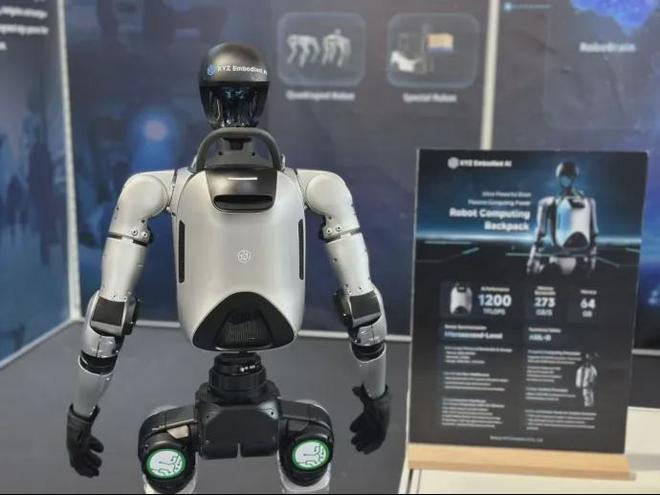
A Lightweight Computing Backpack Under 2.5 kg is Liberating Humanoid Robots from the Cloud
At the 2026 Hannover Industrial Fair, humanoid robots demonstrated advanced capabilities powered by the BotPack B series computing backpack, marking a significant leap in robotics technology. This innovative computing solution allows the robots to operate independently of cloud services, providing high-performance processing directly on board. The development addresses critical challenges in the field, particularly concerning weight and power efficiency, enabling the robots to execute complex tasks seamlessly. The fair showcased how this technology could revolutionize various industries by enhancing the autonomy and functionality of robotic systems.
Humanoid Robots Robotics Technology AI Computing Edge Computing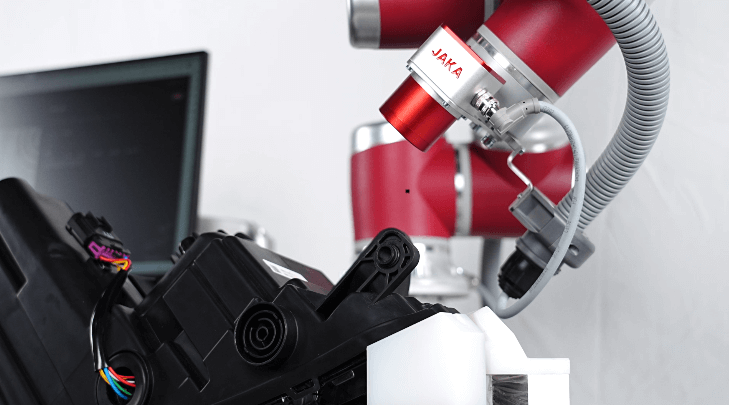
Comparing Cloud-Based and Edge Computing for Robotic Automation Control
JAKA, a leader in collaborative robotic solutions, emphasizes the importance of control system architecture in industrial automation, particularly the choice between cloud-based and edge computing. This decision significantly influences a system's capabilities, response times, and reliability. The company highlights that there is no one-size-fits-all solution; rather, the optimal setup depends on the specific demands of each task. The key distinction between the two computing paradigms lies in data processing locations. Cloud computing centralizes data in remote servers, providing analytical power and scalability for tasks like predictive maintenance and fleet management. In contrast, edge computing processes data locally, reducing latency crucial for real-time operations, especially in safety-sensitive environments where collaborative robots operate alongside humans. JAKA advocates for a hybrid approach that combines both paradigms. Their collaborative robots utilize edge computing for real-time motion control and immediate sensor responses, ensuring high precision and safety. Simultaneously, these robots can stream operational data to the cloud for broader analysis, allowing for continuous improvement without compromising immediate performance. The choice between cloud and edge computing should be based on application specifics. Tasks requiring ultra-low latency favor edge computing, while cloud resources excel in complex data aggregation and non-time-critical processes. JAKA's systems, like the Zu series, are designed for easy integration into either architecture, enabling manufacturers to tailor their setups for optimal performance. Ultimately, JAKA aims to create resilient and intelligent robotic systems that balance real-time autonomy with long-term intelligence, addressing the evolving needs of modern manufacturing.
Robotics needs a service framework.
RSF defines a common language for robot service capability, lifecycle operations, certification pathways, and service-provider networks.
Join the RobotToday community on LinkedIn
Daily robotics news, in-depth analysis, conference highlights, and discussions with professionals worldwide.







