

Industry Briefing
A single destination for timely, editor-curated robotics news from around the world.
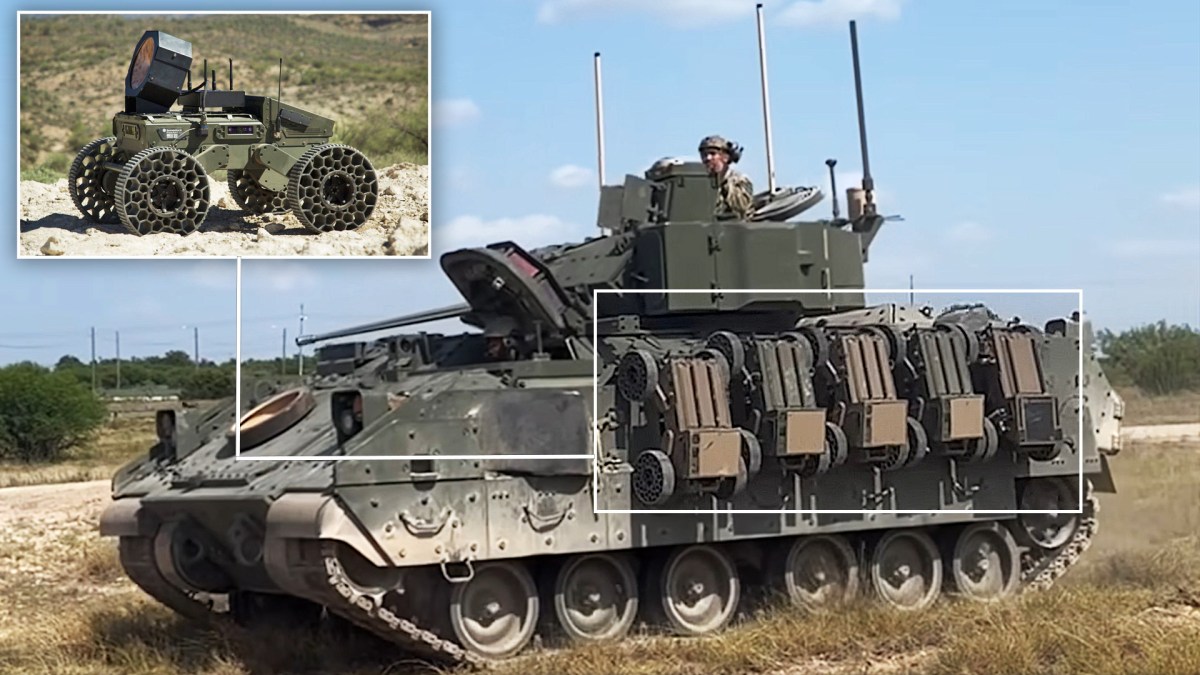
Bradley Fighting Vehicle Demonstrates Swarming Ground Drones in Recent Military Exercise
During a recent test exercise, U.S. Army soldiers utilized a Bradley Fighting Vehicle to transport FireAnt uncrewed ground vehicles (UGVs). These versatile 4×4 UGVs can be adapted for various missions, including electronic warfare and reconnaissance. The integration of Bradleys as carriers for swarms of UGVs like the FireAnt could significantly enhance operational capabilities. This development is crucial as it aligns with the U.S. Army's Transformation In Contact (TIC) modernization initiative, which aims to incorporate advanced technologies into military operations. Swarmbotics AI, the developer of the FireAnt, showcased this capability during the Pegasus Charge 3 exercise, where the Bradley was seen carrying five FireAnt UGVs. The potential for these UGVs to operate in swarms could revolutionize battlefield tactics and strategies. Looking ahead, the effectiveness of the FireAnts in operational scenarios remains to be fully understood, particularly regarding their deployment and control from the Bradley. As the Army continues to test and evaluate these systems, the focus will be on how these UGVs can be integrated into existing military frameworks and their impact on future combat operations. No further timeline was disclosed at the time of publication.
Land Armies Armored Vehicles M2/3 Bradley News & Features U.S. Army
U.S. Army Integrates FireAnt UGVs with Bradley Vehicles During Pegasus Charge 3 Experiment
The U.S. Army is testing the integration of small unmanned ground vehicles (UGVs) into armored formations by carrying them on M2A4 Bradley infantry fighting vehicles. Footage from Swarmbotics AI, released on August 25, 2026, shows a Bradley transporting at least five FireAnt UGVs during the Pegasus Charge 3 experiment with the 1st Cavalry Division. This initiative is significant as it explores how existing armored vehicles can deploy multiple robotic systems alongside traditional crewed roles. The FireAnt, developed by Swarmbotics AI, is designed for various missions, including intelligence and reconnaissance. The Army's approach raises important questions about the integration of robotic systems into combat formations, emphasizing the need for innovation in military doctrine. Looking ahead, the use of Bradleys to carry UGVs could enhance operational flexibility, allowing commanders to deploy unmanned systems for reconnaissance and other missions in high-risk areas. No further timeline was disclosed at the time of publication.
Military
Eurosatory 2026 to showcase tanks and infantry fighting vehicles.
The Eurosatory 2026 exhibition showcased a diverse array of armored vehicles, highlighting both innovative advancements and traditional designs within the defense sector. Held in Paris, the event attracted industry leaders, military officials, and defense enthusiasts from around the globe, eager to explore the latest technological developments. The exhibition, which took place in June 2026, served as a platform for manufacturers to demonstrate their commitment to enhancing military capabilities while also honoring established models that have proven effective in various operational contexts. This blend of new and familiar offerings reflects the industry's response to evolving security challenges and the need for modernization in defense strategies. Attendees engaged in discussions about the future of armored warfare, emphasizing the importance of adaptability in an ever-changing geopolitical landscape.
FeaturesRobotics needs a service framework.
RSF defines a common language for robot service capability, lifecycle operations, certification pathways, and service-provider networks.
Join the RobotToday community on LinkedIn
Daily robotics news, in-depth analysis, conference highlights, and discussions with professionals worldwide.







