Industry Briefing
A single destination for timely, editor-curated robotics news from around the world.

NVIDIA Launches Open Humanoid Robot Reference Platform for Academic Research
NVIDIA has introduced the Isaac GR00T humanoid robot reference design, a sophisticated platform aimed at enhancing research in humanoid robotics. This innovative design combines cutting-edge hardware and software, facilitating a more efficient development process for academic institutions such as Stanford University and ETH Zurich. By concentrating on physical AI, the Isaac GR00T provides a holistic solution for data collection, simulation, and deployment, thereby supporting the advancement of robotics research. The unveiling of this platform marks a significant step in the evolution of humanoid robotics, offering researchers the tools necessary to push the boundaries of technology in this field.
Humanoid Robots AI Robotics Research Robot Development
Unitree Announces H2 Plus, an NVIDIA Isaac GR00T Reference Humanoid Robot for Academic Research
Unitree Robotics has unveiled the H2 Plus, a groundbreaking humanoid robot designed for academic research, which integrates advanced technologies from NVIDIA. Announced on June 1, 2026, the H2 Plus combines the Unitree H2 chassis with Sharpa five-fingered hands and is powered by the NVIDIA Jetson Thor, utilizing the NVIDIA Isaac GR00T development platform. This innovative reference design aims to streamline humanoid robotics research by providing a comprehensive hardware and software solution that eliminates the need for proprietary systems. The H2 Plus stands nearly six feet tall and weighs 150 pounds, featuring 31 degrees of freedom in its body and 22 in its hands, allowing for sophisticated manipulation and interaction. Equipped with multi-view sensing capabilities, including a stereo camera and wrist cameras, the robot is designed for real-world applications, enhancing its utility in various industries. Unitree's CEO, Xingxing Wang, emphasized that the H2 Plus offers developers a validated starting point for creating robotic skills, while NVIDIA's CEO, Jensen Huang, highlighted the potential economic opportunities that humanoid robots could unlock. By unifying the development process, the H2 Plus aims to accelerate advancements in physical AI, enabling researchers to transition from initial setup to skill development and practical validation more efficiently.
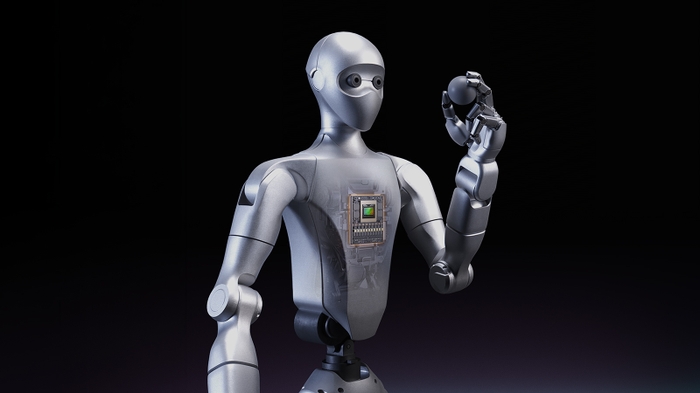
NVIDIA Announces NVIDIA Isaac GR00T Reference Humanoid Robot for Academic Research
NVIDIA has unveiled the NVIDIA Isaac™ GR00T Reference Humanoid Robot, marking a significant advancement in robotics technology. This innovative humanoid robot is the first of its kind to be built on the NVIDIA Jetson Thor™ platform and utilizes the NVIDIA Isaac GR00T open development framework. The announcement was made today, highlighting NVIDIA's commitment to pushing the boundaries of artificial intelligence and robotics. By providing an open reference design, NVIDIA aims to facilitate collaboration and innovation within the robotics community, enabling developers to create advanced applications for various industries. The introduction of the GR00T robot is expected to accelerate the development of humanoid robots capable of performing complex tasks, thereby enhancing automation and efficiency in multiple sectors.
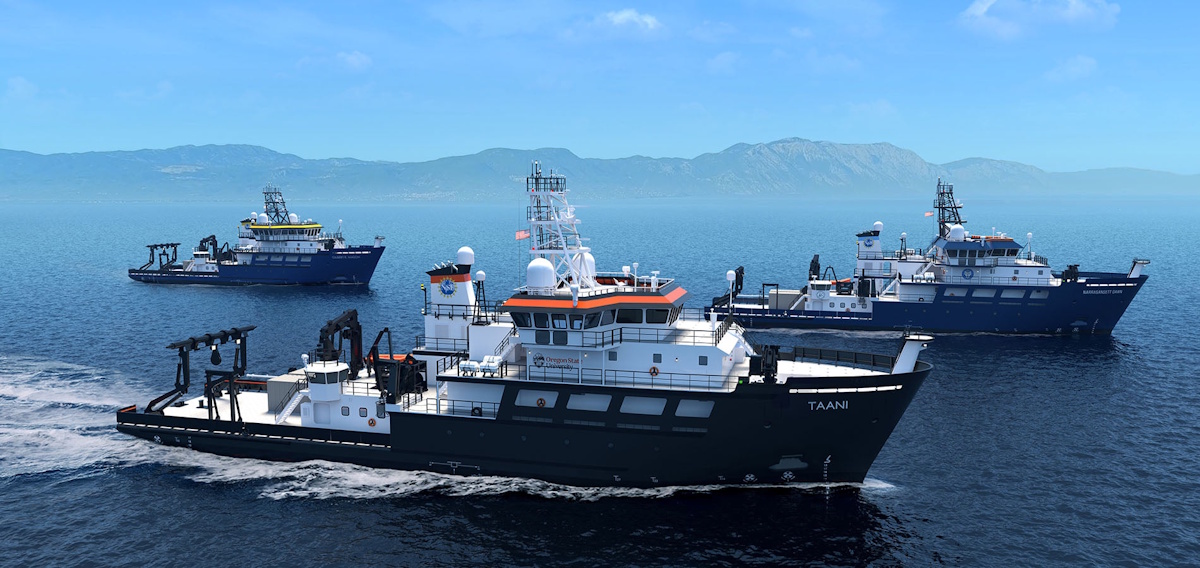
Sonardyne Underwater Positioning and Tracking for US Academic Research Fleet
Sonardyne's underwater positioning and tracking technology has been selected for integration into three new oceanographic research vessels, part of the National Science Foundation's Regional Class Research Vessel (RCRV) construction program. This decision underscores the NSF's commitment to advancing marine research capabilities. The vessels, designed to enhance scientific exploration and data collection in oceanographic studies, will be constructed in the coming years. By utilizing Sonardyne's innovative technology, the NSF aims to improve the accuracy and efficiency of underwater navigation and data acquisition, ultimately supporting a wide range of research initiatives. The program reflects a significant investment in the future of ocean science, addressing the growing need for advanced research tools in understanding marine environments.
sonardyne underwater positioning tracking us academic research fleetRobotics needs a service framework.
RSF defines a common language for robot service capability, lifecycle operations, certification pathways, and service-provider networks.
Join the RobotToday community on LinkedIn
Daily robotics news, in-depth analysis, conference highlights, and discussions with professionals worldwide.