

Industry Briefing
A single destination for timely, editor-curated robotics news from around the world.
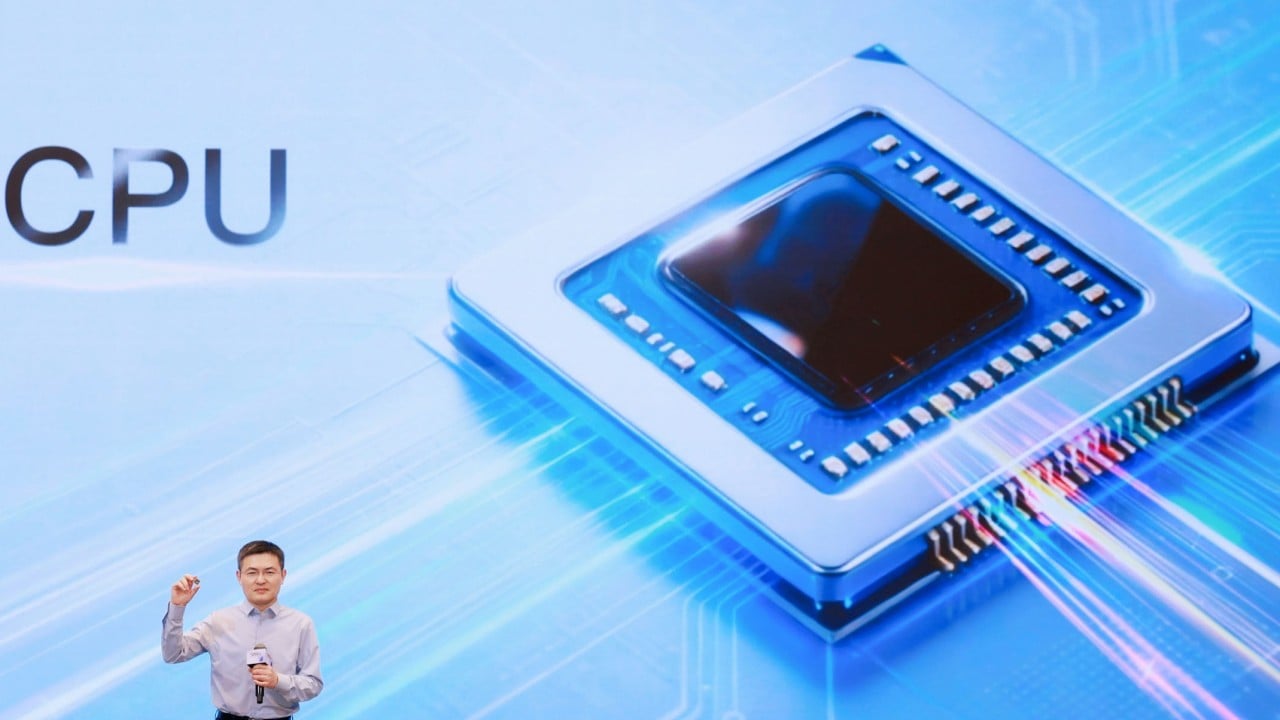
Hygon Information Technology Launches Hygon 1000 Series CPUs for Robotics and Edge AI
Hygon Information Technology has introduced a new line of central processing units (CPUs) aimed at robotics and industrial edge devices. This launch marks the company's strategic move beyond its traditional focus on cloud computing, tapping into the burgeoning market for physical artificial intelligence solutions. The Hygon 1000 series processors are specifically designed for integration into industrial automation systems, including robotics and factory controllers. By enabling local computing and graphics processing, these CPUs aim to enhance the efficiency and performance of embedded devices in various applications. As the demand for edge AI continues to rise, Hygon's entry into this sector is significant. Industry stakeholders should monitor the adoption of the Hygon 1000 series and its impact on the robotics and automation landscape. No further timeline was disclosed at the time of publication.

AMD Launches X100 Series Processors for Humanoid Robot Brain Development
In late July, AMD unveiled its X100 series processors at the Advancing AI conference in Santa Clara, marking a significant entry into the humanoid robot brain market. This initiative aims to leverage AMD's expertise in real-time control and sensor integration, competing against NVIDIA's established Jetson ecosystem. The introduction of the X100 series, which includes the Kria AI SOM module and Spartan UltraScale+ FPGA, is crucial as it addresses the industry's need for integrated solutions that combine processing power with low latency. AMD's strategy focuses on providing a unified memory architecture and industrial-grade reliability, which are essential for applications in robotics and automation. Looking ahead, AMD's X100 series is expected to face stiff competition from NVIDIA, which currently dominates the humanoid robot brain market. However, AMD's unique offering of integrated solutions may attract industrial clients seeking reliable and long-term partnerships. No further timeline was disclosed at the time of publication.
Humanoid Robots AI Processors Industrial Automation FPGA Technology
Sapphire Technology Introduces EDGE+ Apex Robotics Platform Powered by AMD Ryzen AI Processors
Sapphire Technology has launched the EDGE+ Apex System-on-Module (SOM) and Carrier Robotics Platform, which is powered by AMD Ryzen AI Embedded X100 Series processors. This production-ready hardware platform is designed to enhance the development and deployment of physical AI in autonomous robotics, showcased at AMD Advancing AI 2026 in San Francisco. The EDGE+ Apex platform is engineered for rugged, always-on robotics applications, featuring a COM-HPC module with up to 128GB of LPDDR5x memory. It combines CPU, GPU, and NPU acceleration to support real-time perception and autonomous decision-making, making it suitable for demanding edge AI deployments. Sumit Shah from AMD emphasized that this platform unifies AI and industrial reliability, enabling the next generation of autonomous systems. Developers can leverage an open software ecosystem with familiar AI frameworks while utilizing AMD ROCm and Ryzen AI software. Paul Smith from Sapphire noted that the EDGE+ Apex aims to provide a complete foundation for robotics builders, facilitating a faster transition from prototype to production in challenging environments. No further timeline was disclosed at the time of publication.
Computing Robotics ai at the edge amd amd ryzen ai embedded x100 amd ultrascale+
ARBOR Technology Unveils ARES-2100 Series for Next-Generation Edge AI with Intel Core Series 3 Processors
A new technology aimed at enhancing industrial automation has been introduced, focusing on machine vision and lightweight edge AI inference workloads. This innovation is set to facilitate the deployment of smart factory applications, allowing for more efficient operations in manufacturing environments. The development comes in response to the growing demand for advanced automation solutions that can improve productivity and reduce operational costs. By leveraging cutting-edge AI capabilities, the technology enables real-time data processing and decision-making at the edge, minimizing latency and enhancing overall system performance. This advancement is expected to significantly impact the manufacturing sector, providing businesses with the tools necessary to adapt to the rapidly evolving landscape of industrial automation.
Robotics needs a service framework.
RSF defines a common language for robot service capability, lifecycle operations, certification pathways, and service-provider networks.
Join the RobotToday community on LinkedIn
Daily robotics news, in-depth analysis, conference highlights, and discussions with professionals worldwide.







