

Industry Briefing
A single destination for timely, editor-curated robotics news from around the world.
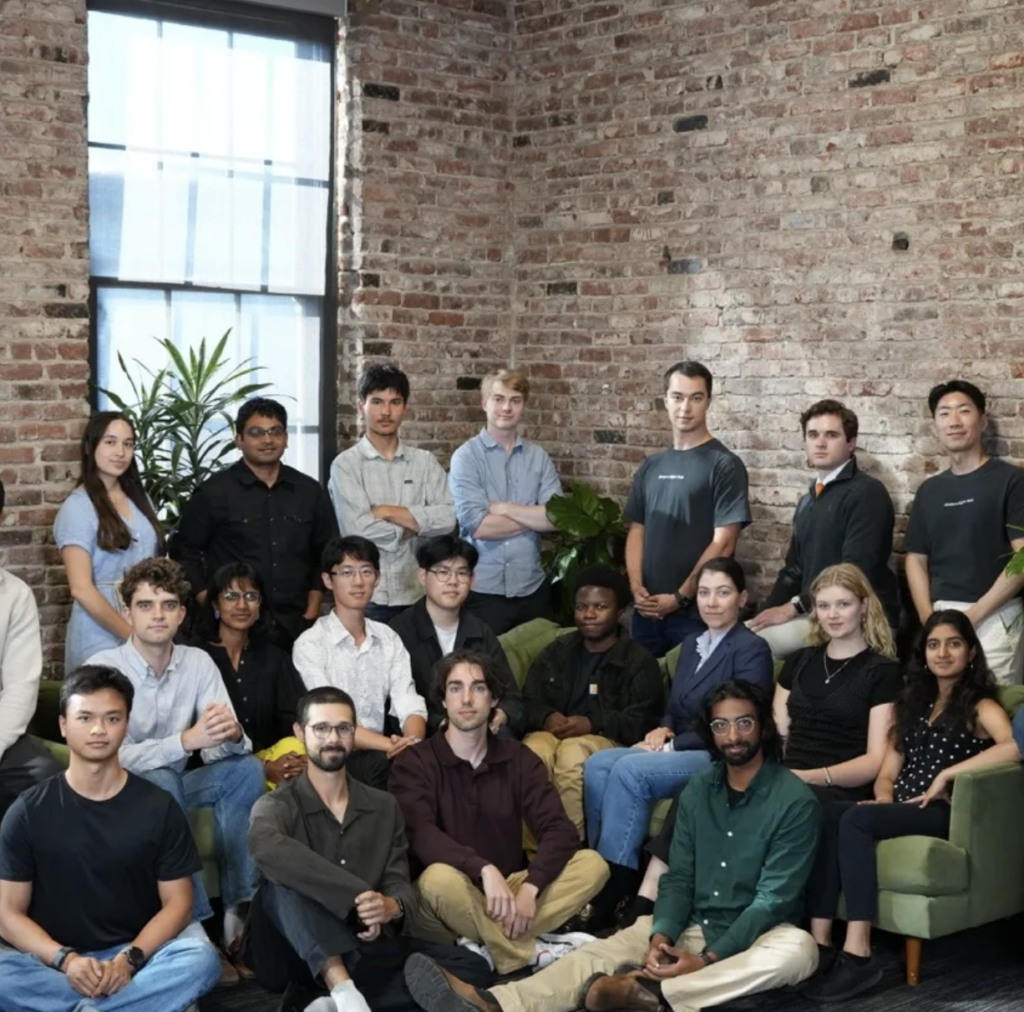
Vals Secures $40M Series A Funding Led by Andreessen Horowitz for AI Benchmarking
Vals, an AI benchmarking startup founded in 2024, has successfully raised $40 million in a Series A funding round led by Andreessen Horowitz. This follows a previous seed round backed by 8VC and Bloomberg Beta. Co-founder Rayan Krishnan highlighted that Vals aims to address the shortcomings of traditional academic benchmarks, which struggle to keep pace with advanced AI models. The significance of Vals' approach lies in its undisclosed evaluation materials, which prevent companies from training their models to pass specific tests. Instead of focusing on general knowledge, Vals evaluates models based on their performance in real-world tasks across various sectors, including law, finance, and coding, while also considering potential negative impacts in areas like cybersecurity and mental health. Looking ahead, Vals has launched a program to provide model evaluations to federal agencies, and Krishnan anticipates that such benchmarks will become increasingly important as AI companies aim for public offerings. No further timeline was disclosed at the time of publication.
AI Funding & Investment AI AI-driven platform Andreessen Horowitz capital markets funding
Robocurve Secures $10 Million Seed Funding to Enhance Robotics Benchmarking Efforts
Robocurve has successfully raised $10 million in seed funding aimed at expanding its independent testing of frontier AI models in controlling real robots. The funding round was led by Initialized Capital, with participation from several investors including Notable Capital and Y Combinator. Robocurve plans to utilize this investment to grow its research team and enhance its academic benchmarking programs. This funding is significant as it supports Robocurve's mission to provide unbiased evaluations of AI models, which is crucial for the development of general-purpose robots. The company emphasizes the importance of independent assessments, stating that their research agenda and methodologies are not influenced by the AI companies whose models they test. The implications of their work could reshape the labor market and societal structures as robotics technology advances. Looking ahead, Robocurve's evaluations are expected to evolve, particularly as large language models continue to improve in their ability to perform robotics tasks. The company anticipates that advancements in inference speeds could make real-time robot control feasible by late 2026 to 2029. No further timeline was disclosed at the time of publication.
AI AI Funding & Investment Robotics AI models auditor large language model
University of Hong Kong Develops RoboDojo, a Benchmarking Platform for Robotic Manipulation
The University of Hong Kong's Multimedia Laboratory has developed 'RoboDojo,' a comprehensive platform for assessing robotic manipulation in both simulated and real-world settings. This initiative, led by Professor Ping Luo and Ph.D. student Tianxing Chen, involved collaboration with researchers from nearly 20 prestigious universities worldwide, including the University of California, Berkeley, and Tsinghua University. RoboDojo is significant as it aims to standardize the evaluation of embodied AI, providing a unified framework that can enhance the development and testing of robotic systems. The collaborative effort underscores the importance of international partnerships in advancing technology and research in the field of robotics. Looking ahead, the implications of RoboDojo could influence future research and development in robotic manipulation. The project has been documented in a paper available on the arXiv preprint server, indicating ongoing interest and potential for further advancements in this area. No further timeline was disclosed at the time of publication.
Robotics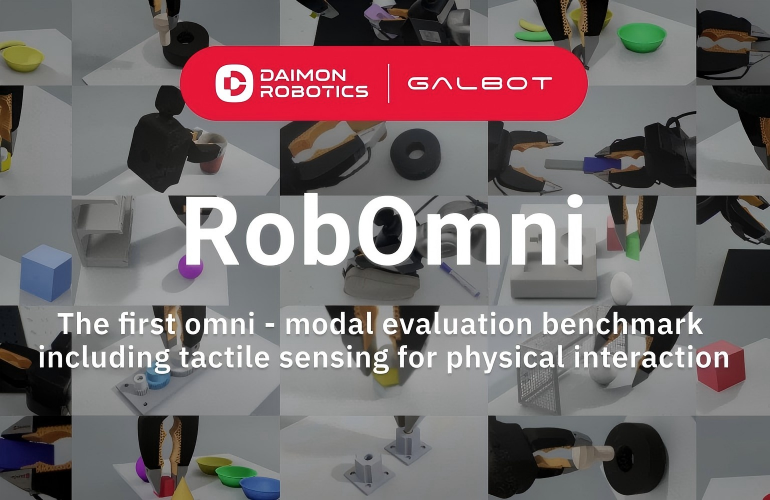
Daimon Robotics and Galbot jointly launches RobOmni for benchmarking tactile perception and dexterous manipulation
Daimon Robotics and Galbot have announced the launch of RobOmni, a new platform designed to benchmark tactile perception and dexterous manipulation in the field of embodied AI. This development marks a significant shift from traditional vision-centric approaches to a more comprehensive understanding of physical interactions. The collaboration aims to enhance the capabilities of robots in performing complex tasks that require fine motor skills and sensitivity to touch. The launch event took place recently, highlighting the growing importance of tactile feedback in robotics and its applications across various industries. By integrating advanced tactile sensing technologies, RobOmni is set to provide researchers and developers with the tools needed to push the boundaries of robotic dexterity and perception.
Sponsored Content
AGIBOT Introduces Genie Sim 3.0, an Integrated Simulation, Data, and Benchmarking Platform for Embodied AI
AGIBOT has unveiled Genie Sim 3.0, an advanced platform aimed at improving embodied artificial intelligence in robotics. Launched recently, this open-source platform addresses significant challenges in robotics development by incorporating features such as environment generation, data scalability, and standardized evaluation methods. Genie Sim 3.0 enables the creation of 3D environments driven by large language models (LLMs) and includes a comprehensive framework for evaluating robot algorithms. The platform also integrates deeply with reinforcement learning, streamlining the experimentation and deployment processes for robotics. This upgrade is expected to facilitate faster advancements in the field, enhancing the capabilities and efficiency of robotic systems.
Embodied AI Robotics Simulation Reinforcement Learning Data EvaluationRobotics needs a service framework.
RSF defines a common language for robot service capability, lifecycle operations, certification pathways, and service-provider networks.
Join the RobotToday community on LinkedIn
Daily robotics news, in-depth analysis, conference highlights, and discussions with professionals worldwide.







