Industry Briefing
A single destination for timely, editor-curated robotics news from around the world.

FLSea: Underwater Visual–Inertial and Stereovision Forward‐Looking Data Sets
A recent study published in the Journal of Field Robotics highlights advancements in autonomous robotic systems designed for agricultural applications. Researchers from various institutions collaborated to develop innovative algorithms that enhance the efficiency and effectiveness of robots in crop monitoring and management. The findings, released in early October 2023, demonstrate how these technologies can significantly reduce labor costs and improve yield predictions, addressing the growing demand for sustainable farming practices. The research was conducted in various agricultural settings, showcasing the robots' adaptability to different environments and crops. By integrating machine learning and real-time data analysis, the team aims to provide farmers with tools that not only optimize their operations but also contribute to environmental sustainability. This study marks a significant step forward in the integration of robotics into agriculture, promising to transform traditional farming methods and support food security in the face of global challenges.
RESEARCH ARTICLE
Tesla's Optimus Robots to Support Starmind Satellite Production, Not Maintenance
Tesla's Optimus robots will not be used to repair Starmind satellites in orbit, as confirmed by recent statements from Elon Musk. Instead, these robots are intended to assist in the construction and operation of the Terafab chip manufacturing facility in Texas. The AI1 satellites, designed to disintegrate upon reentry, highlight the company's swap-and-replace strategy rather than traditional maintenance practices. This approach is significant as it reflects a broader trend in satellite management, where mass-produced satellites are replaced rather than repaired. The economics of servicing missions are prohibitive, with the cost of launching a replacement satellite being significantly lower than conducting a repair mission. This model aligns with SpaceX's operational history, where rapid replacement of satellites is more efficient than attempting to maintain them in orbit. Looking ahead, the focus will remain on the production capabilities of the Gigasat factory, which is expected to support the continuous replacement of satellites. No further timeline was disclosed at the time of publication, but the demand for rapid satellite turnover suggests a robust future for Optimus robots in terrestrial manufacturing rather than in-space servicing.
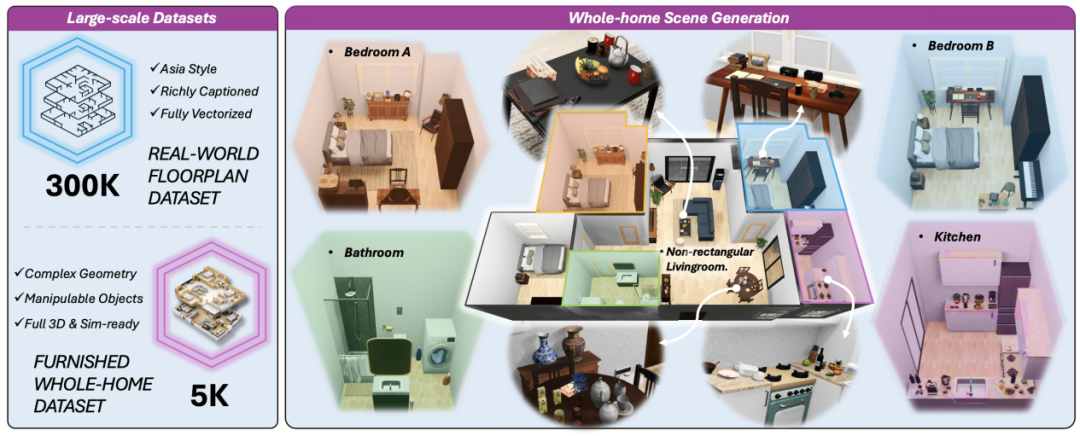
Daxiao Robotics Releases Open Source 3D Dataset for Chinese Home Designs, Challenging Figure AI
Daxiao Robotics, in partnership with the Chinese University of Hong Kong and Shenzhen He Tao College, has unveiled the world's first extensive 3D dataset specifically designed for Chinese households. This groundbreaking resource includes 300,000 authentic floor plans and 5,000 interactive simulation scenes, marking a significant advancement in the field of robotics. Launched recently, the dataset aims to improve the training of robots for various household tasks, thereby contributing to the evolution of embodied AI within the Chinese market. By providing this comprehensive data, the collaboration seeks to enhance the capabilities of robots in domestic environments, ultimately fostering innovation in the sector.
3D Data Sets Embodied AI Home Robotics Simulation Technology
DJI Modify update makes 3D drone data easier to use
DJI has announced a significant update to its DJI Modify software, enhancing its capabilities for users involved in the creation and management of large-scale 3D models. This update, which was released recently, focuses on streamlining workflows to facilitate the processing, editing, and sharing of complex 3D data. By implementing these improvements, DJI aims to address the challenges faced by professionals in various industries who rely on precise and efficient 3D modeling. The enhancements are expected to provide users with a more intuitive experience, ultimately increasing productivity and collaboration in projects that require detailed 3D representations.
News
Advances in Autonomous Vehicle Testing: The State of the Art and Future Outlook on Driving Datasets, Simulators, and Proving Grounds
A recent study published in the Journal of Field Robotics highlights advancements in autonomous robotic systems designed for agricultural applications. Researchers from a leading university conducted the study to explore how these robots can improve efficiency and sustainability in farming practices. The findings, released in early October 2023, indicate that the integration of advanced sensors and artificial intelligence allows these robots to perform tasks such as planting, monitoring crop health, and harvesting with greater precision. The research was conducted on various farms across the Midwest, where the team tested different robotic models under real-world conditions. The motivation behind this study stems from the increasing demand for food production and the need to reduce environmental impact. By employing autonomous technology, farmers can potentially decrease labor costs and enhance productivity while minimizing the use of pesticides and fertilizers. The study outlines the methodology used, including the development of algorithms that enable the robots to navigate complex terrains and adapt to changing environmental conditions. As agriculture faces challenges such as labor shortages and climate change, the implementation of these robotic systems could play a crucial role in the future of farming. The researchers emphasize the importance of continued innovation in this field to address global food security concerns effectively.
SURVEY ARTICLERobotics needs a service framework.
RSF defines a common language for robot service capability, lifecycle operations, certification pathways, and service-provider networks.
Join the RobotToday community on LinkedIn
Daily robotics news, in-depth analysis, conference highlights, and discussions with professionals worldwide.