Enabot

Enabot develops compact mobile robots for home monitoring and telepresence. Its EBO series integrates HD camera modules, autonomous indoor navigation, two-way audio, and app-based remote control to support surveillance, communication, and companion interaction in residential environments.

Share
Enabot
Room 302, Building 10, Shenzhen-Hong Kong Youth Dream Factory, No. 35 Qianwan 1st Road
Shenzhen, Guangdong 518000
RobotToday Initiative

Robotics needs a service framework.

RSF defines a common language for robot service capability, lifecycle operations, certification pathways, and service-provider networks.

Share

Related Content

Robots Face Challenges in Basic Tasks Despite Advances in Embodied Intelligence

Robots Face Challenges in Basic Tasks Despite Advances in Embodied Intelligence

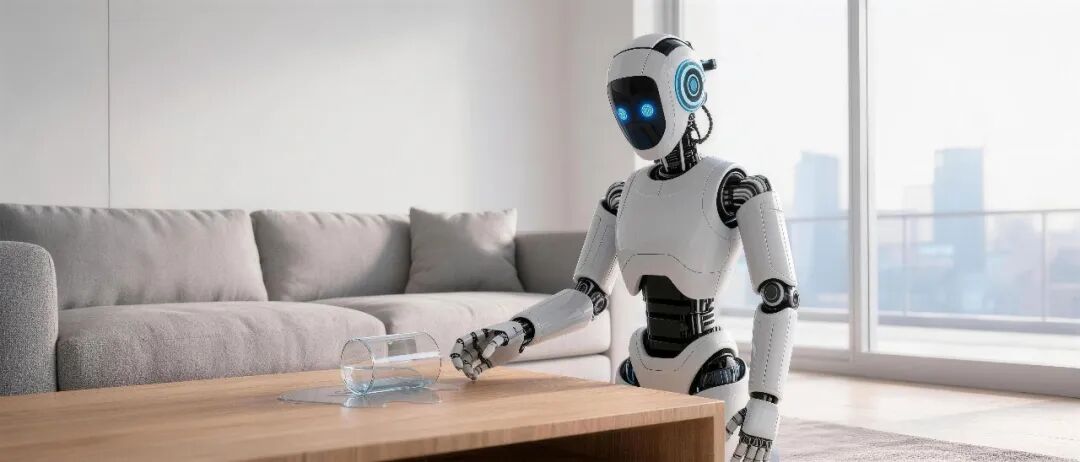
Over the past year, the robotics industry has engaged in a competitive race focused on enhancing the computational power, parameters, and algorithms of robotic 'brains.' While advancements in reasoning capabilities are evident, robots still struggle with basic tasks such as grasping objects or performing precise manipulations. This discrepancy raises questions about the effectiveness of current sensory technologies. The core issue lies in the limitations of robotic perception, which relies heavily on either pure vision or multi-sensor fusion approaches. Multi-sensor fusion, favored by many embodied intelligence manufacturers, combines various sensors to improve robustness and accuracy. However, this method introduces challenges related to data synchronization and processing overhead, hindering the scalability of embodied intelligence. Conversely, pure vision systems, exemplified by Tesla's approach, depend on 2D RGB cameras to reconstruct 3D environments. This method lacks depth information and can falter in challenging visual conditions. Both approaches suffer from the loss of information during data transmission and processing, resulting in robots receiving 'second-hand data' rather than real-time, unified information from the physical world. No further timeline was disclosed at the time of publication.

Robotic Vision Embodied Intelligence Sensor Technology AI Automation
PaXini Unveils Its First Physical AI Experience Hall 'ONE FOR ALL' Globally

PaXini Unveils Its First Physical AI Experience Hall 'ONE FOR ALL' Globally

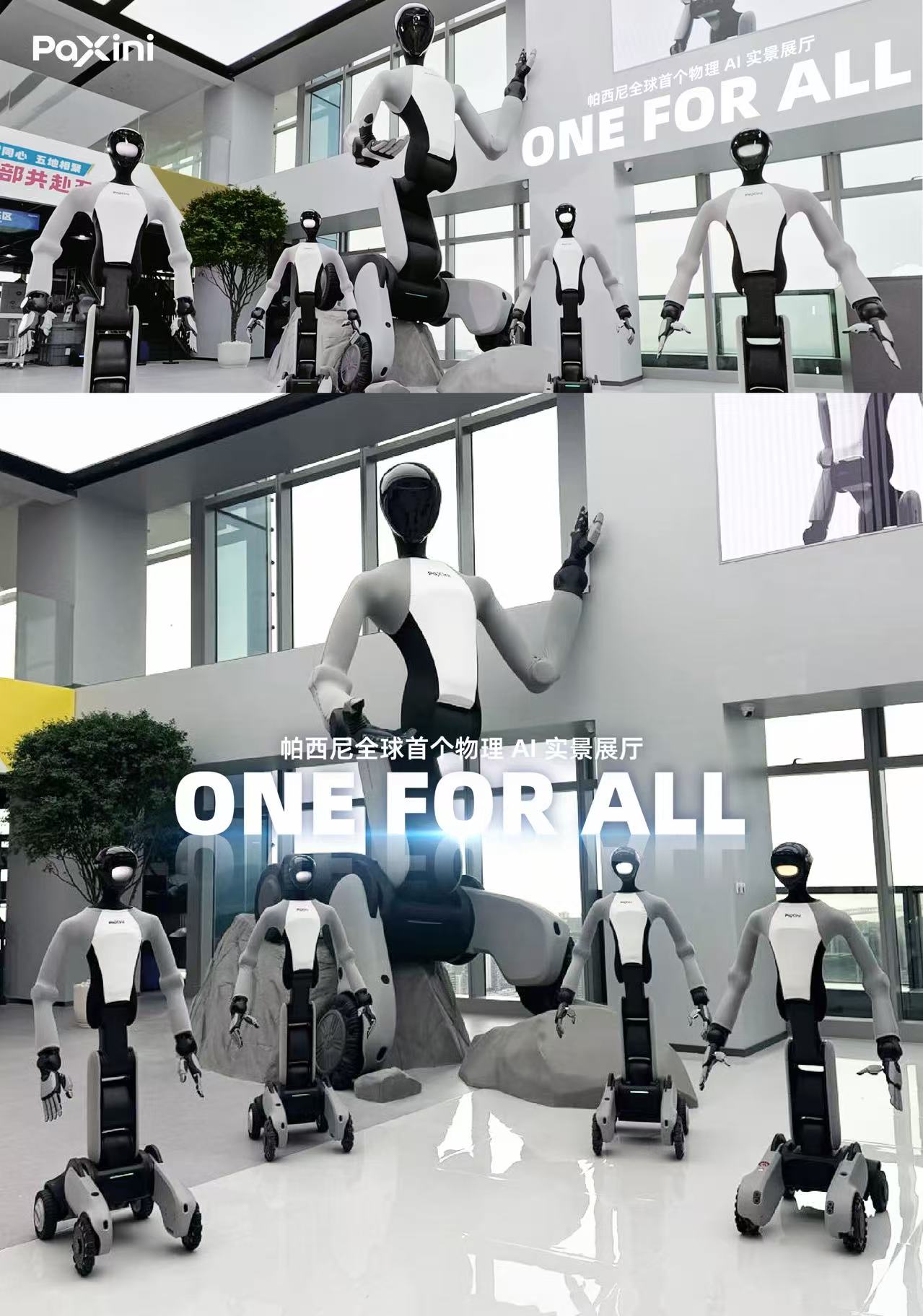
On July 15, PaXini launched its first physical AI experience hall, 'ONE FOR ALL', marking a significant milestone in robotics. This venue showcases the evolution of tactile sensing technology and features a nearly 3,000 square meter space dedicated to immersive human-robot interaction. The hall serves as a flagship platform for PaXini's full-stack embodied perception ecosystem, allowing visitors to engage with advanced technologies like the Feelix high-fidelity physical contact simulation platform and the TORA series humanoid robots. This initiative represents a transformative leap in the robotics industry, emphasizing the importance of tactile feedback in enhancing robotic capabilities. Looking ahead, the 'ONE FOR ALL' hall is positioned as a pioneering space for exploring the boundaries of embodied intelligence. As the physical AI landscape evolves, this venue will play a crucial role in demonstrating the practical applications of embodied perception and human-robot collaboration. No further timeline was disclosed at the time of publication.

Physical AI Tactile Sensing Technology Human-Robot Interaction Embodied Intelligence
Xiaomi's Humanoid Robot Achieves 98% Success Rate in Automotive Production Tasks

Xiaomi's Humanoid Robot Achieves 98% Success Rate in Automotive Production Tasks

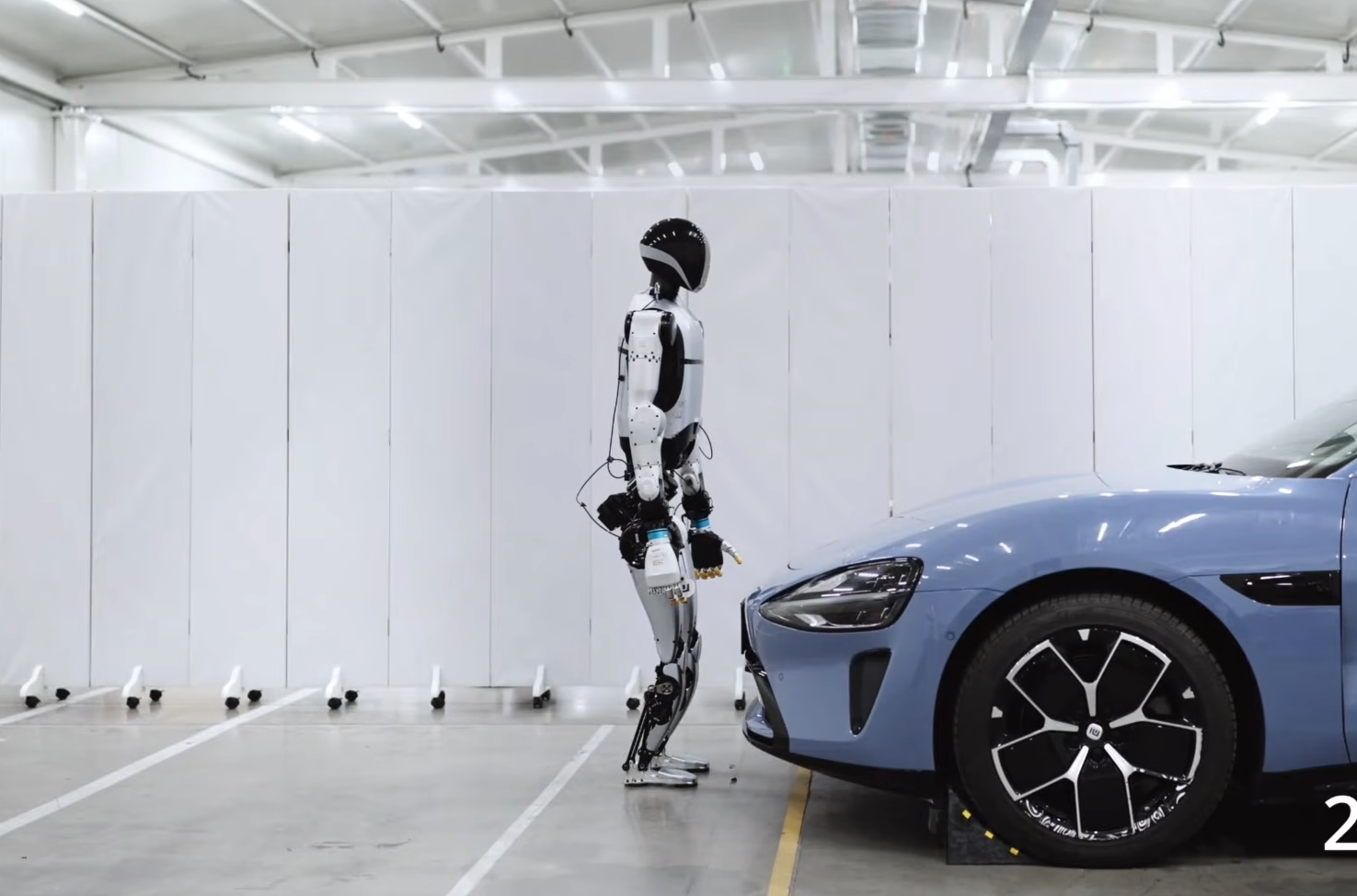
Xiaomi has made significant advancements in deploying its humanoid robot on automotive production lines, achieving a 98% success rate at a self-tapping nut loading station. This improvement narrows the gap to human workers' qualification rates to just one percentage point, showcasing the robot's enhanced capabilities after four months of development. The importance of this development lies in Xiaomi's ability to expand the robot's role in manufacturing, as it has successfully taken on additional tasks such as center console side panel sorting and parts bin folding and recycling, both achieving a 90% success rate. This marks a significant milestone in the robot's operational capabilities, particularly in handling flexible workpieces, which are typically more challenging than rigid components. Looking ahead, Xiaomi's continued focus on refining its humanoid robot's perception and manipulation skills will be crucial for further integration into automotive assembly operations. No further timeline was disclosed at the time of publication.

AI and Robotics
Kinetix AI Introduces KAI Halo to Enhance Data Infrastructure for Robotics

Kinetix AI Introduces KAI Halo to Enhance Data Infrastructure for Robotics

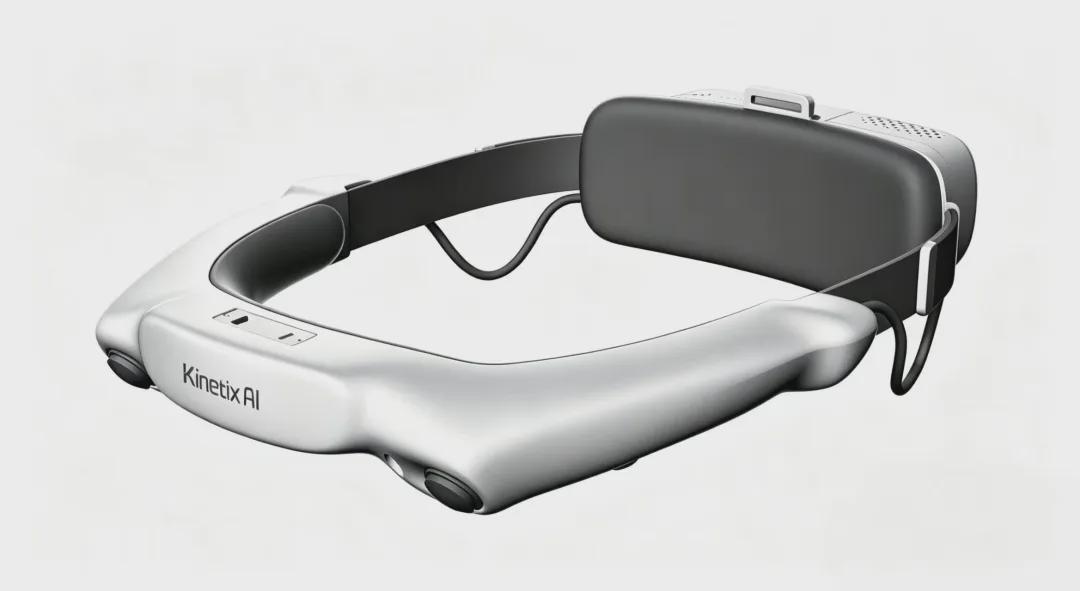
As the robotics industry enters a phase of large-scale development, a critical question arises: how long does it take for newly collected real-world data to translate into actionable capabilities for robots? The data journey, from collection to deployment, is complex and any delays can hinder progress. Kinetix AI is addressing this challenge by connecting every stage of data production rather than simply expanding data volume. The Kai Ego Dataset has amassed over 100,000 hours of first-person multimodal data, covering more than 2,000 atomic skills across various real-world scenarios such as homes, retail, hotels, and factories. This dataset captures the nuances of continuous tasks, allowing robots to learn complex behaviors rather than isolated actions. It integrates diverse information, including visual data, body posture, and motion semantics, providing a unified data foundation for cross-domain transfer. KAI Halo, a standardized data collection tool developed by Kinetix AI, addresses common issues encountered in real data production, such as occlusion and data quality fluctuations. By employing a four-way fisheye global shutter RGB camera and a 200Hz IMU, KAI Halo synchronizes multiple perspectives, enabling a comprehensive reconstruction of human actions and interactions with the environment. No further timeline was disclosed at the time of publication.

Embodied Intelligence Data Infrastructure Robotics AI Data Processing
BF-GNet: A Network for RGB-D Fusion in Grasp Pose Estimation

BF-GNet: A Network for RGB-D Fusion in Grasp Pose Estimation

The article discusses BF-GNet, a novel RGB-D fusion network designed for grasp pose estimation in complex background environments. This technology aims to enhance robotic manipulation capabilities by accurately determining grasp poses despite challenging visual conditions. The significance of BF-GNet lies in its potential to improve the efficiency and reliability of robotic systems in real-world applications. By effectively integrating RGB and depth data, the network addresses common challenges faced in environments with clutter and varying textures, making it a valuable tool for advancing robotic perception. Looking ahead, the adoption of BF-GNet could lead to more sophisticated robotic applications in various sectors, including logistics and manufacturing. As the technology matures, further developments and potential collaborations may emerge to enhance its capabilities and deployment in practical scenarios. No further timeline was disclosed at the time of publication.

RESEARCH ARTICLE
Global Localization Framework for Planetary Rovers Utilizing Interest Region Perception

Global Localization Framework for Planetary Rovers Utilizing Interest Region Perception

A new global localization framework for planetary rovers has been introduced, focusing on interest region perception. This innovative approach enhances the rover's ability to navigate and understand its environment more effectively, which is crucial for successful planetary exploration missions. The significance of this framework lies in its potential to improve the autonomy and efficiency of planetary rovers. By leveraging interest region perception, the framework allows for better decision-making and adaptability in unknown terrains, which is essential for conducting scientific research on other planets. Looking ahead, the implementation of this global localization framework could lead to advancements in rover technology and exploration strategies. No further timeline was disclosed at the time of publication.

RESEARCH ARTICLE
BeingBeyond Unveils Being-M0.7: A Revolutionary Humanoid Robot for Mobility and Dexterity

BeingBeyond Unveils Being-M0.7: A Revolutionary Humanoid Robot for Mobility and Dexterity

On July 15, BeingBeyond officially launched the Being-M0.7, the world's first full-body mobile operation implicit world action model (Latent WAM). This model enables robots not only to 'see' the world but also to 'understand' how it operates, facilitating full-body movements and dexterous actions. It connects visual perception with physical interaction, allowing robots to exhibit human-like coordination. The significance of Being-M0.7 lies in its ability to learn from over 10,000 hours of human first-person video pre-training, enabling it to predict physical changes based on implicit visual and motion information. Before executing commands, the model learns three core capabilities: visual context understanding, future state prediction, and implicit representation of humanoid kinematics. This foundational understanding precedes its ability to control movements. Looking ahead, BeingBeyond's advancements in implicit world action models are noteworthy. The Being-M0.7 expands the capabilities of previous models, transitioning from desktop dexterous tasks to full-body mobile operations. Future demonstrations will likely showcase the robot's understanding of physical interactions and its ability to perform complex tasks autonomously, marking a significant step in humanoid robotics development.

Humanoid Robots Robotic Mobility AI Machine Learning
Chinese University Develops OriCube Sensor to Enhance Robot Tactile Sensitivity

Chinese University Develops OriCube Sensor to Enhance Robot Tactile Sensitivity

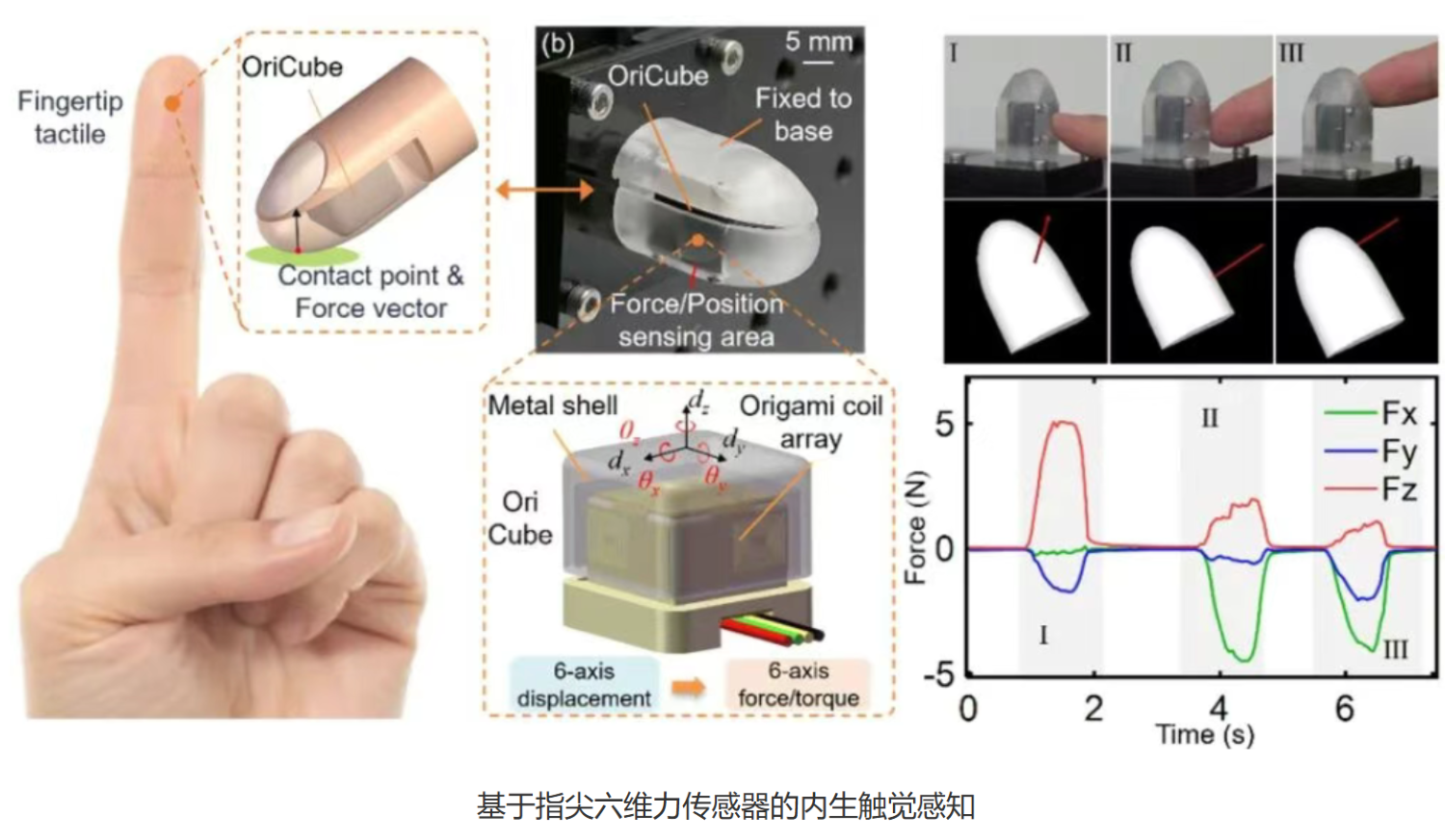
Researchers from the University of Science and Technology of China have developed the OriCube, a compact six-dimensional force/moment sensor that mimics human fingertip sensitivity. Measuring just 14×14×12 mm and weighing 4 grams, it achieves a remarkable resolution of 3 millinewtons within a 23-newton range, allowing it to detect even the lightest touch, such as a feather. This innovation is significant as it addresses the limitations of current robotic tactile solutions, which often rely on electronic skin or array sensors that face challenges like complex wiring and data processing. By embedding the OriCube directly into the fingertips of robotic hands, the sensor captures minute force changes and calculates precise contact points and force vectors, offering a new approach to tactile perception in robotics. The OriCube has demonstrated low power consumption of 45 milliwatts, minimal crosstalk, and high measurement accuracy. Its ability to sense both delicate touches and withstand impacts positions it as a robust solution for enhancing robotic dexterity in uncertain environments. No further timeline was disclosed at the time of publication.

Robotics Tactile Sensors Force Sensing Artificial Intelligence
Post-00s PhD Team Secures Funding for Biomimetic Flapping Robot Development

Post-00s PhD Team Secures Funding for Biomimetic Flapping Robot Development

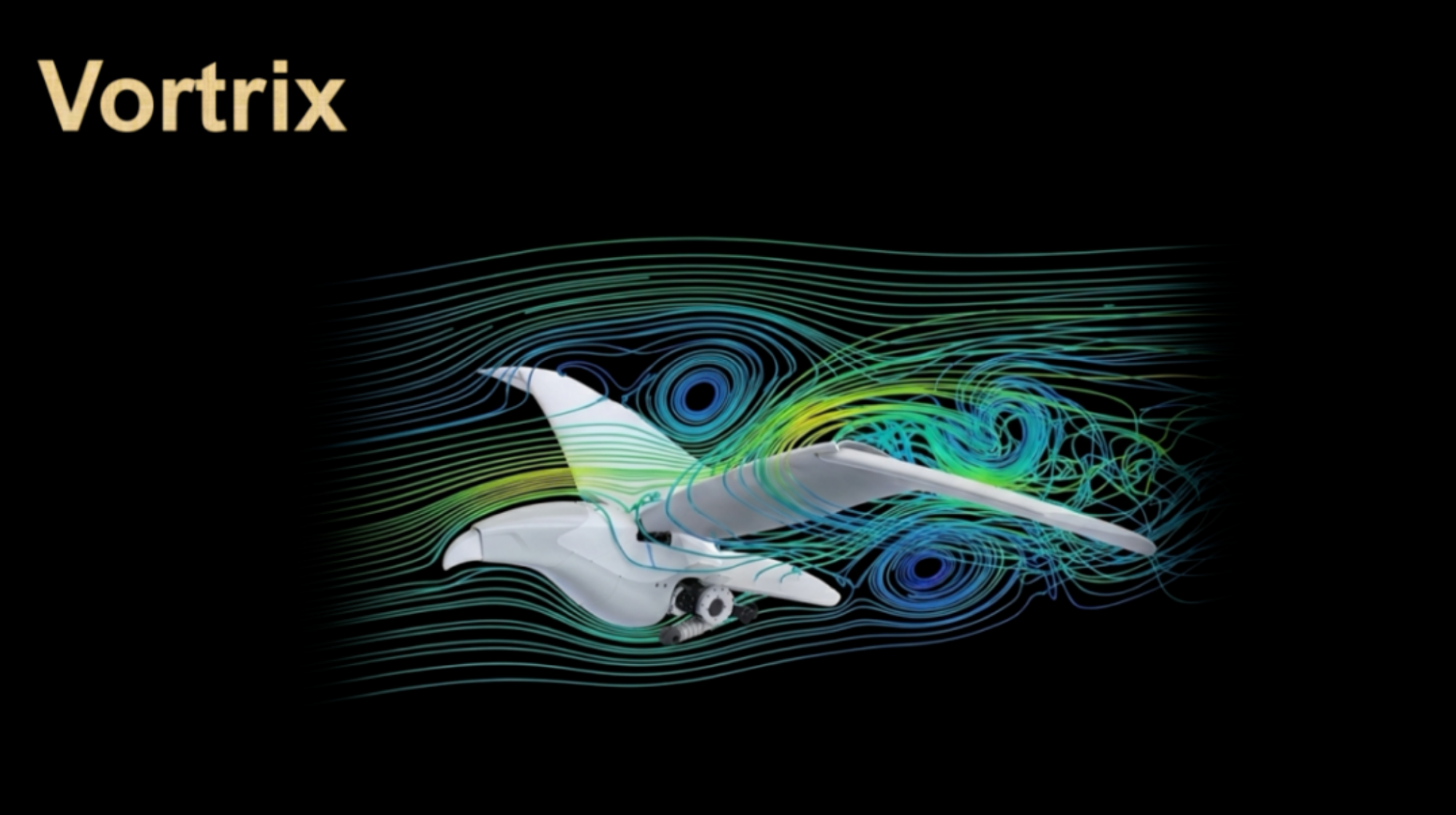
A team of PhD students born after 2000 has developed a biomimetic flapping robot capable of fluid navigation, announced by Eagle Eye Intelligent Wings. The company recently completed a Series A funding round, raising tens of millions of yuan, led by Yuanhe Puhua with participation from Futen Capital and Houxue Capital. This marks the third funding round for the company within three months since its establishment 15 months ago. The funding will primarily support the mass production of their first consumer product, the 'Eagle X,' and the development of the next-generation flapping robot and fluid simulation engine. Founded in March 2025 in Shenzhen, Eagle Eye Intelligent Wings is among the early companies focusing on embodied intelligent flapping robots. The core team consists of over ten members from Shanghai Jiao Tong University, all born after 2000, with notable achievements in research. The 'Eagle X' has completed over 3,000 hours of flight testing and is set to launch on Kickstarter in Q3 of this year. The next-generation product will feature approximately 15 degrees of freedom, allowing for independent wing adjustments. The Vortrix fluid simulation engine is expected to be opened for external use, enhancing training for flying robots and optimizing aerodynamics for fixed-wing aircraft and wind turbine blades. No further timeline was disclosed at the time of publication.

Biomimetic Robots AI Fluid Dynamics Robotics Drone Technology
Harbin Institute of Technology Professor Establishes PHANES AI to Advance Tactile Robotics

Harbin Institute of Technology Professor Establishes PHANES AI to Advance Tactile Robotics

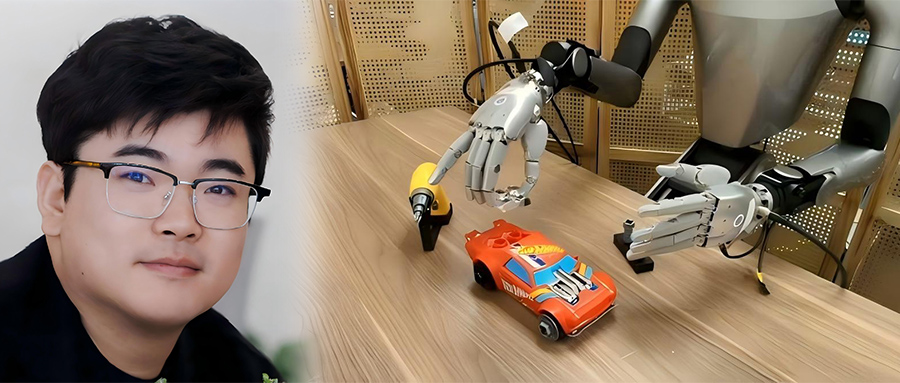
Professor Yang Shuo from Harbin Institute of Technology (Shenzhen) has founded PHANES AI, focusing on human data, tactile perception, and world model research. The startup aims to enable humanoid robots to perform agile full-body movements. A key challenge identified is the gap in current training data, where visual cues do not capture the tactile feedback necessary for successful robotic operations. This initiative is significant as it addresses the limitations of existing robotic training methodologies, which rely heavily on visual data without incorporating tactile information. Recent studies, including NVIDIA's EgoScale, highlight the importance of first-person human operation data in training robots for complex tasks. By leveraging large amounts of human data combined with minimal real-world data, PHANES AI seeks to enhance the success rate of robots in intricate operations. Looking ahead, PHANES AI plans to develop innovative methods for collecting and scaling tactile data through its EgoTouch system, which integrates visual and tactile information. The startup's approach aims to bridge the gap between visual perception and physical interaction, ultimately improving the capabilities of humanoid robots in real-world applications. No further timeline was disclosed at the time of publication.

Humanoid Robots Tactile Perception Robotics AI Data-Centric AI