

NVIDIA Enhances AI Memory Efficiency Through Full-Stack Codesign Approach
- Published
- Source
- NvidiaNews
NVIDIA is addressing the increasing GPU memory pressure caused by larger AI models and applications through a full-stack codesign strategy. This approach integrates GPUs, CPUs, networking, storage, and software to optimize memory usage across the AI factory's hierarchy. By focusing on efficient memory management, NVIDIA aims to maximize the performance of its accelerated computing stack, which includes the latest HBM3e and HBM4 memory technologies.
The significance of this strategy lies in its ability to enhance the performance of AI systems while managing costs amid rising memory demands. With GPU high-bandwidth memory (HBM) being the most critical and contested resource, NVIDIA's design philosophy ensures that memory is utilized effectively at every layer. This results in improved throughput and efficiency, as evidenced by a 3% increase in HBM capacity per GPU and a potential 30x rise in agentic throughput per dollar on specific platforms.
NVIDIA's focus on full-stack codesign is crucial as AI models continue to expand, with trillions of parameters and increasing context requirements. The company is likely to continue refining its memory strategies to meet these challenges, ensuring that the balance between capacity and bandwidth is maintained for optimal performance in future AI applications. No further timeline was disclosed at the time of publication.
Original report
More Performance From Every Byte: How Full-Stack Codesign Solves AI’s Memory Challenge
NvidiaNews · NVIDIAThis briefing is an independently written summary based on publicly available reporting and is provided for industry information and news discovery. The original report and source publication are credited and linked where applicable. RobotToday does not claim ownership of third-party source material.
Rights concerns? Contact [email protected] with the relevant URL and details. We will review the matter and take appropriate action where warranted.
More related news
-
1
RobotToday Weekly November 2 – 6, 2026 RobotToday · 15 hours ago
- 2
- 3
- 4
- 5
- 6
- 7
- 8
- 9
- 10
- 11
- 12
Related Suppliers

NVIDIA Robotics
United States
NVIDIA robotics division delivering Isaac simulation and training tools, Jetson edge compute modules, and Omniverse digital twin frameworks for physical AI.

Deci AI (Acquired by NVIDIA)
Israel
Israeli deep learning optimization startup acquired by NVIDIA in May 2024 for ~$300M; known for AutoNAC neural architecture search technology.
Super Micro Computer, Inc.
United States
San Jose, California server maker founded 1993, Nasdaq: SMCI; builds GPU-accelerated data center and edge computing systems on NVIDIA and AMD platforms.

Vecow Co., Ltd. 維真資訊股份有限公司
Taiwan
Taiwan-based embedded computing provider specializing in fanless AI edge systems, GPU computing platforms, and robotics compute modules for industrial and.
Nscale
United Kingdom
London-based Nscale runs a full-stack AI/GPU cloud platform and on Aug 1, 2026 agreed to acquire Anyscale for $1.65 billion.
Alloy Enterprises Inc
United States
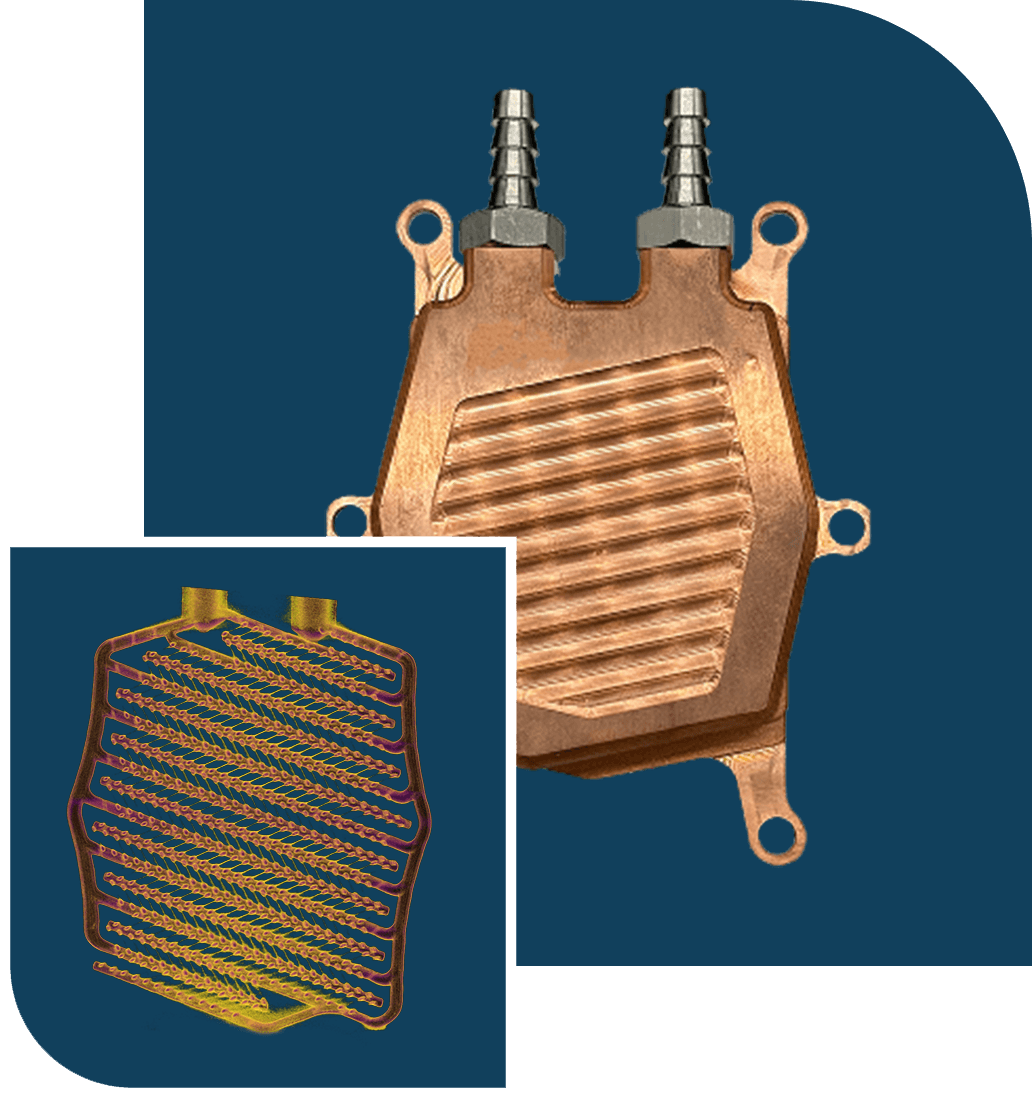
US thermal management maker founded 2020; patented Stack Forging™ yields leak-tight aluminum cold plates with 4× pressure drop reduction.

d-Matrix
United States
Fabless semiconductor startup whose Corsair platform uses digital in-memory compute to accelerate generative AI inference in datacenters.
Acheron Labs
Austria
Vienna-based robotics software startup building an LLM-driven control layer that lets Unitree's G1 humanoid and Go2 quadruped follow spoken commands.
MemryX
United States
US AI chip startup co-founded 2019 at University of Michigan, developing edge AI accelerator chips with at-memory dataflow for robotics, vision, and video.

Microway, Inc.
United States
US manufacturer of HPC and AI computing systems — GPU clusters, workstations, and servers — serving scientific and engineering users since 1982.
Lanner Electronics Inc. 磐儀科技股份有限公司
Taiwan
New Taipei City, Taiwan network-appliance maker listed as TAIEX 6245; builds GPU-accelerated edge AI computing platforms for industrial vision.

ChangXin Memory Technologies 长鑫存储技术有限公司
China
Hefei DRAM chipmaker founded 2016, listed on Shanghai's STAR Market (688825); the largest integrated DRAM manufacturer in mainland China.
Robotics needs a service framework.
RSF defines a common language for robot service capability, lifecycle operations, certification pathways, and service-provider networks.
Join the RobotToday community on LinkedIn
Daily robotics news, in-depth analysis, conference highlights, and discussions with professionals worldwide.