

Lanner Electronics Inc. 磐儀科技股份有限公司
New Taipei City, Taiwan network-appliance maker listed as TAIEX 6245; builds GPU-accelerated edge AI computing platforms for industrial vision.
Contact Lanner Electronics Inc.
WEBSITE
https://www.lannerinc.comPHONE
-13868HEADQUARTERS
Taiwan

Company Facts
Founded
1986
Primary Role
Component Supplier
Company Size
-
Primary Region
Asia-Pacific
Annual Sales
-
Funding Stage
-
Funding Total
-
Certifications & Memberships
Hitachi and Agile Robots Form Partnership to Develop Physical AI for Manufacturing Autonomy
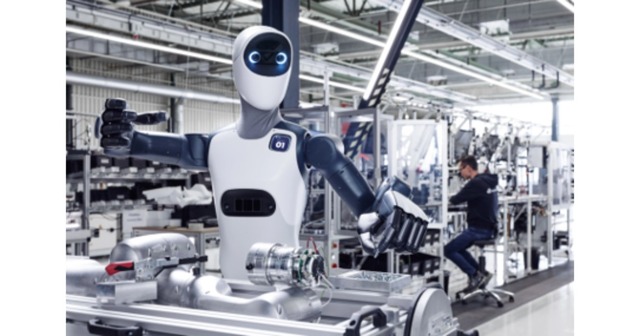
Hitachi Ltd. announced on September 29, 2026, a foundational agreement with Agile Robots SE, based in Munich, Germany, to develop the 'brain' of AI robotics. This partnership aims to enhance AI models that enable robots to perceive, judge, and act flexibly in the real world, deploying them as physical AI in manufacturing environments. The collaboration will integrate Hitachi's physical AI model, which rapidly learns the tacit knowledge of skilled workers, with Agile Robots' versatile AI model, proven in automotive manufacturing, healthcare, and data centers. This initiative seeks to achieve early autonomy in complex tasks and production processes that have traditionally relied on human expertise. Additionally, Hitachi's edge AI semiconductors will be combined with Agile Robots' robotics technology to process sensory information efficiently, allowing robots to recognize and adapt to changing environments in real-time. No further timeline was disclosed at the time of publication.

Hyundai Motor Group Aims to Become a Leader in Physical AI and Robotics
Hyundai Motor Group is positioning itself as a 'physical AI company' by focusing on robotics, autonomous vehicles, and the necessary software. CEO Jose Munoz presented this vision at the HMG Tech Forum 2026 in Silicon Valley, emphasizing the need to attract global tech talent to realize this ambition. This initiative is significant as it highlights Hyundai's commitment to competing with leading automakers and technology firms for top engineering talent. The two-day forum attracted around 380 participants, showcasing Hyundai's advancements in AI, robotics, and smart manufacturing while providing career opportunities in these fields. Looking ahead, Hyundai's focus on combining real-world engineering with virtual development and AI is crucial. The company aims to solve complex challenges in the industry, with ongoing recruitment efforts to build a world-class physical AI organization. No further timeline was disclosed at the time of publication.
All News
Underwater Robotics Sees Surge in Investment After Years of Quiet Growth
The underwater robotics sector, which has seen minimal activity over the past decade, is experiencing a significant increase in investment. In the first nine months of 2026 alone, 123 financing events were recorded in the marine economy, nearing the total of 125 for all of 2025. This surge is marked by notable funding rounds, including over 1 billion yuan for Seawing Intelligent and 500 million yuan for Deep Sea Intelligence. This growth is crucial as it indicates a shift in the market dynamics for underwater robotics, with investments now flowing rapidly into the sector. The Chinese government has recognized deep-sea technology as a strategic direction, aligning it with other emerging industries. The increasing interest from venture capitalists and state-owned enterprises highlights the potential for innovation and commercialization in this field. Looking ahead, the underwater robotics market is expected to continue evolving, with various companies establishing themselves as key players. The recent funding rounds and government support signal a promising future for the industry. No further timeline was disclosed at the time of publication.
Underwater Robotics Investment Trends Marine Technology AI Deep-Sea Exploration
Zhuji Power and Dongtu Technology Unveil China's First Humanoid Robot with Domestic Electronics
On September 28, 2026, Zhuji Power and Dongtu Technology launched China's first humanoid robot equipped with domestic electronic architecture in Yichang, Hubei. This robot marks a significant advancement in integrating domestic industrial-grade real-time communication capabilities within complex humanoid robotic systems. The importance of this development lies in its potential to enhance the robot's ability to operate autonomously in complex real-world scenarios. Effective communication within the robot's system is crucial for processing the vast amounts of information generated by perception, decision-making, and motion control, directly impacting control precision and task safety. Looking ahead, the focus will be on whether this domestic electronic architecture can be effectively implemented across more robotic platforms, and whether its performance, power consumption, and development toolchain can meet commercial requirements. No further timeline was disclosed at the time of publication.
Humanoid Robots Domestic Electronic Architecture Industrial Automation AI Technology
The 'GPT Moment' for Embodied Intelligence Remains Elusive: Evaluating Physical World Tests
The concept of embodied intelligence, referred to as the 'GPT moment', is being tested through practical scenarios involving robotic assembly. When a robot encounters resistance while inserting components, it must decide whether to apply more force or to retract and reposition. This decision-making process is crucial for manufacturers aiming to enhance robots' ability to handle unfamiliar contact conditions without extensive task-specific engineering. The significance of this development lies in the need for robots to demonstrate adaptability in real-world situations. Current models, such as RT-2 and OpenVLA, connect visual and language inputs to robotic commands, but the challenge remains in how robots can utilize interaction history and make informed decisions when faced with conflicting predictions. The integration of feedback and exploration behaviors is essential for advancing embodied intelligence. Future developments should focus on refining evidence capture during interactions and establishing clear definitions for success and failure. As the industry seeks to validate the 'GPT moment', controlled comparisons and repeatable physical performance will be necessary to substantiate its value and applicability in real-world scenarios.
Robotics Manufacturing Automation AI Embodied Intelligence
Qiteng Robotics Unveils 'Yuan Yu Zhi Xun' Intelligent Platform with 10,000 Solutions Deployed
Recently, Qiteng Robotics held a launch event for its brand at the Chongqing Yuelai International Conference Center. During the event, the company introduced its first industrial-grade embodied intelligence platform, 'Yuan Yu Zhi Xun', developed by Shengtong Energy, a publicly listed company under Qiteng Robotics. This platform integrates advanced technologies to create a closed-loop system connecting virtual simulations with real-world operations, enhancing efficiency and reducing costs in industrial applications. The significance of this platform lies in its ability to streamline operations by minimizing on-site debugging time and improving decision-making efficiency. Utilizing proprietary technologies like RoboTwin Cloud and Sim Studio, the platform continuously evolves through real-time data feedback, optimizing algorithms and operational strategies. This innovation aims to make equipment smarter and more stable in real-world scenarios, with plans to gradually open-source its capabilities for broader industry collaboration. At the launch, two new robotic products were showcased, including the X5 explosion-proof quadruped robot and the L3 explosion-proof wheeled robot, both designed for complex industrial environments. Qiteng Robotics has served over 6,000 clients globally, deploying more than 10,000 industry solutions and achieving over 8 million hours of safe operational runtime. The company aims to expand its safety inspection solutions to 100 countries by 2030, addressing various industrial safety scenarios.
Industrial Robotics Intelligent Automation Explosion-Proof Robots AI Technology
Classic Football Shirts Experiences Record Order Surge During World Cup
Classic Football Shirts (CFS) has reported its busiest period in 20 years, with orders increasing by 101% in June and July compared to 2025, driven by World Cup enthusiasm. The surge in demand was supported by a five-year partnership with Shipster, which integrated automated packing technology, significantly enhancing CFS's fulfillment capabilities. The World Cup not only boosted sales but also showcased CFS's ability to manage high order volumes efficiently. The integration of the Logopak/Adpak Ecommerce Auto Bagger allowed for rapid packing, with almost two-thirds of orders processed automatically. This operational efficiency was crucial for meeting the heightened demand from fans eager to purchase memorabilia associated with iconic football moments. Looking ahead, CFS's continued collaboration with Shipster is expected to further enhance its fulfillment operations. The success of the World Cup sales, particularly the popular Away Days Mystery Box range, indicates strong potential for future growth. No further timeline was disclosed at the time of publication.
Automated Packaging eFulfilment Packaging and Ecommerce eCommerce football fulfilment operation
BabaCAD Robotics Web Offers Free Browser-Based 3D Simulation and Offline Programming Software
BabaCAD Robotics Web has launched a free, browser-based software for 3D simulation and offline programming of industrial robots. This software can be used directly in browsers on various devices, including PC, Mac, Linux, tablets, and smartphones, without the need for installation. The introduction of this software is significant as it allows users to engage in 3D simulations and offline programming without the constraints of traditional software installations. This flexibility can enhance accessibility for engineers and developers working with industrial robots. Looking ahead, the ease of use and cross-platform compatibility of BabaCAD Robotics Web may influence the adoption of similar technologies in the robotics industry. No further timeline was disclosed at the time of publication.
Allgemein Robotersteuerung & Digital Twin Robotik
Industrial-Grade End Effectors Like Two-Finger Claw Now Standard in Teaching Robots
The integration of industrial-grade end effectors, such as the Two-Finger Claw, into educational robotics is becoming increasingly common. This trend signifies a shift towards more advanced and capable teaching tools in classrooms, enhancing the learning experience for students. The adoption of these sophisticated robotic components is crucial as it bridges the gap between theoretical knowledge and practical application. By utilizing high-quality end effectors, educators can provide students with hands-on experience that mirrors real-world industrial scenarios, fostering a deeper understanding of robotics and automation. Looking ahead, the continued evolution of educational robotics will likely see further enhancements in end effector technology. No further timeline was disclosed at the time of publication.
Robotics Automation AI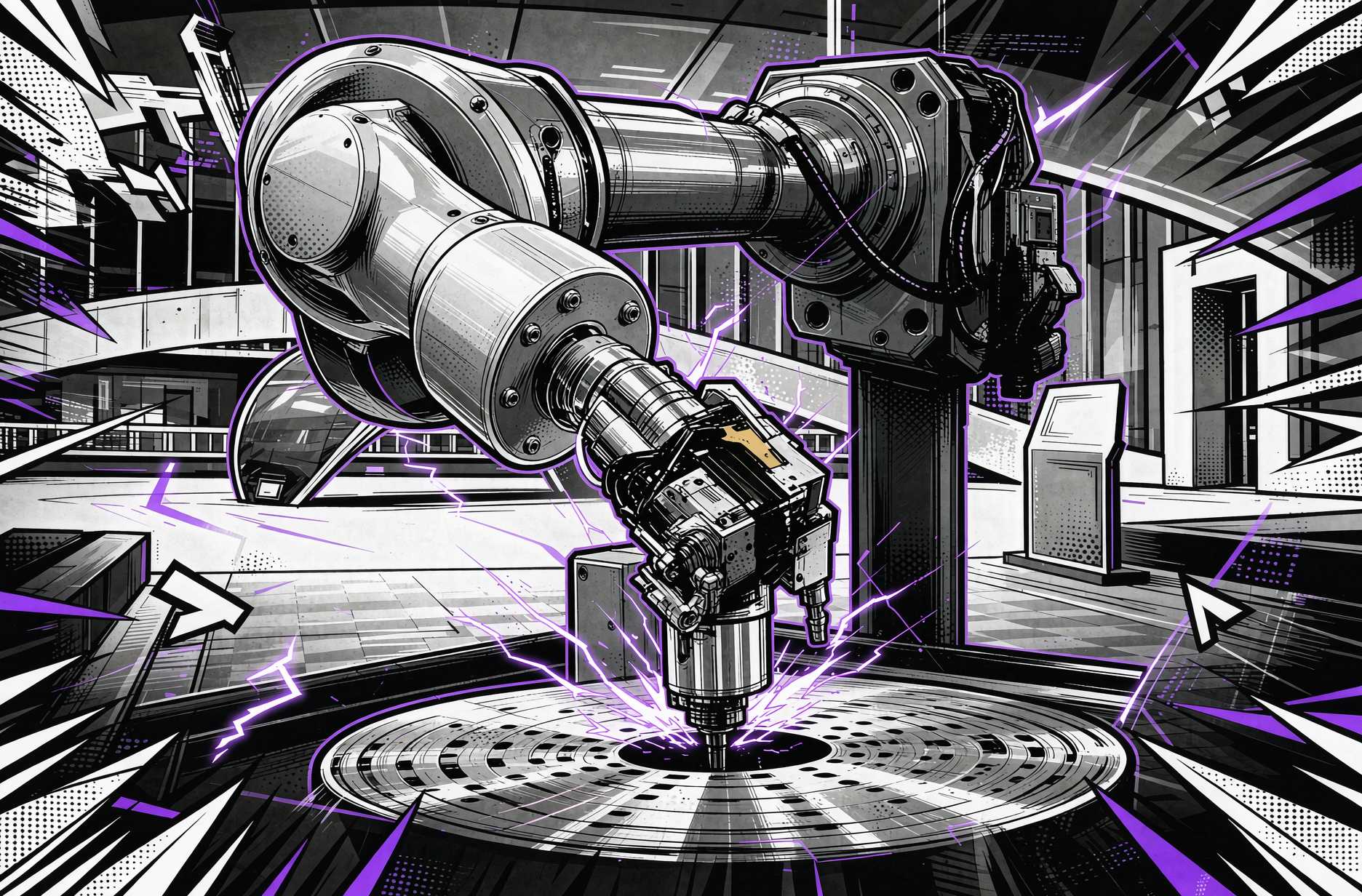
Sanctuary AI and Skild Collaborate to Enhance Industrial Robots with Physical AI
In September, the robotics industry witnessed contrasting developments. On September 10, Skild, a U.S. robotics modeling company, announced its collaboration with NVIDIA and Foxconn to deploy models on dual-arm robotic arms for precise assembly in the Blackwell system. Four days later, Danish collaborative robot manufacturer Universal Robots unveiled a new generation platform designed to facilitate the integration of cameras, sensors, and AI applications into robotic arms. This evolution is significant as it highlights the shift towards enhancing existing robotic systems with advanced AI capabilities rather than waiting for humanoid robots to achieve commercial viability. Sanctuary AI, a Canadian company developing the Phoenix humanoid robot, revealed its strategy to implement Physical AI on current and next-generation industrial robot platforms, achieving a task success rate exceeding 99.5% in a proof of concept with an automotive supplier. Looking ahead, companies like Sumitomo Electric and Yaskawa are exploring the integration of AI into traditional robotic systems to handle complex tasks that still require human judgment. The focus is on adapting control systems and interfaces to improve the robots' ability to interact with variable components, such as soft wire harnesses, which present unique challenges in manufacturing processes. No further timeline was disclosed at the time of publication.
Physical AI Industrial Robotics Automation Technology Robotic Arms
Software, Compute and Interaction at WRC 2026
47 WRC 2026 exhibitors supply robot software, compute or interaction — but only 19 call themselves software companies. Five open artefacts, licence-checked.
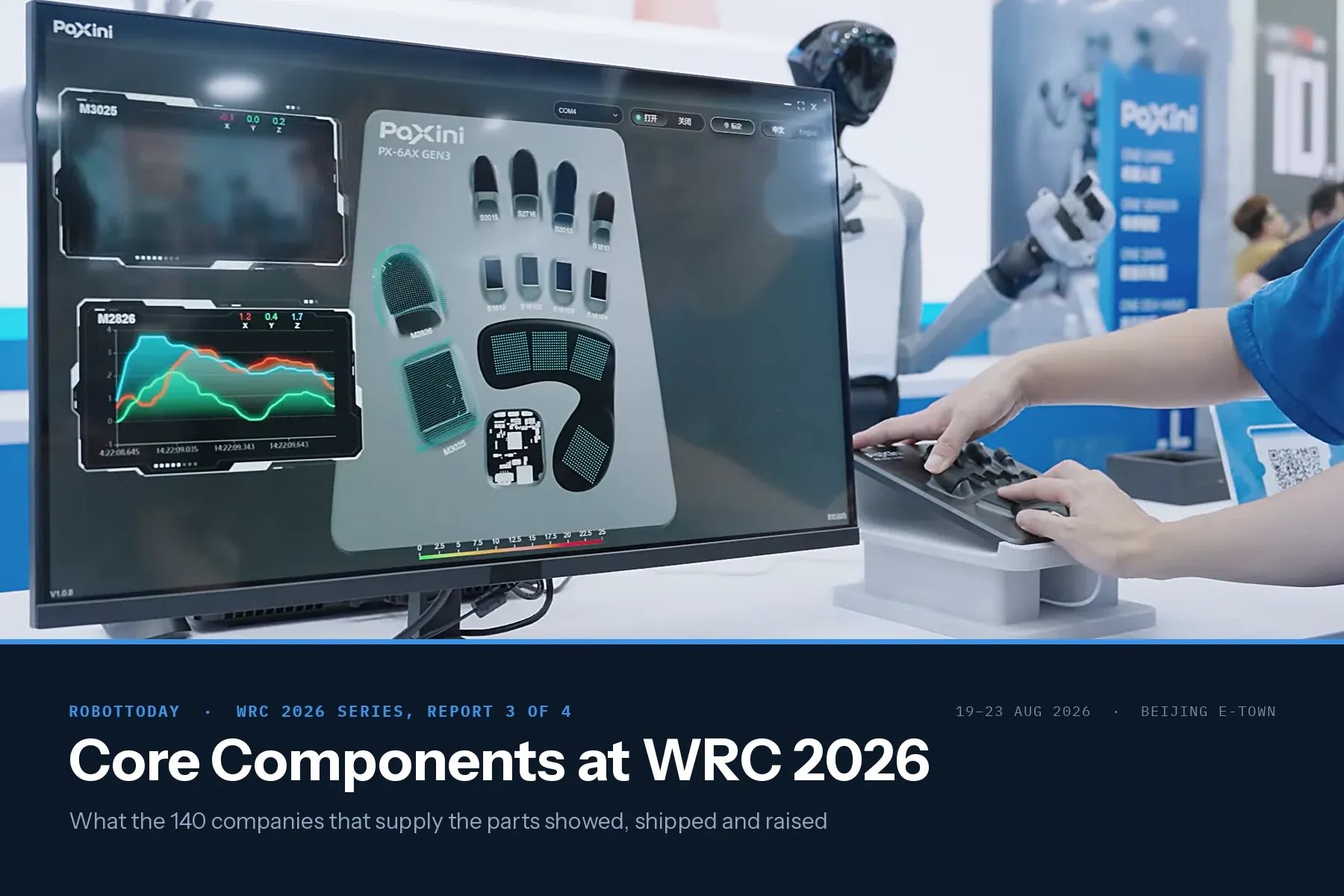
WRC 2026 Core Components: 137 Robot Parts Suppliers
The third report in the WRC 2026 series. Report 1 mapped all 248 exhibitors by category and Report 2 covered the 139 that build finished robots. This one covers the 137 that build what goes inside them.
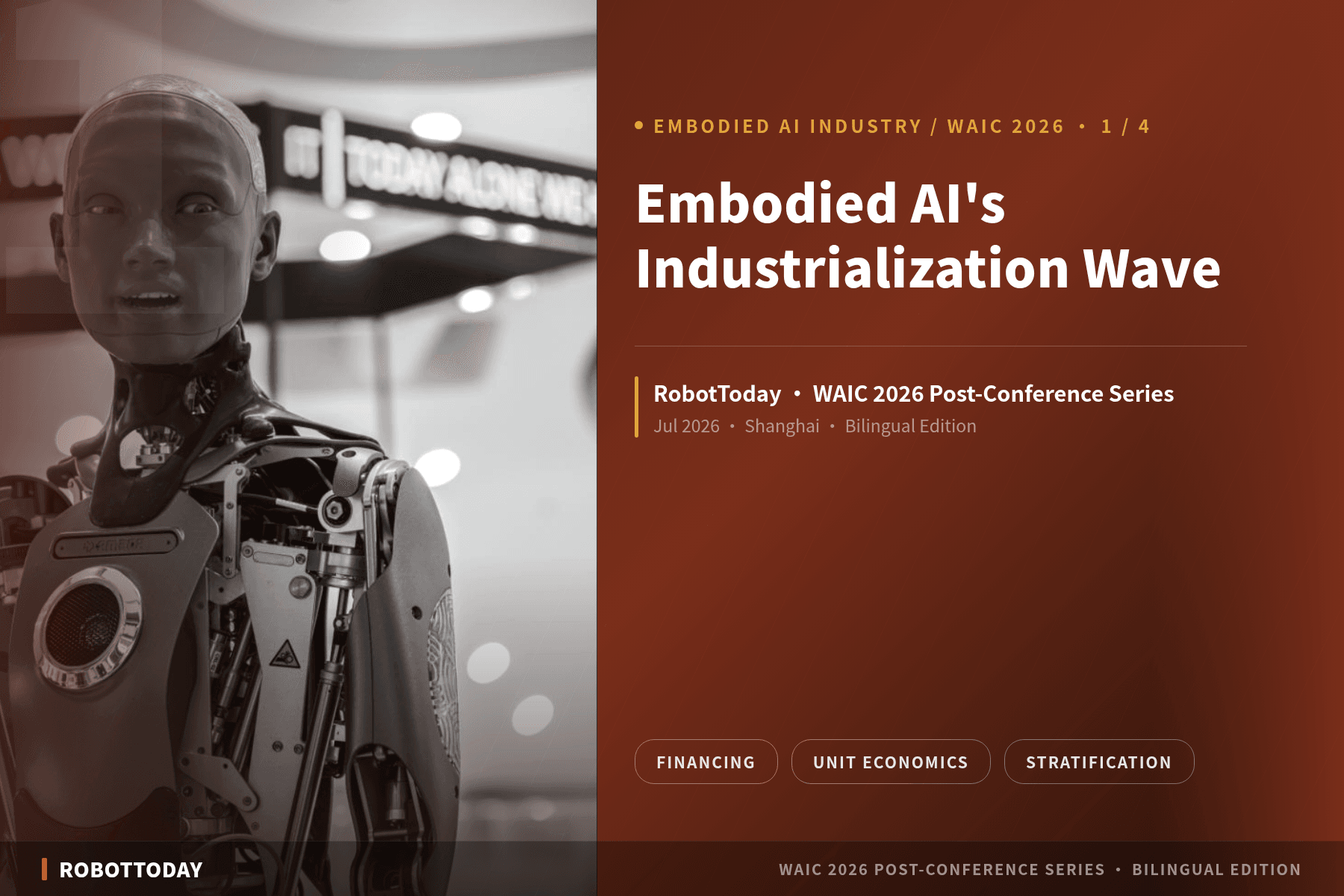
WAIC Review 1/4: Embodied AI's Industrialization Wave: Financing Data, Unit Economics, and a Widening Split
China's embodied AI sector raised $12.5B in H1 2026, but WAIC 2026 speakers detailed ROI demands, power bottlenecks, and the mass-production-to-sales gap.

WAIC Review 4/4: From Port AGVs to Hospital Night Shifts: What WAIC 2026 Reveals About Real Robot Deployments
From 530+ AGVs at a Singapore port to robots on Apple's line, WAIC 2026 speakers shared concrete data on where embodied AI robots are actually working today.

US Restrictions on Chinese Humanoid Robots: The Full Map
Every US restriction on Chinese humanoid robots — NDAA Sec. 163, GUARD Act, the 1260H list — plus the supply-chain math and a 4-tier map of decoupling.

WAIC 2026: Embodied Intelligence Enters Industrial Deployment Era
WAIC 2026 in Shanghai (July 17–20) saw 200+ embodied intelligence companies, 300+ live robots, and first confirmed humanoid deployments in logistics and pharmacy. RobotToday engineering analysis.
When a Materials Giant Meets Robotics: Covestro at Automate 2026
At Automate 2026, Covestro brought Makrolon, Bayblend, Baysafe BEF and Vulkollan to robotics — tackling weight, heat, sensing and sustainability for humanoids and AGV/AMRs.

China vs. The World: A Space Robotics Competitive Analysis
A domain-by-domain competitive benchmark of China versus the international space robotics field — covering on-orbit servicing, lunar ISRU, space station

China's 15th Five-Year Plan and the Space Robotics Imperative
China's 15th Five-Year Plan names aerospace a strategic pillar industry alongside semiconductors and sets hard mission schedules — Chang'e-7, Chang'e-8, crewed lunar landing — that make space robotics one of the most consequential engineering battlegrounds of the late 2020s.

Space Robot- Lunar Rovers: Building Infrastructure on the Moon
Lunar rovers face -180°C nights and glass-sharp dust while building moon infrastructure. Inside the engineering challenges, commercial strategies, and international competition shaping planetary robotics.


