

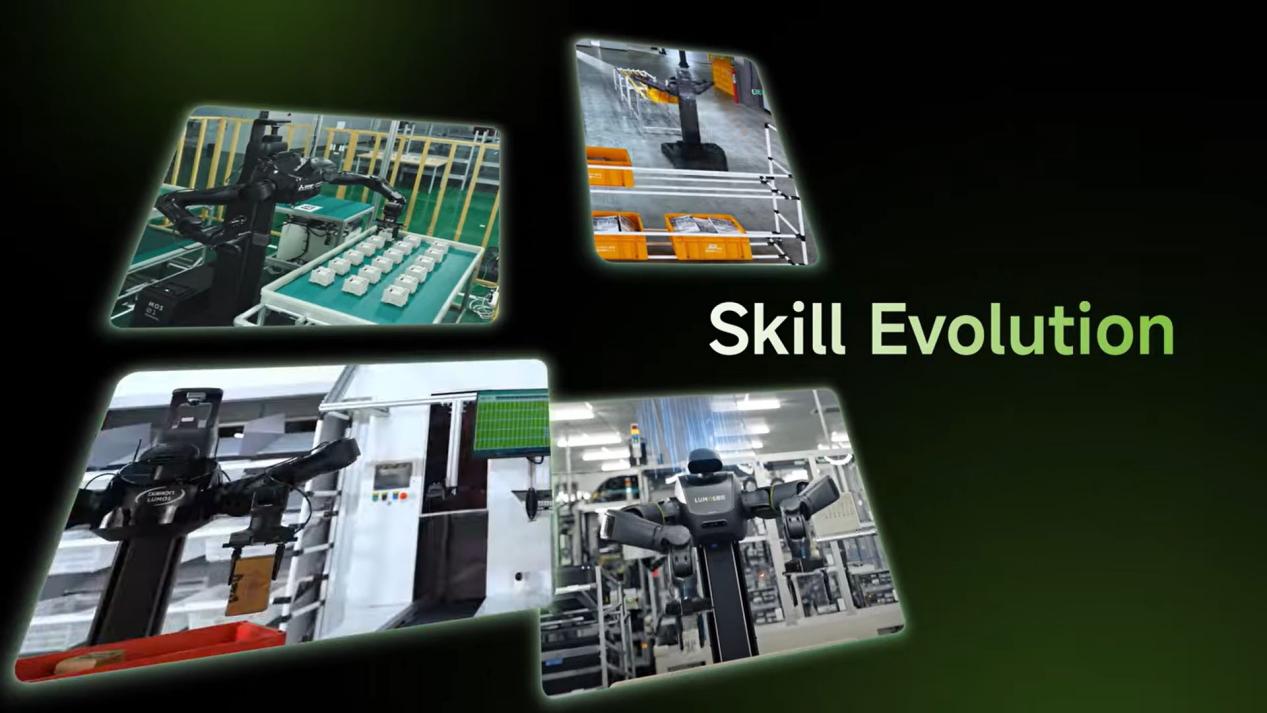
Lumos Robotics has announced that its NexCore platform can significantly reduce the time required to develop new skills for robots, from weeks to just days. This innovation targets the engineering processes that contribute to high costs in deploying additional robots in factories. By integrating task definition, data collection, model training, evaluation, and deployment into a single workflow, NexCore aims to streamline the adaptation of robots to various production tasks.
The importance of NexCore lies in its potential to democratize robotics for factory users who lack programming or AI development experience. Users can describe tasks in natural language and utilize a combination of real-world, simulation, and video data to train and evaluate skills. This capability allows for the management and reuse of skills across compatible robots, enhancing operational efficiency and reducing reliance on specialists.
Looking ahead, Lumos Robotics emphasizes that the key to scaling embodied AI is minimizing the cost of acquiring new skills. The NexCore platform has been validated through collaboration with Mitsubishi Electric, achieving success rates of up to 99% in various tasks. No further timeline was disclosed at the time of publication.
Editor's Note
The introduction of NexCore by Lumos Robotics highlights a significant advancement in the robotics sector, particularly in reducing the time and cost associated with skill development. This innovation could lead to broader adoption of robotics in manufacturing environments, especially among companies with limited technical expertise. As the demand for flexible automation solutions grows, platforms like NexCore may redefine how industries approach robotic deployment and training.























Leave a comment