

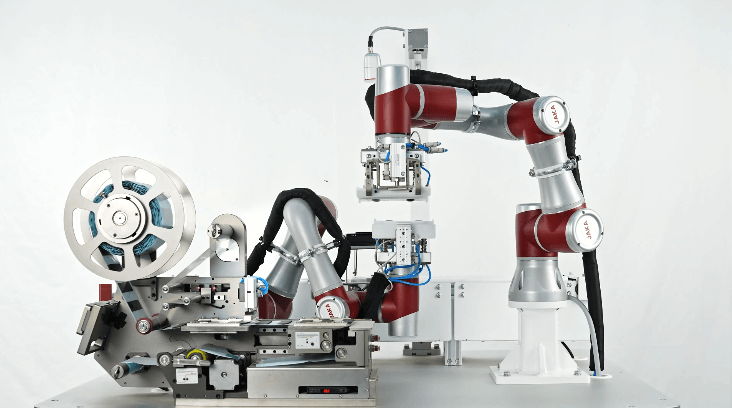
The deployment of collaborative robots, or cobots, is often praised for its user-friendly "plug-and-play" design; however, this simplicity can mask significant safety risks. Many manufacturers overlook essential risk assessments, which are crucial for ensuring worker safety and preventing costly production delays.
Common pitfalls include focusing solely on the robot arm while neglecting the entire robot system, particularly the end-of-arm tooling (EOAT) and the specific motion paths that can create hazards. For instance, even a power-limited cobot can pose risks if it manipulates sharp objects at high speeds. Additionally, failing to account for environmental factors, such as clamping or pinch points, can lead to dangerous situations where workers’ hands may become trapped. To mitigate these risks, operators are advised to maintain a minimum clearance of 500mm from fixed objects or program the robots to avoid these areas entirely.
JAKA, a company specializing in advanced robotics, is addressing these safety concerns with its JAKA S series, which incorporates sophisticated safety features directly into its hardware. This series includes a high-performance safety skin that provides 360-degree detection, allowing the cobot to sense nearby humans and halt operations before any potential impact. With a payload capacity of up to 18 kg and precise repeatability, JAKA ensures that safety measures do not compromise industrial performance. The intuitive visual interface of JAKA systems allows safety officers to easily define safety zones, promoting a secure and efficient working environment.































Leave a comment