


SensArs Neuroprosthetics
Swiss EPFL spin-off developing implantable neuroprosthetics (SENSY) to restore limb sensation in amputees and diabetic neuropathy patients.
Contact SensArs Neuroprosthetics
WEBSITE
https://www.sensars.comPHONE
2545352419HEADQUARTERS
Switzerland


Company Facts
Founded
2014
Primary Role
Research Institute
Company Size
-
Primary Region
Europe
Annual Sales
-
Funding Stage
Early-Stage VC
Funding Total
$ 4,790,000
Certifications & Memberships

Wandercraft Completes Acquisition of Ekso Bionics to Enhance Medical Exoskeleton Offerings
Wandercraft has acquired Ekso Bionics from a subsidiary of ChronoScale Holdings, merging their medical exoskeleton businesses to enhance rehabilitation and personal mobility solutions. This acquisition combines Wandercraft's robotics expertise with Ekso Bionics' established U.S. operations, expanding their market presence and support network. The merger is significant as it integrates two leading players in the medical exoskeleton sector, with products like Atalante X and EksoNR already utilized in over 700 rehabilitation centers globally. Both companies hold FDA clearances and CE markings for various neurological and mobility conditions, ensuring a robust portfolio for healthcare providers and patients. Looking ahead, Wandercraft aims to leverage this acquisition to broaden access to robotic mobility solutions, enhancing patient care and rehabilitation services. No further timeline was disclosed at the time of publication.
Business & Markets Physical AI Wearables acquisition Ekso Bionics exoskeleton
X Square Robot's TwinDEX Executes 24-Step Chemistry Experiment Without On-Robot Training Data
X Square Robot's TwinDEX has successfully completed a 24-step chemistry experiment using a unique combination of a wearable exoskeleton and a three-finger hand. This achievement is notable as the policy governing the robot's actions was trained solely on a few hundred demonstrations that did not involve the robot itself. The significance of this development lies in the potential for reducing the need for extensive on-robot training, which can be time-consuming and resource-intensive. By leveraging demonstrations from external sources, TwinDEX showcases a new approach to robotic learning that could streamline the training process and enhance efficiency in various applications. Looking ahead, the implications of this technology could extend beyond chemistry experiments, potentially influencing other fields that require complex manipulations. No further timeline was disclosed at the time of publication.
Sharpa Launches Three Innovative Products at IROS to Enhance Robotic Precision
On September 28, Sharpa unveiled three innovative products at the International Conference on Intelligent Robots and Systems in Pittsburgh, USA. These include the D01 integrated tactile perception robot, the W02 ultra-compact and lightweight dexterous hand, and the AE01 high-fidelity exoskeleton tactile data glove. Each product targets specific operational needs, providing a complete hardware closed-loop for complex contact operations in real environments. The significance of these products lies in their ability to address the challenges of speed, power, and precision in robotic tasks. The D01 robot is designed for high-speed and high-precision operations, achieving a maximum end-effector speed of over 10.5 meters per second and a repeat positioning accuracy of 0.2 millimeters. The W02 hand integrates 21 active degrees of freedom in a compact structure, while the AE01 glove captures natural hand movements for precise teleoperation, enhancing the overall operational capability of robots. Looking ahead, the combination of D01, W02, and AE01 represents a complete operational capability closed-loop in embodied intelligence. This approach aligns with trends in the industry, where companies are focusing on integrating execution hardware, perception hardware, and data sources to improve robotic dexterity and responsiveness in various applications, including industrial collaboration and home services. No further timeline was disclosed at the time of publication.
Robotic Manipulation Tactile Sensing Haptic Technology Robotic Hands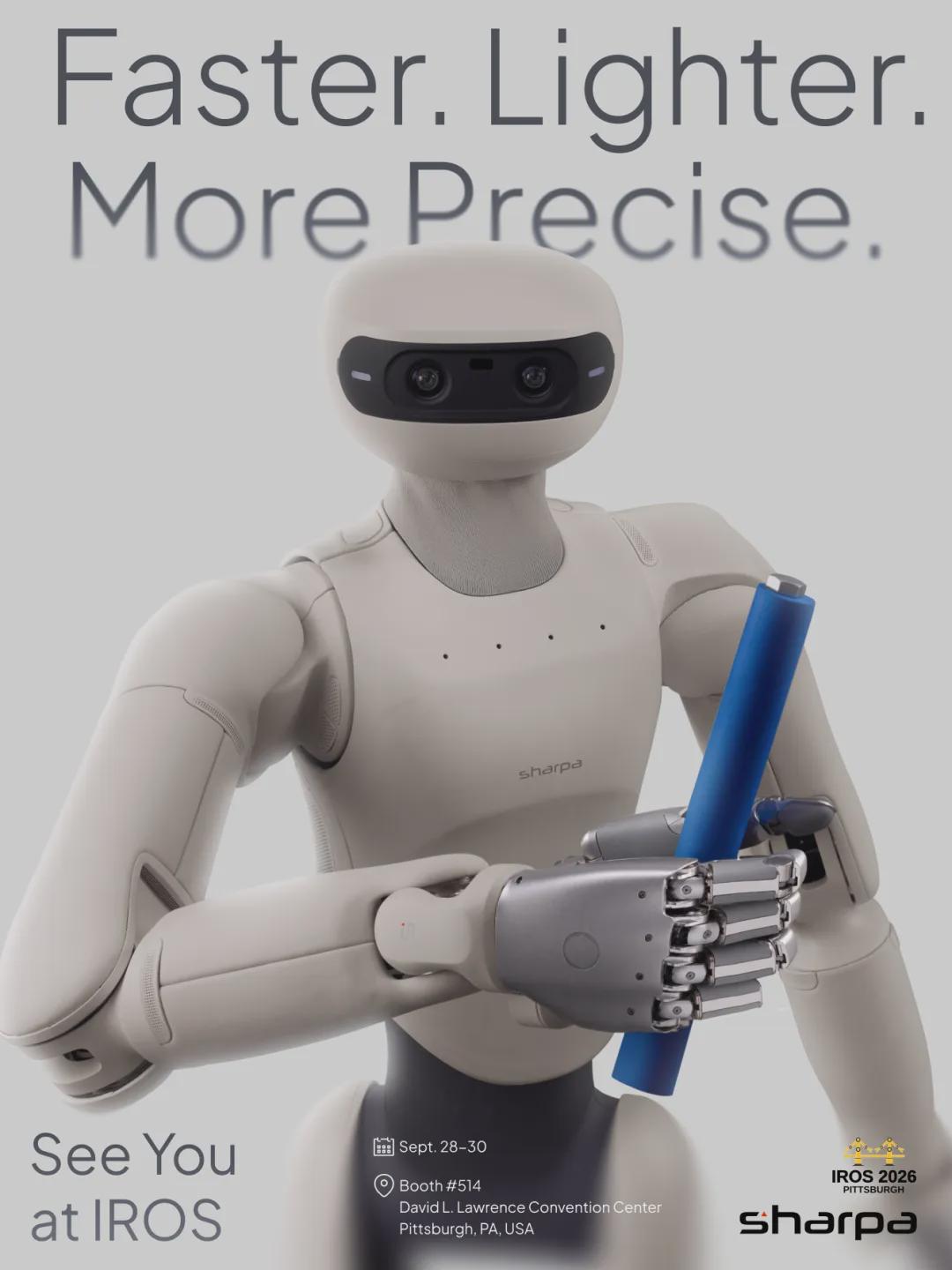
Sharpa Unveils Comprehensive Robotics System for Dexterous Manipulation at IROS 2023
On September 28, at the IROS conference in Pittsburgh, Sharpa showcased a complete robotics system featuring a humanoid robot, a dexterous hand, and an exoskeleton glove. Unlike many exhibitors presenting single modules, Sharpa's offering represents a cohesive system aimed at creating an end-to-end operational loop, enhancing tactile perception, and addressing challenges in real-world applications. This development is significant as it responds to the industry's need for solutions in real-world environments like retail and dining, where maintaining control precision during high-speed movements and interacting with complex objects are critical. Sharpa's approach integrates the robot body, end effector, and human-machine data input devices, positioning itself as a leader in the dexterous manipulation space. Looking ahead, the focus will be on the engineering validation of this system, including the performance of its components in real-world scenarios. The D01 humanoid robot, W02 dexterous hand, and AE01 exoskeleton glove are designed to work together seamlessly, with the D01 aiming to achieve high-speed movement and precision control, addressing long-standing challenges in humanoid robotics.
Humanoid Robots Dexterous Manipulation Robotics Systems Tactile Feedback
Soft Exosuit Enhances Standing Up for Older Adults
A new soft exosuit is designed to assist older individuals in standing up from a seated position, addressing the challenges posed by declining strength and coordination in their legs and hips. This innovative technology aims to provide intuitive support, allowing users to perform this common movement with greater ease. The significance of this development lies in its potential to improve the quality of life for seniors, who often struggle with mobility issues. By facilitating a natural and synchronized response to the body's movements, the soft exosuit can help mitigate the difficulties faced by older adults when rising from chairs, thereby promoting independence and reducing the risk of falls. Looking ahead, the focus will be on refining the exosuit's responsiveness and ensuring it integrates seamlessly with users' movements. No further timeline was disclosed at the time of publication.
Robotics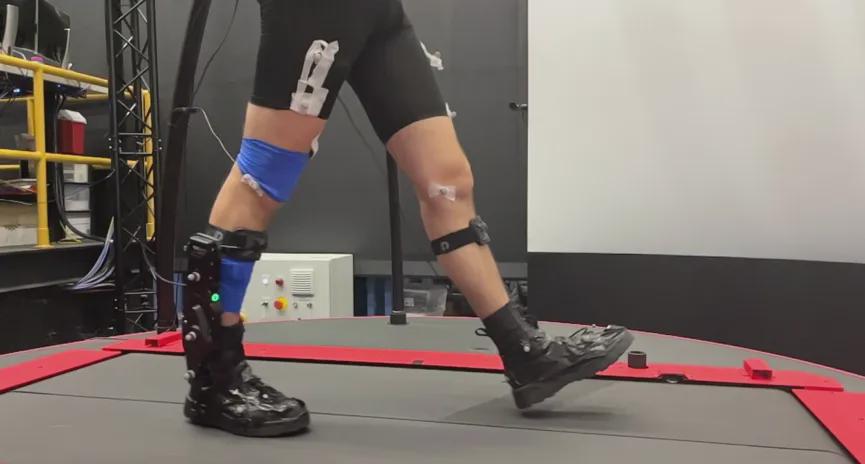
Georgia Tech Develops Wearable Robots That Interpret Muscle Activity Using Electrical Signals
Researchers at Georgia Tech have developed a system that uses six electrodes placed on the skin to track muscle activity during walking. This innovative approach extracts information about muscle contractions from electrical signals, showing a strong correlation with ultrasound measurements. The findings, published in Science Robotics, suggest that wearable robots could utilize this technology for more convenient and efficient muscle monitoring. The significance of this development lies in its potential to enhance the functionality of exoskeletons and other wearable robots. By using electrical impedance myography (EIM), the system can monitor muscle activity without the need for invasive procedures or complex ultrasound equipment. This could lead to more accessible and lower-power solutions for tracking muscle behavior in real-time. Looking ahead, researchers aim to further explore the relationship between muscle contractions and the electrical impedance changes observed. Understanding how these internal muscle dynamics contribute to movement will be crucial for advancing wearable robotics and improving their integration into everyday activities. No further timeline was disclosed at the time of publication.
Wearable Robots Muscle Monitoring Exoskeleton Technology Biomedical Engineering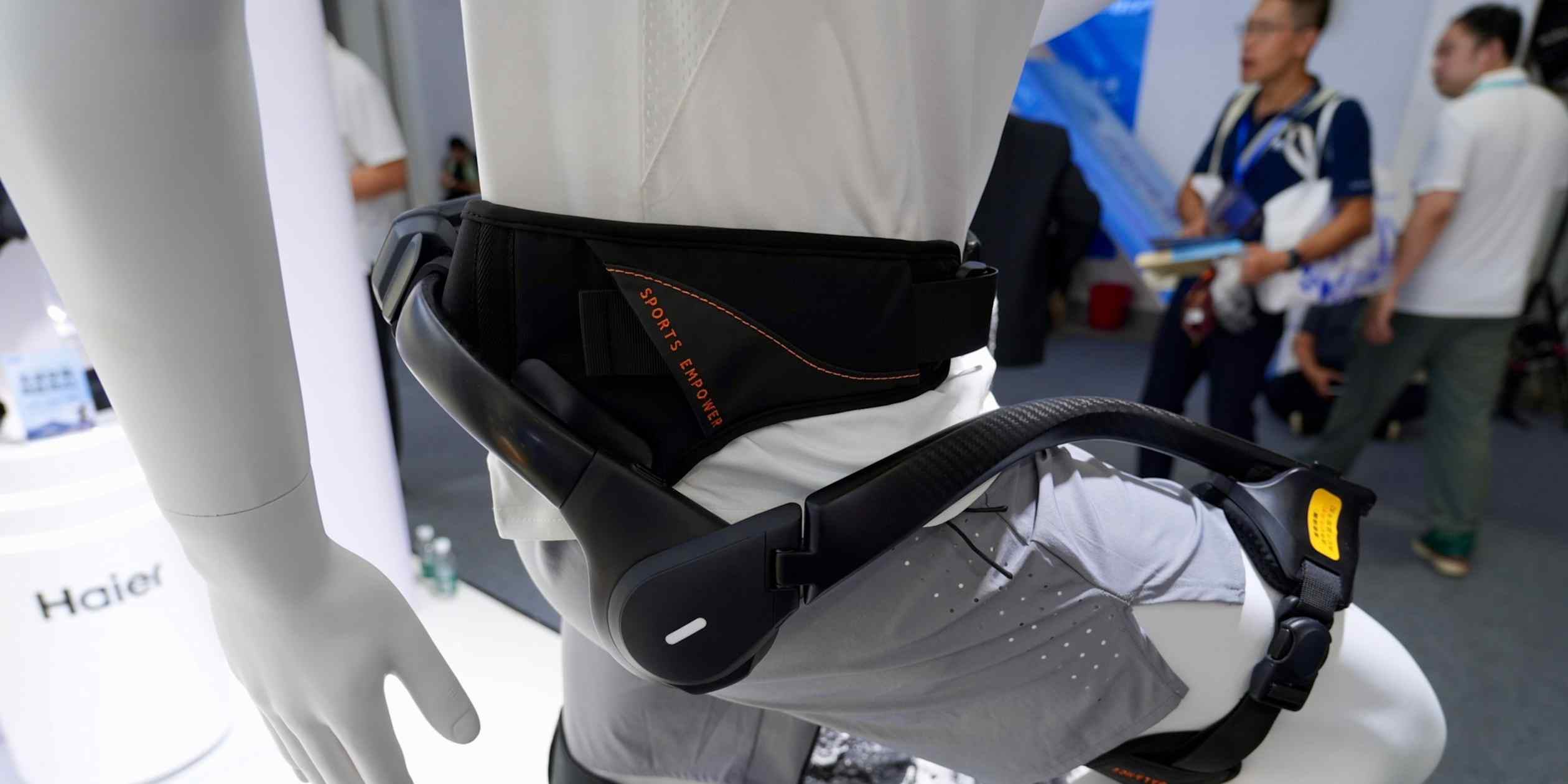
China's Exoskeleton Robots Transition into Consumer Markets Beyond Medical Use
Exoskeleton robots, also known as powered suits, are increasingly entering the consumer market in China, moving beyond their traditional applications in medicine and industry. This shift was highlighted by appliance maker Haier Group, which showcased its exoskeleton products at the World Robot Conference in Beijing in August 2026. The emergence of exoskeletons in everyday life signifies a notable trend in the robotics sector, as companies and startups race to capitalize on this nascent market. The growing interest in these wearable devices reflects a broader movement towards integrating advanced technologies into daily activities, enhancing physical capabilities for consumers. Looking ahead, the competition among appliance makers and startups in the exoskeleton market is expected to intensify. As more companies enter this space, it will be crucial to monitor developments and innovations that could shape the future of consumer robotics. No further timeline was disclosed at the time of publication.

RobotToday Weekly September 21 – 25, 2026
Cognex buys RealSense, Qualcomm acquires PickNik, the IFR counts 5 million factory robots, AGIBOT deploys 300 robots at Chimelong, and Tekever raises $580 million.
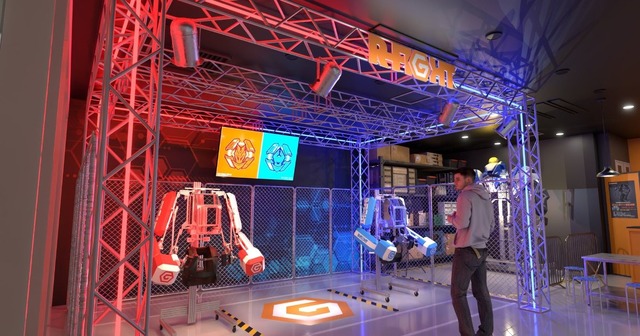
Robot Ride to Open Interactive Attraction 'THE ROBOT PARK ODAIBA' on October 15, 2026
Robot Ride, a company specializing in the development of wearable robots, will launch 'THE ROBOT PARK ODAIBA' on October 15, 2026, at Aqua City Odaiba in Tokyo. This interactive attraction aims to provide robot experiences to both domestic and international visitors, building on the success of previous events that attracted over 7,000 attendees in Hachioji. The facility will feature a cyberpunk-themed space of 25 tsubo, offering four main experiences: ROBOT FIGHT, where participants wear specialized robots to compete; ROBOT RIDE, allowing users to pilot the 3-meter tall exoskeleton robot 'Skeletontics'; Cyber KASSEN, a digital battle activity; and a robot assembly workshop. Safety measures will be in place, requiring participants in ROBOT FIGHT to be at least 7 years old and 110 cm tall. No further timeline was disclosed at the time of publication. The attraction aims to engage children and families, with discounted prices for Tokyo residents. Daisuke Miyamoto, CEO of Robot Ride, expressed a desire to bring the dream of controlling giant robots to life, expanding the excitement experienced at their Hachioji factory to this new location.

Glacian: Physics Model Vets AI Data Center Cooling
Glacian Technologies pairs AI with a physics-based digital twin that rejects unsafe commands. CEO Jie Zhao on cutting data center cooling energy 15-30%.

Researchers Innovate Wearable Robotic Limbs to Assist with Daily Tasks
Researchers are developing wearable robotic limbs designed to assist individuals in performing everyday tasks. This innovation aims to provide users with an extra hand, enhancing their ability to manage multiple activities simultaneously. The significance of this development lies in its potential to improve the quality of life for those who struggle with mobility or have limited dexterity. By integrating robotic technology into wearable devices, users can gain greater independence and efficiency in their daily routines. Looking ahead, it will be important to monitor advancements in this technology and its applications in various settings. The ongoing research may lead to practical solutions for individuals needing additional support in their daily lives. No further timeline was disclosed at the time of publication.
Robotics
RobotToday Weekly September 14 – 18, 2026
Toyota weighs 400,000 factory robots, SoftBank buys Hyundai's Robotics and AI Institute, Agility unveils Digit 5, Figure's Helix 2.5 generalises to 30 homes, and August robotics funding hits $4.87 billion.

Innovation Works Venture Expo 2026: 58 Pittsburgh Startups Pitch to Investors
58 health, deep tech and robotics startups pitched at Innovation Works Venture Expo 2026 in Pittsburgh. Full company list, program and 2025 funding data.

FAULHABER Drives the IX BACK VOLTON Exoskeleton for Enhanced Worker Support
The IX BACK VOLTON exoskeleton, developed by SUITX, utilizes FAULHABER drive solutions to provide significant support for manual laborers. This innovative system is designed to alleviate back strain during physically demanding tasks in logistics and production environments. The importance of the IX BACK VOLTON lies in its ability to enhance worker efficiency and reduce injury risks. By integrating advanced robotics and adaptive intelligence, the exoskeleton dynamically adjusts support based on the user's movements, ensuring comfort and effectiveness during repetitive tasks. Looking ahead, the demand for ergonomic solutions like the IX BACK VOLTON is expected to grow, particularly in fast-paced logistics settings. As industries continue to prioritize worker safety and efficiency, the successful deployment of this exoskeleton could set a new standard for wearable robotic support in the workplace.

ROBOTTODAY WEEKLY September 7 – 11, 2026
This week in robotics: JD.com plans to deploy three million robots across its logistics network, XPeng commissions its IRON humanoid production line, FANUC and Google launch an AI arc-welding agent, and Unitree shares fall 53% from their post-IPO high. September 7–11, 2026.

Ailoys Brings Acoustic Industrial AI to IMTS 2026
Berlin's Ailoys brings acoustic industrial AI to IMTS 2026, Booth 237629. Edge sensors catch process drift on existing machines before scrap appears.
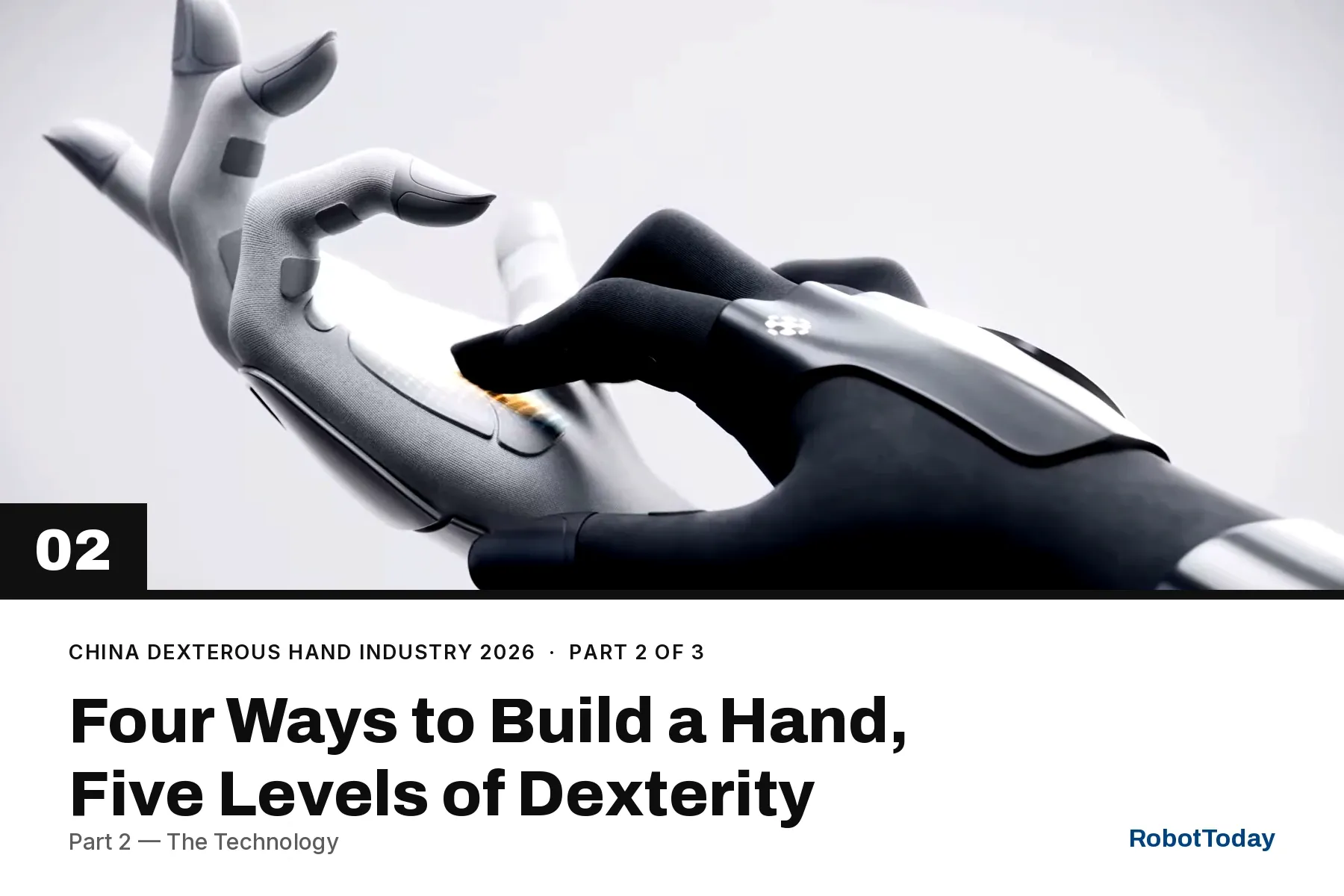
China’s Dexterous Hand Industry, 2026 Part 2 — The Technology
Linkage, tendon, direct drive or hybrid — and why hardware is converging while the DL1–DL5 manipulation scale decides who wins. Part 2 of 3.
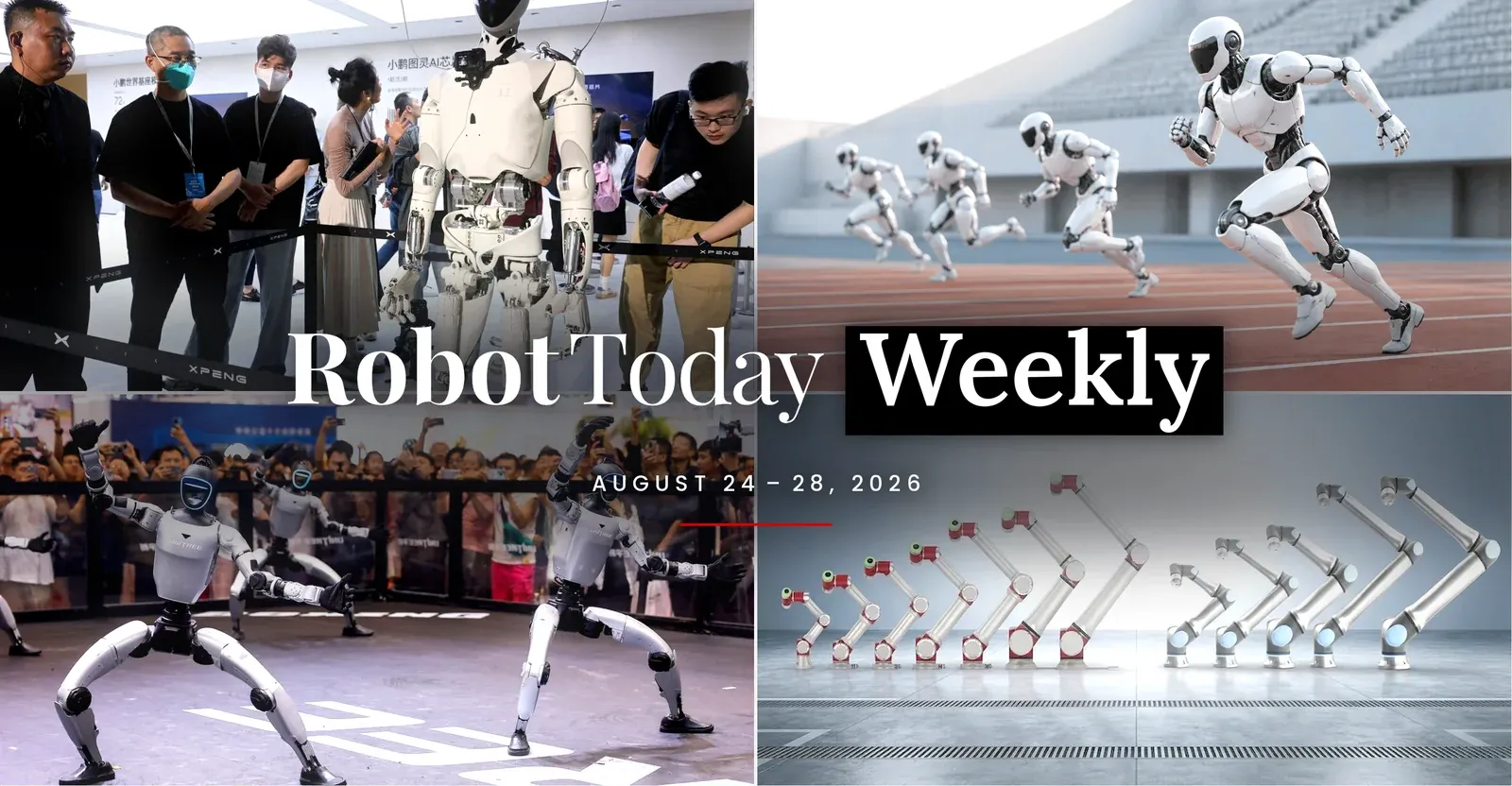
ROBOTTODAY WEEKLY BRIEFING August 24 – 28, 2026
This week in robotics: XPeng's Dogotix raises over $900 million at a $6.3 billion valuation, Unitree's post-IPO slump revives bubble talk, Beijing's World Humanoid Robot Games close with a shift to real-world tasks, and Teradyne sues JAKA at Europe's Unified Patent Court. August 24–28, 2026.
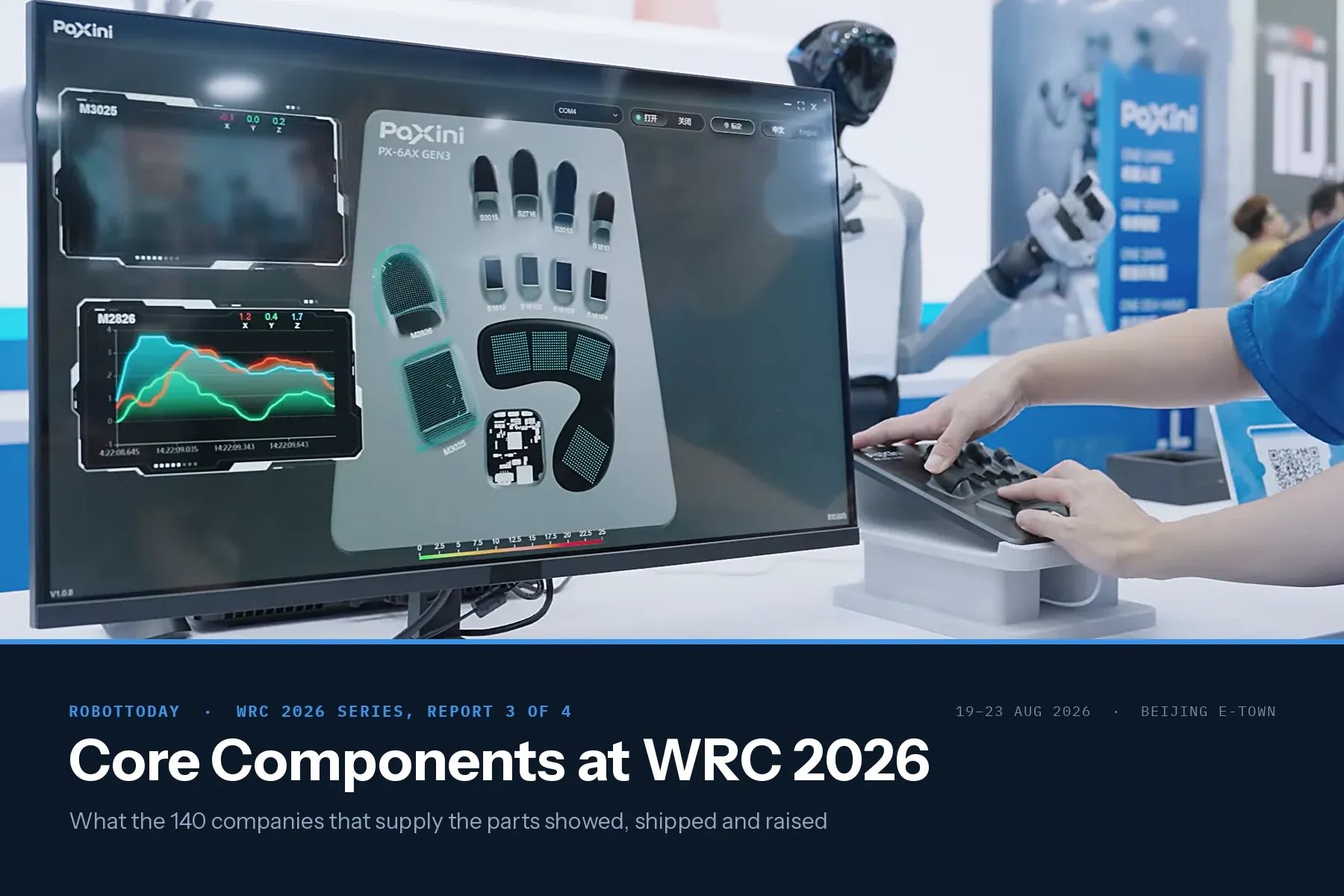
WRC 2026 Core Components: 137 Robot Parts Suppliers
The third report in the WRC 2026 series. Report 1 mapped all 248 exhibitors by category and Report 2 covered the 139 that build finished robots. This one covers the 137 that build what goes inside them.
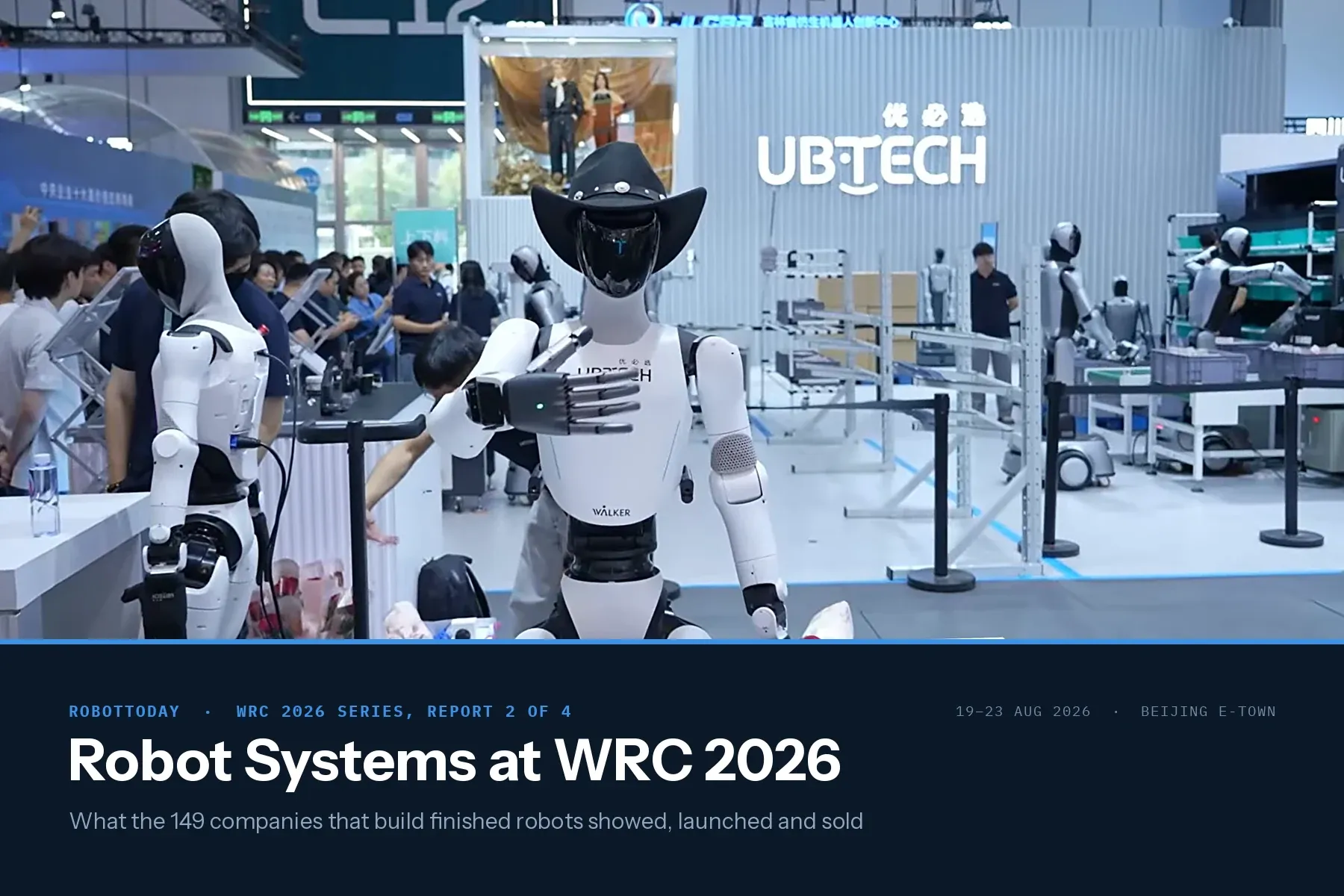
WRC 2026 Robot Systems: 149 Companies That Build Robots
149 of the 248 classified WRC 2026 exhibitors build finished robots. 93 build humanoid or legged machines. The audited humanoid sales number is one unit.


