

Butterfly Haptics LLC
US maker of the Maglev 200, a 6-DOF magnetic levitation haptic interface spun out of Carnegie Mellon University in 2007.
Contact Butterfly Haptics LLC
WEBSITE
https://butterflyhaptics.comPHONE
+1 412-963-1097HEADQUARTERS
United States

Company Facts
Founded
2007
Primary Role
Manufacturer
Company Size
-
Primary Region
North America
Annual Sales
-
Funding Stage
-
Funding Total
-
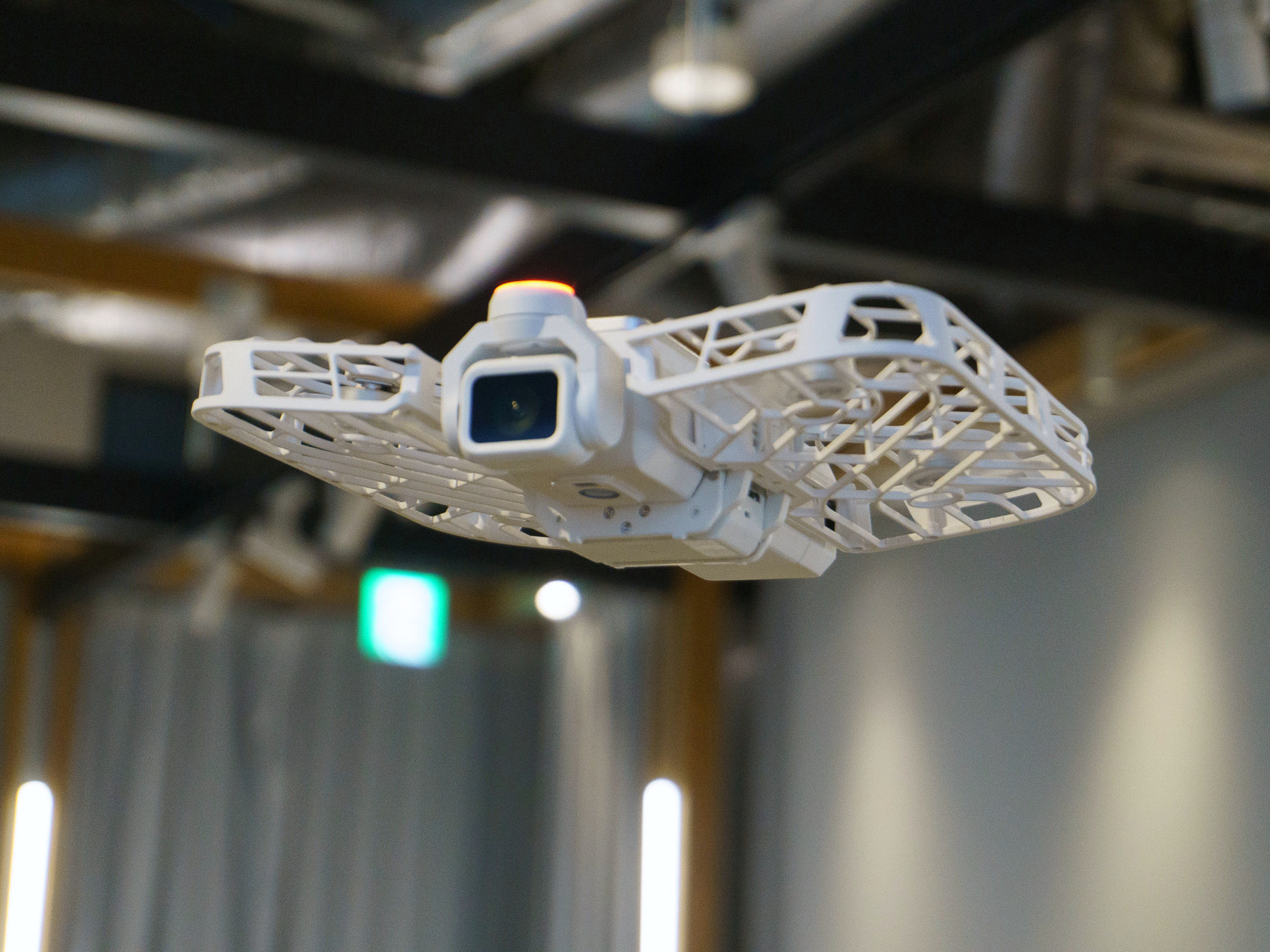
HOVERAir VERSA Launches in Japan with Unique Flying Camera Features
On September 7, ZERO ZERO ROBOTICS unveiled the HOVERAir VERSA in Tokyo, a handheld camera that transforms into an autonomous flying camera with 67g wings. The product will be available for pre-sale in Japan from September 29 to November 13 on Makuake. The HOVERAir VERSA combines a 3-axis gimbal with a compact design, allowing users to capture 4K video and photos from both handheld and aerial perspectives. The device features a 1/1.3-inch sensor and offers 14 minutes of flight time, making it suitable for personal and family use without leaving anyone behind in the frame. Looking ahead, the company plans to introduce additional features like AI framing and 3D Worlds for enhanced shooting capabilities. No further timeline was disclosed at the time of publication.

GMO AIR Launches New Service 'GMO LOOP for Physical AI' to Enhance Humanoid Robotics
GMO AI & Robotics Co., part of the GMO Internet Group, has launched a new service called 'GMO LOOP for Physical AI' on September 8, 2026. This service utilizes operational data from humanoid robots to continuously improve their motion accuracy, addressing challenges such as the lack of real-world data and the Sim2Real gap. The importance of this service lies in its ability to adapt humanoid robots to various operational environments, which differ significantly from one another. By leveraging data collected from actual operations, GMO LOOP aims to enhance the precision of humanoid movements, thereby facilitating better integration of these robots into real-world applications. Looking ahead, the focus will be on how effectively GMO LOOP can gather and utilize operational data to improve humanoid performance. As competition intensifies among companies developing humanoids, the ability to convert real-world data into enhanced accuracy will be crucial for success. No further timeline was disclosed at the time of publication.

The Rise of Household Robots: Transforming Mobility and Daily Life by 2026
By 2026, the tech industry anticipates a significant shift where robotaxis will replace personal vehicles, and humanoid robots will become essential household members. This narrative suggests that cars will transition from personal ownership to mobility services, while robots will evolve similarly, becoming integral to family life. The implications of this shift are profound, as automotive companies leverage their expertise in intelligent driving technologies for robotics. Tesla's Optimus and FSD share architecture and AI chips, with mass production delayed until summer 2027. Meanwhile, BYD's humanoid robot, Xiaodi, is already in experience centers, highlighting the automotive sector's readiness to adapt. However, the transition from industrial to home environments remains challenging. Despite a surge in humanoid robot shipments, household penetration is low, with most units directed towards entertainment and education. As the industry moves towards a service-oriented model, the focus will shift from hardware ownership to the value of the underlying intelligent systems, data, and services that drive competition in this evolving landscape.
Humanoid Robots Robotaxi Service Robotics AI Mobility Solutions
North Carolina State University Develops Soft Robot for Continuous Jumping Without Electronics
Researchers at North Carolina State University have developed a soft robot capable of continuous jumping without electronic control. This innovation utilizes geometric structures and light-responsive materials to enable the robot to autonomously jump under constant infrared light, overcoming previous limitations that required manual resets or external stimuli for each jump. This advancement is significant as it opens new pathways for the movement of micro soft robots, allowing them to navigate diverse environments without the need for complex electronic systems. The robot, named the annular jumper, can adapt to various terrains, achieving vertical jumps up to 80 times its size and horizontal jumps exceeding three times its length, showcasing its potential for real-world applications. Looking ahead, the research highlights the importance of physical intelligence in robotics, where movement logic is embedded in material properties and geometric configurations. While the current prototype is still in the concept validation stage and faces challenges such as reliance on infrared light and material fatigue, it lays the groundwork for future developments in low-cost micro soft robots that could be deployed in swarm formations for environmental exploration and disaster response.
Soft Robotics Autonomous Systems Light-Responsive Materials Geometric Structures
International Team Develops Robots Learning to Navigate Terrain from Stick Insects
An international team from Tohoku University and VISTEC is studying stick insects to enhance robot navigation in challenging terrains. The research focuses on the insect's six legs, which allow for agile movement across various surfaces, surpassing current multi-legged robots in coordination. By employing adversarial inverse reinforcement learning, the team enabled a six-legged robot to autonomously learn to navigate diverse terrains within an hour by observing stick insect locomotion. This research is significant as it proposes a shift from traditional biomimetic approaches that require specific programming for each robot and terrain. Instead, the team aims to extract fundamental movement control principles, allowing robots to adapt to changing environments without extensive reprogramming. This adaptability is crucial for disaster scenarios where uneven surfaces and obstacles are prevalent, particularly in earthquake-prone Japan, where the demand for effective rescue robots is high. Looking ahead, the team plans to validate the learning system's robustness in realistic rubble environments and explore the potential for robots to compensate for lost limbs through continuous learning. The implications of this research could redefine how robots navigate complex terrains, making them more effective in emergency situations.
Robotics Disaster Response Machine Learning Bio-inspired Robotics
iKairos: An AI Companion and Jewelry Redefining Human-AI Interaction
The iKairos, showcased at the 2026 IFA, aims to redefine human-AI interaction by actively understanding users' lives rather than passively waiting for commands. Developed by Singapore-based startup Lingverse, this circular device, known as the 'Neural Core', can be worn as a pendant or embedded in a desktop robot, addressing common issues faced by AI companions. The modular design of iKairos allows for seamless transitions between different forms, enhancing user experience. Its core functionality, termed 'memory perception', utilizes cameras and microphones to record conversations and preferences, building a comprehensive user profile over time. This enables the device to proactively suggest activities or reminders based on accumulated context, potentially acting as an agent to perform tasks on behalf of the user. Lingverse, co-founded by former Jibo board member and investor Joe Jiawei, aims to continue the legacy of the discontinued social robot Jibo. The company secured $29 million in Pre-A funding in July 2026. While iKairos is still in development with no set pricing or launch date, it represents a shift towards AI that not only responds but also understands and integrates into daily life.
AI Companions Wearable Technology Robotics Privacy-focused Design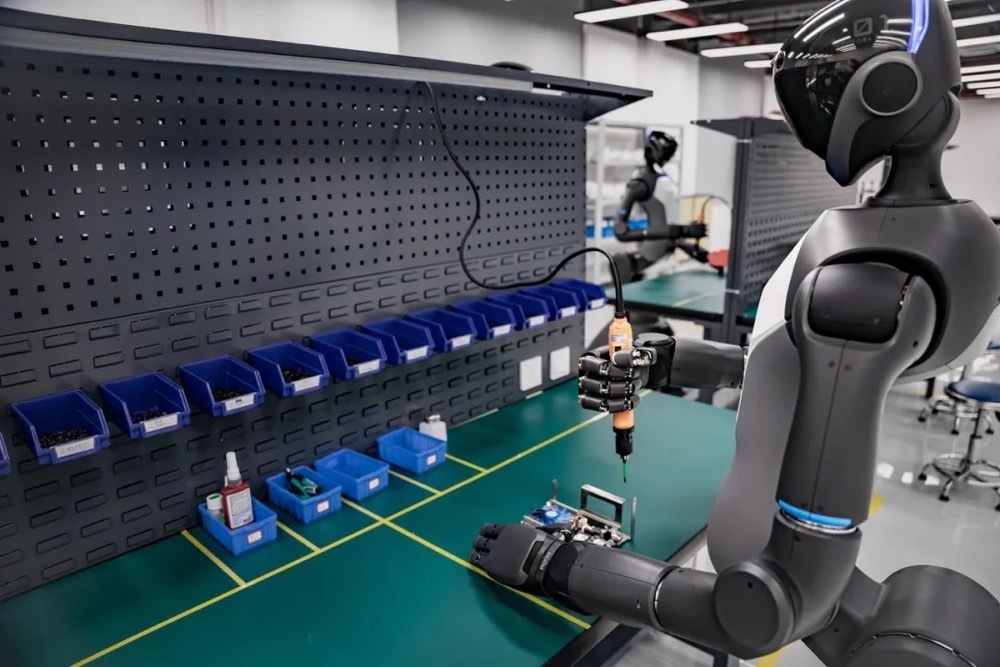
Batten & Kamp Unveils 'Beauty Seeker': An AI Robot as a Mobile Flower Vase
At the 2026 IFA in Berlin, Batten & Kamp introduced 'Beauty Seeker,' a unique creation combining an AI six-legged robot with an orchid, transforming it into a mobile vase. This design intentionally diverges from mainstream technology narratives by stripping the robot of its built-in camera and multiple functionalities, focusing instead on a fundamental question: what does it mean for a high-tech robot to coexist with us as a simple container in a home environment? The robot retains a single core function: using LiDAR to track nearby people and slowly adjust its position to draw attention to the orchid it carries. This design creates a sense of absurdity, as the advanced robot serves not to perform tasks but to act as a moving base for a flower. Interestingly, this limitation reduces the typical threat perception associated with such robots, as it merely holds a flower, creating a peculiar tension between its potential power and its chosen role as a vase. This is not Batten & Kamp's first exploration of such contradictions; their 2023 project 'Comfort Seeker' featured an iconic Eames chair on a four-legged robot, examining the intersection of furniture and autonomous systems. 'Beauty Seeker' continues their inquiry into the relationship between technology and nature, as the orchid, evolved to attract pollinators, now competes for human attention through an AI-driven robot. The designers aim to shift the focus from what robots can do to what they should do, suggesting that the rarest behavior may be simply to hold a flower and quietly revolve around us.
AI Robots Design Innovation Human-Robot Interaction Domestic TechnologyConcerns Rise Over Violence in Fighting Robots at Trade Shows Like IFA 2026
At the IFA 2026 in Berlin, fighting robots captured significant attention, particularly the EngineAI T800 humanoid robot, which mimicked boxing moves. CNET's Katie Collins expressed deep concerns about the implications of showcasing such robots, especially as they are increasingly associated with violence in entertainment. The presence of aggressive robots raises questions about public perception of risk, especially as autonomous robots are already used in military applications. Collins highlighted the troubling normalization of violence through entertainment, noting that while robots like the T800 can engage in combat scenarios, their safety measures and decision-making capabilities remain uncertain. This contrasts sharply with strict safety protocols observed in industrial settings, where robots pause operations when humans enter their work zones. The disparity raises alarms about the potential dangers of allowing aggressive robots to interact freely with the public. The article argues that while technology may enable the creation of violent autonomous machines, it does not justify their production or display as harmless entertainment. Collins calls for a reevaluation of the safety culture within the robotics industry, emphasizing the need for responsible public engagement with these technologies. No further timeline was disclosed at the time of publication.
Fighting Robots Robot Safety Entertainment Technology AI Ethics
Robots Engage in Activism: Demonstrating for Job Preservation and Human Employment
Recent developments in robotics have seen machines taking on activist roles, with robots staging protests to advocate for the preservation of human jobs. This movement highlights the growing intersection of technology and social issues, emphasizing the need for a balance between automation and employment. The significance of this robotic activism lies in its potential to influence public perception and policy regarding automation in the workforce. As industries increasingly adopt robots for various tasks, the conversation around job displacement and the future of work becomes more critical. Companies like Monumental are focusing on automating construction while maintaining skilled jobs, showcasing a commitment to both innovation and employment. Looking ahead, the evolution of robotics and AI technologies will likely continue to shape these discussions. The integration of advanced systems, such as XTEND’s XOS and DEEP Robotics’ capabilities, will be pivotal in determining how robots can coexist with human workers. No further timeline was disclosed at the time of publication.
AI and Robotics
Astribot Launches SmoothRL: A New Era in Online Reinforcement Learning for Robots
Astribot has introduced SmoothRL, an online reinforcement learning framework validated through real robot tasks. This technology addresses a critical challenge in embodied intelligence: how robots can learn and improve while executing tasks in real-time. Traditional models struggle with precision in real-world applications, often failing in details like positioning and force control despite extensive training. The significance of SmoothRL lies in its ability to allow robots to receive feedback through real interactions, adjusting their strategies based on success or failure. Unlike conventional offline training, which pauses for data collection and model updates, SmoothRL enables continuous operation, thus enhancing the robot's learning process without disrupting its tasks. This shift marks a pivotal change in how robots are trained, moving from reliance on pre-collected data to ongoing adaptation based on real-world experiences. Initial tests with the Astribot S1 robot show promising results, with task success rates significantly improving across various activities. However, challenges remain for widespread adoption, including high data collection costs and the need for reliable reward mechanisms. The future of robotic learning may evolve into a continuous optimization process, moving away from fixed capabilities post-deployment.
Reinforcement Learning Embodied Intelligence Robot Development Real-Time Learning
China’s Dexterous Hand Industry, 2026 Part 3 — The Players
Five vendor archetypes, MIR’s composite top ten, eight company profiles and six field deployments — every firm linked to the RobotToday supplier directory.
China’s Dexterous Hand Industry, 2026 Part 2 — The Technology
Linkage, tendon, direct drive or hybrid — and why hardware is converging while the DL1–DL5 manipulation scale decides who wins. Part 2 of 3.
China’s Dexterous Hand Industry, 2026 Part 1 — The Demand Picture
MIR Databank puts China dexterous hand shipments above 30,000 units in 2026, yet only 3.5% of 2025 demand came from factory production. Part 1 of 3.
Software, Compute and Interaction at WRC 2026
47 WRC 2026 exhibitors supply robot software, compute or interaction — but only 19 call themselves software companies. Five open artefacts, licence-checked.
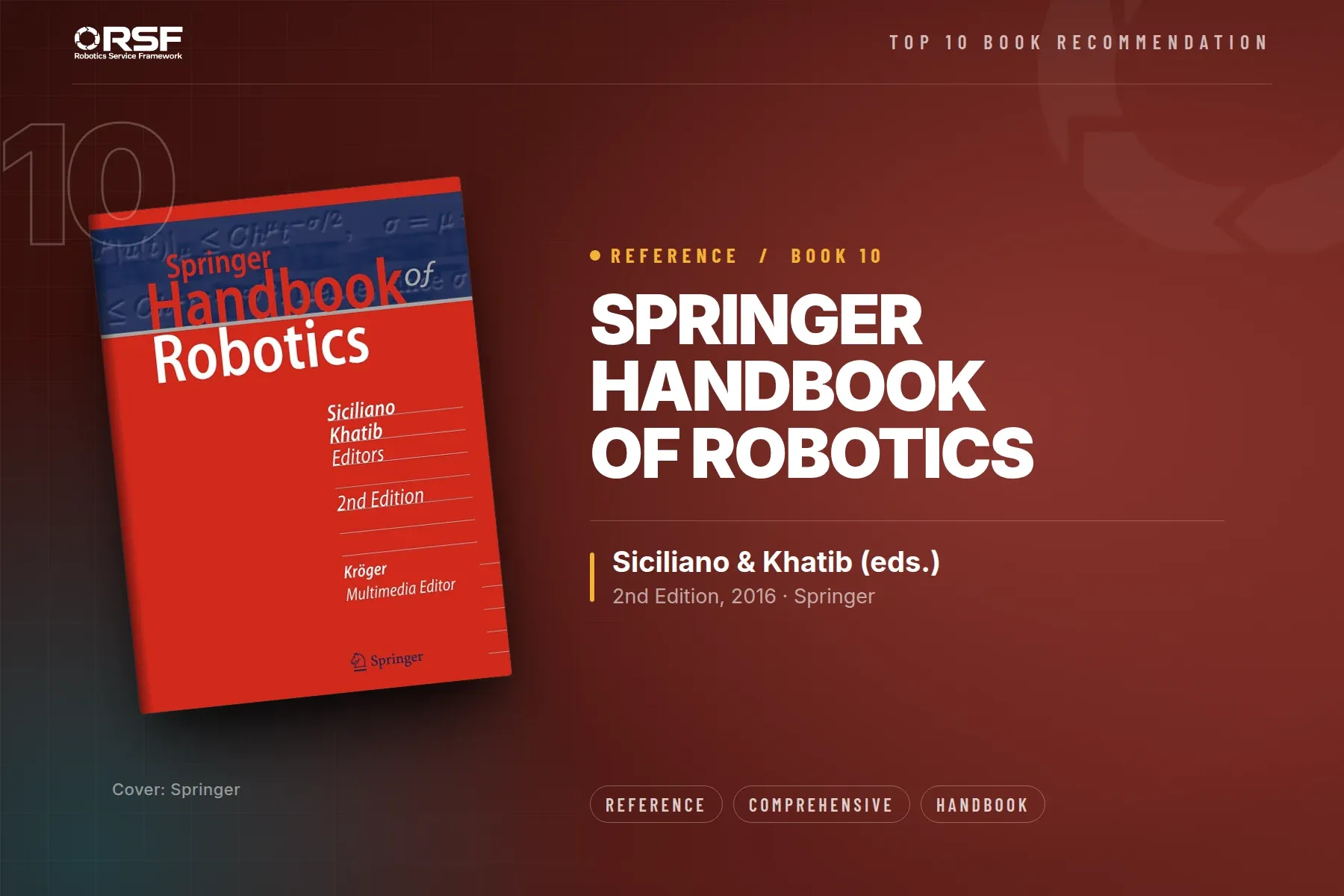
Springer Handbook of Robotics B. Siciliano & O. Khatib (eds.) — RSF Top 10 Robot Education Textbooks · No. 10
Eighty-plus chapters, 2,300 pages, nobody reads it cover to cover. It ranks for one reason: when a fault crosses domains, this is the reference of record.

The Most Important AI at WAIC Wasn't a Robot
At WAIC 2026, AI-native platforms quietly replaced interpreter hardware — what invisible AI infrastructure means for robotics and embodied AI.

Physical AI Landscape: From Digital Intelligence to the Embodied Physical World
A comprehensive industry analysis of Physical AI — covering Embodied AI, Field AI, Factory AI, VLM, World Model, VLA, and the VLA vs WAM architecture debate. Includes 20+ companies, 28 references, and the RobotToday Physical AI Landscape diagram. July 2026.
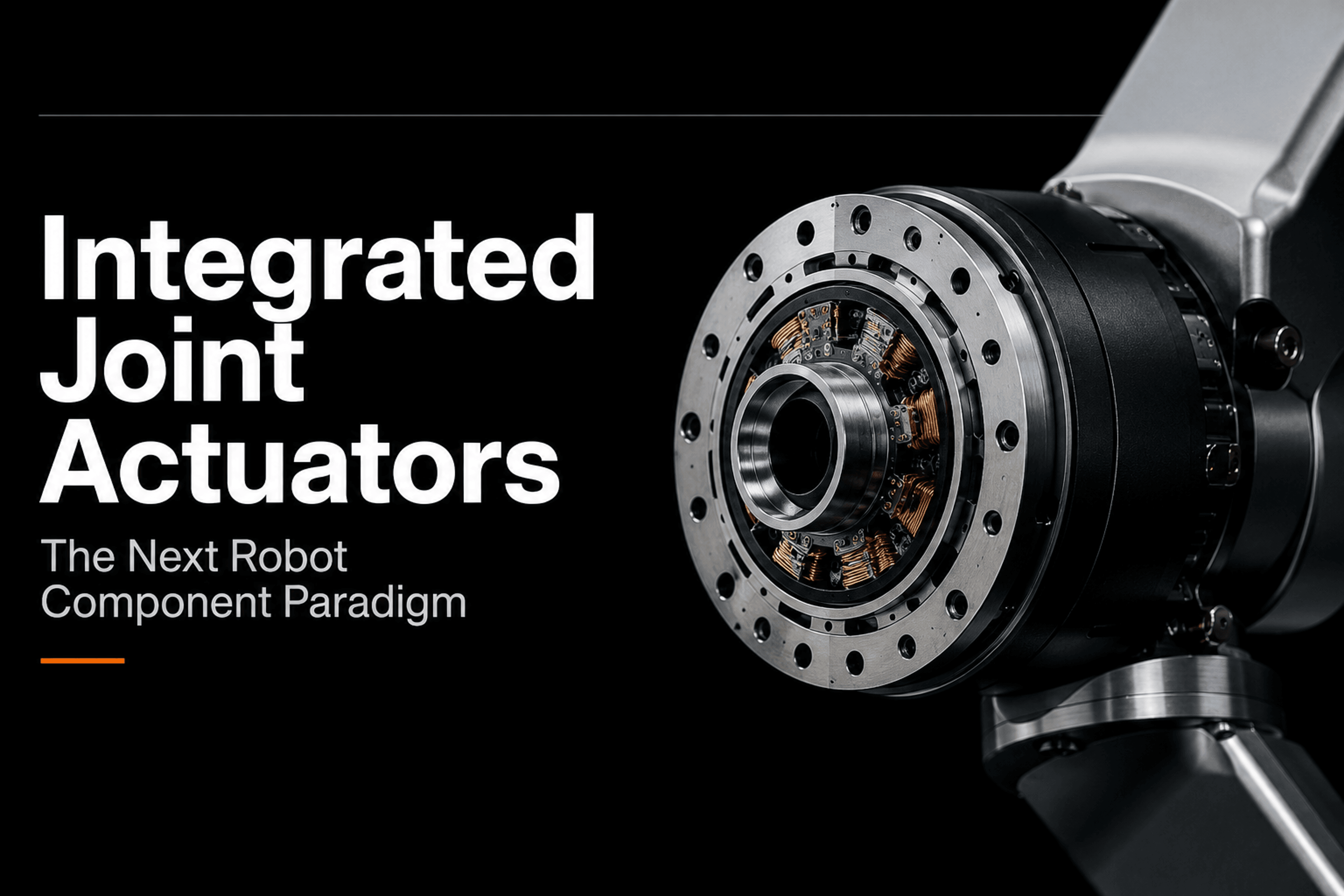
Integrated Joint Actuators 2026: Technology, Global Suppliers & China's Leap Forward
From rotary joints hitting 530 N·m+ to linear joints with planetary roller screws, integrated actuators are replacing the three-part drivetrain. Full supplier map: Tihu, PhyArc, RobStride, Schaeffler, maxon — and China's path from 1,000-RMB modules to global standard-setter.

CONSTRUCTION ROBOTICS | EXOSKELETONS & HUMAN AUGMENTATION
Construction musculoskeletal injuries cost US employers over $2 billion annually. Exoskeletons are moving from pilots to standard practice. Ottobock, German Bionic, Hyundai, and Innophys launched major products in 2024–2025. Korea and Japan lead adoption. AI is turning passive suits into connected safety platforms.
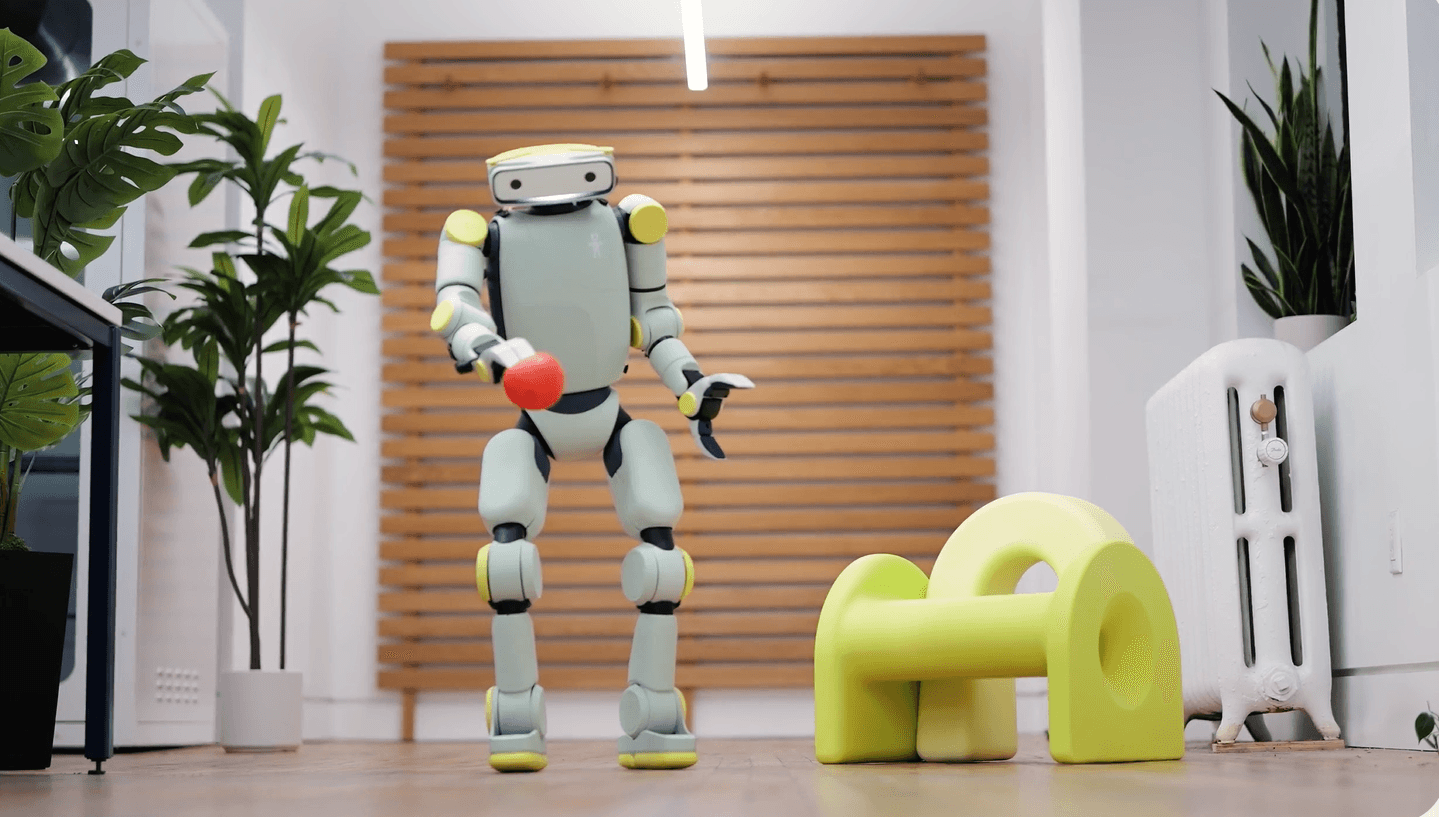
HUMANOID ROBOTICS | Amazon Acquires Fauna Robotics to Advance “Approachable” Consumer Humanoids
Amazon acquires Fauna Robotics, signaling a shift toward approachable humanoid robots like Sprout, focused on safety, design, and human-centric interaction.


