

Industry Briefing
A single destination for timely, editor-curated robotics news from around the world.

Security Researcher Nightmare Eclipse Reveals Windows Zero-Day Bug ShieldBreak Amid Legal Threats
A security researcher known as Nightmare Eclipse has disclosed a new vulnerability in Windows, named ShieldBreak, which allows hackers to gain system-wide access to user devices. This revelation comes after Microsoft threatened legal action over previous disclosures of software flaws. The bug exploits a weakness in Windows Defender, enabling permission escalation from a low-level user to full access. The significance of ShieldBreak lies in its potential impact, as it affects multiple Windows versions, including Windows 10, Windows 11, and Windows Server 2025. The researcher has published a proof-of-concept exploit, which requires users to run a specific app to exploit the vulnerability. This disclosure follows a history of tension between Nightmare Eclipse and Microsoft regarding the handling of bug reports, with the researcher alleging inadequate responses from the company. Looking ahead, the security community is closely monitoring Microsoft's response to ShieldBreak, especially since no patch has been released yet. The situation highlights ongoing concerns about the relationship between security researchers and software companies, particularly regarding the disclosure of vulnerabilities. No further timeline was disclosed at the time of publication.
Security cybersecurity Microsoft Windows zero-day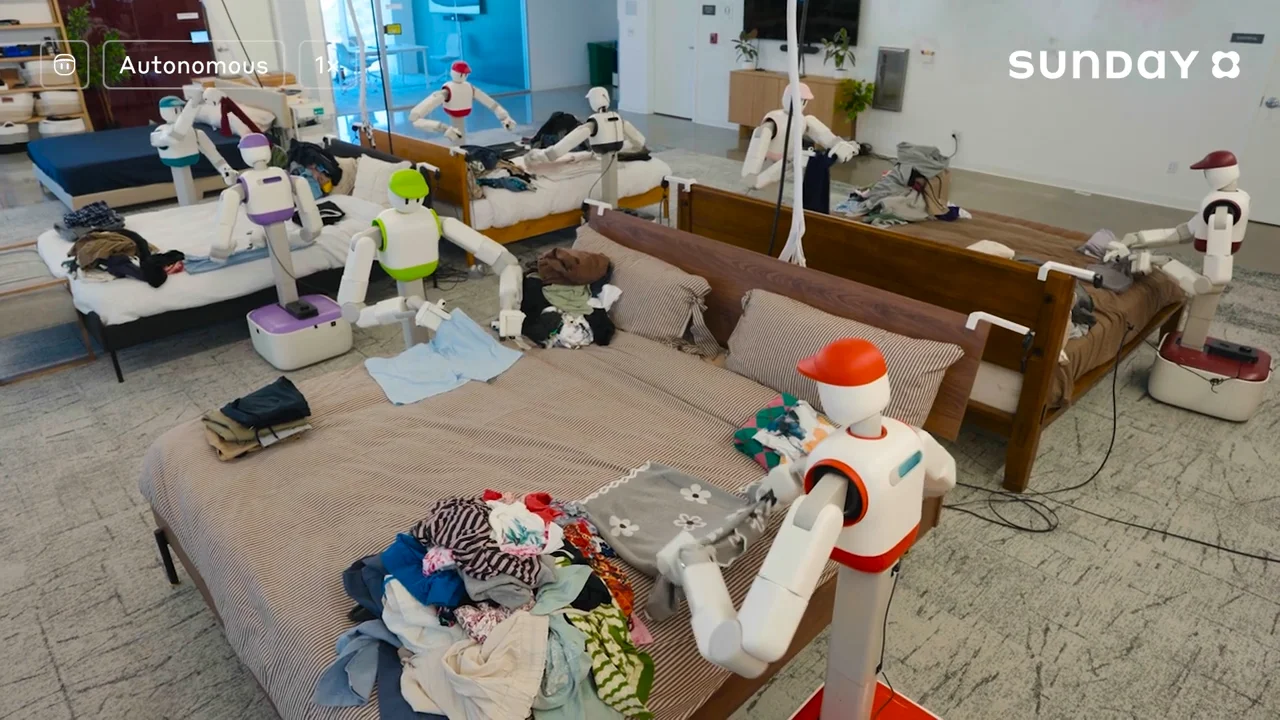
Sunday Robotics Achieves 99.1% Zero-Shot Success in Laundry Folding with ACT-2
Sunday Robotics has introduced ACT-2, a foundation model that claims a 99.1% zero-shot success rate in laundry folding across diverse environments. This achievement is significant as it required no per-home data collection or expert demonstrations, showcasing the model's ability to generalize effectively in real-world conditions. The importance of this development lies in its challenge to the traditional robotics industry, which often relies on controlled demonstrations. Sunday Robotics emphasizes the need for performance metrics that reflect real-world scenarios, as demonstrated by ACT-2's performance across nine garment types and various crumpled configurations. Looking ahead, Sunday Robotics is pushing for a new evaluation framework called a 'Solve', which defines performance, scope, and adaptation cost. This framework aims to enhance the evaluation of robotic capabilities beyond controlled environments. No further timeline was disclosed at the time of publication.
Sunday Robotics Memo
Phantom Blade Zero Unveils 11-Minute Gameplay Demo, Surges to Eight Million Views
On Wednesday, S-Game released an 11-minute gameplay demo for Phantom Blade Zero, which quickly garnered around eight million views on Bilibili within a day. The game, a dark wuxia-themed action RPG, has also reached No. 1 on Steam’s global best-sellers chart, showcasing its popularity. This demo provides a substantial look at the game, featuring two complete levels, Fog Forest Hunt and Lone City Showdown. It highlights the fast-paced combat and exploration mechanics, including the newly introduced Reality-Void switching system that allows players to alternate between dimensions during battles, enhancing the gameplay experience. Phantom Blade Zero is set to launch in the fourth quarter of this year on PS5, PC, and other platforms. As pre-orders open for three editions, the focus now shifts to whether the final release can maintain the quality and depth promised in the demo, particularly regarding combat feel and animation quality.
Heavy Hitters Content and entertainment Gaming Highlight News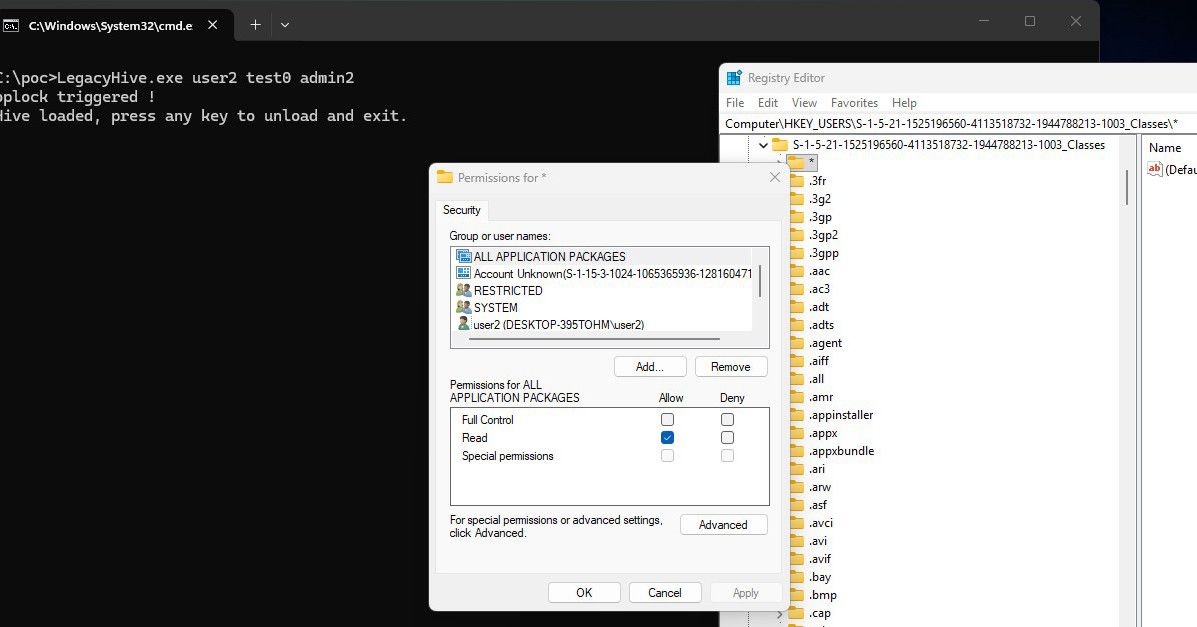
New Zero-Day Vulnerability 'LegacyHive' Reported in Windows Despite Latest Updates
On July 14, 2026, a new zero-day vulnerability named 'LegacyHive' was disclosed by Nightmare-Eclipse on GitHub. This vulnerability affects Windows systems even when the latest security updates have been applied, as it allows the mounting of a different user's registry hive during user profile read/write operations. The significance of the LegacyHive vulnerability lies in its potential to compromise user authentication credentials, leading to severe security risks, including complete system takeover. Currently, no CVE code has been assigned, and Microsoft has not provided any information regarding this issue. As the situation develops, it is crucial to monitor any updates from Microsoft regarding patches or mitigations for the LegacyHive vulnerability. No further timeline was disclosed at the time of publication.

Starmind's Orbital Compute vs. Terrestrial Data Centers: Analyzing Resource Advantages
Starmind's orbital compute technology presents a significant advantage over traditional ground-based data centers by eliminating constraints related to land, water, and grid permitting. While terrestrial data centers are currently cheaper and faster to construct, with U.S. data center spending reaching $85.3 billion in 2026, Starmind's approach focuses on addressing the growing resource limitations faced by hyperscale facilities. The significance of Starmind's technology lies in its ability to sidestep the increasing challenges of land and water usage. For instance, a 100 MW data center can consume approximately 530,000 gallons of water daily for cooling, while Starmind's AI1 utilizes deployable liquid radiators that require no water. This structural advantage could resonate with investors as the demand for AI computing continues to escalate, potentially leading to annual water withdrawals of up to 1.7 trillion gallons by 2027. Looking ahead, Starmind's next milestones include the launch of AI1 prototypes scheduled for early 2027. However, the technology's claims regarding cooling efficiency and operational reliability remain unverified until real flight data is available. As the industry evolves, the competition between orbital and terrestrial solutions will become increasingly relevant, particularly in the context of resource management and sustainability.

Starmind's Satellite Technology Achieves 880 Billion Liters in Annual Water Savings
Starmind has announced that its satellite technology can save approximately 880 billion liters of cooling water annually at full scale. This figure is equivalent to the annual household water use of around 6.5 million Americans. The technology operates by utilizing a closed-loop liquid cooling system that eliminates the need for water during its operational life, contrasting sharply with traditional ground data centers that consume vast amounts of water for cooling. The significance of this achievement lies in the growing water consumption crisis faced by data centers, particularly as AI expansion drives demand. In 2025, U.S. data centers consumed nearly one trillion liters of water, highlighting the urgent need for sustainable solutions. Starmind's approach not only addresses direct water usage but also avoids indirect water consumption associated with electricity generation, marking a substantial shift in how computing can be conducted in a resource-efficient manner. Looking ahead, Starmind's deployment strategy includes a projected buildout of 100 GW of orbital compute per year, which could displace an additional 735 billion liters of ground water demand annually. The first tranche of 10,000 satellites is already operational, offsetting approximately 8.8 billion liters of water per year. No further timeline was disclosed at the time of publication.

SpaceX's Starmind Project: Supplier Strategy and Chip Manufacturing Plans for 2026
SpaceX's Starmind project, aimed at deploying up to 1 million AI satellites, was filed with the FCC on January 30, 2026. The initiative is designed to minimize reliance on external suppliers, with CEO Elon Musk stating that current chip production capabilities only meet 2% of the projected needs. The first satellite, AI1, is set for prototype launches in early 2027, featuring a 70-meter wingspan and a modular payload system that allows for interchangeable chips from various suppliers. The significance of Starmind lies in its ambitious supply chain strategy, which seeks to transition from external hardware suppliers to a fully integrated Musk-owned facility by 2028. The Gigasat manufacturing site in Bastrop, Texas, is expected to be operational by the end of 2027, with plans for high-volume production of the D3 chip, specifically designed for space applications. This approach aims to consolidate chip manufacturing processes under the Terafab joint venture, which has an estimated initial investment of $55 billion. Looking ahead, the next milestone for Starmind is the launch of AI1 prototypes in early 2027, while the full-scale chip production at Terafab is projected to ramp up significantly thereafter. However, analysts express skepticism regarding the feasibility of achieving Musk's ambitious compute goals, which may require substantial investment and time to establish the necessary manufacturing capabilities.
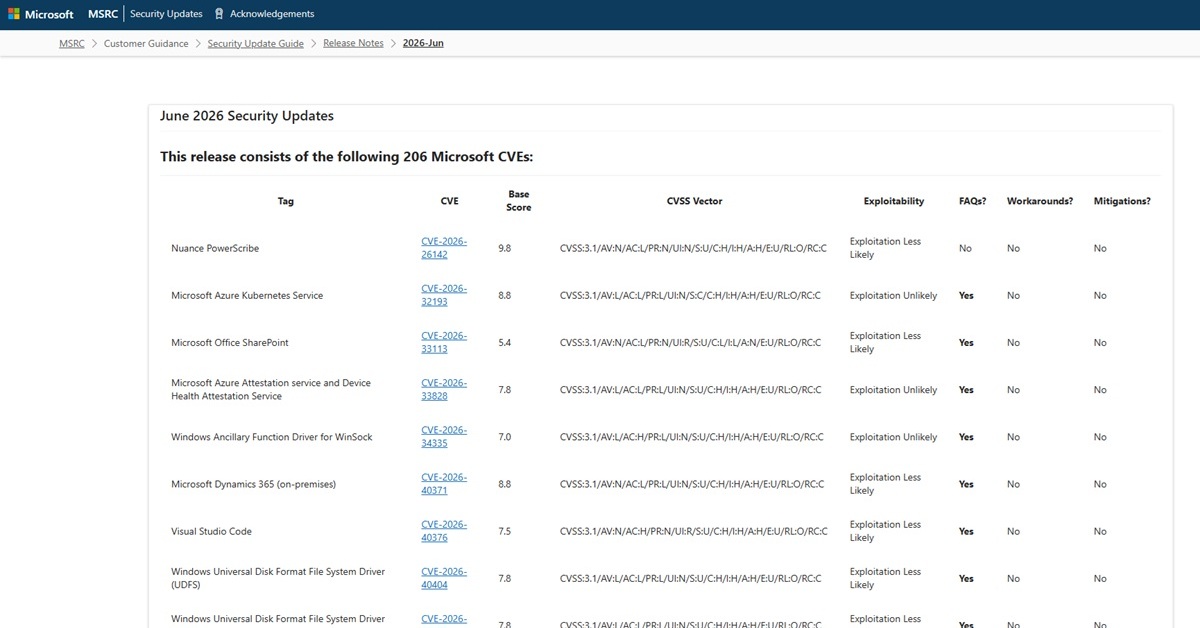
Microsoft releases June patch addressing zero-day vulnerabilities in BitLocker and Exchange.
Microsoft has released its monthly security update for June 2026, addressing a range of products including Windows, Office, and Azure. This update specifically targets known zero-day vulnerabilities that have already been exploited. The company is urging users to apply the updates promptly to enhance their security and protect against potential threats.

Microsoft criticizes disclosure of zero-day vulnerability without prior sharing, clashes with bug hunters.
On May 27, Microsoft publicly criticized the practice of disclosing zero-day vulnerabilities—security flaws that have not yet been patched—without prior notice. In a statement on its official blog, the company emphasized its ongoing commitment to protecting customers through round-the-clock monitoring and response efforts. Microsoft reiterated the importance of Collaborative Vulnerability Disclosure (CVD) as a more responsible approach to handling such vulnerabilities, highlighting the need for cooperation between security researchers and software developers to ensure user safety.
Robotics needs a service framework.
RSF defines a common language for robot service capability, lifecycle operations, certification pathways, and service-provider networks.
Join the RobotToday community on LinkedIn
Daily robotics news, in-depth analysis, conference highlights, and discussions with professionals worldwide.







