

Industry Briefing
A single destination for timely, editor-curated robotics news from around the world.
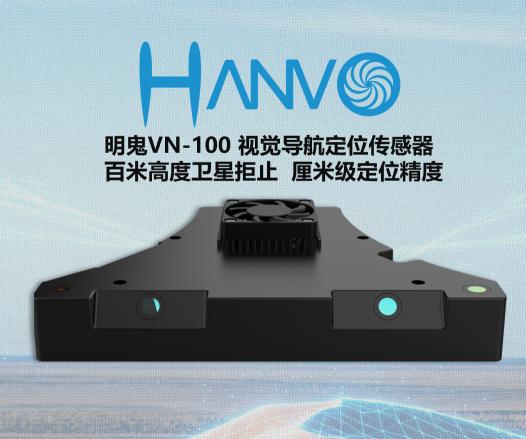
Two Years of Rigorous Testing Across 52 Scenarios: Embodied Intelligence Redefines Visual Navigation Technology
As embodied intelligence moves from laboratory settings to practical applications, researchers are addressing a significant challenge: enabling mobile agents to navigate effectively without relying on satellite signals. A recent exploration into modular visual navigation technology reveals promising advancements that have been validated in extreme environments. This innovative approach enhances the capabilities of various robotic applications, paving the way for more robust and versatile navigation solutions in real-world scenarios. The development of this technology is crucial as it aims to overcome the limitations posed by traditional navigation systems, particularly in areas where satellite signals are unreliable or unavailable.
Visual Navigation Robotics Autonomous Drones Sensor Technology
Robot Talk Episode 154 – Visual navigation in insects and robots, with Andrew Philippides
In a recent conversation, Claire engaged with Andrew Philippides, a Professor of Biorobotics at the University of Sussex, to explore insights from the behaviors of ants and bees that could enhance robot navigation systems. Philippides, who co-directs the Centre for Computational Neuroscience and Robotics as well as the be.AI Leverhulme Doctoral Centre for Biomimetic Embodied AI, emphasized the potential of studying these social insects to inform the development of more efficient and adaptive robotic technologies. The discussion highlighted how the intricate navigation strategies employed by ants and bees can inspire innovative approaches to solving complex challenges in robotics. This dialogue took place at the University of Sussex, a hub for advanced research in robotics and artificial intelligence, underscoring the institution's commitment to interdisciplinary collaboration and the application of biological principles in technological advancements.
Alibaba launches preorders for its first in-house AI glasses, featuring AR navigation and visual payment integration across its ecosystem
Alibaba has launched preorders for its inaugural self-developed Quark AI Glasses, priced at ¥3,699 ($510) for members and ¥3,999 ($550) for non-members. The preorder phase is currently active on Tmall, with deliveries anticipated to begin in early December. These innovative glasses are equipped with Qualcomm’s AR1 and BES2800 dual flagship chips, allowing them to seamlessly integrate with Alibaba’s ecosystem services and provide augmented reality experiences. This move marks Alibaba's entry into the growing market for smart eyewear, aiming to enhance user interaction with digital content.
News FeedRobotics needs a service framework.
RSF defines a common language for robot service capability, lifecycle operations, certification pathways, and service-provider networks.
Join the RobotToday community on LinkedIn
Daily robotics news, in-depth analysis, conference highlights, and discussions with professionals worldwide.







