Industry Briefing
A single destination for timely, editor-curated robotics news from around the world.
US Space Force Deploys Space Control Weapons in Orbit, Air Force Secretary Confirms
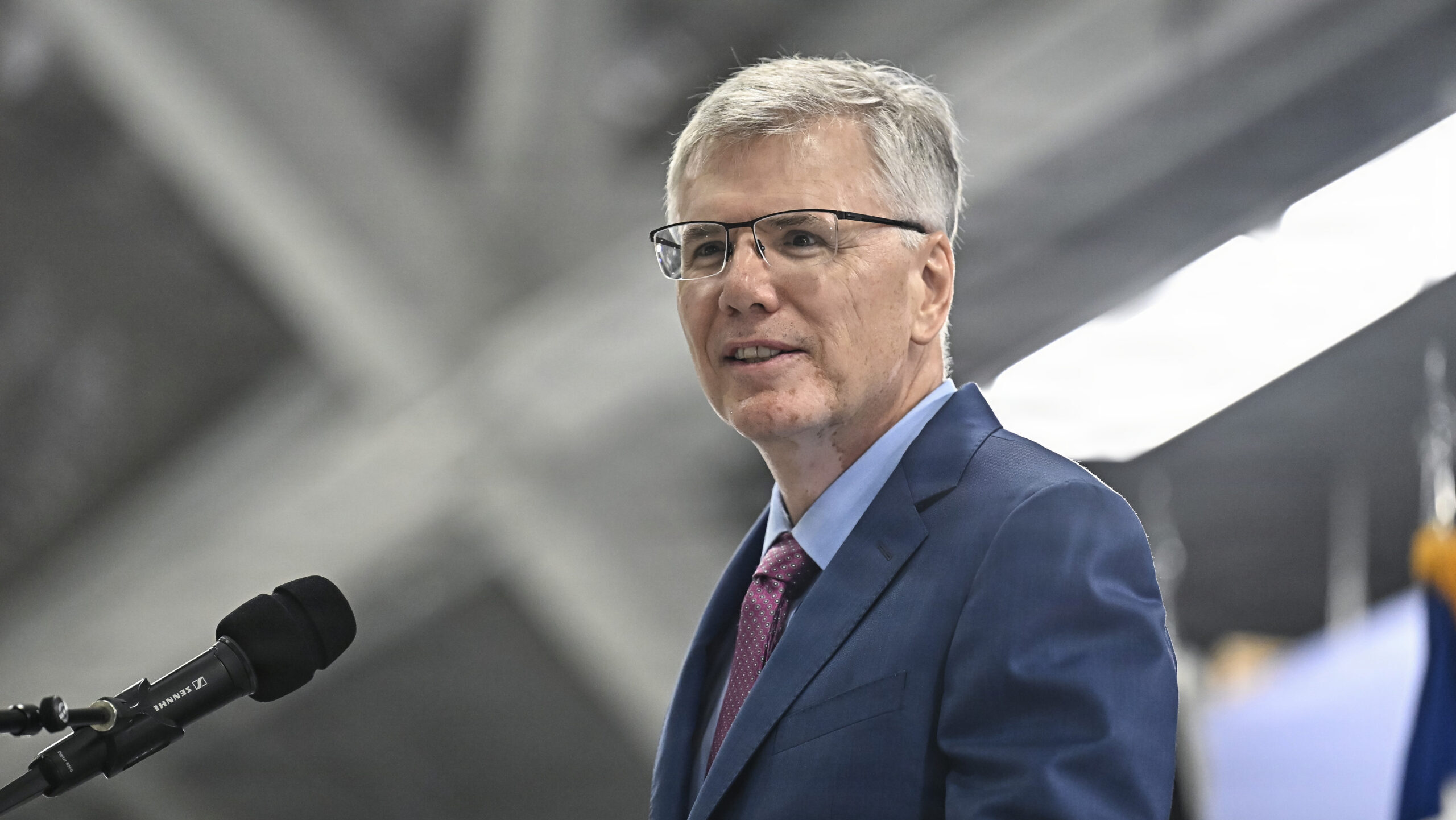
The US Space Force has officially launched 'space control weapons' into orbit, marking a significant acknowledgment from Air Force Secretary Troy Meink. During a keynote address at the Air and Space Forces Association conference, Meink emphasized the importance of these weapons in defending against evolving threats from adversaries. This announcement highlights a shift in the US government's stance on discussing orbital weaponry, which has historically been a sensitive topic due to concerns about a potential arms race in space. The deployment of space control weapons is part of a broader strategy to ensure the United States can protect its interests in space. Meink noted that these weapons could include both kinetic and non-kinetic systems, although specific details were not disclosed. The discussion around space control is crucial for establishing deterrence against nations like China and Russia, which have been developing their own orbital weapon capabilities. Looking ahead, the Space Force is also preparing to launch space-based interceptors as part of the Golden Dome initiative, aimed at countering missile threats from orbit. Additionally, the first air-moving target indication satellites are set to be launched this month, enhancing the US's ability to monitor air-based adversary platforms globally. No further timeline was disclosed at the time of publication.
Air Warfare Space AFA 2026 Air Force airborne moving target indication (AMTI) Anduril
NASA's Katalyst Space Robot for Telescope Lift Faces Control Issues in Orbit
NASA's Katalyst Space robot, designed to elevate the Neil Gehrels Swift Observatory to a higher orbit, is currently tumbling out of control. This mission marks NASA's first collaboration with a private company for such an operation, aimed at extending the observatory's operational lifespan beyond its initial expectations. The Swift Observatory, launched in 2004, is crucial for observing transient cosmic events. However, the LINK spacecraft, which was launched on July 3 aboard a Northrop Grumman Pegasus rocket, has encountered significant control issues, including the failure of two of its three reaction wheels. This has complicated communication efforts as the spacecraft spins away from Earth. Flight controllers are actively working to stabilize the LINK spacecraft using alternative thrusters, and initial efforts have shown positive results. As Katalyst's mission progresses, the focus will be on recovering the spacecraft to ensure the Swift Observatory can continue its vital work in astrophysics. No further timeline was disclosed at the time of publication.
Space NASA
Fault Tolerant Attitude Control for Spacecraft Considering Input Delay and Actuator Saturation: Theory and Experiment
A recent study published in the Journal of Field Robotics highlights the advancements in robotic technology aimed at enhancing agricultural efficiency. Researchers from various institutions collaborated to develop an autonomous robot capable of performing complex tasks such as planting, weeding, and harvesting crops. This innovative project, which began in early 2023, took place at several test farms across the Midwest. The motivation behind this initiative stems from the growing need for sustainable farming practices and the increasing labor shortages in the agricultural sector. By integrating advanced sensors and artificial intelligence, the robot can adapt to different crop types and environmental conditions, thereby optimizing yield and reducing resource waste. Field tests demonstrated the robot's ability to navigate diverse terrains and execute tasks with precision, significantly reducing the time and labor required for traditional farming methods. The research team aims to further refine the technology and expand its applications, potentially revolutionizing the way food is produced and addressing challenges faced by farmers worldwide.
RESEARCH ARTICLE
Control framework lets flexible robots move in tight spaces with less math
Recent discussions in robotics have highlighted the limitations of traditional machines, often characterized by rigid arms and mechanical movements, as exemplified by iconic characters like Optimus Prime and Bumblebee from the "Transformers" franchise. These designs, while visually striking, are impractical for navigating confined and cramped environments. Experts in the field are advocating for the development of more flexible and adaptable robotic systems that can operate effectively in such challenging spaces. This shift in focus aims to enhance the functionality of robots in real-world applications, where versatility and maneuverability are crucial. As the industry evolves, researchers are exploring innovative designs and technologies that could redefine the capabilities of robots, making them more suitable for a variety of tasks in diverse settings.
RoboticsRobotics needs a service framework.
RSF defines a common language for robot service capability, lifecycle operations, certification pathways, and service-provider networks.
Join the RobotToday community on LinkedIn
Daily robotics news, in-depth analysis, conference highlights, and discussions with professionals worldwide.