Industry Briefing
A single destination for timely, editor-curated robotics news from around the world.
China Unveils Advanced AI Robotics and Computing Innovations at WAIC 2026
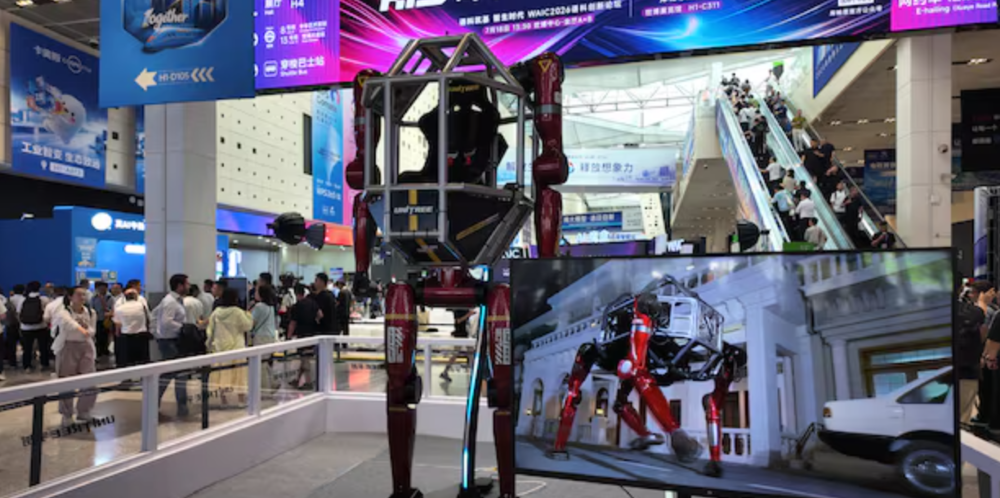
At the 2026 World Artificial Intelligence Conference (WAIC), a striking 3-meter tall, 500-kilogram red transforming mech, showcased by Yushu Technology, captured attendees' attention. This GD01 model, designed for high-risk environments, can switch between bipedal and quadrupedal forms in seconds and starts at a price of 3.9 million yuan. The Huawei Atlas 950 SuperPoD, displayed prominently at the event, represents a significant leap in AI computing capabilities with 8192 Ascend 950DT chips, achieving 8 EFLOPS of FP8 computing power. This super node, expected to launch in Q4 2026, marks a shift in domestic computing from chip-centric to system-centric approaches, emphasizing the importance of integrated performance across multiple units. The WAIC 2026 featured over 1,100 exhibitors and 4,500 products, with more than 350 global debuts. President Xi Jinping announced the establishment of international AI application cooperation centers, signaling China's transition from merely using AI to defining its foundational infrastructure.
Transforming Robots AI Computing Huawei Atlas Robotics Technology
D-Robotics Showcases Sunrise™ AI Chips at IFA 2026 for Home Robots
At IFA 2026 in Berlin, D-Robotics is highlighting its Sunrise™ AI chips, which power a variety of home robots. Notable products include TCL's hey AiMe companion robot, Vbot's SuperDog quadruped, and the xLean TR1 floor washer, showcasing the versatility of D-Robotics' technology. The significance of D-Robotics' contributions lies in its role as a leading provider of robotics development infrastructure. By equipping numerous robots with its AI chips, the company is influencing the evolution of home robotics, making advanced technology accessible to various manufacturers and enhancing consumer experiences. As IFA 2026 progresses, attention will be on how D-Robotics continues to innovate within the robotics sector. The impact of its Sunrise™ AI chips on the functionality and capabilities of home robots will be closely monitored, as the industry looks to the future of intelligent automation in domestic settings. No further timeline was disclosed at the time of publication.

University of Texas Develops 3D-Printable Bio-Material for Diverse Applications
Engineers at The University of Texas at Austin have created a 3D-printable bio-material called JIBEs (Jammed Interconnected Bilayer Emulsions) that mimics the selective filtering capabilities of biological tissue. This innovative material can be produced rapidly and at scale, overcoming previous limitations in manufacturing tissue-like structures. The significance of this development lies in its wide-ranging applications across various fields, including medicine, robotics, computing, and environmental science. The bio-material's ability to replicate the organization of human cells allows for precise tissue growth, which could revolutionize organ grafting and enhance the functionality of soft robotics in complex environments. Looking ahead, the adaptability of this bio-material suggests potential breakthroughs in multiple industries. Its biocompatibility and structural flexibility position it as a promising platform for future innovations in healthcare and robotics. No further timeline was disclosed at the time of publication.
Innovation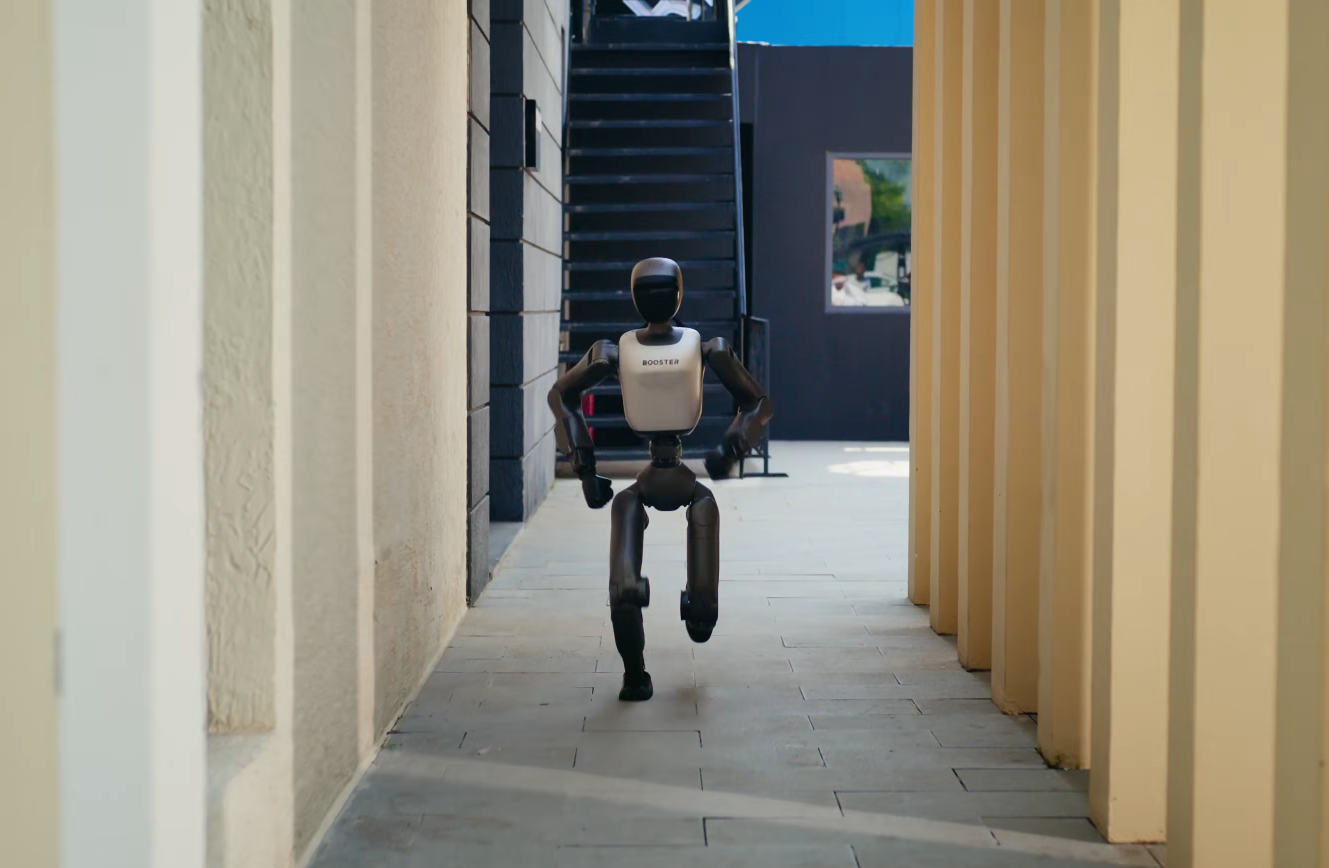
Booster Robotics Launches Booster T2 Humanoid Robot with NVIDIA Thor Computing Power
Booster Robotics has introduced the Booster T2, a humanoid robot platform aimed at real-world applications and embodied AI research. The T2 Pro version utilizes NVIDIA’s Thor chip, delivering up to 2,070 TFLOPS for real-time perception and control. The robot is designed for tasks requiring mobility and manipulation, showcasing advanced capabilities such as walking, dynamic balance, and athletic movements. The significance of the Booster T2 lies in its integration of cutting-edge technology and open development. With features like whole-body coordination and onboard AI computing, it supports a wide range of applications in robotics. The introduction of Booster Studio, an open software platform, further enhances its utility by allowing developers to simulate and deploy AI models effectively. Looking ahead, the Booster T2 is positioned to advance research in embodied AI and robotics. Its robust design, including 31 degrees of freedom and multiple hardware configurations, makes it suitable for various manipulation tasks. No further timeline was disclosed at the time of publication.
AI and Robotics
Virginia Tech researchers control soft robotics with ‘AI’s cousin’: ‘Reservoir computing’
Researchers at Virginia Tech are advancing the field of soft robotics, which utilizes flexible, muscle-like materials to create machines capable of bending and stretching in ways that surpass traditional rigid robots. This innovative technology enables applications such as harvesting ripe tomatoes and navigating complex search-and-rescue environments. However, the inherent flexibility of these robots presents significant challenges in control and precision. The team at Virginia Tech is focused on addressing these control difficulties to enhance the functionality and reliability of soft robotics, aiming to unlock their full potential in various practical applications.
Computing Features Robotics Science agricultural robotics ai robotics
Unlocking soft robotics control with AI's cousin: Reservoir computing
Recent advancements in soft robotics, which utilize flexible, muscle-like materials, have revolutionized the field, allowing machines to perform tasks such as picking ripe tomatoes and navigating complex search-and-rescue environments. However, despite their impressive capabilities, these innovative robots face significant challenges in terms of control. The inherent flexibility that enables their fluid movements also complicates their operation, making it difficult for developers to achieve precise control. As researchers continue to explore the potential of soft robotics, the quest for improved control mechanisms remains a critical focus, highlighting the balance between versatility and functionality in this emerging technology.
Robotics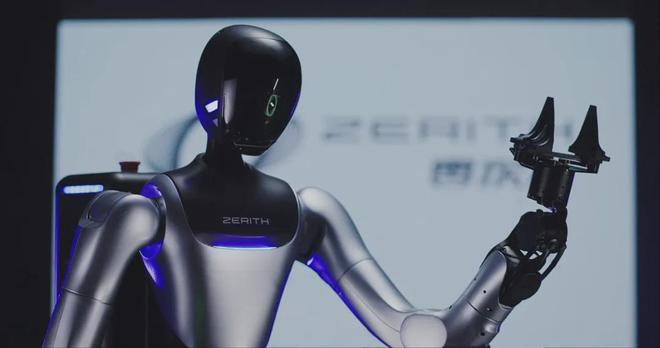
Computing Power Giants Enter Embodied Intelligence! Runze Group Leads Over 100 Million Financing for Tsinghua's Zerith Robotics
Zerith Robotics has successfully raised over $100 million in funding, with the investment spearheaded by Runze Group, a prominent player in the computing power sector. This substantial financial backing is intended to harness advanced computing technologies to improve embodied intelligence in real-world commercial applications. The initiative represents a pivotal advancement in the pursuit of achieving true general intelligence, positioning Zerith Robotics at the forefront of innovation in the field.
Embodied Intelligence Robotics AI Computing Power Commercial AutomationRobotics needs a service framework.
RSF defines a common language for robot service capability, lifecycle operations, certification pathways, and service-provider networks.
Join the RobotToday community on LinkedIn
Daily robotics news, in-depth analysis, conference highlights, and discussions with professionals worldwide.