

Industry Briefing
A single destination for timely, editor-curated robotics news from around the world.

Shangwei New Materials Launches Personal Robots Despite Stock Price Decline
On September 20, Shangwei New Materials launched two personal robots under its consumer brand, Qiyuan Robotics, targeting the personal and family market. CEO Tian Hua stated that their goal is to position their products as the 'Apple of robotics.' However, following the launch, the company's stock price fell by 4.14% on September 21 and continued to decline over the next two days. The introduction of Q1, the world's first small-sized humanoid robot, and T1, a transformable personal robot, aims to explore the consumer market for robotics. Key functionalities include children's programming, companionship, and remote photography. Industry experts suggest that while the initial focus on fun is valid, the long-term value will depend on the robots' practical applications. Looking ahead, Qiyuan Robotics plans to invest 1 billion yuan over the next five years to develop its ecosystem and enhance its hardware and AI capabilities. The success of these personal robots in generating stable sales and profits will be crucial for Shangwei New Materials as it seeks to establish a new growth trajectory in the robotics sector.
Personal Robots Consumer Robotics AI Technology Smart Home Robot Development
Chemical Materials Crucial for Enhancing Humanoid Robots' Performance and Competitiveness
A humanoid robot recently completed a half marathon in 50 minutes and 26 seconds, showcasing its capabilities not just through algorithms but through advanced materials. The year 2026 is anticipated to mark a significant milestone in the mass production of humanoid robots, with China's four-legged robots accounting for nearly 70% of global sales and over 400 humanoid robot models available worldwide. The competition in the humanoid robot industry is increasingly influenced by chemical materials, which are essential for improving performance. For instance, the use of PEEK, which is lighter than aluminum and steel, can reduce the weight of robots by 10%-30% and lower energy consumption by 15%-25%. Companies like YuTree and Xiaopeng are already utilizing carbon fiber composites and PEEK in their robots, while the global market for carbon fiber in humanoid robots is projected to reach $1.114 billion by 2033. Furthermore, the integration of flexible materials is vital for creating more lifelike robots. SEBS thermoplastic elastomers are being developed to mimic human skin, enhancing the robots' tactile interactions. As humanoid robots transition from laboratories to practical applications in factories and homes, the focus will shift from algorithms to the materials that enable robots to perform better and more human-like. No further timeline was disclosed at the time of publication.
Humanoid Robots Chemical Materials Robotics Technology Lightweight Materials
NASA Funds Innovative Project for Robotically Assembled Metamaterial Radars in Space
NASA is funding a novel initiative to explore the construction of large radar antennas in space using robots and modular metamaterials. This project, led by Duke University's David Smith, is part of the 2026 NASA Innovative Advanced Concepts (NIAC) Phase I study, titled Robotically Assembled Electromagnetic Metamaterials for Long-Range Space Situational Awareness. The significance of this project lies in its potential to enhance space surveillance capabilities. Current ground-based radars, like the upgraded Space Fence, can track objects as small as four inches in low Earth orbit, but monitoring smaller objects or those at greater distances poses challenges. By assembling radar components in space, the project aims to overcome the limitations of traditional antennas that must survive launch constraints. Looking ahead, the project will focus on the feasibility of using metamaterials as building blocks for a large electromagnetic aperture. NASA plans to investigate metamaterial designs through numerical modeling while considering the robotic assembly techniques demonstrated by the ARMADAS project. No further timeline was disclosed at the time of publication.
Space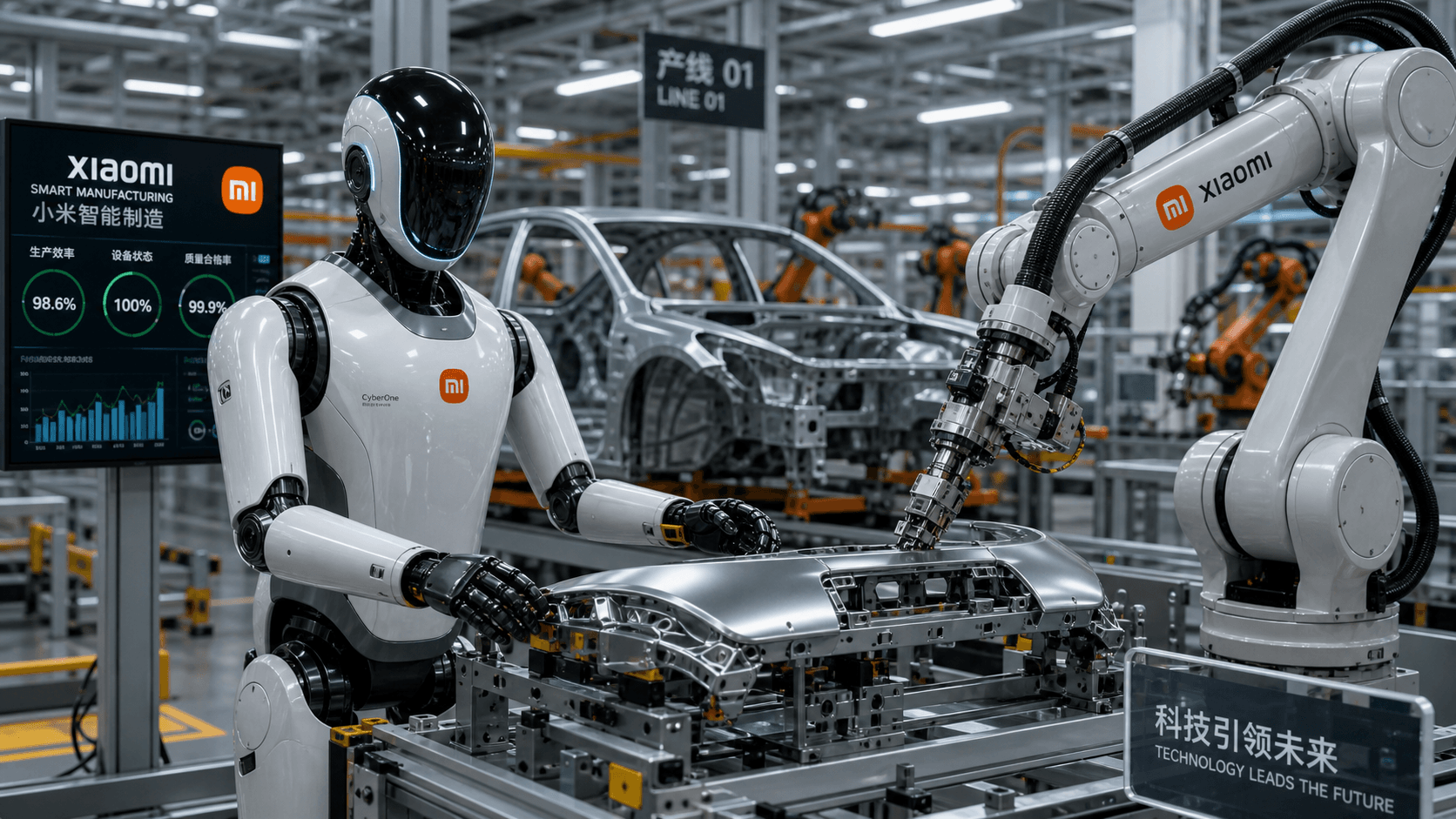
Xiaomi Humanoid Robots Transition to Complex Workpiece Handling on SU7 Production Line
Xiaomi's humanoid robots have advanced from basic screw-tightening tasks to managing complex flexible workpieces on the SU7 production line. This transition marks a significant achievement, with the robots reaching a success rate of over 90% after just six months of training in the factory environment. This development is crucial as it highlights Xiaomi's commitment to enhancing automation in car manufacturing, showcasing the potential of humanoid robots in handling intricate tasks. The successful implementation of these robots could lead to increased efficiency and productivity within the automotive production sector. Looking ahead, it will be important to monitor how Xiaomi continues to integrate these humanoid robots into their production processes and whether they will expand their capabilities further. No further timeline was disclosed at the time of publication.
Technology
Hyundai's Louisiana Steel Mill to Supply Materials for Robots and SpaceX Rockets
Hyundai Motor Group Executive Chair Chung Euisun announced that steel from the upcoming Hyundai Steel mill in Louisiana could be utilized beyond automotive applications, potentially in Atlas humanoid robots and SpaceX rockets. This vision was shared during the groundbreaking ceremony for the Hyundai-Posco Louisiana Steel plant, which will initially focus on automotive steel production. The $5.8 billion electric arc furnace facility is set to be Hyundai Steel's first production base in the U.S., with an annual capacity of 2.7 million metric tons, including 1.8 million tons dedicated to automotive steel and 900,000 tons for other uses. Chung's comments reflect a long-term strategy to diversify the mill's output, aligning with Hyundai's plans to deploy Atlas robots in U.S. manufacturing operations by 2028. Looking ahead, Hyundai is cautious about deploying Atlas within the steel mill, emphasizing the need for extensive testing. Chung also highlighted the company's efforts to enhance Atlas' development by reorganizing its structure to accelerate technology adoption and improve capabilities in critical components like actuators and grippers. No further timeline was disclosed at the time of publication.
All News
Peter Wurman Inducted into National Inventors Hall of Fame for Kiva System Innovation
Peter Wurman was inducted into the National Inventors Hall of Fame in 2022 for his significant contributions to robotics. Alongside Mick Mountz and Raffaello D’Andrea, he co-invented the Kiva system, a mobile robotic solution that has transformed material handling in distribution centers. The Kiva system has revolutionized warehouse order fulfillment, enhancing efficiency and productivity in logistics operations. This innovation has set new standards in the industry, showcasing the potential of robotics in optimizing supply chain processes. Looking ahead, the impact of the Kiva system on the future of material handling and warehouse automation will be significant. As more companies adopt similar technologies, the landscape of distribution centers is expected to evolve further. No further timeline was disclosed at the time of publication.

Yale Lift Truck Technologies Hosts Dealer Showcase to Highlight Innovations in Materials Handling
Yale Lift Truck Technologies held a dealer showcase from June 24-25, 2026, at its upgraded Frankfurt Experience Centre in Mörfelden-Walldorf, Germany. The invite-only event gathered dealers from DACH and Northern Europe to explore advanced technologies and participate in knowledge-sharing sessions aimed at modern supply chain demands. The showcase featured an exclusive preview of the Yale Route Runner, a materials handling solution designed to enhance direct-to-store deliveries, significantly improving operational efficiency and last-mile performance. Attendees also learned about the new Yale® MXLG series of lithium-ion forklifts, capable of handling loads up to 7-tonnes, and battery technologies that promote energy management and sustainability. Looking ahead, the collaborative spirit of the Yale dealer network was emphasized, with a focus on delivering customer-centric solutions. No further timeline was disclosed at the time of publication.
Fork Lift Trucks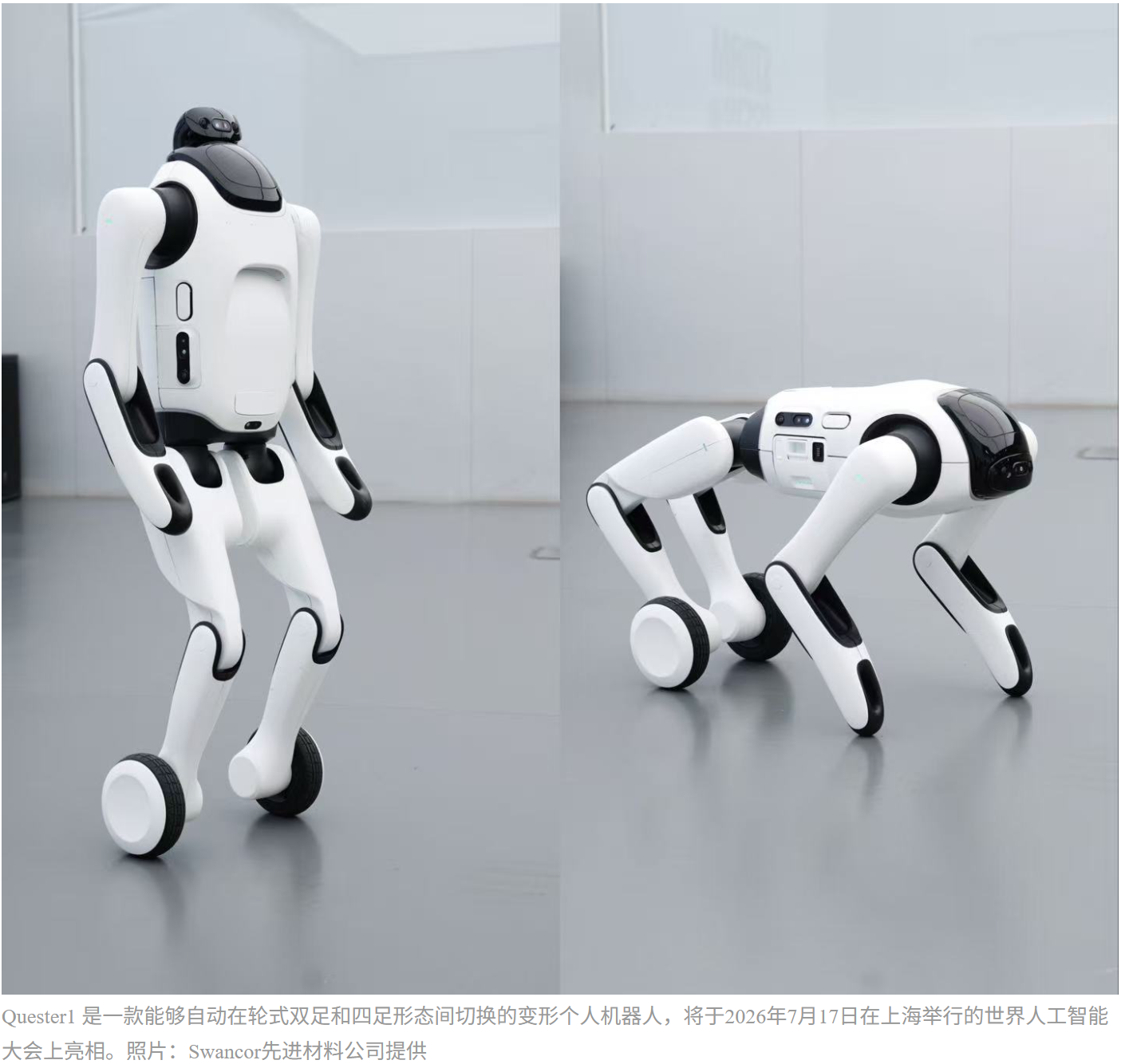
Swancor Advanced Materials to Launch World's First Shape-Shifting Personal Robot at WAIC
Swancor Advanced Materials is set to unveil the Quester1, the world's first shape-shifting personal robot, at the 2026 World Artificial Intelligence Conference (WAIC) on July 17. This innovative robot can automatically switch between bipedal and quadrupedal modes without manual disassembly, showcasing a unique 'transformable cross-modal integration architecture' that enables smooth transitions. The Quester1 is designed for various environments, with its bipedal form ideal for flat surfaces and intricate tasks, while the quadrupedal mode excels in navigating stairs and rough terrain. CEO Tian Hua emphasized that this product aims to redefine personal robotics for consumer markets, marking Swancor's first foray into the consumer robotics sector. As the Quester1 prepares for its debut, it highlights the rapid development of transformable robotics in China. The WAIC will feature over 1,100 companies and more than 300 product launches, indicating a significant shift towards embodied intelligence in robotics. No further timeline was disclosed at the time of publication.
Personal Robots Shape-Shifting Technology AI Robotics Consumer Robotics
Robots that can identify materials and map unknown environments could aid nuclear and defense sectors
Researchers at the University of Surrey are developing advanced robots capable of surpassing human vision, creating live 3D maps of unfamiliar environments, and determining the composition of various objects. This innovative technology, which is currently in development, has the potential to revolutionize several fields, including nuclear inspection, rail and building safety, and search and rescue operations in combat zones. By enhancing robotic capabilities, the team aims to improve safety and efficiency in critical situations where human intervention may be risky or impractical. The project highlights the university's commitment to pioneering research that addresses real-world challenges through cutting-edge technology.
Robotics
At Automate, VisionNav Robotics to Showcase Autonomous Material Handling Solutions and Intelligent Vision Technologies
A leading logistics technology company is set to showcase its latest innovations in warehouse automation at an upcoming industry trade show. The event, scheduled for next month in Chicago, will feature the company's autonomous precision stacking solution, designed to enhance efficiency in material handling. Additionally, attendees will have the opportunity to explore the capabilities of a new counterbalance truck, which aims to improve safety and productivity in warehouse operations. The company will also present its advanced warehouse visibility platform, which provides real-time data analytics to optimize inventory management and streamline operations. This initiative reflects the company's commitment to addressing the growing demand for automation and efficiency in the logistics sector, driven by the need for businesses to adapt to rapidly changing market conditions and consumer expectations. By integrating cutting-edge technology into their offerings, the company aims to empower warehouses to operate more effectively and reduce operational costs.
Materials Handling Group Power
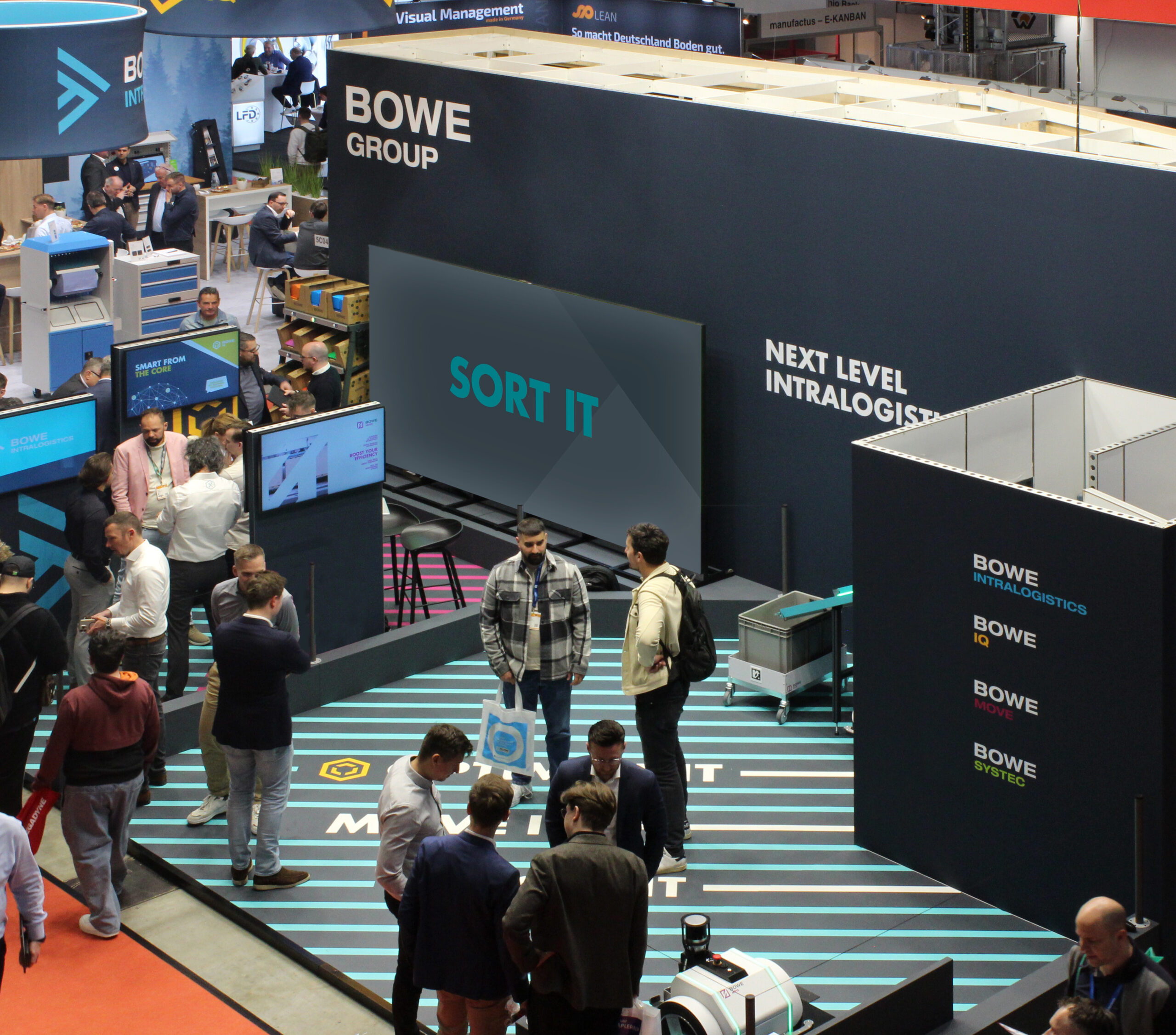
At LogiMAT, Bowe Group leaders discussed the company's evolution and future plans for integrated automation supported by advanced software intelligence. Founded 80 years ago, Bowe Group initially focused on manufacturing household goods before expanding into dry cleaning and car wash systems, and eventually document and paper management. The company's commitment to engineering innovation continues to drive its growth and adaptation in the materials handling sector.
AMR and AGV Automation Systems and Shuttles Conveying and Sortation Magazine Features Materials Handling WMS & SCM Software
ANSCER Robotics closes Series A round for industrial material handling
ANSCER Robotics has successfully secured $5.4 million in a Series A funding round aimed at expanding its hybrid industrial automation robots. This investment will enable the company to enhance its operations in North America and extend its reach to global markets. The funding comes at a time when the demand for advanced automation solutions is on the rise, driven by the need for increased efficiency in industrial material handling. With this financial boost, ANSCER Robotics plans to scale its technology and improve its product offerings to meet the evolving needs of the industry.
Autonomous Mobile Robots (AMRs) Investments Logistics Manufacturing News ANSCER Robotics
Milvus Robotics Introduces the SEIT F1500S Forklift-Type Autonomous Mobile Robot for Advanced Material Handling
The F1500S, a new logistics solution, has been introduced to enhance operational efficiency in fast-paced manufacturing settings. This innovative system is designed to provide manufacturers with the flexibility needed for high-mix production environments, ensuring precise and reliable material transport. By streamlining intralogistics processes, the F1500S allows companies to maintain agility in their production lines. This development is particularly significant for manufacturers seeking to optimize their operations and adapt to varying production demands.

IFOY Competition Names 17 Finalists for Material Handling Awards
The IFOY competition has announced its 17 finalists in the material handling sector, highlighting innovative automation solutions that are transforming warehouse operations. Among the contenders is Locus Robotics, a company known for its cutting-edge technology in logistics and automation. The finalists were selected based on their ability to enhance efficiency and productivity within the industry. This year's competition aims to showcase advancements that not only streamline processes but also address the growing demand for automation in supply chain management. The winners will be revealed during the IFOY Awards ceremony, which is set to take place later this year, emphasizing the importance of innovation in the evolving landscape of material handling.

Radboud chemists are working with companies and robots on the transition from oil-based to bio-based materials
Researchers at Radboud University are addressing the sustainability challenges posed by the reliance on fossil raw materials in the production of chemical products, including medicines, plastics, soap, and paint. Recognizing the urgent need for a transition to bio-based raw materials, the team is exploring innovative solutions to facilitate this shift. The initiative aims to accelerate the development of sustainable alternatives, thereby reducing the environmental impact associated with traditional materials. By focusing on efficient methods for sourcing and utilizing bio-based resources, the researchers hope to contribute to a more sustainable future in the chemical industry.
Robotics needs a service framework.
RSF defines a common language for robot service capability, lifecycle operations, certification pathways, and service-provider networks.
Join the RobotToday community on LinkedIn
Daily robotics news, in-depth analysis, conference highlights, and discussions with professionals worldwide.







