Industry Briefing
A single destination for timely, editor-curated robotics news from around the world.

Rapta Secures $8 Million Funding to Enhance AI Quality Assurance in Defense Manufacturing
Rapta has successfully raised $8 million to further develop its AI-driven quality assurance and manufacturing intelligence platform tailored for defense and aerospace sectors. The funding round was co-led by Voyager Capital and Access Venture Partners, with contributions from several other investors. This financial boost will enable Rapta to expand the deployment of its Manufacturing Intelligence Platform, which integrates computer vision and production data to enhance quality tracking and process performance. The significance of this funding lies in Rapta's technology, which is already utilized by five of the ten largest U.S. defense contractors. By addressing challenges such as quality issues and fragmented data in production environments, Rapta's platform aims to streamline operations without necessitating a complete overhaul of existing technology infrastructures. This approach is particularly crucial in industries with stringent compliance requirements, where accurate documentation and traceability are vital. Looking ahead, Rapta's focus will be on leveraging the new funding to enhance its platform's capabilities and expand its market presence. The addition of Voyager and Access Venture Partners' representatives to its board is expected to provide valuable guidance during this critical phase. No further timeline was disclosed at the time of publication.
AI AI Funding & Investment Robotics Access Venture Partners BVC DeepWork Capital
Data-Driven Quality Control Enhances Manufacturing by Preventing Costly Defects
Data-driven quality control is transforming modern manufacturing by identifying variations in processes before defects occur. This proactive approach allows teams to monitor conditions that lead to nonconforming parts, reducing scrap, rework, and delivery pressures while maintaining quality costs. The significance of this method lies in its ability to shift from reactive to proactive quality control. By focusing on process changes rather than merely sorting defective products, manufacturers can prevent issues before they escalate, ultimately protecting production capacity and minimizing hidden costs associated with defects. Looking ahead, the integration of statistical process control (SPC) will be crucial for operators and engineers. By training teams to read control charts and understand process capability, manufacturers can ensure stable processes that meet specifications, thus avoiding the costly errors of mismanaging process variations.
Computing Digital Automation Manufacturing Software continuous improvement data-driven quality control
Inside modern supplement manufacturing: How automated filling lines are raising the quality bar
Recent advancements in automation are transforming the supplement manufacturing industry, particularly through the implementation of cutting-edge filling lines that enhance both quality and efficiency. These innovative systems not only incorporate advanced technologies but also necessitate the establishment of new protocols and expectations for quality assurance. As manufacturers adopt these automated solutions, they are experiencing significant breakthroughs and adopting best practices that elevate production standards. The article delves into how these automated filling lines are setting a new benchmark in the industry, emphasizing the critical controls that are essential for maintaining high-quality output.
Health Manufacturing automated filling lines automated inspection automation news checkweighers
A Faster Manufacturing World Demands Enhanced, Automated Quality Processes
In a rapidly evolving technological landscape, the need for modern software solutions to be seamlessly integrated and connected to shared data sources has become increasingly critical. As organizations strive for efficiency and real-time data access, the demand for software that can operate cohesively across various platforms is paramount. This shift is driven by the necessity for businesses to enhance their operational capabilities and improve decision-making processes. By leveraging interconnected systems, companies can ensure that all departments have access to the same up-to-date information, fostering collaboration and innovation. The emphasis on integration highlights the importance of adopting advanced technologies that not only streamline workflows but also support data-driven strategies in a competitive market. As of October 2023, this trend continues to shape the future of software development, pushing organizations to prioritize connectivity and data accessibility in their technological investments.
Process / Control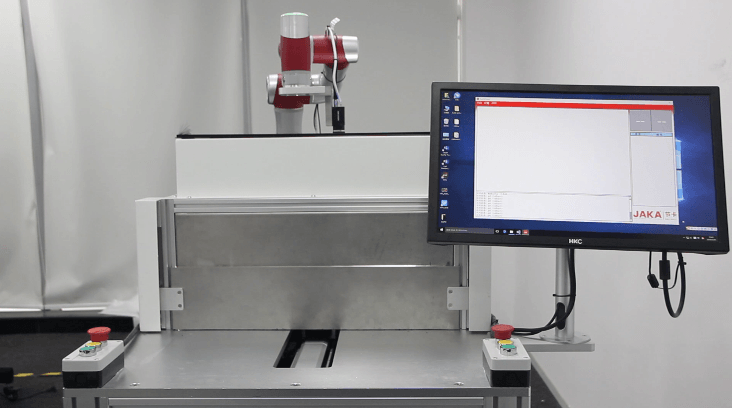
How Collaborative Robots Are Improving Quality Control in Electronics Manufacturing
The electronics industry is undergoing a significant transformation as manufacturers increasingly adopt collaborative robots to enhance quality control and inspection processes. With rapid product lifecycles and the demand for zero-defect production, traditional automation methods often fall short in the high-mix, low-volume production environment typical of modern tech manufacturing. Collaborative robots, or cobots, are now being integrated into precision testing and visual inspection lines, offering the speed and accuracy needed while maintaining the flexibility required for delicate electronic assembly. These robots can perform Automated Optical Inspection (AOI) with sub-millimeter precision, significantly reducing the risk of human error associated with fatigue and perceptual blindness during long shifts. Companies like JAKA are leading this innovation by developing robots equipped with advanced 2D and 3D vision systems. Their JAKA AL series features an integrated vision system that allows the cobot to autonomously identify components and check for assembly errors without the need for external cameras. This capability enables real-time adjustments to the production line, helping to identify quality drifts before they result in defective batches. JAKA’s engineering emphasizes safety and high performance, with models like the JAKA Zu series designed for high-speed testing while ensuring safe human interaction through torque-feedback collision detection. By investing in JAKA collaborative robots, manufacturers can ensure that every device produced meets stringent global standards, thereby maintaining a competitive edge in the electronics market.

Automatic Visual Inspection: The Secret to Flawless Manufacturing Quality
Manufacturers are enhancing their quality control processes by adopting a digital inspection framework, which allows engineers to shift their focus from merely identifying defects to addressing the underlying causes of these issues. This transition, which emphasizes the importance of human expertise in the manufacturing process, aims to improve overall product quality and efficiency. By integrating advanced technology into their inspection protocols, companies are not eliminating the human element but rather elevating it, enabling skilled professionals to apply their knowledge and problem-solving abilities more effectively. This strategic move reflects a growing trend in the industry, as organizations seek to leverage digital tools to optimize operations and enhance the role of human oversight in quality assurance.
Robotics needs a service framework.
RSF defines a common language for robot service capability, lifecycle operations, certification pathways, and service-provider networks.
Join the RobotToday community on LinkedIn
Daily robotics news, in-depth analysis, conference highlights, and discussions with professionals worldwide.