Industry Briefing
A single destination for timely, editor-curated robotics news from around the world.

Multiway Robotics Enhances Malaysian Manufacturer's Smart Warehouse with Over 5,000 Storage Locations
Multiway Robotics has implemented a solution for a Malaysian manufacturer that features over 5,000 storage locations and multi-model autonomous forklift collaboration. This transformation has led to a more efficient and scalable warehouse operation, achieving a storage density improvement of over 30%. The significance of this development lies in its support for the customer's ongoing supply chain transformation, showcasing how advanced robotics can optimize warehouse logistics. By enhancing storage capabilities and operational efficiency, Multiway Robotics is setting a new standard in smart warehouse solutions. Looking ahead, it will be important to monitor how this implementation impacts the manufacturer's overall supply chain performance and whether similar solutions will be adopted by other manufacturers in the region. No further timeline was disclosed at the time of publication.

SpaceX's Starmind Plans 1 Million AI Satellites Amid Collision Risks
SpaceX has announced its ambitious Starmind project, which aims to deploy 1 million AI satellites in orbits between 500 and 2,000 km. This initiative, confirmed by Elon Musk on June 23, 2026, follows a merger with xAI, valuing the combined entity at $1.25 trillion. The satellites will function as orbital data centers, processing AI workloads powered by solar arrays and linked by optical lasers. The significance of Starmind lies in its potential to add 100 gigawatts of AI compute capacity annually, contingent on the successful operation of the Starship launch system. However, the project raises concerns regarding space debris, as the current orbital environment is already congested, with a 20% increase in collision risk reported since 2024. The European Space Agency has highlighted that the density of debris in low Earth orbit is now comparable to that of active satellites, complicating the operational landscape for new entrants like Starmind. Looking ahead, the first operational orbital AI deployments are targeted for 2028, with test launches expected in early 2027. However, the project faces scrutiny regarding its impact on space debris, as even a 1% failure rate could significantly increase the number of uncontrollable objects in orbit, exacerbating existing risks. No further timeline was disclosed at the time of publication.
An Adaptive Double Closed‐Loop Path Tracking Control Method for High‐Precision Autonomous Navigation of Agricultural Machinery
In a recent study published in the Journal of Field Robotics, researchers have unveiled significant advancements in robotic navigation systems, particularly focusing on autonomous vehicles. This groundbreaking research, conducted by a team of engineers and computer scientists, was released in May 2026 and highlights the integration of artificial intelligence with real-time data processing to enhance navigation accuracy. The study took place in various urban environments, where the team tested their innovative algorithms designed to improve obstacle detection and route optimization. The motivation behind this research stems from the increasing demand for safer and more efficient autonomous transportation solutions in densely populated areas. Through a series of simulations and field tests, the researchers demonstrated how their approach allows vehicles to adapt to dynamic conditions, such as changing traffic patterns and unexpected obstacles. This capability not only promises to reduce the likelihood of accidents but also aims to improve overall traffic flow. The findings are expected to have a profound impact on the future of urban mobility, potentially leading to widespread adoption of autonomous vehicles that can navigate complex environments with greater reliability. As cities continue to evolve, the integration of such advanced robotic systems could play a crucial role in shaping the future of transportation.
RESEARCH ARTICLE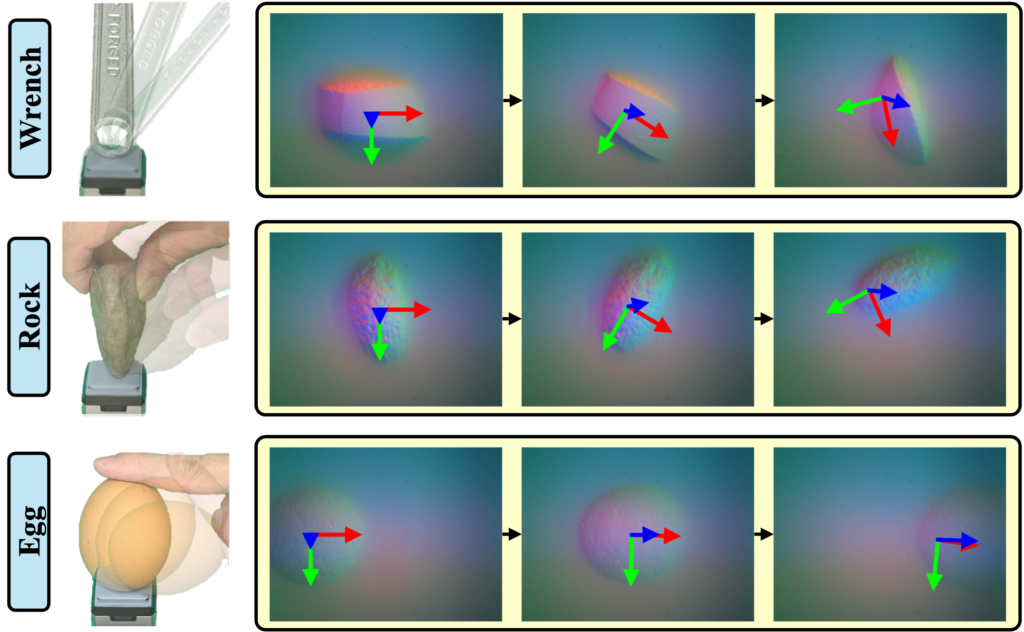
Innovative Algorithm Enhances Robot Tracking for High-Precision Manipulation Tasks
Researchers at Carnegie Mellon University's Robotics Institute are making strides in enhancing robotic capabilities with the development of an innovative algorithm designed to improve tracking for high-precision manipulation tasks. This advancement is particularly significant as it addresses the challenges robots face when handling a diverse range of low-texture objects, which require human-level dexterity for effective manipulation and reconstruction. The work, led by a Ph.D. student, aims to push the boundaries of current robotic tactile sensing technologies. By refining the algorithms that govern how robots perceive and interact with their environment, the team hopes to facilitate more accurate and versatile robotic applications in various fields. This breakthrough could pave the way for robots to perform complex tasks that demand a high degree of precision, ultimately revolutionizing the way robots are utilized in industries that rely on intricate object handling.
ResearchRobotics needs a service framework.
RSF defines a common language for robot service capability, lifecycle operations, certification pathways, and service-provider networks.
Join the RobotToday community on LinkedIn
Daily robotics news, in-depth analysis, conference highlights, and discussions with professionals worldwide.