Industry Briefing
A single destination for timely, editor-curated robotics news from around the world.
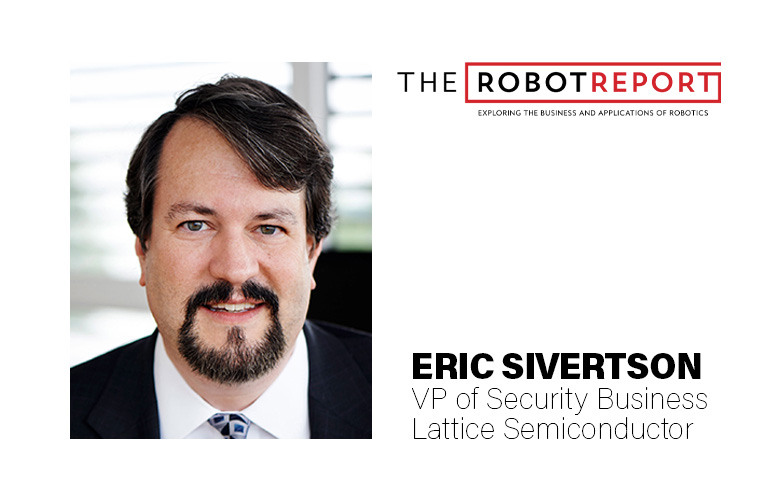
Eric Sivertson Explores FPGAs and Their Role in Robot Security
Eric Sivertson, Vice President of Security Business at Lattice Semiconductor, recently appeared on The Robot Report Podcast to discuss the importance of field-programmable gate arrays (FPGAs) in enhancing robot security. He highlighted that FPGAs are essential for mitigating security risks in robotic systems, particularly as robots become more autonomous and capable. Sivertson emphasized that the intersection of artificial intelligence and robotics, especially in humanoid robots, necessitates a focus on both safety and security. He pointed out that while safety measures are crucial, they can be compromised if the underlying software or hardware is vulnerable to cyberattacks. This dual focus is critical as robots increasingly operate in dynamic environments. Looking ahead, Sivertson warned of the potential consequences of cyberattacks on robotic systems, particularly humanoids that could be manipulated to cause harm. He urged the industry to prioritize robust security measures to prevent such scenarios, as the implications of compromised robots could be severe, turning them into dangerous entities capable of causing physical harm.
Design / Development Development Tools / SDKs / Libraries Educational Humanoids Markets / Industries Microprocessors / SoC
Exploring the Role of FPGAs in Enhancing Physical AI Security
In Episode 260 of The Robot Report Podcast, Eric Sivertson, vice president of security at Lattice Semiconductor, discusses the significance of FPGAs in physical AI security. He highlights how these field-programmable gate arrays are crucial for building safe and secure robots, emphasizing their role in enhancing trust in embedded systems. The conversation underscores the growing importance of security in robotics, particularly as the industry shifts towards more advanced AI applications. Sivertson's extensive experience in developing technologies for security and connectivity positions him to provide valuable insights into the challenges and opportunities within this sector. Listeners should pay attention to the evolving landscape of physical AI security and the potential for FPGAs to serve as foundational elements in safeguarding robotic systems. No further timeline was disclosed at the time of publication.
Artificial Intelligence Autonomous Mobile Robots (AMRs) Humanoids Manufacturing Markets / Industries Microprocessors / SoC
Lattice Semiconductor's Karl Wachswender Discusses Edge AI and FPGA Innovations
Lattice Semiconductor, founded in 1983 and based in Oregon, is advancing technology for the robotics stack, focusing on low-power field programmable gate arrays (FPGAs). These FPGAs are crucial for applications in industrial robots and autonomous mobile robots, enabling real-time control and power efficiency while supporting complex workloads like sensor fusion and motor control. The significance of Lattice's work lies in its contribution to the evolving landscape of robotics, where edge processing is becoming essential. As robots increasingly rely on onboard processing rather than cloud solutions, the flexibility of FPGAs allows for adaptability post-deployment, ensuring machines remain relevant as requirements change. Looking ahead, the discussion highlights the growing semiconductor opportunities in sectors such as humanoid robotics, industrial automation, and healthcare. As intelligent machines become more prevalent, the need for robust security measures, starting at the hardware level, is emphasized, with FPGAs potentially serving as a hardware root of trust.
Computing Features Manufacturing Technology autonomous mobile robots cybersecurityRobotics needs a service framework.
RSF defines a common language for robot service capability, lifecycle operations, certification pathways, and service-provider networks.
Join the RobotToday community on LinkedIn
Daily robotics news, in-depth analysis, conference highlights, and discussions with professionals worldwide.