
Industry Briefing

A single destination for timely, editor-curated robotics news from around the world.
The Hidden Lifecycle Challenge Behind Industrial Automation Growth

The Hidden Lifecycle Challenge Behind Industrial Automation Growth

The rapid advancement of automation is reshaping infrastructure demands across factories and shipping centers. As industries strive to enhance production efficiency, reduce errors, and minimize waste, the integration of smarter technologies has become essential. This shift is characterized by the increasing reliance on robots, artificial intelligence, and self-operating machines, which require sophisticated systems to function effectively. The ongoing evolution in manufacturing and logistics is not only transforming operational processes but also necessitating significant upgrades in infrastructure to support these advanced technologies. As companies adapt to these changes, the focus remains on optimizing the movement of goods and ensuring seamless operations in an increasingly automated environment.

Automation Industry automation infrastructure automation news circular economy data security
China to assign digital ID numbers to humanoid robots for lifecycle tracking

China to assign digital ID numbers to humanoid robots for lifecycle tracking

China is set to implement a national digital identification system for humanoid robots, aiming to enhance safety monitoring and standardize management within the burgeoning sector. As reported by state broadcaster CCTV, this initiative will involve assigning unique digital identity numbers to humanoid robots, tracking them throughout their entire lifecycle—from manufacturing and deployment to recycling and disposal. The move is part of broader efforts by authorities to address safety risks associated with the increasing use of humanoid robots in various applications. By establishing a comprehensive identification system, China seeks to ensure better oversight and regulation in a field that is rapidly evolving.

Humanoids News agibot AI regulation automation news Autonomous robots
China launches first humanoid robot lifecycle management platform in Beijing

China launches first humanoid robot lifecycle management platform in Beijing

In a significant advancement for robotics, China has unveiled its first full lifecycle management service platform for humanoid robots in Beijing. This innovative platform, spearheaded by the Ministry of Industry and Information Technology’s Standardization Technical Committee for Humanoid Robots and Embodied Intelligence, assigns a unique digital identity to each robot. This allows for comprehensive tracking throughout the robot's lifecycle, from production to recycling. The initiative aims to enhance efficiency and sustainability in the robotics industry, reflecting China's commitment to advancing technology and improving resource management. By implementing this platform, the country seeks to streamline processes and ensure responsible handling of humanoid robots at every stage of their existence.

News Feed
Sortera uses physical AI to double capacity in a Tennessee sorting facility

Sortera uses physical AI to double capacity in a Tennessee sorting facility

Sortera has significantly enhanced its operational capabilities by doubling the processing capacity at its Tennessee sorting facility, now estimated at 240 million pounds annually. This expansion, achieved through the implementation of physical AI technology, marks a pivotal development for the company as it seeks to improve efficiency and meet growing demand in the recycling industry. The upgrade not only positions Sortera as a leader in innovative sorting solutions but also reflects the increasing importance of advanced technologies in waste management.

Aerospace Artificial Intelligence Artificial Intelligence / Cognition Automotive Construction Design / Development
Take-back Portal for Circular Retail Operations

Take-back Portal for Circular Retail Operations

ReBound Returns, a specialist in omnichannel returns management, has introduced 'The Circularity Portal', a digital platform designed for consumers to easily return unwanted products through various circular pathways such as take-back, resale, donation, and recycling programs. Launched recently, the platform is accessible to all organizations, including those not currently partnered with ReBound. This initiative aligns with ReBound's broader goal of enhancing circularity within retail supply chains, promoting sustainable practices and reducing waste in the industry.

eFulfilment Last Mile and Lockers Packaging and Ecommerce TMS and Telematics Omnichannel returns ReBound Returns
With aluminum prices up 20%, recycling startups bet on AI to cash in

With aluminum prices up 20%, recycling startups bet on AI to cash in

A number of recycling startups are leveraging artificial intelligence to enhance the recovery of essential minerals, particularly aluminum, in a bid to establish a substantial supply source for the metal. This innovative approach comes in response to the growing demand for aluminum in various industries, driven by its lightweight properties and versatility. By integrating AI technology into their recycling processes, these companies aim to increase efficiency and yield, ultimately contributing to a more sustainable circular economy. The initiative reflects a broader trend towards utilizing advanced technologies to address resource scarcity and environmental challenges. As these startups continue to refine their methods, they are poised to play a significant role in reshaping the recycling landscape and meeting the rising needs of the market.

AI Climate Aluminum AMP Robotics Exclusive recycling
Scaling Battery Disassembly: Why the Real Challenge Is Not Automation

Scaling Battery Disassembly: Why the Real Challenge Is Not Automation

The rise of the circular economy is presenting unique challenges and opportunities for automation, particularly in the field of electric vehicle (EV) battery disassembly. As of October 2023, this sector faces significant hurdles due to the lack of stable geometries, consistent designs, and reliable data, which are typically found in traditional industrial settings. The need for effective automation solutions in this area is driven by the increasing demand for sustainable practices and the efficient recycling of EV batteries. As companies strive to adapt to these new requirements, innovative technologies and methodologies are being explored to streamline the disassembly process, ensuring that valuable materials can be recovered and reused.

Robots Could Turn E-Waste Into a Source of Legacy Chips

Robots Could Turn E-Waste Into a Source of Legacy Chips

In response to increasing regulatory pressures regarding electronic waste, Tuurny, a San Francisco-based startup, is developing an innovative automated system aimed at enhancing e-waste recycling. With global e-waste projected to reach 82 million tonnes annually by 2030, current recycling methods capture less than one-third of the recoverable metal value from discarded electronics. Tuurny’s robotic system, named Nantul, is designed to identify and extract reusable components, particularly RAM integrated circuits, from circuit boards before they are shredded. The company plans to deploy dozens of these machines in early 2027 through a partnership with Areera, a UK-based television recycler that processes 1,500 tonnes of televisions monthly. Tuurny’s approach contrasts with traditional recycling methods, which often destroy valuable components by mixing them into bulk streams. Instead, Nantul employs advanced robotics and computer vision to carefully remove and sort components, aiming to create a new supply chain from recycled materials. Sina Ghashghaei, Tuurny’s founder, emphasizes the importance of recovering components from legacy systems, where sourcing replacements can be challenging. The technology, which combines suction, controlled heat, and robotic controls, is designed to minimize damage during extraction. While experts acknowledge the technical feasibility of Tuurny’s approach, challenges remain in ensuring the robots can adapt to the variability of e-waste and operate cost-effectively. The success of this initiative could significantly impact the recycling industry and address supply chain concerns for critical components in various sectors.

E-waste Robotics Electronics-recycling Computer-vision
What Makes a Job Dull, Dirty, or Dangerous?

What Makes a Job Dull, Dirty, or Dangerous?

Researchers from the RAI Institute have presented a new framework aimed at redefining the concepts of “dull, dirty, and dangerous” (DDD) work in robotics at the 21st ACM/IEEE International Conference on Human-Robot Interaction in Edinburgh, Scotland. Their study, which analyzes robotics publications from 1980 to 2024, reveals that only a small percentage of these works define DDD or provide specific examples. The team emphasizes that the classification of jobs as DDD is influenced by social, economic, and cultural factors, and they advocate for a deeper understanding of workers' perspectives. The researchers conducted a comprehensive review of social science literature to refine definitions of DDD tasks. They found that dangerous work often goes underreported, with significant gaps in data related to gender and employment status. Similarly, dirty work encompasses not only physical aspects but also social stigma, while dull work is often mischaracterized without considering the experiences of those performing the tasks. By proposing a framework that incorporates worker insights and contextual factors, the researchers aim to guide the robotics community in identifying jobs that could benefit from automation without stripping away the meaningful aspects of the work. They highlight the waste and recycling industry as a case study, noting that while it is perceived as a DDD job, many workers find pride and enjoyment in their roles. The researchers call for further exploration of how robotics can enhance safety and efficiency while preserving the positive elements of work.

Hri Human-robot-communication Robotics Robot-jobs
Material Demand Shapes Robot and Drone Manufacturing

Material Demand Shapes Robot and Drone Manufacturing

Recent research has highlighted the supply risks associated with critical materials necessary for the development of autonomous machines. Conducted by a team of experts in materials science, the study emphasizes the urgent need for sustainable solutions to ensure the continued growth of this emerging technology sector. The findings, released in October 2023, reveal that reliance on certain materials poses significant challenges, potentially hindering innovation and production. To address these concerns, the researchers propose a multifaceted approach that includes innovative techniques for material sourcing and enhanced recycling processes. By focusing on sustainability, the study aims to mitigate supply chain vulnerabilities and promote responsible consumption of resources. The implications of this research are particularly relevant for manufacturers and policymakers in the autonomous technology industry, as they seek to balance the demand for advanced materials with environmental considerations. As the industry evolves, the integration of these strategies could play a crucial role in fostering resilience and ensuring the long-term viability of autonomous machines. The research serves as a call to action for stakeholders to prioritize sustainable practices in material management, ultimately paving the way for a more secure and environmentally friendly future in technology development.

Germany develops new robotic system to recover and repurpose EV battery cells

Germany develops new robotic system to recover and repurpose EV battery cells

German researchers are advancing the development of a robot-assisted system aimed at repurposing old electric vehicle (EV) batteries. This innovative project, which is currently underway, seeks to address the growing challenge of battery waste as the demand for electric vehicles continues to rise. By creating a more efficient method for recycling and reusing these batteries, the researchers hope to contribute to sustainability efforts and reduce environmental impact. The system utilizes robotic technology to streamline the disassembly and refurbishment processes, ensuring that valuable materials can be extracted and reused effectively. This initiative not only aims to extend the life cycle of EV batteries but also to promote a circular economy within the automotive industry. The project is part of a broader effort in Germany to lead in green technology and sustainable practices, reflecting the country’s commitment to environmental innovation.

From Rainforests to Recycling Plants: 5 Ways NVIDIA AI Is Protecting the Planet

From Rainforests to Recycling Plants: 5 Ways NVIDIA AI Is Protecting the Planet

NVIDIA AI is making significant strides in various sectors, including climate change, conservation, disaster monitoring, and recycling, with the aim of enhancing environmental protection. By leveraging advanced artificial intelligence technologies, the company is developing applications that address pressing global challenges. These initiatives are particularly relevant as the world grapples with the impacts of climate change and seeks innovative solutions to safeguard natural resources. As of October 2023, NVIDIA's efforts reflect a growing commitment to sustainability and the use of technology to foster a healthier planet.

JD.com launches robot ambulance service, plans expansion to 50+ cities across China

JD.com launches robot ambulance service, plans expansion to 50+ cities across China

JD.com has introduced a new robot ambulance service aimed at providing maintenance and repair solutions for various types of robots, including humanoid, quadruped, and AI companion models. Launched on Wednesday, this innovative service encompasses a range of offerings such as basic repairs, fault diagnosis, battery replacement and recharging, testing and certification, cosmetic maintenance, and equipment recycling. Initially, the robot ambulance service is available exclusively in the Beijing area, with plans for expansion in the future. This initiative reflects JD.com's commitment to enhancing the functionality and longevity of robotic technology, addressing the growing demand for reliable maintenance solutions in the rapidly evolving robotics sector.

News Feed
Implementing a Sorting Robot for Quality Inspection in Recycling Processes

Implementing a Sorting Robot for Quality Inspection in Recycling Processes

Recycling facilities face ongoing challenges in maintaining material purity due to the variability of recyclables, which complicates manual sorting processes. To address this issue, JAKA is proposing the implementation of automated sorting robots designed to integrate seamlessly into existing workflows. These collaborative robots, or cobots, are equipped with advanced vision-guided systems that can identify and separate diverse materials based on visual or spectroscopic signals. The robots are engineered to operate effectively in the dynamic environments of recycling plants, where safety is paramount. JAKA's cobots feature multiple safety mechanisms, including force sensing and collision detection, allowing them to work alongside human operators without the need for extensive safety barriers. Their compact design enables installation in tight spaces, making them suitable for retrofitting in current facilities. Successful deployment of these sorting robots relies on a well-coordinated system that includes high-resolution cameras or near-infrared sensors for accurate material identification, as well as adaptive grippers or vacuum cups for handling various materials. JAKA emphasizes intuitive programming, allowing technicians to quickly adjust the robots for different material streams, thus minimizing downtime. By incorporating JAKA's sorting robots into recycling quality inspection processes, facilities can significantly enhance material purity and throughput. This strategic move not only improves operational consistency but also supports the essential work of modern recycling, ensuring a more efficient and effective waste management system.

Kinisi Robotics Deploys Wheeled Humanoid for Glass Sorting

Kinisi Robotics Deploys Wheeled Humanoid for Glass Sorting

A startup based in New York City and Bristol has launched its first practical application of technology by deploying its wheeled KR1 robot to sort glass bottles at a facility in the UK. This marks a significant milestone for the company as it transitions from laboratory development to real-world operations. The initiative aims to enhance recycling efficiency and address the growing need for sustainable waste management solutions. By utilizing advanced robotics, the startup seeks to streamline the sorting process, reduce human labor, and improve overall productivity in recycling facilities. The KR1 robot's deployment is part of a broader effort to innovate within the recycling industry and contribute to environmental sustainability.

Kinisi
CMU Robot Works Inside E-Waste Recycling Facility

CMU Robot Works Inside E-Waste Recycling Facility

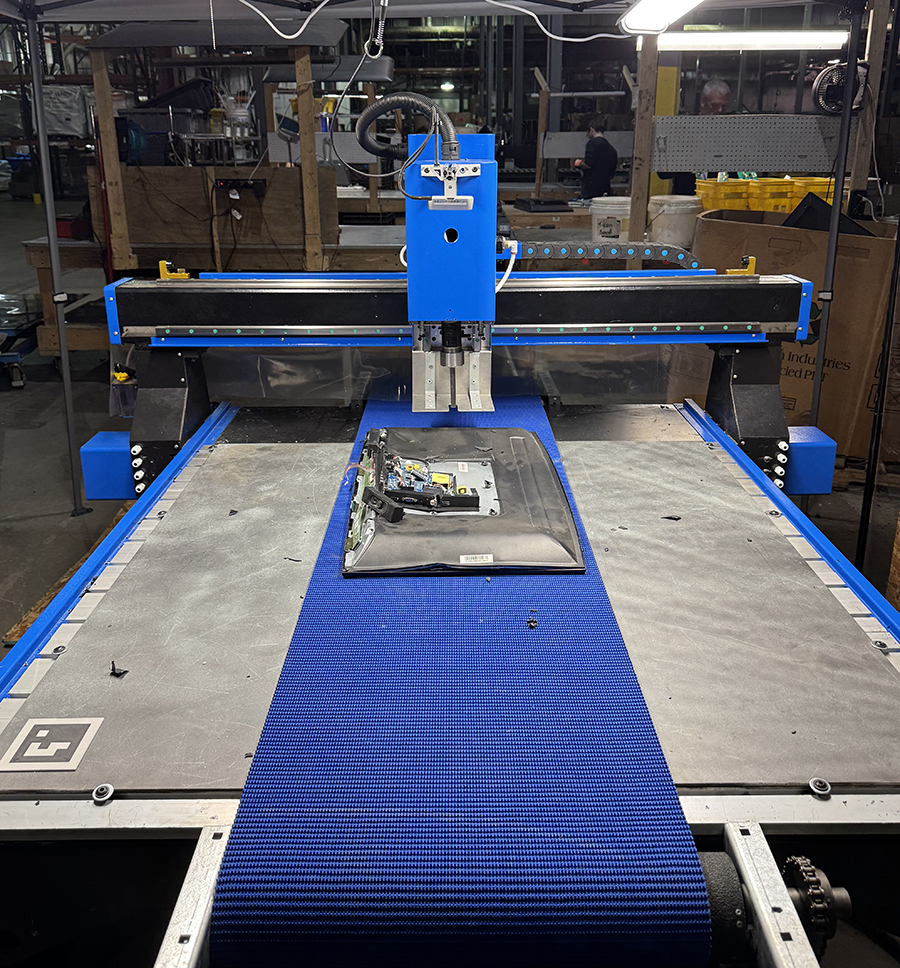
A researcher from Carnegie Mellon University's School of Computer Science is leveraging robotics to enhance the efficiency of e-waste recycling, particularly for flat-screen displays. This initiative comes in response to the alarming growth of e-waste, which reached an estimated 62 million tons globally in 2022, making it one of the fastest-growing waste categories. By integrating robotic technology within e-waste recycling facilities, the researcher aims to streamline the recycling process, ultimately addressing the increasing environmental challenges posed by electronic waste. This innovative approach not only seeks to improve recycling rates but also to mitigate the negative impact of e-waste on the environment.

Research
RobotToday Initiative

Robotics needs a service framework.

RSF defines a common language for robot service capability, lifecycle operations, certification pathways, and service-provider networks.







