Industry Briefing
A single destination for timely, editor-curated robotics news from around the world.
Visual Components Introduces FactoryLens, Enhancing Collaboration with NVIDIA for Digital Twins
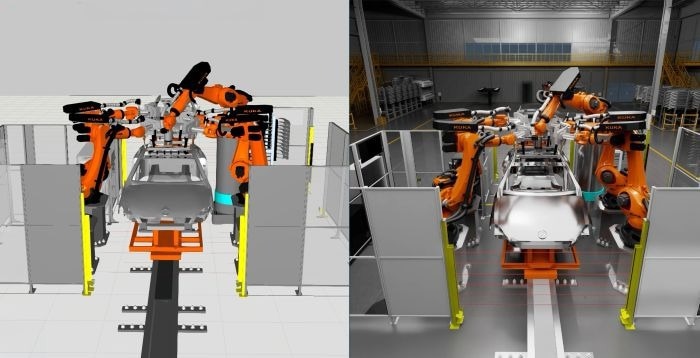
Visual Components has launched FactoryLens, a new viewport integrated into its simulation platform, utilizing NVIDIA Omniverse libraries. This innovation aims to enhance the capabilities of 3D manufacturing simulation and robot offline programming. The introduction of FactoryLens is significant as it represents a step forward in the collaboration between Visual Components and NVIDIA, leveraging advanced technologies to improve industrial digital twin applications. This development is expected to streamline processes and enhance productivity in manufacturing environments. Looking ahead, industry professionals should monitor how FactoryLens will impact the adoption of digital twins in manufacturing. No further timeline was disclosed at the time of publication.
Visual Components Introduces FactoryLens Powered by Nvidia for Enhanced Digital Twins
Visual Components has launched FactoryLens, a new viewport integrated into its simulation platform, utilizing Nvidia Omniverse libraries. This innovation allows manufacturers to transition their existing factory layouts into a realistic digital twin environment, enhancing real-time rendering capabilities within the familiar software. The introduction of FactoryLens represents a significant advancement in the collaboration between Visual Components and Nvidia, enabling users to visualize large-scale layouts, control materials, and export configurations seamlessly. The importance of FactoryLens lies in its ability to improve the accuracy of simulations, which are critical in modern manufacturing processes. As manufacturers increasingly rely on simulations to design and test equipment and facilities, the realism provided by FactoryLens ensures that these validations closely reflect real-world conditions. This tool not only enhances existing workflows but also sets the stage for future applications in digital twin technology and physical AI. Looking ahead, Visual Components envisions FactoryLens as a foundational element for various digital twin and AI use cases, including vision-based virtual commissioning and synthetic data generation. No further timeline was disclosed at the time of publication, but the integration of Nvidia technologies is expected to enhance collaboration and interoperability within the Visual Components ecosystem.
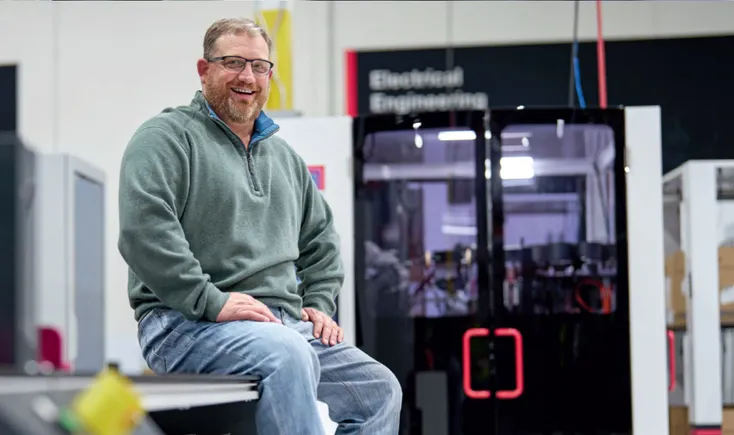
Eplan and Rittal Enhance Manufacturing Efficiency with Digital Twins for Business Growth
R&D Specialties, a UL-certified panel builder in Odessa, Texas, faces challenges in scaling due to a lack of skilled labor and inefficiencies in the design-to-manufacturing process. The disconnect between design, sourcing, and fabrication leads to significant costs that often go unnoticed, impacting margins and delivery timelines. Eplan and Rittal address these issues by implementing a digital twin system, which streamlines the workflow and ensures that all teams work from a single source of truth, reducing errors and improving efficiency. The collaboration between Eplan and Rittal is crucial for manufacturers like R&D Specialties, as it tackles the hidden costs associated with traditional handoffs in the production process. By integrating Eplan's engineering software with Rittal's manufacturing capabilities, the companies create a seamless flow of information that enhances productivity and reduces the risk of delays. This approach not only optimizes operations but also positions businesses for growth in a competitive market. Looking ahead, manufacturers should monitor the adoption of digital twin technologies as a means to bridge gaps in their processes. The success of Eplan and Rittal's solution could inspire other companies to explore similar integrations, ultimately leading to improved operational efficiency and better financial outcomes. No further timeline was disclosed at the time of publication.

Delta Enhances Production Line Digital Twins with AI and Reduces Defect Detection Time
Delta has improved its production line digital twins by integrating AI technology, which significantly enhances simulation precision and efficiency. This advancement is crucial for smart manufacturing as it allows for more accurate modeling of production processes, ultimately leading to better operational outcomes. The integration of NVIDIA's Defect Image Generation skill has enabled Delta to reduce the development time for defect detection models for new products from three months to just two weeks. This reduction in time is vital for manufacturers looking to quickly adapt to market demands and improve product quality. Looking ahead, it will be important to monitor how Delta continues to leverage AI in its smart manufacturing solutions and the impact of these technologies on overall production efficiency. No further timeline was disclosed at the time of publication.

Moxin Technology Launches MoWorld 4D Model for Pet Photos on Huawei Mate 90
Moxin Technology has introduced its MoWorld application, which transforms pet photos into animated 4D digital twins. This innovative feature is available on Huawei's Mate 90 smartphone, utilizing Ascend cloud generation technology alongside a sophisticated 600M-parameter model powered by Kirin. The launch of MoWorld is significant as it showcases the integration of advanced AI capabilities into mobile devices, enhancing user engagement through personalized digital experiences. By converting static images into dynamic 4D representations, Moxin Technology is setting a new standard in how pet owners can interact with their beloved animals in a virtual space. Looking ahead, the impact of MoWorld on the pet technology market will be worth monitoring. As more users adopt this technology, it could pave the way for further innovations in digital pet care and virtual interactions. No further timeline was disclosed at the time of publication.
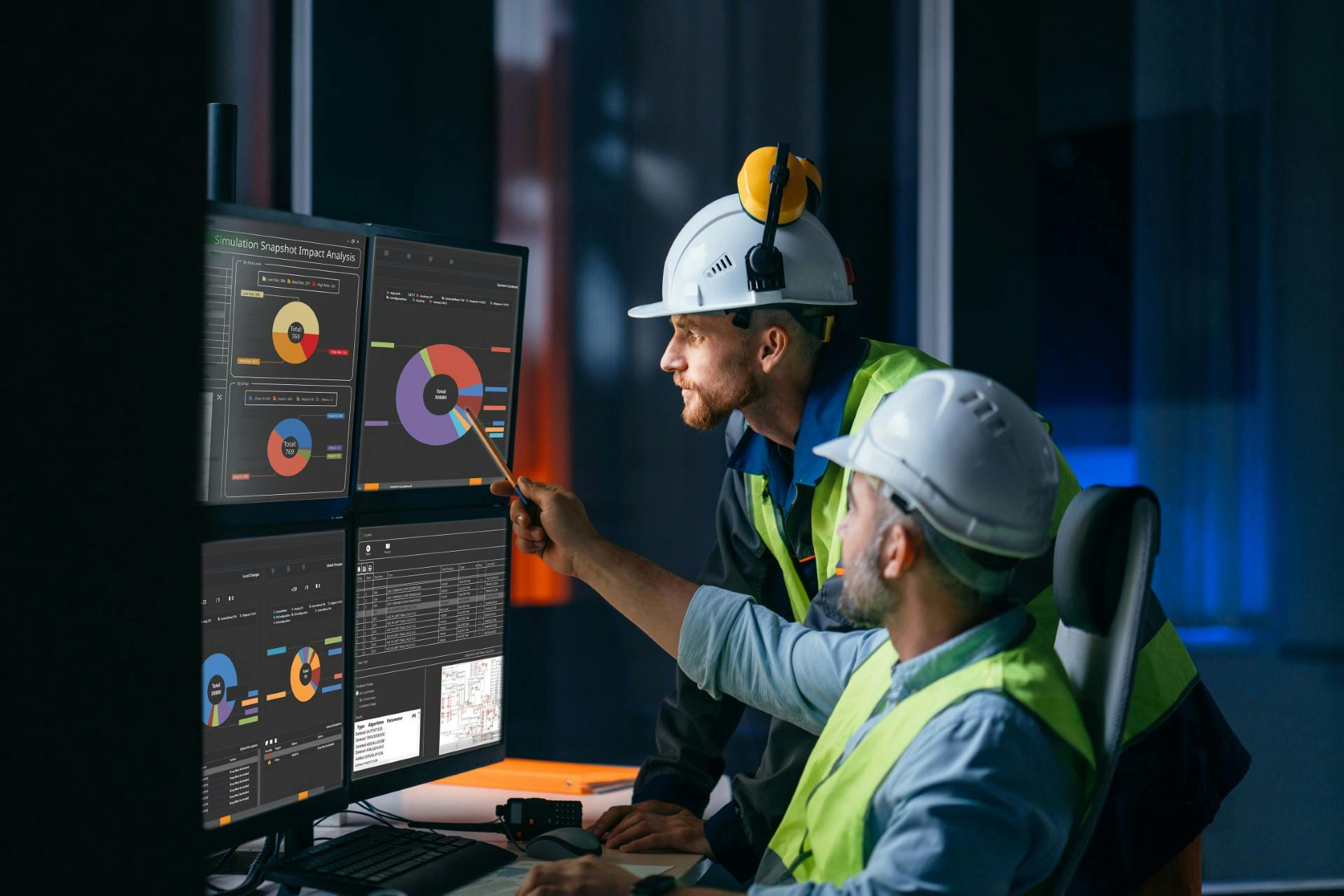
Emerson Introduces Ovation Curation Tool for Enhanced Control Systems Management
Emerson has launched the Ovation Curation Tool, a synchronization software designed for power and water control systems. This tool aims to maintain version control and change history across multiple Ovation systems and simulators, automating the management of changes between production systems and their digital twins. The introduction of the Ovation Curation Tool is significant as it addresses the challenges of keeping digital twins synchronized with live systems, especially amid workforce shortages. By improving testing and training accuracy, the tool is expected to save engineering time and facilitate faster troubleshooting, enhancing overall operational efficiency. Looking ahead, the software's ability to automatically track changes and provide an intuitive dashboard for users will be crucial for organizations seeking to optimize their control systems. No further timeline was disclosed at the time of publication.
Factory / Digital Transformation
Digital twins, software maturity and other automation trends
Manufacturers are increasingly adopting AI-powered simulation technology and advanced robotics software, which are becoming more powerful and cost-effective. This shift is occurring as companies seek to enhance efficiency and productivity in their operations. The trend has gained momentum in recent months, reflecting a broader industry move towards automation and smart manufacturing solutions. By integrating these technologies, manufacturers aim to streamline processes, reduce costs, and improve overall performance. As a result, the landscape of manufacturing is evolving, with businesses leveraging innovative tools to remain competitive in a rapidly changing market.

Eco Wave Power Turns Waves Into Watts With NVIDIA AI Infrastructure and Digital Twins
The future of artificial intelligence (AI) is poised to be shaped not just by computational power but significantly by energy resources. As AI technologies evolve, particularly in areas such as agentic AI, industrial AI, edge computing, and robotics, the demand for sustainable energy solutions will become increasingly critical. This shift highlights the importance of integrating energy efficiency into the development of AI systems, ensuring that as these technologies scale and become more prevalent, they do so in an environmentally responsible manner. The emphasis on energy will drive innovation and investment in renewable resources, ultimately influencing the trajectory of AI advancements.
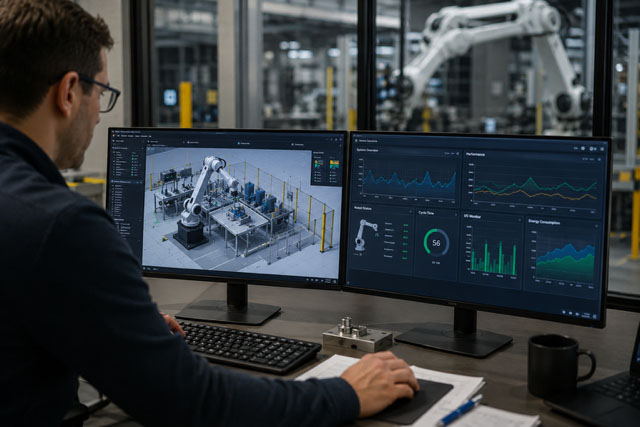
Digital Twins: Transforming the Factories of the Future
As media attention focuses on humanoid robots and generative artificial intelligence, a less flashy yet equally transformative technology is quietly reshaping the global industry: digital twins. This innovative approach is emerging as a crucial element in the ongoing industrial transformation, offering strategic advantages that may rival those of more visible technologies. The concept of digital twins involves creating virtual replicas of physical systems, enabling companies to optimize operations and improve efficiency. This shift is expected to significantly impact the future of manufacturing, positioning digital twins as a foundational component in the evolution of factories worldwide.
À la une IA Industrie Robotique analyse de données industrielles automatisation industrielle.
US team combines digital twins, VR to boost lunar robot performance for future missions
Researchers at the University of Colorado Boulder are pioneering the use of digital twin technology to enhance environmental monitoring and management. This innovative approach involves creating virtual replicas of physical systems, allowing scientists to simulate and analyze real-world conditions in real time. The project, which commenced in late 2023, aims to address pressing environmental challenges by providing more accurate data and predictive insights. Located in Boulder, Colorado, the initiative seeks to improve understanding of climate change impacts and resource management by integrating advanced modeling techniques with real-time data collection. The motivation behind this research stems from the urgent need to develop effective strategies for sustainability and resilience in the face of environmental degradation. By employing sensors and data analytics, the researchers are able to create dynamic models that reflect current environmental conditions, enabling stakeholders to make informed decisions. This method not only enhances the accuracy of environmental assessments but also facilitates proactive responses to potential ecological threats. The team at CU Boulder is collaborating with various stakeholders, including government agencies and conservation organizations, to ensure that the findings are applicable and beneficial for real-world applications.

Into the Omniverse: How Industrial AI and Digital Twins Accelerate Design, Engineering and Manufacturing Across Industries
Companies across various industries are increasingly leveraging industrial AI, digital twins, AI physics, and accelerated AI infrastructure to enhance their design, simulation, and optimization processes. This technological shift allows organizations to refine products, processes, and facilities in a virtual environment before actual construction begins. By adopting these advanced tools, businesses aim to improve efficiency, reduce costs, and accelerate time-to-market for new innovations. The integration of these technologies is seen as a crucial step in staying competitive in a rapidly evolving market, enabling firms to make data-driven decisions and optimize their operations effectively.

3D Mobile Mapping for Digital Twins: Camera Features That Ensure Accuracy
Recent advancements in surveillance technology have transformed urban environments into rich sources of visual data, essential for creating digital twins of cities. These digital replicas rely heavily on high-quality imagery captured by cameras installed in various public spaces, including streets and buildings. However, experts warn that if the visual data collected is inadequate or flawed, the integrity and functionality of the entire digital model can be compromised. This reliance on precise imagery underscores the importance of maintaining and upgrading surveillance systems to ensure accurate representations of urban landscapes. As cities increasingly adopt these technologies, the challenge remains to balance effective data collection with privacy concerns, prompting ongoing discussions among policymakers and technology developers.
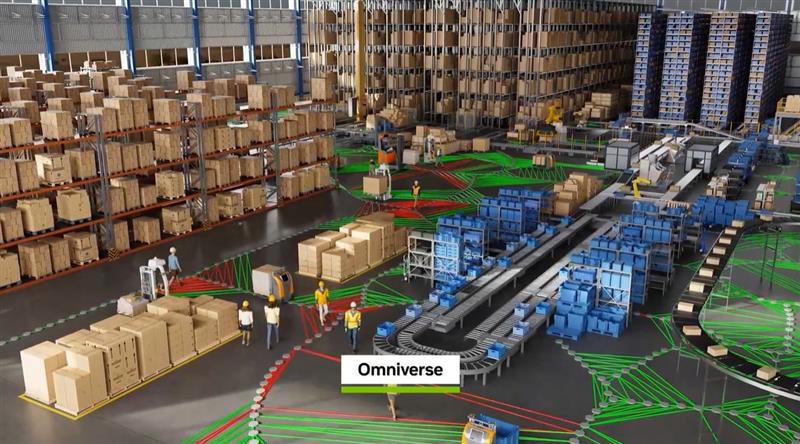
KION Teams with NVIDIA and Accenture to Optimize Supply Chains with AI-Powered Robots and Digital Twins
KION Group has joined forces with NVIDIA and Accenture to transform supply chains by integrating AI-powered robots and digital twins. This partnership was highlighted during CES 2025, where the companies presented their cutting-edge warehouse solutions. The collaboration seeks to boost warehouse efficiency and adaptability, utilizing advanced artificial intelligence to streamline operations and enhance productivity.
intralogistics supply chain solutions industrial trucks forklift trucks warehouse trucks automation technologyRobotics needs a service framework.
RSF defines a common language for robot service capability, lifecycle operations, certification pathways, and service-provider networks.
Join the RobotToday community on LinkedIn
Daily robotics news, in-depth analysis, conference highlights, and discussions with professionals worldwide.