

From May 24, 2026 to May 27, 2027
NASA Lunabotics 2027 | Student lunar construction robots compete at Kennedy
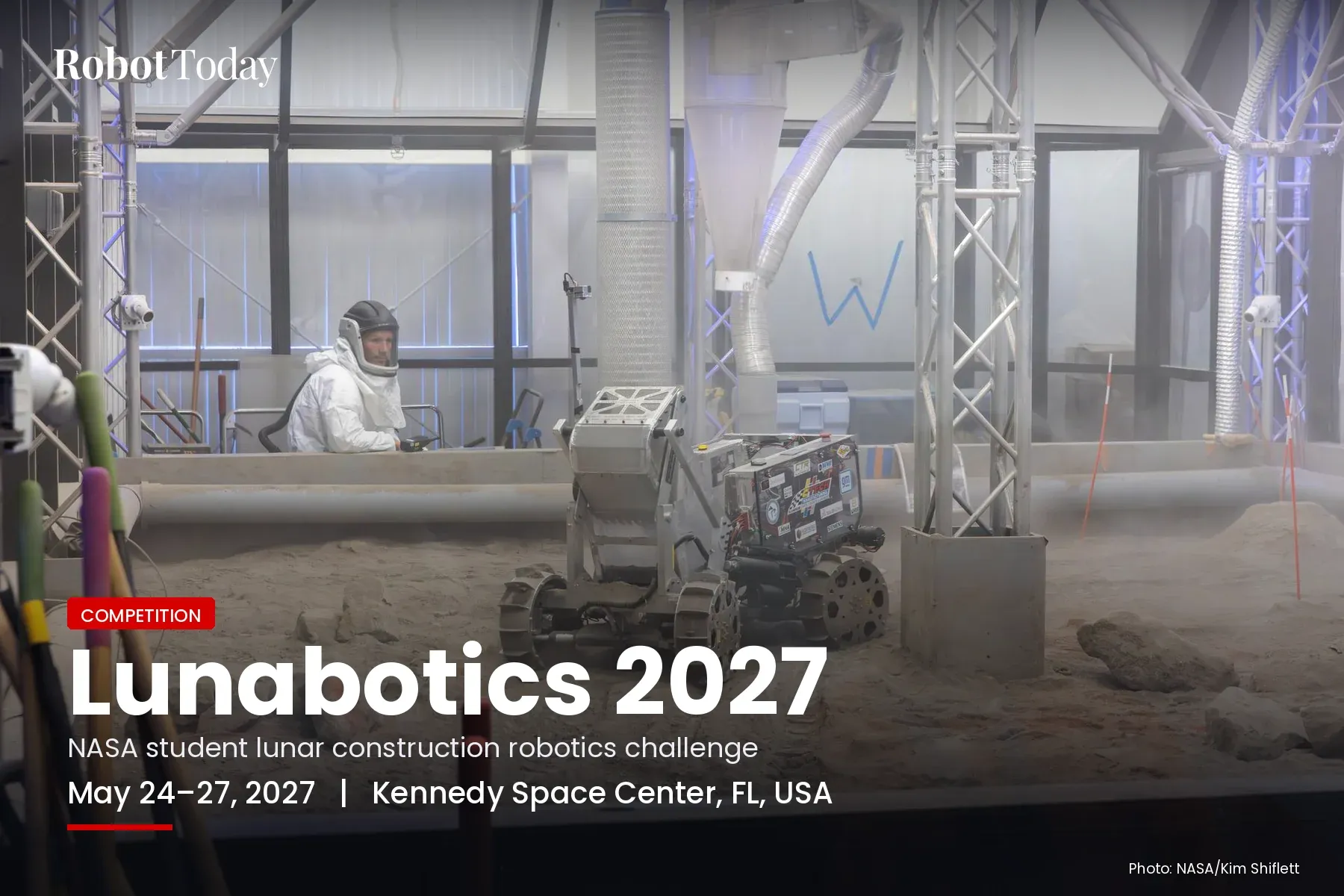
NASA's Lunabotics Challenge, where US college teams build robots for lunar construction, runs May 24–27, 2027, at Kennedy Space Center in a new single-week format without a separate qualifying round.
QUICK FACTS
| Date | May 24–27, 2027 |
| Location | Kennedy Space Center, FL, USA |
| Venue | Kennedy Space Center (2026 finals: Artemis Arena, AMF Center for Space Education, KSC Visitor Complex) — AMF Center for Space Education, State Road 405, Building M6-306, Kennedy Space Center, FL 32899, USA |
| Organizer | NASA Kennedy Space Center (Artemis Student Challenges), administered with the Astronauts Memorial Foundation's Center for Space Education |
| Event type | Competition |
| Official website | https://www.nasa.gov/learning-resources/lunabotics-challenge/ |
| Registration | https://www.amfcse.org/lunabotics |
| Admission | Open to teams from US colleges, universities and vocational/technical schools; teams selected through a design-review down-select. Media attend by RSVP to the KSC newsroom (2026 procedure); competition is livestreamed on NASA's Lunabotics page. |
| Scale | 2026 edition: about 50 US college teams; 47 reached the qualifying round at UCF's Exolith Lab and 10 competed in the May 19–21 finals at KSC. University of Virginia won the Off World Grand Prize. Autonomous robots rose to 27 from 12 the year before. |
| Key deadlines | Guidebook released Sept 17, 2026 ; Project Management Plan due Oct 6, 2026 ; team selections announced Dec 14, 2026 ; practice runs May 20–21, 2027 ; construction runs May 24–27, 2027 |
EVENT OVERVIEW
NASA's Lunabotics Challenge 2027 will hold its construction runs at Kennedy Space Center in Florida on May 24–27, 2027, with practice runs on May 20–21. NASA has restructured the competition after participant feedback: instead of a qualifying round at the University of Central Florida's Exolith Lab followed by finals at Kennedy, which meant about two weeks of travel, all selected teams will compete at a single Kennedy location. The guidebook was released on September 17, 2026, project management plans are due October 6, and NASA will announce selected teams on December 14, 2026.
Lunabotics is one of NASA's Artemis Student Challenges and dates to 2010. Teams from US colleges, universities and technical schools design robots that perform construction work in simulated lunar regolith; in 2026 the task was to build a berm to protect Artemis surface infrastructure. Scoring combines a systems engineering paper, a STEM industry plan, presentations and on-field performance, including berm size, robot mass, communications, energy use and autonomy. The 2026 finals, held May 19–21 at the Artemis Arena in the Kennedy Space Center Visitor Complex, were won by the University of Virginia; 27 robots ran autonomously, up from 12 a year earlier.
KEY HIGHLIGHTS
2027 format condensed into a single week at Kennedy Space Center, dropping the separate UCF qualifying round
Robots perform lunar construction tasks in simulated regolith (2026: building a protective berm for Artemis infrastructure)
Scoring spans systems engineering paper, STEM industry plan, presentations, autonomy, energy use and construction output
NASA links the challenge to Swamp Works' IPEx lunar excavator research
Practice runs May 20–21, construction runs May 24–27, 2027
RECOMMENDED ATTENDEES
Space robotics and lunar construction companies, excavation and autonomy technology suppliers, NASA and Artemis program contractors recruiting engineers, university aerospace and robotics faculty, construction-equipment makers with off-Earth programs, space-focused investors, NASA center outreach staff, community-college and technical-school faculty building space programs, and media covering Artemis and physical AI. The event is compact and team-focused, and media access is by NASA accreditation.











Leave a comment