
Top News

Industry Briefing

A single destination for timely, editor-curated robotics news from around the world.

Uplift360 Secures Multi-Year Contract with Luxembourg for High-Performance Materials Supply

Uplift360 Secures Multi-Year Contract with Luxembourg for High-Performance Materials Supply

Uplift360 has signed a multi-year framework agreement with the Directorate of Defence (DOD) in Luxembourg. This contract aims to enhance the supply of high-performance materials specifically for defence and aerospace applications across Europe. The agreement marks a significant step in bolstering the region's capabilities in advanced materials procurement. The importance of this contract lies in its potential to strengthen Europe's supply chain for critical materials used in defence and aerospace sectors. By partnering with Uplift360, Luxembourg aims to ensure a reliable source of high-performance materials, which are essential for the development and manufacturing of advanced technologies in these industries. This move reflects a growing emphasis on securing local supply chains amid global uncertainties. Looking ahead, stakeholders will be monitoring the implementation of this agreement and its impact on the supply chain dynamics within Europe. No further timeline was disclosed at the time of publication, but the contract is expected to play a pivotal role in enhancing material availability for defence and aerospace projects in the region.

News
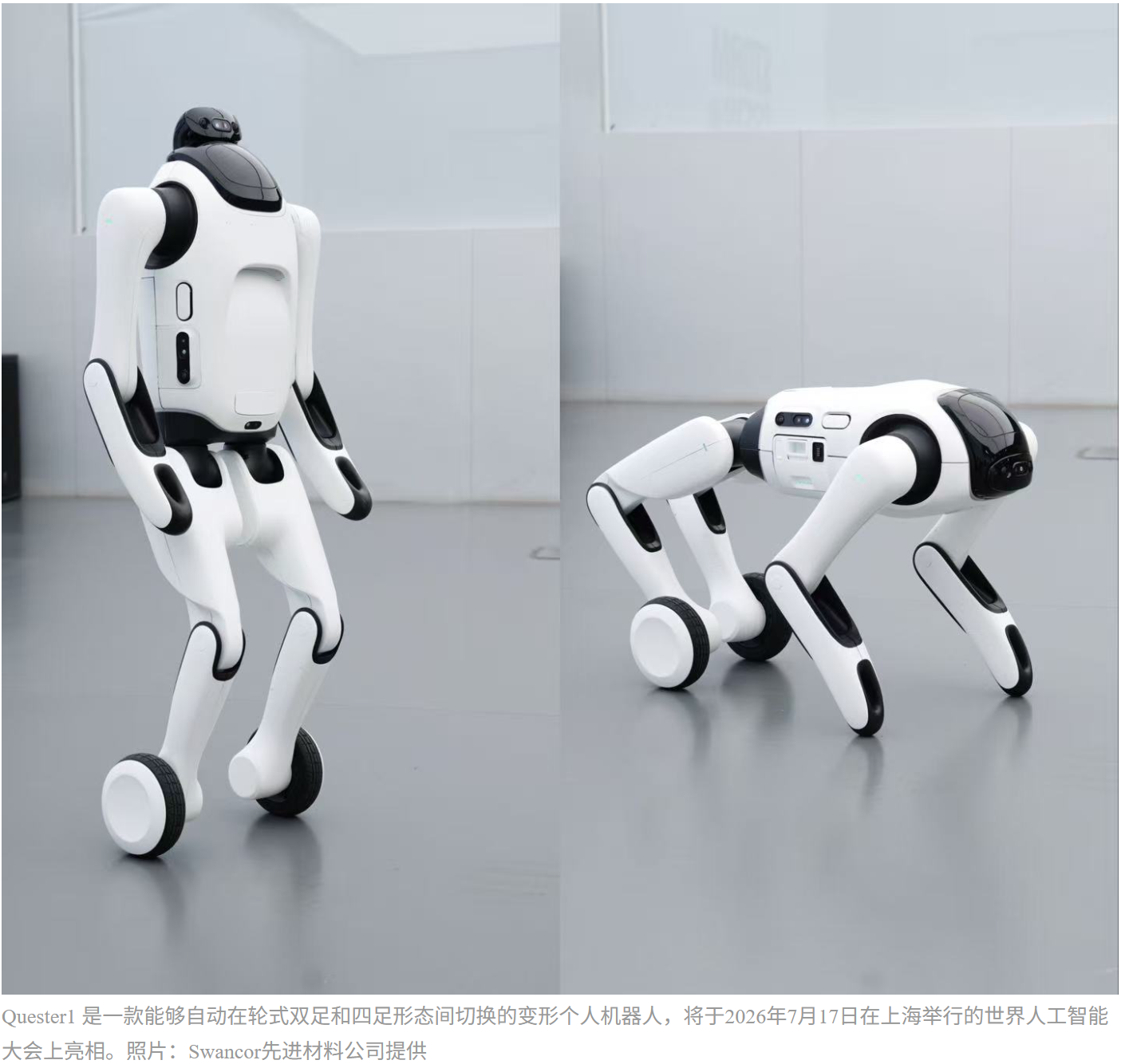
Swancor Advanced Materials to Launch World's First Shape-Shifting Personal Robot at WAIC

Swancor Advanced Materials to Launch World's First Shape-Shifting Personal Robot at WAIC

Swancor Advanced Materials is set to unveil the Quester1, the world's first shape-shifting personal robot, at the 2026 World Artificial Intelligence Conference (WAIC) on July 17. This innovative robot can automatically switch between bipedal and quadrupedal modes without manual disassembly, showcasing a unique 'transformable cross-modal integration architecture' that enables smooth transitions. The Quester1 is designed for various environments, with its bipedal form ideal for flat surfaces and intricate tasks, while the quadrupedal mode excels in navigating stairs and rough terrain. CEO Tian Hua emphasized that this product aims to redefine personal robotics for consumer markets, marking Swancor's first foray into the consumer robotics sector. As the Quester1 prepares for its debut, it highlights the rapid development of transformable robotics in China. The WAIC will feature over 1,100 companies and more than 300 product launches, indicating a significant shift towards embodied intelligence in robotics. No further timeline was disclosed at the time of publication.

Personal Robots Shape-Shifting Technology AI Robotics Consumer Robotics
LG Chem to invest W15tr in R&D by 2035 to develop advanced materials

LG Chem to invest W15tr in R&D by 2035 to develop advanced materials

LG Chem Ltd. announced a significant investment of 15 trillion won (approximately $9.74 billion) aimed at research and development over the next 12 years. The plan, revealed by CEO Kim Dong-chun during a town hall meeting on Monday, focuses on diversifying the company's portfolio beyond its traditional petrochemical roots. The investment will target high-value sectors including semiconductor materials, mobility solutions, robotics, and anticancer drugs. This strategic move is designed to establish new growth drivers and enhance the company's competitiveness in emerging markets.

All News
Syensqo Expands Havre de Grace Facility to Boost Aerospace Material Production by 30%

Syensqo Expands Havre de Grace Facility to Boost Aerospace Material Production by 30%

Syensqo, a global aerospace company, is expanding its Havre de Grace facility to enhance its manufacturing capabilities by over 30%. This multi-million-dollar investment aims to strengthen the company's U.S. manufacturing footprint and support the growing demand for advanced material solutions in aerospace, defense, and automotive sectors. The expansion focuses on producing high-performance structural adhesives and surfacing products, crucial for commercial aerospace and space exploration applications. The significance of this expansion lies in Syensqo's commitment to supplying high-performance materials that contribute to safer and more sustainable products across various industries. By reinforcing its global manufacturing network, the company aims to improve supply reliability and efficiency, addressing the increasing customer demand for adhesive and bonding materials. This move is part of Syensqo's broader strategy to lead in advanced materials and sustainable specialty chemicals, particularly in the aerospace sector, which is its largest market. Looking ahead, Syensqo's expansion at the Havre de Grace site marks a pivotal milestone in its growth trajectory. The company is expected to accelerate its efforts in supporting customers as they scale production, particularly in high-performance materials. No further timeline was disclosed at the time of publication, but the investment aligns with Syensqo's ongoing initiatives in electric vehicle batteries and clean energy technologies.

Science
Improving the performance of high-power electronics

Improving the performance of high-power electronics

Researchers have discovered that applying a thin layer of diamond can significantly enhance the speed and energy efficiency of next-generation wireless devices. This innovative approach addresses the challenge of excessive heat generated during device operation, which has been a limiting factor in the performance of modern technology. The findings, which emerged from ongoing studies in advanced materials science, highlight the potential for diamond to serve as an effective thermal management solution. This breakthrough could pave the way for faster and more efficient wireless communication, ultimately benefiting consumers and industries reliant on high-performance devices.

Research Computer chips Electronics Carbon materials Nanoscience and nanotechnology Mobile devices
University of Toronto Engineers Develop Six New Metal Alloys for Extreme Environments

University of Toronto Engineers Develop Six New Metal Alloys for Extreme Environments

Researchers at the University of Toronto Engineering have created six innovative metal alloys using an AI-driven discovery platform. These alloys are designed to enhance the durability of components in jet engines and nuclear reactors, capable of withstanding temperatures exceeding 1,832°F. The AI-assisted approach significantly accelerates the identification of high-performance materials, demonstrating the potential for rapid advancements in material science. The significance of this development lies in the growing demand for materials that can endure extreme temperature and pressure fluctuations, which are common in applications like jet engines and nuclear power plants. Yu Zou, the project leader, emphasized the need for materials that can be produced through 3D metal printing, allowing for the creation of complex components that traditional manufacturing methods cannot achieve. Looking ahead, the researchers aim to further refine their AI-driven system to explore additional material compositions. No further timeline was disclosed at the time of publication, but the initial success in identifying six new alloy formulations suggests a promising future for advanced materials in extreme environments.

AI and Robotics Energy Innovation
China's First Integrated Chip Solution for Dexterous Hands: 0.1mm Precision and Ultra-Low Latency

China's First Integrated Chip Solution for Dexterous Hands: 0.1mm Precision and Ultra-Low Latency

A Chinese semiconductor company has unveiled a groundbreaking integrated chip solution designed for dexterous robotic hands, effectively tackling significant challenges such as high latency and low precision. This innovative technology merges AI ASIC capabilities with advanced materials, resulting in improved performance and cost efficiency. The new chip is poised to enhance the functionality of robotic systems across a range of applications, including industrial collaboration and home assistance. By enabling high-precision tasks, this development marks a significant advancement in the field of robotics, promising to transform how robots interact with their environments.

Robotics AI Dexterous Hands Chip Technology
New color-changing tactile sensor gives robots a real-time sense of touch

New color-changing tactile sensor gives robots a real-time sense of touch

Researchers have developed an innovative color-changing tactile sensor that enables machines to perceive and respond to their surroundings in real-time. This groundbreaking technology was unveiled in October 2023 and represents a significant advancement in the field of robotics and artificial intelligence. The sensor mimics the way humans and animals sense touch and texture, providing machines with the ability to "see" and interpret the materials they come into contact with. The motivation behind this development lies in enhancing the interaction between machines and their environment, allowing for more sophisticated and responsive robotic systems. By integrating this tactile sensor, robots can better understand the properties of objects, leading to improved performance in various applications, such as manufacturing, healthcare, and service industries. The process involves a combination of advanced materials and engineering techniques that allow the sensor to change color based on the pressure and texture of the surfaces it touches. This visual feedback not only aids in object recognition but also enhances the machine's ability to make informed decisions based on tactile information. As this technology continues to evolve, it holds the potential to revolutionize how machines interact with the world, paving the way for smarter, more adaptable robotic systems that can operate effectively in diverse environments.

AI and Robotics
UCF engineers tackle water-to-air flight instability for amphibious drones

UCF engineers tackle water-to-air flight instability for amphibious drones

Researchers at the University of Central Florida (UCF) are developing an innovative approach to enhance the efficiency of solar energy conversion. This groundbreaking work, which began in early 2023, aims to address the growing demand for sustainable energy solutions amid rising global energy consumption and climate change concerns. The team is focusing on improving the performance of solar cells by utilizing advanced materials and techniques that could significantly increase their energy output. By integrating nanotechnology and novel chemical processes, the researchers hope to create more effective solar panels that can capture and convert sunlight into electricity with greater efficiency than current models. This initiative is part of a broader effort to make renewable energy more accessible and affordable, ultimately contributing to a reduction in reliance on fossil fuels. The findings from this research could have far-reaching implications for the renewable energy sector, potentially leading to more widespread adoption of solar technology in both residential and commercial applications. As the project progresses, the researchers plan to collaborate with industry partners to bring their innovations to market, aiming for practical applications within the next few years. This work not only highlights UCF's commitment to advancing sustainable technologies but also positions the university as a leader in the quest for cleaner energy solutions.

Innovation Science
US scientists’ new electron microscopy tech delivers 10,000x magnification compared to light microscopy

US scientists’ new electron microscopy tech delivers 10,000x magnification compared to light microscopy

A team of researchers in the United States has developed a groundbreaking technology aimed at enhancing the performance of electron devices. This innovation, unveiled recently, promises to significantly improve the efficiency and capabilities of various electronic components. The research, conducted at a prominent university, addresses the growing demand for faster and more efficient electronic systems in an increasingly digital world. By leveraging advanced materials and innovative engineering techniques, the team has successfully created a method that optimizes electron flow, potentially revolutionizing the electronics industry. This development comes at a crucial time as industries seek to meet the challenges posed by modern technological demands, including the need for better energy efficiency and higher processing speeds. The researchers are now looking to collaborate with industry partners to further refine the technology and explore its applications in commercial products.

Innovation
Deep learning co-design helps scientists project 28-layer 3D images without crosstalk

Deep learning co-design helps scientists project 28-layer 3D images without crosstalk

Engineering researchers at the University of California, Los Angeles (UCLA) have unveiled a groundbreaking three-dimensional printing technology that significantly enhances the production of complex structures. This innovative method, introduced in October 2023, aims to revolutionize various industries by allowing for the rapid and precise fabrication of intricate designs that were previously difficult or impossible to achieve. The researchers' motivation stems from the growing demand for more efficient manufacturing processes that can produce high-quality components while minimizing waste and time. By leveraging advanced materials and techniques, the team has demonstrated that their new approach can streamline production workflows and reduce costs, making it an attractive option for sectors such as aerospace, automotive, and biomedical engineering. This development not only showcases the potential of 3D printing technology but also emphasizes UCLA's commitment to leading research in engineering and technology. The researchers plan to further refine their technique and explore its applications across various fields, aiming to set new standards in manufacturing efficiency and innovation.

Science
SORA-Q: Baseball-sized shape-shifting rover that saved Japan’s SLIM moon mission

SORA-Q: Baseball-sized shape-shifting rover that saved Japan’s SLIM moon mission

A groundbreaking development in robotics has emerged from Japan, where researchers have created a microscopic, shape-shifting robot inspired by children's toys. This innovative technology successfully demonstrated its potential by aiding in the preservation of Japan's rich historical narrative. The robot, which can alter its form and function, was unveiled during a recent scientific conference held in Tokyo. The motivation behind this invention lies in the desire to enhance preservation techniques for cultural artifacts and historical sites, making them more accessible and engaging for future generations. By utilizing advanced materials and engineering principles, the team was able to design a robot that can navigate intricate environments and perform delicate tasks, showcasing its versatility and effectiveness. This achievement not only highlights the intersection of technology and cultural heritage but also opens new avenues for research and application in the field of robotics.

Space
US Navy drone ship gets its own production line to speed up fleet deliveries

US Navy drone ship gets its own production line to speed up fleet deliveries

Bayou Metals, a key manufacturing partner of defense shipbuilder Huntington Ingalls Industries (HII), has announced the establishment of a new facility aimed at enhancing its production capabilities. This development, which took place in early October 2023, is located in the Gulf Coast region, a strategic area for defense manufacturing. The decision to expand comes in response to increasing demand for advanced materials and components necessary for military vessels. By investing in this new facility, Bayou Metals aims to streamline its operations and improve efficiency, ultimately supporting HII's commitment to delivering high-quality defense products. The facility is expected to create numerous jobs and contribute to the local economy, while also reinforcing the supply chain for the defense sector.

Military
US engineers make ‘artificial eyes’ to improve vision in robots, self-driving cars

US engineers make ‘artificial eyes’ to improve vision in robots, self-driving cars

Researchers at Penn State University have developed an innovative device inspired by the human eye, aimed at enhancing the vision capabilities of self-driving cars. This groundbreaking technology was unveiled recently as part of ongoing efforts to improve the safety and reliability of autonomous vehicles. The device mimics the eye's ability to adapt to varying light conditions, which is crucial for navigating complex environments. The motivation behind this advancement stems from the challenges faced by self-driving cars in low-light situations, where traditional sensors often struggle to provide accurate data. By integrating this eye-inspired technology, the researchers hope to significantly reduce the risk of accidents and improve the overall performance of autonomous systems. This development is part of a broader initiative to advance automotive technology and ensure that self-driving cars can operate effectively in diverse conditions. The research team utilized a combination of advanced materials and optical engineering to create a device that can dynamically adjust its sensitivity, much like the human eye does when transitioning from bright to dim environments. As the automotive industry continues to push towards fully autonomous vehicles, innovations like this are essential for addressing safety concerns and building public trust in self-driving technology. The research findings are expected to contribute to future advancements in vehicle design and functionality, paving the way for safer roads.

Doosan seeks bigger role in Nvidia's AI factory ecosystem

Doosan seeks bigger role in Nvidia's AI factory ecosystem

Doosan Group announced on Monday its intention to strengthen its partnership with US technology leader Nvidia, focusing on the development of physical AI-driven robotics and AI factories. This collaboration aims to extend beyond their existing work with collaborative robots, creating a more comprehensive AI value chain. By leveraging Doosan's manufacturing expertise in robotics, energy solutions, and advanced materials for AI semiconductors alongside Nvidia's advanced computing and Physical AI platforms, the two companies plan to explore new business opportunities. This strategic alliance is expected to yield significant synergies, enhancing both firms' capabilities in the rapidly evolving AI landscape.

All News
US firm’s next-gen aerospace composite set to deliver exceptional strength, durability

US firm’s next-gen aerospace composite set to deliver exceptional strength, durability

A Texas-based company has submitted a patent application for an innovative self-lubricating aerospace composite, designed to enhance the performance and longevity of aircraft components. The development, spearheaded by Carbon Fiber Max, aims to address the challenges of friction and wear in aerospace applications, which can lead to increased maintenance costs and reduced efficiency. By integrating advanced materials technology, the firm seeks to provide a solution that not only improves operational reliability but also contributes to overall safety in aviation. The patent application was filed recently, marking a significant step forward in aerospace material science. This breakthrough could potentially revolutionize the industry by offering a more sustainable and cost-effective alternative to traditional materials.

New three-layered armor protects vehicles from mines, RPGs and drone attacks

New three-layered armor protects vehicles from mines, RPGs and drone attacks

Defense companies are innovating in armored vehicle protection, shifting away from traditional methods of using thicker steel and heavier plating. This evolution in military technology is driven by the need for enhanced safety and effectiveness in combat situations. As threats become more sophisticated, manufacturers are exploring advanced materials and designs that offer better protection while maintaining mobility and performance. The ongoing research and development efforts are taking place across various locations, with companies aiming to meet the demands of modern warfare. This transition reflects a broader trend in the defense industry, where adaptability and innovation are crucial in ensuring the safety of personnel and the success of missions.

US firm launches hypersonic coating that holds up to 800°F in extreme heat zones

US firm launches hypersonic coating that holds up to 800°F in extreme heat zones

Cambium, a U.S. aerospace defense company, has unveiled its latest innovation, the ApexShield 3000, a high-temperature coating engineered to enhance the durability and performance of aerospace components. This announcement was made during a press conference held on October 15, 2023, at the company's headquarters in Arlington, Virginia. The ApexShield 3000 is designed to withstand extreme temperatures, addressing the growing demand for advanced materials in the aerospace sector. By improving resistance to heat and wear, this coating aims to extend the lifespan of critical components, thereby increasing safety and efficiency in aerospace operations. The development of ApexShield 3000 reflects Cambium's commitment to advancing aerospace technology and meeting the evolving needs of the industry.

US military’s high-performing defense products could soon be built with next-gen ceramic

US military’s high-performing defense products could soon be built with next-gen ceramic

A Virginia-based company is poised to enhance research on ceramic materials specifically designed for extreme aerospace and defense applications. This initiative, which aims to improve the performance and durability of materials used in high-stress environments, is expected to significantly contribute to advancements in technology for military and aerospace sectors. The firm plans to leverage its expertise and innovative approaches to develop new ceramic composites that can withstand extreme temperatures and pressures. This research is part of a broader effort to address the increasing demands for advanced materials in defense and aerospace, where reliability and resilience are critical. The project is anticipated to unfold over the coming months, with the potential to reshape material science in these high-stakes industries.

Pea-sized liquid-metal pump helps soft robots become lighter, portable, and more agile

Pea-sized liquid-metal pump helps soft robots become lighter, portable, and more agile

Engineers at the University of Bristol have created a groundbreaking pea-sized liquid-metal pump that has the potential to revolutionize various industries. This innovative device, designed to be compact and efficient, could serve as a replacement for traditional pumps in applications ranging from medical devices to robotics. The development was announced recently, showcasing the university's commitment to advancing engineering technology. The motivation behind this invention stems from the need for more versatile and efficient pumping solutions that can operate in tight spaces and under varying conditions. By utilizing liquid metal, the pump offers enhanced performance and adaptability compared to conventional materials. The engineering team achieved this breakthrough through a combination of advanced materials science and innovative design techniques, allowing for the creation of a pump that is not only small but also highly effective. As industries seek to improve efficiency and reduce energy consumption, this new liquid-metal pump could play a crucial role in meeting those demands. With its potential applications still being explored, the University of Bristol's development marks a significant step forward in pump technology, promising to influence a wide range of fields in the near future.

New heat-pressed silk material outperforms wood, rivals Kevlar and carbon fiber

New heat-pressed silk material outperforms wood, rivals Kevlar and carbon fiber

A team of researchers from Tufts University, Imperial College London, and the University of Michigan has unveiled a groundbreaking development in the field of biomedical engineering. This innovation, announced on October 15, 2023, focuses on creating a new type of biodegradable material that could significantly enhance medical implants and devices. The research aims to address the growing concern over the environmental impact of traditional plastic implants, which can take centuries to decompose. By utilizing advanced materials science, the team has engineered a substance that not only meets the necessary medical standards for safety and efficacy but also naturally breaks down in the body over time, reducing the need for surgical removal. This advancement is expected to revolutionize the way medical professionals approach implantable devices, offering a sustainable alternative that aligns with the increasing emphasis on eco-friendly practices in healthcare. The findings were published in a peer-reviewed journal, highlighting the collaborative efforts of the researchers and their commitment to addressing both health and environmental challenges. As the medical community continues to seek innovative solutions, this new biodegradable material stands out as a promising step towards more sustainable healthcare practices. The research team plans to conduct further studies to explore the full potential and applications of this material in various medical fields.

Material Demand Shapes Robot and Drone Manufacturing

Material Demand Shapes Robot and Drone Manufacturing

Recent research has highlighted the supply risks associated with critical materials necessary for the development of autonomous machines. Conducted by a team of experts in materials science, the study emphasizes the urgent need for sustainable solutions to ensure the continued growth of this emerging technology sector. The findings, released in October 2023, reveal that reliance on certain materials poses significant challenges, potentially hindering innovation and production. To address these concerns, the researchers propose a multifaceted approach that includes innovative techniques for material sourcing and enhanced recycling processes. By focusing on sustainability, the study aims to mitigate supply chain vulnerabilities and promote responsible consumption of resources. The implications of this research are particularly relevant for manufacturers and policymakers in the autonomous technology industry, as they seek to balance the demand for advanced materials with environmental considerations. As the industry evolves, the integration of these strategies could play a crucial role in fostering resilience and ensuring the long-term viability of autonomous machines. The research serves as a call to action for stakeholders to prioritize sustainable practices in material management, ultimately paving the way for a more secure and environmentally friendly future in technology development.

Sixth sense: Robot uses human-like touch awareness for camera-free navigation

Sixth sense: Robot uses human-like touch awareness for camera-free navigation

Researchers at the National University of Singapore have unveiled an innovative soft robot system designed to enhance human-robot interaction. This groundbreaking development, announced on October 15, 2023, aims to improve the safety and effectiveness of collaborative tasks in various environments, including healthcare and manufacturing. The motivation behind this project stems from the growing need for robots that can work alongside humans without posing risks. Traditional robots often lack the flexibility and adaptability required for close collaboration, which can lead to accidents or inefficiencies. The new soft robot system addresses these challenges by utilizing advanced materials and design techniques that allow for greater dexterity and a more human-like touch. The research team achieved this by integrating soft actuators that mimic the movements of human muscles, enabling the robot to perform delicate tasks with precision. This technology not only enhances the robot's ability to interact safely with humans but also opens up new possibilities for applications in fields such as rehabilitation, where gentle handling is crucial. As the demand for collaborative robots continues to rise, this development represents a significant step forward in creating machines that can seamlessly integrate into human environments, ultimately improving productivity and safety. The researchers are optimistic that their soft robot system will pave the way for more advanced human-robot partnerships in the future.

Stretchable electronic skin lets robotic hand feel touch and pressure signals

Stretchable electronic skin lets robotic hand feel touch and pressure signals

Researchers are making significant strides in the development of stretchable, transparent electronics capable of bending, rolling, and mimicking human skin. This advancement, which has been gaining momentum in recent months, aims to revolutionize various applications, including wearable technology and medical devices. The ongoing research is taking place in laboratories across the globe, with scientists collaborating to enhance the functionality and durability of these innovative materials. The motivation behind this work stems from the increasing demand for flexible electronics that can seamlessly integrate with the human body and adapt to various environments. Through a combination of advanced materials science and engineering techniques, researchers are exploring new methods to create these electronics, which could lead to breakthroughs in health monitoring and interactive devices. As this technology continues to evolve, it holds the potential to transform industries and improve the quality of life for many individuals.

A new type of electrically driven artificial muscle fiber

A new type of electrically driven artificial muscle fiber

Researchers have developed electrofluidic fibers that replicate the natural bundling of muscle fibers, a breakthrough that could revolutionize the design of compact and silent robotic systems as well as prosthetics. This innovative technology was unveiled in a recent study aimed at enhancing the functionality and efficiency of robotic and prosthetic devices. By mimicking the structure and behavior of biological muscles, these fibers offer the potential for more responsive and adaptable machines. The advancement is particularly significant as it addresses the growing demand for quieter and more efficient robotic solutions in various applications, from medical devices to industrial automation. The research team employed advanced materials and engineering techniques to create these fibers, which could lead to a new generation of devices that are not only more effective but also more closely aligned with human movement. This development marks a promising step forward in the integration of robotics into everyday life, providing users with improved mobility and interaction capabilities.

Research Invention Robotics Bioinspiration Fluid dynamics Media Lab
Penn State Scientists Discover Cause of Corrosion Highways in Advanced Nuclear Reactors

Penn State Scientists Discover Cause of Corrosion Highways in Advanced Nuclear Reactors

Researchers at Penn State University have identified the reasons behind the formation of 'corrosion highways' in advanced nuclear reactors. By adjusting the atomic arrangement of structural metals, they can influence the corrosion rate and extent, which is critical as nuclear energy gains traction in the quest for low-carbon energy solutions. The significance of this research lies in its potential to enhance the safety and efficiency of molten salt reactors, which operate at much higher temperatures than conventional fission reactors. With temperatures reaching 1,500 degrees Fahrenheit (800 degrees Celsius), understanding corrosion mechanisms is vital to prevent safety risks associated with reactor vessel integrity. Looking ahead, the team aims to develop a high-length-scale model to predict how different alloy materials behave when exposed to molten salt. This advancement could lead to the design of safer vessels for molten salt reactors, addressing the corrosion challenges identified in their studies. No further timeline was disclosed at the time of publication.

Science
Kirisense wins funding to develop robotic fingertips that can sense touch and slip

Kirisense wins funding to develop robotic fingertips that can sense touch and slip

Kirisense, a UK robotics startup, has received funding from the Henry Royce Institute to advance its development of tactile sensing technology aimed at enhancing robots' sense of touch to more closely resemble that of humans. This initiative, part of the Henry Royce Institute’s Industrial Collaboration Programme, is being executed in collaboration with the University of Sheffield. The project will concentrate on creating robotic fingertips that can provide a more nuanced and sensitive interaction with their environment, potentially revolutionizing the field of robotics by improving the dexterity and functionality of robotic systems.

News Sensors advanced automation advanced materials artificial intelligence automation news
Base Materials Announces Long-term Technical Partnership with Cutting-edge Submersible Manufacturer Triton Submarines LLC

Base Materials Announces Long-term Technical Partnership with Cutting-edge Submersible Manufacturer Triton Submarines LLC

Base Materials has entered into a strategic partnership with Triton Submarines LLC to enhance the capabilities of the Triton 7500/3, recognized as the world's deepest diving three-person acrylic submersible. This collaboration aims to upgrade the innovative vessel, which is certified by DNV and features a fully transparent acrylic pressure hull. Capable of reaching depths of 2,286 meters (7,500 feet) and operating for over 10 hours, the Triton 7500/3 will provide explorers, scientists, and filmmakers with unparalleled access to the ocean's bathypelagic zone, an area located between 1,000 and 4,000 meters (3,280 to 13,123 feet) beneath the surface. This initiative underscores the growing interest in deep-sea exploration and the need for advanced technology to uncover the mysteries of the ocean.

base materials technical partnership submersible triton submarines
Lingdi Technology Demonstrates Advanced Clothing Simulation at WAIC 2026

Lingdi Technology Demonstrates Advanced Clothing Simulation at WAIC 2026

At the WAIC 2026, Lingdi Technology showcased a compelling demonstration of robotic arms folding clothes, highlighting the complexities of handling flexible materials. The demonstration illustrated not just the end result of clothing manipulation but emphasized the intricate process of transforming garments into computable digital objects. This involves understanding various fabric properties and how they interact with robotic grippers, which is crucial for real-world applications in households and light industries. The significance of this demonstration lies in addressing the challenges robots face when dealing with flexible, deformable objects. Unlike rigid items, clothing can change shape and state when manipulated, requiring advanced algorithms to adapt to these variations. Lingdi Technology's SynReal World aims to bridge the gap between robotic systems and embodied models by providing a comprehensive data infrastructure for 3D asset generation, simulation training, and automated evaluation, ensuring that models undergo extensive physical interactions in a digital environment before real-world deployment. Looking ahead, the focus on flexible object simulation is critical as robots increasingly enter domestic and industrial settings. The ability to accurately simulate the handling of clothing and other soft materials will be essential for improving efficiency and reducing operational costs. No further timeline was disclosed at the time of publication.

Robotics Fabric Simulation AI Training Automation Soft Robotics
Impossible Metals to Launch Advanced Marine Robotics Hub for Deep-Sea Mineral Harvesting

Impossible Metals to Launch Advanced Marine Robotics Hub for Deep-Sea Mineral Harvesting

Impossible Metals, a US mining technology company, has announced plans to establish an Advanced Marine Robotics Hub in Pittsburgh, Pennsylvania. This facility will focus on developing autonomous marine systems for the deep-sea collection of critical minerals, creating over a dozen high-paying engineering and science jobs. The hub aims to enhance US capabilities in marine robotics and critical mineral technologies through collaboration with local universities and researchers. The significance of this initiative lies in its potential to redefine deep-sea mining practices. According to Mike Regan, Chief Growth Officer at Impossible Metals, the hub will enable swarms of autonomous robots to harvest critical minerals like nickel, cobalt, copper, and manganese with minimal environmental impact. This approach not only promises to produce the lowest-cost critical metals on Earth but also aims to strengthen the US supply chain and reduce reliance on foreign sources of essential materials. Looking ahead, the Advanced Marine Robotics Hub will serve as the primary research center for advancing the Eureka autonomous underwater platform and Smart Launch and Recovery Systems. The company plans to continue developing dual-use technologies that cater to both commercial and naval applications. No further timeline was disclosed at the time of publication.

AI and Robotics
From Materials Simulation to Experimental Astronomy, New NVIDIA AI Software Unlocks Scientific Discoveries

From Materials Simulation to Experimental Astronomy, New NVIDIA AI Software Unlocks Scientific Discoveries

During the ISC conference taking place this week in Hamburg, NVIDIA unveiled innovative software aimed at accelerating artificial intelligence applications in scientific research. The newly introduced DAQIRI library and ALCHEMI NIM software are designed to enhance processes in various fields, including chemistry, materials discovery, and even the exploration of dark matter. By leveraging advanced AI capabilities, NVIDIA seeks to empower researchers and scientists to achieve breakthroughs more efficiently, addressing the growing demand for faster and more effective scientific solutions.

Materials Handling Group Power

Materials Handling Group Power

At LogiMAT, Bowe Group leaders discussed the company's evolution and future plans for integrated automation supported by advanced software intelligence. Founded 80 years ago, Bowe Group initially focused on manufacturing household goods before expanding into dry cleaning and car wash systems, and eventually document and paper management. The company's commitment to engineering innovation continues to drive its growth and adaptation in the materials handling sector.

AMR and AGV Automation Systems and Shuttles Conveying and Sortation Magazine Features Materials Handling WMS & SCM Software
Why deformable materials are physical AI’s real manufacturing test

Why deformable materials are physical AI’s real manufacturing test

Createme's CEO has highlighted the potential of Physical AI in revolutionizing the assembly of deformable materials, particularly in the apparel industry. This insight comes as the company explores innovative approaches and software solutions to enhance manufacturing processes. The discussion emphasizes the importance of adapting technology to effectively handle the complexities of working with flexible materials. As the demand for advanced manufacturing techniques grows, the application of Physical AI could serve as a significant test for the industry, showcasing its capabilities beyond traditional manufacturing methods.

6-Axis Artificial Intelligence / Cognition Manufacturing Materials News Opinion
World’s first Mach 2.5 test platform to blast hypersonic materials through storms

World’s first Mach 2.5 test platform to blast hypersonic materials through storms

A U.S. aerospace company has introduced what it claims to be the world's first commercial platform designed for urban air mobility. The announcement was made during a press conference held on October 15, 2023, at the company's headquarters in California. This innovative platform aims to revolutionize transportation in densely populated areas, addressing the growing need for efficient and sustainable urban transit solutions. The company’s executives highlighted that the development is motivated by increasing urban congestion and the demand for faster travel options. The platform is expected to utilize advanced electric vertical takeoff and landing (eVTOL) technology, enabling it to operate in urban environments while minimizing noise and emissions. The unveiling marks a significant milestone in the aerospace industry, as the company plans to collaborate with city planners and regulatory bodies to ensure the safe integration of this new mode of transportation into existing urban infrastructures.

Military
Robots that can identify materials and map unknown environments could aid nuclear and defense sectors

Robots that can identify materials and map unknown environments could aid nuclear and defense sectors

Researchers at the University of Surrey are developing advanced robots capable of surpassing human vision, creating live 3D maps of unfamiliar environments, and determining the composition of various objects. This innovative technology, which is currently in development, has the potential to revolutionize several fields, including nuclear inspection, rail and building safety, and search and rescue operations in combat zones. By enhancing robotic capabilities, the team aims to improve safety and efficiency in critical situations where human intervention may be risky or impractical. The project highlights the university's commitment to pioneering research that addresses real-world challenges through cutting-edge technology.

Robotics
Shape-morphing metamaterials with continuous
                    relearning

Shape-morphing metamaterials with continuous relearning

In a groundbreaking study published in the May 2026 issue of Science Robotics, researchers from a leading robotics institute have unveiled a new autonomous robotic system designed to assist in disaster response efforts. The innovative technology aims to enhance the efficiency and effectiveness of rescue operations in the aftermath of natural disasters, such as earthquakes and floods. The research team, comprised of experts in robotics and emergency management, conducted extensive field tests in various simulated disaster scenarios to evaluate the robot's capabilities. These tests demonstrated the system's ability to navigate challenging terrains, locate survivors, and deliver essential supplies, significantly reducing response times. The motivation behind this development stems from the increasing frequency and severity of natural disasters worldwide, which necessitate improved response strategies. By integrating advanced artificial intelligence and machine learning algorithms, the robotic system can adapt to dynamic environments and make real-time decisions, ultimately saving lives. The study highlights the potential for collaboration between technology and emergency services, showcasing how robotics can play a crucial role in humanitarian efforts. As the world grapples with the impacts of climate change, this innovation represents a significant step forward in preparing for and responding to future crises.

Editors' Choice
Exploring the Use and Impact of Composite Materials in Robotics: A Systematic Review

Exploring the Use and Impact of Composite Materials in Robotics: A Systematic Review

A recent study published in the Journal of Field Robotics highlights the advancements in autonomous robotic systems designed for agricultural applications. Conducted by a team of researchers from various universities, the study was released in early October 2023. The research focuses on the increasing need for efficient farming solutions amid growing global food demands and labor shortages. The team developed a series of robotic prototypes capable of performing tasks such as planting, weeding, and harvesting with minimal human intervention. These innovations aim to enhance productivity and sustainability in agriculture, addressing critical challenges posed by climate change and population growth. By utilizing advanced sensors and artificial intelligence, the robots can navigate complex environments and make real-time decisions, significantly improving operational efficiency. The findings underscore the potential of robotics to transform traditional farming practices and contribute to food security. This research not only showcases the technological capabilities of modern robotics but also emphasizes the importance of integrating such systems into agricultural practices to meet future demands. The implications of this work could lead to widespread adoption of robotic solutions in farming, ultimately benefiting both producers and consumers.

FIELD REPORT
Buffalo’s Natrion Rolls Out NDAA-Compliant Drone Battery Cells

Buffalo’s Natrion Rolls Out NDAA-Compliant Drone Battery Cells

Natrion, a battery materials company based in Buffalo, New York, has introduced a new line of NDAA-compliant pouch cells that offer up to 80% more energy density than conventional lithium-ion batteries. Announced on May 14, 2026, these defense-optimized battery cells are designed for use in uncrewed systems, including drones, surface and underwater vessels, ground vehicles, and humanoid robots. The launch aims to enhance the performance and efficiency of military and defense applications, addressing the growing demand for advanced energy solutions in various unmanned technologies.

battery technology Defense Drone News Drone News Feeds Military NDAA Compliant
Fanuc-powered robotic cell automates one of furniture manufacturing’s toughest jobs

Fanuc-powered robotic cell automates one of furniture manufacturing’s toughest jobs

A Canadian furniture manufacturer has successfully implemented automation in its upholstery process by utilizing a robotic work cell centered around a Fanuc M-710iC industrial robot. This innovative system, developed by Fanuc Authorized System Integrator Dvolu, streamlines tasks that have traditionally demanded skilled labor, such as fabric stretching, stapling, trimming, and palletizing chair seats. The automation aims to enhance efficiency and reduce reliance on manual labor, addressing challenges in workforce availability and productivity. By integrating advanced robotics into their operations, the manufacturer is poised to improve production speed and consistency, marking a significant shift in the furniture industry’s approach to upholstery.

Industrial robots News advanced manufacturing ai vision systems automated trimming automation news
Solid State Automation and Controls Cuts Motor Control Center Delivery Time by 50 Weeks

Solid State Automation and Controls Cuts Motor Control Center Delivery Time by 50 Weeks

Solid State Automation and Controls (SSAC) faced a significant challenge when a customer required a Motor Control Center (MCC) for a new facility, with a traditional lead time of 14 months. The facility needed to be operational in just eight months, prompting SSAC to innovate a solution. They designed the custom Motor Control Complex, MC-PLEX, in collaboration with Rittal, successfully delivering it in 22 weeks, thus saving 50 weeks compared to the standard timeline. This achievement is crucial as it highlights SSAC's ability to adapt and meet urgent customer needs in the building materials and logistics industry. By leveraging a modular enclosure and busbar platform, SSAC not only fulfilled the immediate requirement but also laid the groundwork for a more efficient and flexible product line. The company’s commitment to customer trust through expertise and accountability was pivotal in overcoming the traditional limitations of MCC delivery. Looking ahead, SSAC's innovative approach to the MCC design and delivery process may set a new standard in the industry. Their collaboration with Rittal and the use of advanced design tools like Eplan could lead to further enhancements in efficiency and flexibility for future projects. No further timeline was disclosed at the time of publication.

Factory / Digital Transformation
Teradyne to Release Financial Results for Q2 2026 on July 28

Teradyne to Release Financial Results for Q2 2026 on July 28

Teradyne, Inc. (NASDAQ: TER) is set to announce its financial results for the second quarter of 2026 on Tuesday, July 28, 2026, at 4:30 p.m. Eastern Time. Following the release, a conference call will take place on Wednesday, July 29, 2026, at 8:30 a.m. ET to discuss the results and management's business outlook. This announcement is significant as it reflects Teradyne's ongoing commitment to transparency and investor engagement. The company's performance in the second quarter will provide insights into its automated test equipment and advanced robotics systems, which are crucial for maintaining quality standards in semiconductor and electronics manufacturing. Investors and analysts should monitor the upcoming conference call for insights into Teradyne's business outlook and strategic direction. Presentation materials will be available starting at 7:30 a.m. ET on the day of the call, and a replay will be accessible on Teradyne's website afterward. No further timeline was disclosed at the time of publication.

Argonne National Laboratory launches ChemGraph framework for automated chemistry simulations

Argonne National Laboratory launches ChemGraph framework for automated chemistry simulations

Researchers at Argonne National Laboratory have introduced ChemGraph, an open-source framework that automates complex computational chemistry simulations using AI agents. Built on the Aurora exascale supercomputer, ChemGraph simplifies the simulation process by allowing users to describe scientific problems in plain language, which the system then translates into computational tasks. This innovation aims to enhance research in materials science, battery design, and combustion systems by streamlining workflows and reducing the need for specialized expertise. The significance of ChemGraph lies in its ability to combine large language models with agent-based automation, enabling researchers to conduct simulations without manually navigating every technical step. By distributing tasks among AI agents, the framework enhances efficiency and reduces costs associated with computational resources. This approach not only improves the accuracy of simulations but also allows for the integration of various scientific software and libraries, ensuring that results are physics-based rather than solely reliant on language model outputs. Looking ahead, ChemGraph's open-source nature has already led to adaptations for other applications, such as X-ray absorption spectroscopy and high-throughput materials screening. The research team envisions further educational applications, providing a platform for professors to teach advanced computational techniques while simplifying the exploration of research questions for students. No further timeline was disclosed at the time of publication.

AI and Robotics
Venus Aerospace raises $90M Series B to build a new kind of rocket engine

Venus Aerospace raises $90M Series B to build a new kind of rocket engine

A groundbreaking development in rocket technology is poised to attract significant attention from the aerospace industry. Engineers and scientists are collaborating to design an innovative rocket engine that promises to enhance efficiency and reduce costs in space travel. This initiative is gaining momentum as the demand for advanced propulsion systems increases, driven by both commercial space ventures and governmental space exploration programs. The project is currently underway, with prototypes expected to be tested in early 2024 at a facility in California known for its aerospace advancements. The motivation behind this initiative stems from the need for sustainable and reliable space travel solutions, as traditional rocket engines face limitations in performance and environmental impact. By leveraging cutting-edge materials and advanced engineering techniques, the team aims to create a rocket engine that not only meets the rigorous demands of space missions but also paves the way for future innovations in the field. As the project progresses, it is anticipated that the new engine design will attract interest from various stakeholders, including private space companies and government agencies, eager to capitalize on its potential benefits. This pioneering effort reflects a broader trend in the aerospace sector, where the push for more efficient and environmentally friendly technologies is reshaping the landscape of space exploration. As the world watches closely, the successful development of this new rocket engine could mark a significant milestone in the quest for sustainable space travel.

Fundraising Space Mercury Fund rockets
IEEE Honors Robotics Pioneer Toshio Fukuda

IEEE Honors Robotics Pioneer Toshio Fukuda

Toshio Fukuda has been blazing trails for most of his career. He is considered to be one of the most prolific scholars in robotics, writing more than 2,000 research papers and authoring several books on the field. He’s an influential figure thanks to his pioneering work developing biomedical robotic systems, industrial robots, micro-nano robotics, mechatronics, and AI-driven automation.Fukuda launched one of the first robotics conferences, the IEEE/RSJ International Conference on Intelligent Robots and Systems (IROS). It is still popular almost 40 years later.Toshio FukudaEmployerEgypt-Japan University of Science and Technology, in Alexandria TitleProfessor and vice president of research Member gradeLife Fellow Alma matersWaseda University, in Tokyo; University of Tokyo An IEEE Life Fellow, he is a professor emeritus in the department of micro-nano systems engineering and a visiting professor at Nagoya University, in Japan, where he taught for nearly 25 years. Currently, he is a vice president of research at the Egypt-Japan University of Science and Technology, in Alexandria, Egypt.Within IEEE, Fukuda has held top volunteer positions including the organization’s highest office: He served as IEEE president in 2020, becoming the first person of Asian descent to hold the role.He’s a former program director of Japan’s Moonshot program, which by 2050 intends to develop advanced AI robots.Born in Japan, Fukuda has been recognized by the country for his contributions to science with two of its highest awards: the Medal of Honor with a purple ribbon in 2015 and the Order of the Sacred Treasure in 2022.IEEE honored him with this year’s Richard M. Emberson Award for “distinguished service advancing the technical objectives of IEEE, especially in the area of robotics.” The IEEE Board-level award is sponsored by the IEEE Technical Activities Board. Fukuda received the award on 24 April at a ceremony in New York City.As a former IEEE president who has served as a master of ceremonies at several of the organization’s major award events, Fukuda noted that he is more accustomed to bestowing awards than receiving them.“It’s very interesting to be on the receiving end,” he says.The journey into robotics researchAs a teenager, Fukuda spent his summer breaks teaching himself how to build things including transistor radios and steam engines.“It was very nice to have a hands-on hobby and make these kinds of things myself,” he says. His experimentation led him to study engineering.He earned a bachelor’s degree in engineering in 1971 from Waseda University, in Tokyo. He says one of his professors there—Ichiro Kato, regarded as the father of Japanese robotics research—was a good mentor who made a positive impact.Fukuda’s research interests were robotics and mechatronics, a field that combines robotics, electronics, computer science, and control systems.He went on to earn a master’s degree and a doctorate in science from the University of Tokyo, in 1971 and 1977. During those years, he also attended Yale, where he conducted research on advanced control theory in 1973.He reflects fondly on his time at Yale: “It was a very nice environment and a kind of free-thinking atmosphere. It motivated me to study more.”“IEEE doesn’t care who you are, what you do, what country you are from, or whether you are male or female. IEEE accepts people who have energy and passion.”While at Yale, Fukuda served as an assistant to his advisor—which led him to consider a career in academia, he says, because he enjoyed the freedom that research work afforded him.But he realized that such freedom comes with a price. University researchers are expected to raise the money that funds their work. He compares researchers to small-business owners who have to bring in money to keep their enterprise afloat.That realization led him to select robotics as his field because he intended to develop technologies useful to industry, he says.After earning his doctorate, he returned to Japan in 1977 to work as a research scientist at the government’s Mechanical Engineering Laboratory, later renamed the National Institute of Advanced Industrial Science and Technology, in Tsukuba.“There was a lot of research going on at the lab, including practical robotics and theory,” he says.He left Japan in 1979 to become a visiting research fellow at the University of Stuttgart, in Germany. During his year there, he studied systems, software problems, and related topics.He returned to Japan and was hired as an associate professor of mechanical engineering at the Tokyo University of Science. He conducted research into practical uses for robots by visiting industrial plants. He decided to develop robots that inspect industrial equipment such as those used in assembly plants, oil refineries, and power stations—places that “can be hostile environments for humans,” he says.His work drew interest from chemical, oil, and utility companies.“I got a lot of money from them for this very practical application, which funded my research,” he says, laughing.Developing popular robotic systemsFukuda grew tired of making those robots, he says, so he switched to creating ones for scientific applications. He developed many techniques, but he probably is best known for his modular, cellular robotic systems (CEBOTs), which he introduced in 1985.He has described how CEBOTs work in numerous papers published in the IEEE Xplore Digital Library.The CEBOT system is composed of a number of autonomous robotic cells that stick together like interlocking Lego plastic bricks, he says.Each cell is a fundamental modular unit that has a function. When a simple task is given, the system can analyze it and generate the structure of the cellular manipulator. The cells connect to and detach from each other through connection mechanisms and cooperate mutually, creating complex structures and configurations.“You start developing from the component-wise to the cell-wise to a small functional unit—and then you come up with clusters that make bigger systems. We can make a society of robot beings like that,” he explained in his oral history published on the Engineering and Technology History Wiki. “It’s a distributed robotic system, a self-organized robotic system, and also an evolutionary robotic system.“It’s also a fault-tolerant robot system because if something is wrong, you just remove those things and make a new one. You keep the system working. That’s a great thing.”Today CEBOTs are used for a variety of tasks such as delivering medication in hospitals, assisting with planting crops, and transporting products in distribution centers. Check out IEEE Spectrum’s Robots Guide for news from the world of robotics.In 1989 Fukuda joined Nagoya University as a professor of mechanical engineering and micro-nano systems engineering. During his 24-year career there, he was director of the university’s Center for Micro-Nano Mechatronics. He developed a long list of technologies at the university, including many for medical applications. He also conducted groundbreaking research into intelligent robotic systems and micro- and nano-robotics.Another technology he is known for is brachiation robots, which he helped develop in 1988. He calls them monkey robots because they’re based on the pendulum-like movement of monkeys swinging from tree to tree. The gravity-based locomotion enables continuous movement.Brachiation robots now are inspecting high-voltage transmission towers and bridges, searching damaged buildings for survivors, and performing maintenance on pipelines and cables.Fukuda retired from the university in 2013 and was named professor emeritus.He didn’t stay retired for long, though. He next held a teaching appointment at Meijo University, in Nagoya, until he left in 2022 to join the Egypt-Japan University.A prominent volunteerHe joined IEEE in 1980 at the encouragement of one of his research advisors, Professor Fumio Harashima, now an IEEE Life Fellow. After attending conferences and reading the organization’s publications, Fukuda says, he looked forward to becoming more involved.“I wanted to know how to organize a conference and how to edit a paper for one of its Transactions,” he says. “I wanted to know what was going on from inside the organization, not just the outside.”In 1988 he was the founding chair and organizer of IROS, in Tokyo. The conference had 330 attendees that year, and was supported by Harashima. Today it is one of the largest and most prestigious conferences on the topic, attracting more than 9,000 people annually. Out of 120,000 conferences, it was the only conference in the Nature Index database for this year, Fukuda says.In 1996 he and other members launched IEEE Transactions on Mechatronics.He was the founding president of the IEEE Nanotechnology Council, which was established in 2002. He is considered a pioneer in nanotechnology research, particularly regarding how it relates to robotics.Over the years, he has held numerous volunteer positions on IEEE editorial boards and committees.He was the 1998–1999 president of the IEEE Robotics and Automation Society, becoming the first non-U.S. member to hold the title.He was director of IEEE Division X (2001–2002 and 2017–2018), which covers intelligent systems, biological engineering, robotics, control systems, and photonic technologies. He served as the 2013–2014 director of IEEE Region 10 (Asia-Pacific).As the 2020 IEEE president, Fukuda saw the organization through the early part of the COVID-19 pandemic. Because of travel restrictions, he realized IEEE should change how it offered its in-person services, specifically educational programs. He encouraged IEEE Educational Activities to develop an online learning platform. The IEEE Learning Network started with just three courses and now offers nearly 2,000 courses, webinars, and learning materials.An award-winning memberThe Emberson Award joins a slew of other recognitions Fukuda has received from IEEE. They include several from the IEEE Robotics and Automation Society: a 2004 Pioneer Award, a 2009 Saridis Leadership Award, and the 2011 Harashima Award for Innovative Technologies. He is also a recipient of the Board-level 2010 IEEE Robotics and Automation Technical Field Award.He says he feels strongly that IEEE should be a diverse organization that is welcoming to all. As IEEE president, he led efforts to devise a diversity, equity, and inclusion program. Several policies, procedures, and bylaws were revised to give members a safe, inclusive place for discourse.“It’s important for IEEE to make everyone feel comfortable,” he says. “DEI programs are important. All people should be equal. IEEE doesn’t care who you are, what you do, what country you are from, or whether you are male or female. IEEE accepts people who have energy and passion.“It accepted me, from the Far East. That’s why I like it.”You can learn more about Fukuda and his career from the oral history conducted by the IEEE History Center.

Robotics Robots Ieee-member-news Type-ti Ieee-awards Toshio-fukuda
What is an AMR?

What is an AMR?

In recent years, the industrial sector has witnessed a significant shift with the increasing adoption of Autonomous Mobile Robots (AMRs) in factories and warehouses. Traditionally, industrial robots were confined to specific production cells and operated behind safety barriers. However, AMRs are now gaining prominence due to their ability to navigate autonomously and transport materials efficiently within facilities. This transition reflects a growing interest among manufacturers in leveraging advanced robotics technology to enhance operational efficiency and streamline logistics processes. As industries seek to optimize their workflows, the integration of AMRs is becoming a crucial component in modern manufacturing and warehousing strategies.

À la une IA Industrie Robotique AGV Amazon Proteus
Boston Dynamics' Atlas Welcomes a "Weight Reduction" Revolution: Components Reduced by Nearly an Order of Magnitude, Costs Expected to Drop Significantly

Boston Dynamics' Atlas Welcomes a "Weight Reduction" Revolution: Components Reduced by Nearly an Order of Magnitude, Costs Expected to Drop Significantly

Boston Dynamics has announced a significant advancement in its Atlas robot, achieving a dramatic reduction in component weight by nearly an order of magnitude. This breakthrough, revealed in October 2023, is expected to lead to substantial cost savings for the company. The weight reduction is part of Boston Dynamics' ongoing efforts to enhance the robot's performance and efficiency, making it more accessible for various applications. By utilizing innovative materials and design techniques, the company aims to improve the robot's agility and functionality while lowering production expenses. This development marks a pivotal moment in robotics, as lighter robots can operate more effectively in diverse environments, potentially transforming industries that rely on automation and advanced robotics.

Robotics Automation AI
New humanoid robot built for companionship with 90% accuracy in recognizing emotions

New humanoid robot built for companionship with 90% accuracy in recognizing emotions

Chinese robotics company UBTech has unveiled its latest innovation, the UWORLD U1 Series, which it claims to be the world's first humanoid robot designed for educational purposes. The launch took place on October 15, 2023, during a technology expo in Beijing, where the company showcased the robot's capabilities in interactive learning and skill development for students. The UWORLD U1 Series aims to enhance educational experiences by providing personalized tutoring and engaging students in STEM subjects through interactive lessons. UBTech's motivation behind this development is to address the growing demand for innovative educational tools that can adapt to various learning styles and environments. The humanoid robot features advanced AI technology, enabling it to interact with students in real-time, respond to questions, and facilitate hands-on learning activities. By integrating robotics into the classroom, UBTech hopes to inspire a new generation of learners and foster interest in technology and engineering fields. With this launch, UBTech positions itself at the forefront of the educational technology sector, aiming to revolutionize how students engage with learning materials and prepare for future careers in an increasingly digital world.

AI and Robotics
China's Aerospace-Grade Carbon Fiber Breaks Free from Foreign Dependency with Major Production Expansion

China's Aerospace-Grade Carbon Fiber Breaks Free from Foreign Dependency with Major Production Expansion

Zhongfu Shenying has launched three advanced carbon fiber production lines in Lianyungang, a significant step towards enhancing China's self-sufficiency in aerospace materials. This initiative, unveiled recently, aims to reduce the country's reliance on foreign suppliers, particularly Japan's Toray and various U.S. manufacturers, which have dominated the market for critical aerospace components. By establishing these production lines, Zhongfu Shenying is positioning itself as a key player in the high-performance materials sector, responding to the growing demand for domestic production capabilities in the aerospace industry. This move not only strengthens China's industrial base but also aligns with national objectives to bolster local manufacturing and innovation in strategic sectors.

Technology
Artificial skin enables robots to simultaneously sense temperature and pressure like humans

Artificial skin enables robots to simultaneously sense temperature and pressure like humans

A research team from Seoul National University, headed by Professor Seung Hwan Ko, has made significant advancements in artificial skin technology that allows robots to detect both temperature and pressure simultaneously, mimicking the sensory capabilities of human skin. This breakthrough, announced recently, aims to enhance the interaction between robots and their environments, potentially leading to more sophisticated applications in fields such as healthcare, manufacturing, and service industries. By integrating advanced sensors and materials, the team has developed a system that not only improves robotic sensitivity but also paves the way for more intuitive human-robot interactions. The research highlights the ongoing efforts to bridge the gap between human and robotic capabilities, with the ultimate goal of creating machines that can operate safely and effectively alongside people.

Robotics
NIST launches MEP pilot program to strengthen industrial base

NIST launches MEP pilot program to strengthen industrial base

The National Institute of Standards and Technology (NIST) is launching a new initiative aimed at enhancing the adoption of additive manufacturing technologies for aerospace components while simultaneously developing a domestic supply chain for critical minerals. This program, which is set to invest approximately $20 million in each pilot project, underscores the government's commitment to bolstering the aerospace sector and ensuring a reliable source of essential materials. By focusing on these two key areas, NIST aims to support innovation and competitiveness within the industry, addressing both technological advancements and supply chain vulnerabilities. The initiative reflects a strategic response to the growing demand for advanced manufacturing solutions and the need for secure access to critical resources.

RobotToday Initiative

Robotics needs a service framework.

RSF defines a common language for robot service capability, lifecycle operations, certification pathways, and service-provider networks.







