Industry Briefing
A single destination for timely, editor-curated robotics news from around the world.

BQP and Modovolo Transform Aerospace Design with Quantum-Inspired Software
BQP and Modovolo have announced a significant advancement in aerospace design through the use of quantum-inspired computing. By leveraging BQP's advanced computing platform, Modovolo has managed to bypass traditional lengthy design cycles, achieving remarkable performance in drone manufacturing. This collaboration is crucial as it highlights the potential of quantum-accelerated simulation software to revolutionize heavy engineering sectors. Modovolo's ability to produce high-performance drones at drastically reduced costs signifies a shift in the aerospace industry, enabling faster innovation and deployment. Looking ahead, the impact of this technology on engineering practices will be significant. Stakeholders should monitor how BQP's quantum-inspired solutions continue to influence design processes and the broader implications for manufacturing efficiency. No further timeline was disclosed at the time of publication.

Tencent WorkBuddy V5.3.5 Introduces AI Collaboration in Office Documents
Tencent has launched WorkBuddy V5.3.5, integrating Tencent Docs to enhance AI collaboration in Office documents. This version supports local Office files and cloud documents, allowing users to box-select and edit with contextual multi-modal intelligence. The introduction of this feature is significant as it streamlines the editing process across various formats, including Word, Excel, PPT, and Markdown. By enabling real-time collaborative editing, Tencent aims to improve productivity and facilitate seamless teamwork in document creation and management. Looking ahead, it will be important to monitor how users adapt to these new collaborative features and whether they enhance overall efficiency in document workflows. No further timeline was disclosed at the time of publication.
Technology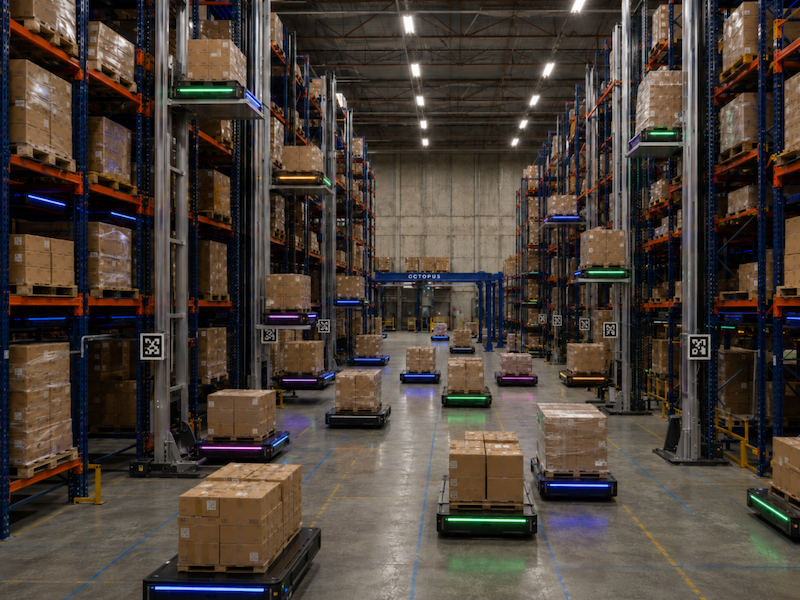
Real-Time Supply Chains Transform Industrial Real Estate and Inventory Management
Recent advancements in predictive analytics, robotics, and data-driven logistics are reshaping industrial real estate by reducing reliance on large inventories. Traditionally, warehouses were designed to manage uncertainty through storage, but the shift towards real-time coordination is changing this paradigm. As supply chains become more connected and visibility improves, the need for extensive inventory diminishes, leading to a redesign of facilities focused on efficient operations. This transformation is significant as it alters the fundamental structure of industrial real estate, moving away from storage-heavy models to those optimized for continuous movement. Just as the introduction of standardized shipping containers revolutionized logistics, the new design principles for automation and throughput will set long-lasting standards for future infrastructure. The choice of facilities that prioritize flow over storage will influence the development of buildings, vehicles, and logistics networks for years to come. Looking ahead, the role of intermediate facilities is evolving from inventory storage to dynamic transfer points, facilitating the movement of goods between transportation modes. As data accessibility increases and transportation systems become more coordinated, the industry must adapt to these changes. No further timeline was disclosed at the time of publication.
Features Logistics Supply chain automation autonomous logistics digital twins
Changxin Technology Announces Underwriting Team for IPO Amid SK Hynix's Successful Nasdaq Debut
Changxin Technology, known as the 'first domestic storage stock,' has revealed its underwriting team ahead of its IPO scheduled for July 16. The underwriting group includes major firms such as CICC and CITIC Securities, totaling six brokers. This IPO is significant as several underwriters are also shareholders, indicating potential for substantial returns beyond underwriting fees. The IPO is crucial for Changxin Technology as it aims to strengthen its position in the semiconductor market, particularly in storage solutions. The involvement of top investment banks suggests confidence in the company's growth prospects, especially as the demand for memory chips continues to rise in various sectors, including artificial intelligence and data centers. In related news, SK Hynix made a successful debut on the Nasdaq on July 10, with shares rising nearly 13% on the first day. This event highlights the increasing interest in semiconductor companies and their potential for growth. No further timeline was disclosed regarding Changxin Technology's IPO progress at the time of publication.

Harvard scientists turn a silicon chip into a DNA writing machine
A team of scientists has developed an innovative silicon chip capable of simultaneously writing multiple DNA sequences through the use of electricity and water-based enzymes. This advancement presents a cleaner and more efficient alternative to traditional DNA manufacturing methods. The breakthrough, announced recently, holds the potential to pave the way for portable DNA-writing devices and large-scale DNA data storage solutions. However, experts note that further advancements in chemistry will be necessary to enhance the scalability of this technology.
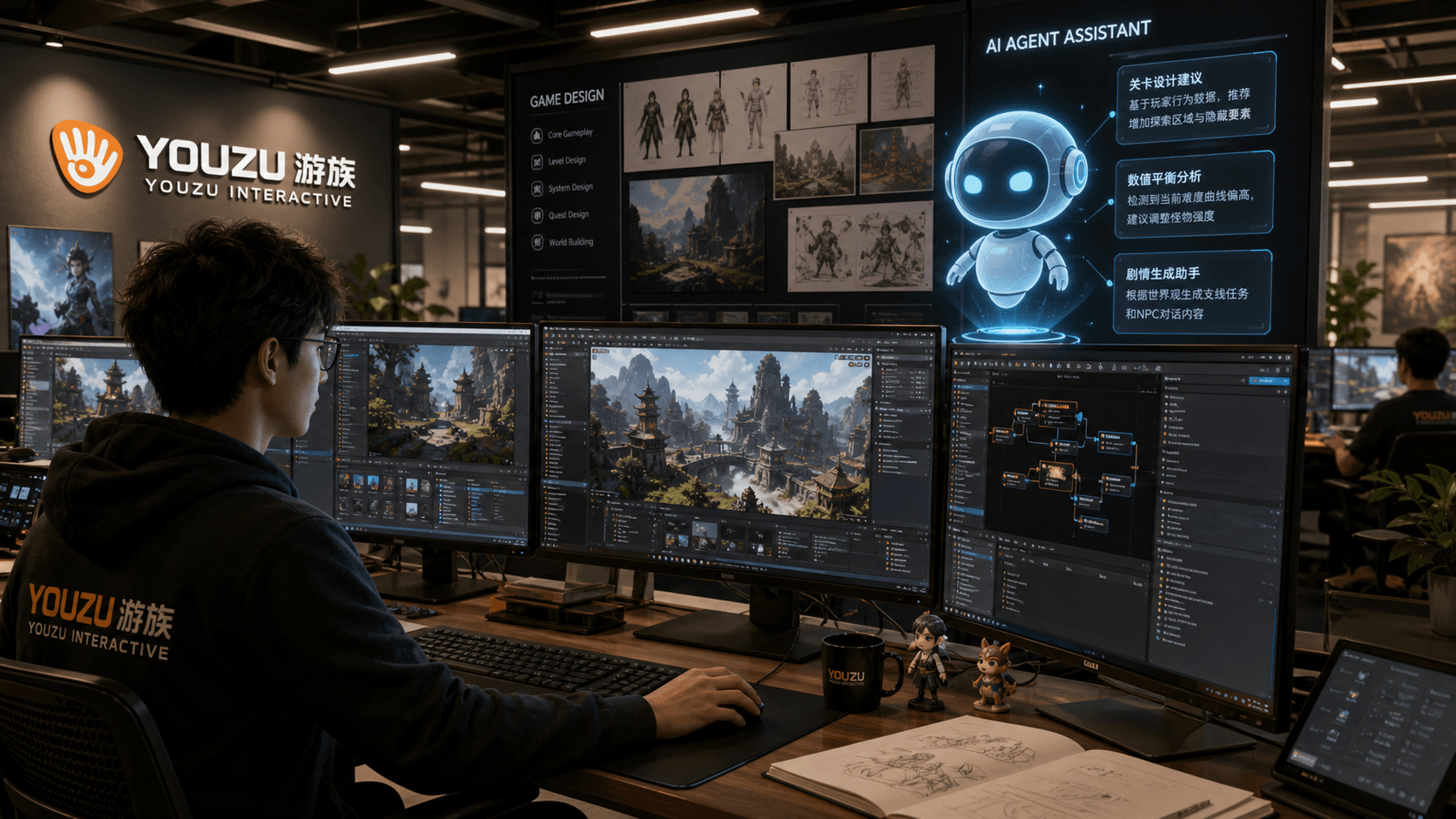
From R&D to Data Analysis, AI Is Rewriting How Game Companies Operate
YOOZOO Interactive deploys AI agents across 75% of its workforce, using Tencent Cloud WorkBuddy to transform game development from coding to global marketing analytics.
Industry
It looks like a sea urchin, but this strange 20-legged machine is rewriting what robots can do
Roboticists have long sought to replicate the diverse forms and functionalities found in nature, drawing inspiration from the symmetry observed in various organisms, such as the bilateral structure of vertebrates and the radial patterns of starfish. This endeavor has spanned decades, with researchers developing robots that mimic the appearances and movements of humans, dogs, and insects. The ongoing exploration into biomimicry aims to enhance robotic design and performance by integrating the efficient and adaptive traits seen in living creatures. As technology advances, these efforts continue to push the boundaries of robotics, potentially leading to more versatile and capable machines in the future.
Robotics
Archivists Turn to LLMs to Decipher Handwriting at Scale
Recent advancements in artificial intelligence are revolutionizing the transcription of handwritten historical documents, making previously inaccessible archives more usable for researchers and the public. Mark Humphries, a history professor at Wilfrid Laurier University in Ontario, has been at the forefront of this transformation, utilizing OpenAI's GPT-4 to analyze millions of World War I pension records. His research, published in May 2025, demonstrated that AI models significantly outperformed traditional handwriting recognition software, achieving lower error rates and faster processing times. The implications of this technology extend beyond academia. Institutions like the University of North Carolina at Chapel Hill and the Federal Reserve Bank of Philadelphia are exploring AI transcription for various historical documents, enabling new avenues for research into topics such as enslaved ancestors and economic history. Lianne Leddy, a co-author of Humphries' study, emphasized that AI tools can uncover stories of Indigenous women from historical records, which would have taken years to analyze manually. As AI continues to evolve, tools like Archive Pearl are being developed to democratize access to historical documents, allowing users to quickly obtain accurate transcriptions. This shift not only aids trained historians but also empowers non-experts and families seeking to explore their heritage, fundamentally changing the landscape of historical research.
Archives Artificial-intelligence Writing Chatgpt Yann-lecun
Import AI 448: AI R&D; Bytedance's CUDA-writing agent; on-device satellite AI
As the conflict in Ukraine continues to evolve, experts are raising questions about the potential for artificial intelligence (AI) to play a significant role in future warfare. The ongoing war, characterized by extensive drone usage, is being viewed as a precursor to what could be the first major AI-driven conflict. Analysts suggest that advancements in AI technology could soon transform military strategies and operations, leading to a new era of warfare. The discussion comes amid increasing investments in AI by various nations, as they seek to enhance their military capabilities. With the rapid development of autonomous systems and machine learning algorithms, the integration of AI into combat scenarios is becoming more plausible. This shift raises concerns about the ethical implications and the potential for unintended consequences in warfare. As military leaders and policymakers assess the lessons learned from the Ukraine conflict, they are also contemplating how AI could change the dynamics of future battles. The urgency to address these developments is underscored by the need for international regulations to govern the use of AI in military applications. The ongoing discourse highlights the importance of preparing for a future where AI could fundamentally alter the landscape of global conflict.

Aerospace’s Automation Breakthrough: How Robotics and AI Orchestration Are Rewriting the Supply Chain
The aerospace industry is poised for significant advancements through the integration of physical automation and artificial intelligence (AI) systems. This innovative approach aims to enhance the coordination of information flow within complex, multi-vendor environments while ensuring the protection of confidential data. By leveraging these technologies, companies in the sector are expected to achieve greater operational efficiency and streamline processes. The push for this transformation is driven by the need to adapt to evolving industry demands and improve overall productivity. As organizations implement these integrated systems, they will likely reshape the landscape of aerospace operations, paving the way for a more secure and efficient future.
Robotics needs a service framework.
RSF defines a common language for robot service capability, lifecycle operations, certification pathways, and service-provider networks.
Join the RobotToday community on LinkedIn
Daily robotics news, in-depth analysis, conference highlights, and discussions with professionals worldwide.