

Industry Briefing
A single destination for timely, editor-curated robotics news from around the world.

Agility Robotics Explores Development of Wheeled Robots Alongside Digit Humanoid
Agility Robotics recently revealed plans to explore wheeled robots during the launch of Digit 5. CEO Jonathan Hurst confirmed that the company is considering various robot designs, including wheeled options, to meet diverse customer needs and operating environments. This exploration is significant as it marks a potential shift for Agility, which has primarily focused on legged robots. Hurst emphasized that while legged robots are becoming more capable, wheeled robots could provide quicker market entry in certain environments where legged capabilities may not be necessary. No specific timeline for the introduction of a wheeled robot has been disclosed. As Agility continues to commercialize Digit, the company is also navigating a SPAC merger with Churchill Capital Corp. XI, valuing it at $2.5 billion and highlighting the importance of diversifying its product offerings to enhance revenue growth.
Humanoids News Robots / Platforms Agility Robotics robobusiness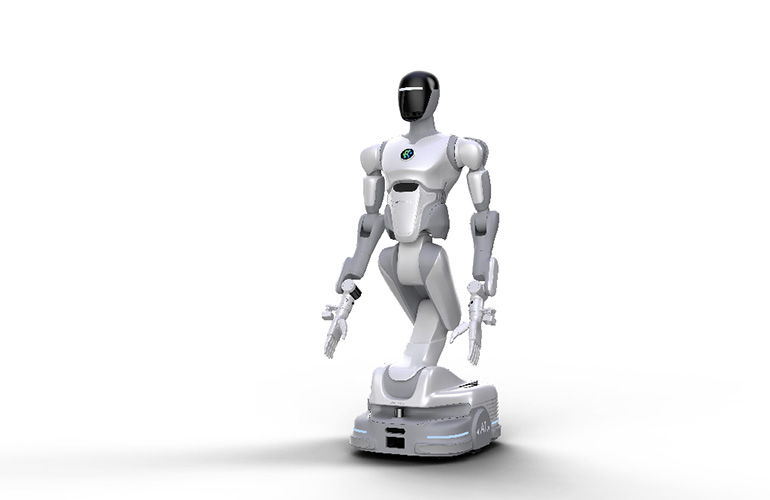
AI² Robotics Secures $735 Million Funding for Wheeled Humanoid Robots Development
AI² Robotics has successfully raised approximately $735 million in a recent funding round, elevating its valuation to around $2.8 billion. The Shenzhen-based company specializes in wheeled humanoid robots, which feature a humanoid torso and five-fingered hands, offering a unique alternative to traditional bipedal systems. This funding round attracted a diverse group of investors, including government-backed entities and major corporations, highlighting the growing importance of physical AI technology in China. The strategic choice to develop wheeled robots instead of bipedal models allows AI² Robotics to focus on mechanical simplicity and durability, making their robots more cost-effective and easier to deploy in public spaces. With over 34 degrees of freedom and a custom lifting mechanism, the robots are designed for various industrial applications, including logistics, manufacturing, and retail. The company’s proprietary Alpha Brain software enhances the robots' capabilities in real-time spatial reasoning and task planning, positioning them as practical solutions in structured environments. Looking ahead, AI² Robotics aims to further penetrate industrial markets while steering clear of the consumer robotics hype. The company is actively deploying its AlphaBot 2 in practical settings, emphasizing its utility in sectors such as biotech and public service. No further timeline was disclosed at the time of publication regarding future funding or product releases.
Artificial Intelligence / Cognition China Financial Humanoids Investments News
Agility Robotics Unveils Digit 5 and Explores Wheeled Robot Designs
In mid-September, Agility Robotics launched its fifth-generation humanoid robot, Digit 5. The company, which has been developing bipedal robots for over a decade, has seen its flagship product, Digit, deployed in various facilities including Amazon and Toyota Canada. According to the company, it has achieved continuous commercial deployment for nearly three years. The exploration of wheeled designs was confirmed by co-founder and Chief Robotics Officer Jonathan Hurst, who noted that while the company is investigating various robot forms to meet different operational environments, bipedal robots are expected to remain the solution for many scenarios as their safety and reliability improve. Hurst emphasized that the goal is to enable robots to operate in more environments quickly, although it is too early to determine if a wheeled version of Digit will be released. Digit 5 features significant design changes, including a switch from bird-like legs to human-like legs, allowing it to squat and lift loads of up to 50 pounds. Hurst stated that this capability is sufficient for single-person handling tasks in OSHA-regulated areas. The robot's ability to operate without fixed safety zones and its involvement in standard-setting for industrial mobile robots are crucial for its integration into workplaces, as current humanoid robots often operate in isolated areas, limiting their value.
Bipedal Robots Wheeled Robots Industrial Automation Robot Safety Standards
DEEP Robotics Expands Use of Quadruped and Wheeled Robots in Emergency Response Operations
Chinese startup DEEP Robotics is enhancing firefighting and emergency response capabilities with its X30 quadruped and Lynx M20 wheeled-legged robots. These robots are designed to enter hazardous environments first, gathering real-time data on conditions and relaying it to command teams, thereby keeping human responders safe during initial assessments. The deployment of these robots is significant as they can monitor dangerous situations such as fires, chemical leaks, and collapsed structures without putting human lives at risk. The X30 quadruped is equipped with advanced sensors and can also assist in firefighting efforts, transporting equipment, and maintaining communication links in challenging environments. Looking ahead, DEEP Robotics aims to further integrate its robotic systems into emergency response protocols, enhancing the efficiency and safety of rescue operations. No further timeline was disclosed at the time of publication.
AI and Robotics
Leading Company in Wheeled Embodied Intelligence Robots Launches New Product
Xinghai Map, a frontrunner in the wheeled robotics industry, has announced the launch of its upgraded R1 series, set to debut in 2026. This new series focuses on enhancing hardware precision and reliability, with the goal of setting new benchmarks in the field of embodied intelligent robotics. As the technology transitions from laboratory settings to practical applications, the R1 series is expected to play a significant role in advancing the capabilities of robotic systems in various real-world scenarios.
Embodied Intelligence Robotics Hardware Development AI
4SWLR: A Switched System and Skid Steer Integrated Whole‐Body Control Framework for Wheeled‐Legged Robots
A recent study published in the Journal of Field Robotics highlights advancements in autonomous robotic navigation. Researchers from a leading university conducted experiments to improve the efficiency and accuracy of robots in complex environments. The study, released in early October 2023, focuses on the integration of artificial intelligence and machine learning algorithms to enhance decision-making processes in real-time. The research team aimed to address challenges faced by robots in dynamic settings, such as unpredictable obstacles and varying terrain. By employing advanced sensing technologies and adaptive algorithms, the robots demonstrated significant improvements in their ability to navigate and perform tasks autonomously. The experiments were conducted in various locations, including urban settings and natural landscapes, to test the robots' adaptability and performance under different conditions. The findings suggest that these innovations could lead to more effective applications in fields such as search and rescue, agriculture, and environmental monitoring. This study underscores the growing importance of robotics in addressing real-world challenges and the potential for continued advancements in the field. The researchers believe that their work could pave the way for more sophisticated robotic systems capable of operating independently in increasingly complex environments.
RESEARCH ARTICLERobotics needs a service framework.
RSF defines a common language for robot service capability, lifecycle operations, certification pathways, and service-provider networks.
Join the RobotToday community on LinkedIn
Daily robotics news, in-depth analysis, conference highlights, and discussions with professionals worldwide.







