

Industry Briefing
A single destination for timely, editor-curated robotics news from around the world.

Ant Group Leads Strategic Investment in Daimeng Robotics for Tactile Sensor Development
On August 11, Shenzhen's Daimeng Robotics announced the completion of a strategic financing round worth hundreds of millions, led by Ant Group, with existing shareholders participating. This marks Daimeng's second significant funding within two months and represents Ant Group's strategic entry into the embodied intelligence sector through component technology. Daimeng, founded by Wang Yu and Duan Jianghua from the Hong Kong University of Science and Technology, focuses on millimeter-level optical tactile sensing and dexterous manipulation technology. As the demand for humanoid robots in China is projected to reach 61.4% in entertainment and educational sectors by 2025, the shift towards precision operations in industrial applications is becoming crucial, highlighting the importance of tactile sensors in enhancing operational accuracy. Daimeng's core strength lies in miniaturizing tactile sensing units to achieve high-resolution capabilities. The company has developed a humanoid optical tactile five-fingered dexterous hand and the Sparky 1 humanoid robot, integrating tactile data into a visual-tactile-language-action framework. This investment by Ant Group is part of a broader strategy to create a comprehensive ecosystem that spans data generation, component supply, and model training, positioning Daimeng as a key player in the tactile sensor market.
Tactile Sensors Robotics Industrial Automation Embodied Intelligence
Bengbu Develops Comprehensive Domestic Sensor Stack from MEMS Chips to BCI Technology
Bengbu, an industrial city in Anhui province, has developed a robust domestic sensor stack that includes 8-inch MEMS wafer production, flexible brain-computer interface (BCI) electrodes, and clinical applications for stroke rehabilitation and Alzheimer's screening. This development is significant as it positions Bengbu as a key player in China's sensor technology landscape, showcasing the city's ability to integrate various technologies into a cohesive system. The advancements in MEMS and BCI technologies could enhance healthcare solutions and improve patient outcomes in critical areas such as rehabilitation and early diagnosis. Looking ahead, it will be important to monitor how Bengbu's sensor stack evolves and whether it can attract further investment or partnerships to expand its capabilities. No further timeline was disclosed at the time of publication.

Yotlive Completes Pre-A+ Funding Round to Enhance Flexible Tactile Sensor Development
On July 29, Yotlive, a flexible tactile sensing company, announced the completion of its Pre-A+ funding round. The round was led by Dinghe Gaoda, with participation from Changshu Qishi and Zulong Entertainment, while Yundao Capital served as the long-term exclusive financial advisor. The funds will primarily support the development of flexible fabric sensing technology, expansion of data glove production capacity, and the establishment of data interfaces and standardization capabilities for embodied intelligence and world models. This funding is significant as it underscores the growing interest in Yotlive's innovative technology, which integrates sensing directly into fabric. Founded in 2010 and operational since 2015, Yotlive's core technology involves a unique conductive network created from metal alloy yarns woven into a multi-layer fabric sensor matrix. The company aims to transform physical interaction data into valuable assets for embodied intelligence training and world modeling. Looking ahead, Yotlive plans to launch its flexible fabric tactile sensing data gloves in August, which have already garnered thousands of pre-orders. The company anticipates that by 2026, its data glove business will account for over half of its total revenue, projecting a tenfold increase in annual revenue. No further timeline was disclosed at the time of publication.
Tactile Sensors Flexible Technology Data Gloves Embodied Intelligence Wearable Technology
U.S. Air Force Enhances $500M Counter-Drone Shield with New Multi-Sensor Technology
The U.S. Air Force is enhancing its counter-drone capabilities by integrating Teledyne FLIR Defense’s Argus XL platform into AeroVironment’s Titan Multi-Sensor system. This initiative is part of a three-year, $500 million contract under the Domestic Shield Program, aimed at protecting military installations from aerial threats. This expansion is significant as it strengthens the layered counter-unmanned aircraft system (UAS) coverage across domestic sites, addressing the growing concern of small unmanned aircraft that pose risks to sensitive locations. The Argus XL platform enhances detection and tracking capabilities, allowing operators to respond more effectively to potential threats. Looking ahead, the integration of Argus XL is expected to improve operational efficiency and situational awareness for military users. The system's ability to incorporate third-party sensors and adapt to emerging threats will be crucial as drone technology continues to evolve. No further timeline was disclosed at the time of publication.
Military
Nanoscience Instruments Partners with BioNavis to Enhance MP-SPR Technology Solutions
Nanoscience Instruments has announced a new partnership with BioNavis, a Finnish leader in Multi-Parametric Surface Plasmon Resonance (MP-SPR) technology. This collaboration aims to leverage BioNavis's innovative technology to provide enhanced scientific instrumentation solutions across North America. The partnership is significant as it combines Nanoscience Instruments' extensive experience in scientific instrumentation with BioNavis's cutting-edge MP-SPR technology. This integration is expected to improve the capabilities of real-time binding kinetics analysis, which is crucial for various applications in biosensing and molecular interactions. Looking ahead, the collaboration is poised to advance the development of next-generation optical biosensors. No further timeline was disclosed at the time of publication.
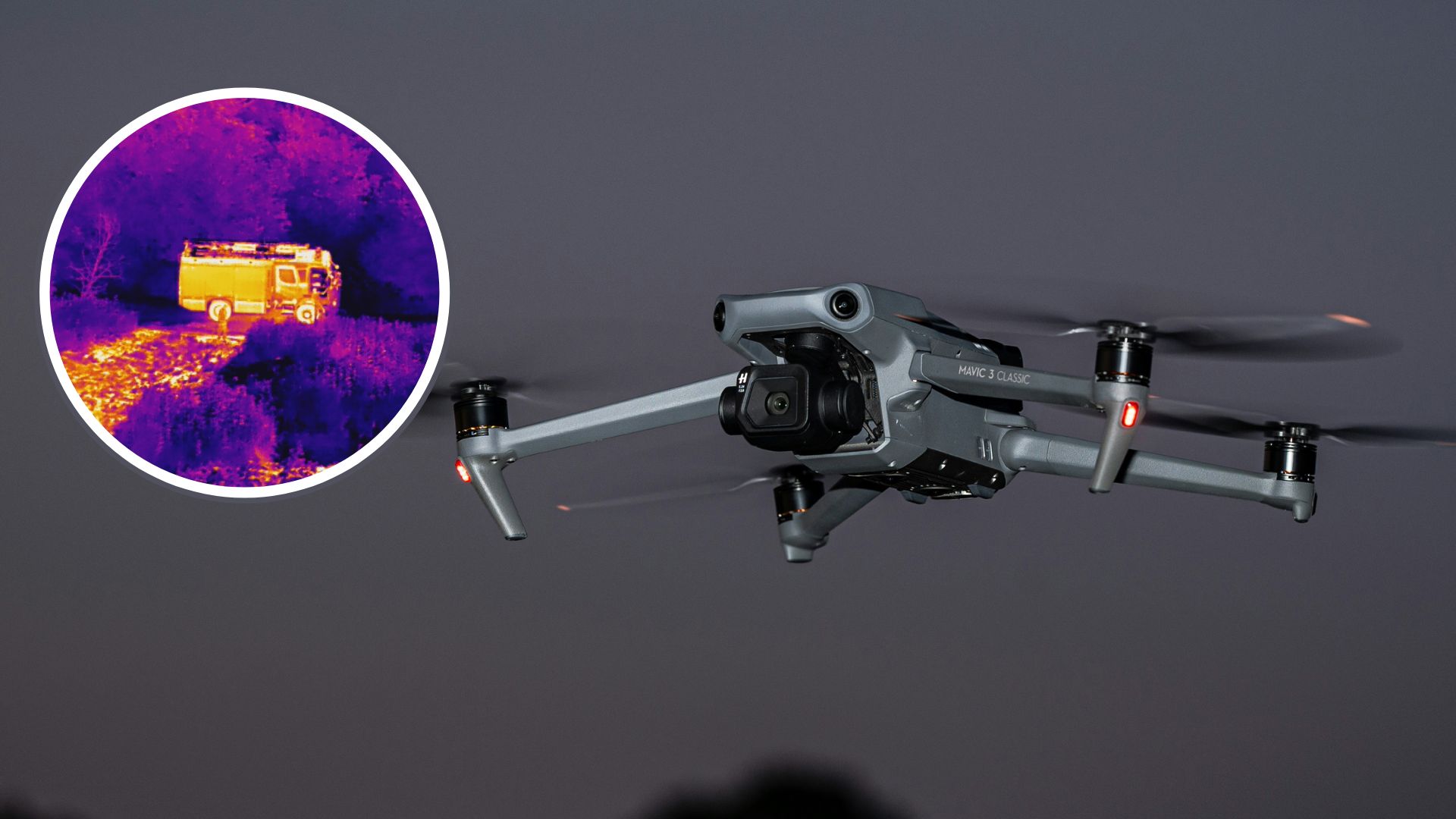
Teledyne FLIR OEM to Enhance U.S. Army's Thermal Imaging Technology for Drones
Teledyne FLIR OEM has partnered with the U.S. Army to advance thermal imaging technology under the DUTCH initiative. This program aims to develop smaller, more affordable uncooled infrared sensors for military applications, enhancing the performance of drones and other autonomous systems. The initiative is significant as it seeks to improve sensor capabilities without increasing size or power requirements, addressing the Army's need for more efficient military equipment. By focusing on size, weight, power, and cost (SWaP-C), the project aims to reduce payload burdens on uncrewed aircraft while extending operational time. Teledyne FLIR OEM plans to leverage its expertise in thermal imaging and system integration to support the Army's modernization efforts. The company is investing in small-pixel thermal sensor designs, which will allow for compact imaging systems that maintain thermal detail. No further timeline was disclosed at the time of publication.
Military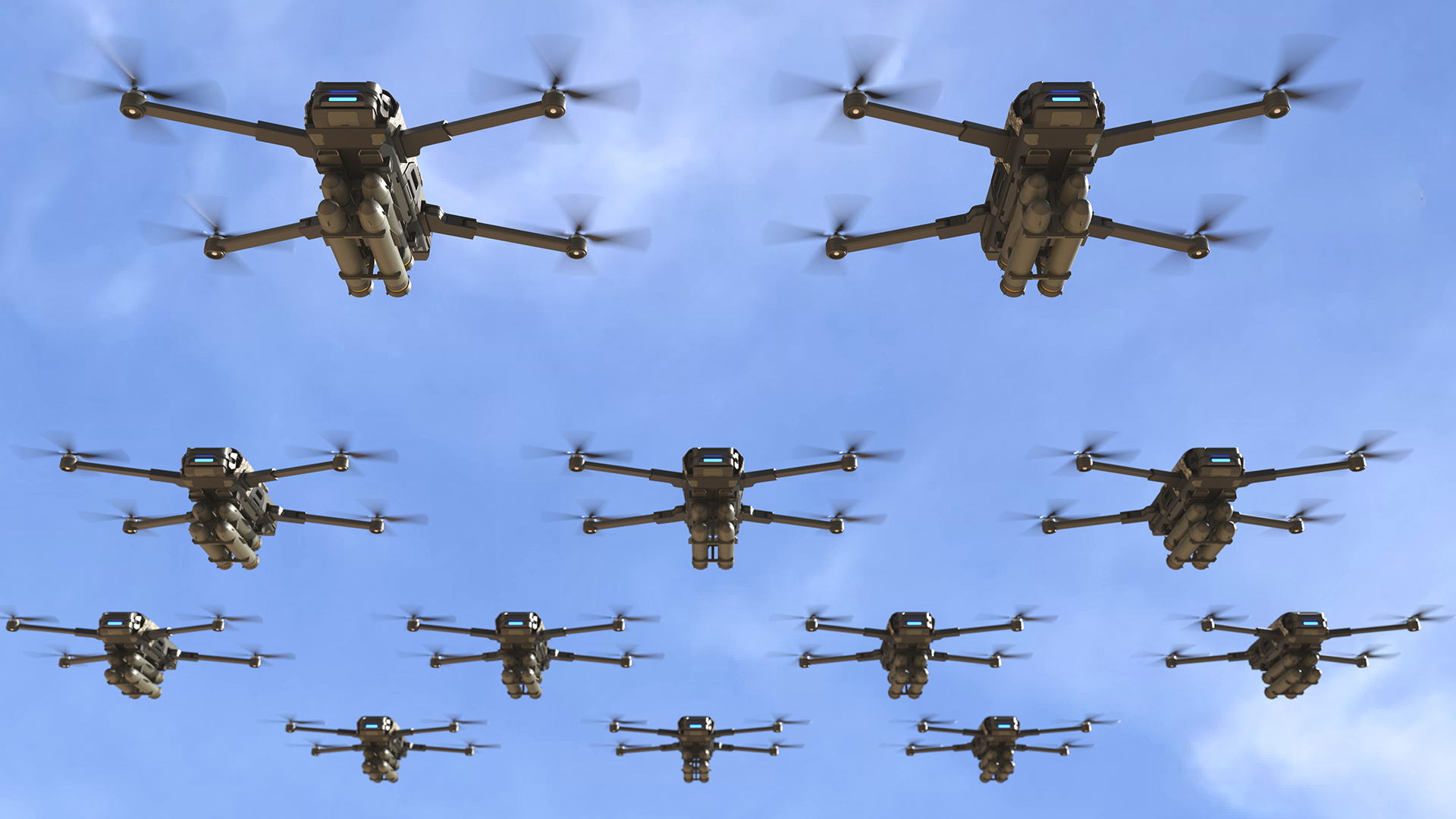
Laser dazzler blinds drone sensors in breakthrough counter-UAS technology trials
NUBURU, a U.S. defense technology company, has announced promising preliminary findings from its recent tests of a laser dazzler system. Conducted in October 2023, these tests aim to evaluate the effectiveness of the laser dazzler in countering potential threats. The system is designed to temporarily blind or disorient adversaries, enhancing the safety of military personnel and operations. The encouraging results indicate that the technology could play a crucial role in modern defense strategies, addressing the increasing need for non-lethal deterrents in various combat scenarios. NUBURU's advancements in laser technology reflect a growing trend in the defense sector to develop innovative solutions for protecting forces while minimizing collateral damage.
Military
Tactile Sensor Technology
Humanoid robots are poised to become a common presence in households, with advancements in technology emphasizing the importance of tactile sensation for their safe and effective operation. As homes present complex, unstructured, and dynamic environments, the development of robots equipped with a sense of touch is essential for their integration into daily life. This innovation is driven by the need to enhance the robots' ability to navigate and interact with various household tasks and obstacles, ensuring they can function effectively alongside humans. With ongoing research and development in this field, the arrival of these sophisticated humanoids is anticipated in the near future, marking a significant step forward in domestic robotics.
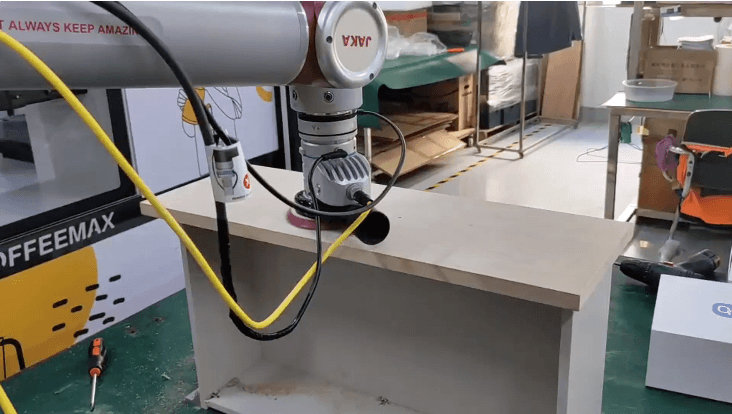
Understanding Automation Robotics Technology: From Sensors to Control Systems (JAKA CAB V3)
JAKA, a leader in automation robotics technology, has unveiled its advanced polishing robot, powered by the innovative CAB V3 controller, designed to enhance the precision and consistency of metal component finishing. This cutting-edge system, which integrates sophisticated sensing and control mechanisms, addresses the challenges faced by skilled artisans in achieving flawless surfaces. The CAB V3 controller serves as the brain of the robot, translating high-resolution sensor data into precise motion commands. Equipped with advanced proprioceptive sensors and force control technology, the polishing robot can adapt to subtle variations in part geometry, ensuring optimal tool orientation and pressure during operation. This real-time feedback loop allows the robot to maintain high standards of quality while compensating for any deviations. JAKA's design philosophy emphasizes the seamless integration of sensing, computation, and mechanical action, enabling the polishing robot to operate smoothly without vibrations that could damage surfaces. The CAB V3 also supports connectivity with external vision systems and factory networks, enhancing flexibility in mixed-production environments. By leveraging this advanced automation technology, manufacturers can achieve unprecedented levels of consistency and quality in their finishing tasks, transforming the traditional polishing process into a highly efficient and repeatable operation.
Robotics needs a service framework.
RSF defines a common language for robot service capability, lifecycle operations, certification pathways, and service-provider networks.
Join the RobotToday community on LinkedIn
Daily robotics news, in-depth analysis, conference highlights, and discussions with professionals worldwide.






