A single destination for timely, editor-curated robotics news from around the world.
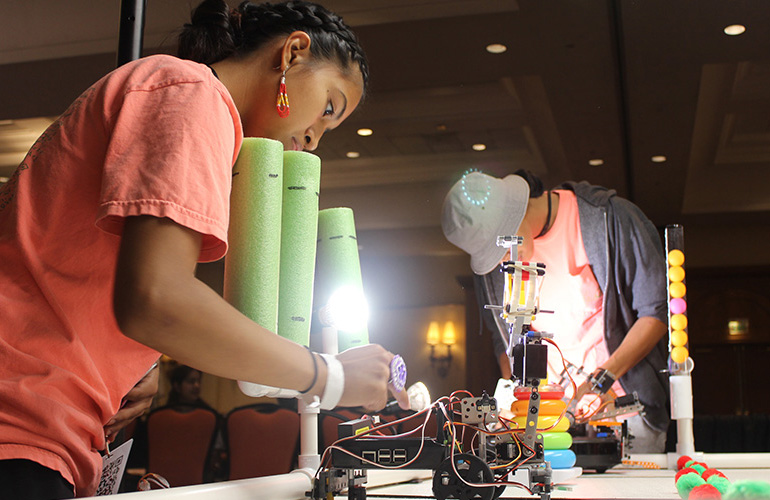
The KISS Institute for Practical Robotics (KIPR) has introduced BotBall, a robotics program designed to foster creativity and critical thinking among students. This initiative emphasizes student-led engineering, allowing participants from elementary to high school to engage in hands-on learning using a standardized kit. The program ensures a level playing field by providing all teams with the same materials, promoting accountability and project management skills without adult intervention during competitions. BotBall challenges traditional educational models by integrating real programming languages like C and Python into its curriculum, demonstrating that students can handle complex coding at an early age. The Junior Botball Challenge (JBC) further innovates by allowing up to five students to collaborate on a single robot, shifting the focus from competition to inquiry-driven problem solving. This approach encourages teamwork and a deeper understanding of both mechanics and software among participants. As the school year approaches, KIPR is expected to release more details about the upcoming competition schedule. The BotBall program represents a significant shift in STEM education, moving away from conventional roles and fostering a new generation of students who are well-versed in both engineering and programming disciplines. No further timeline was disclosed at the time of publication.
TheRobotReport.com By Mike Oitzman Jul 12, 2026 Autonomous Mobile Robots (AMRs) Educational News competition education workforce
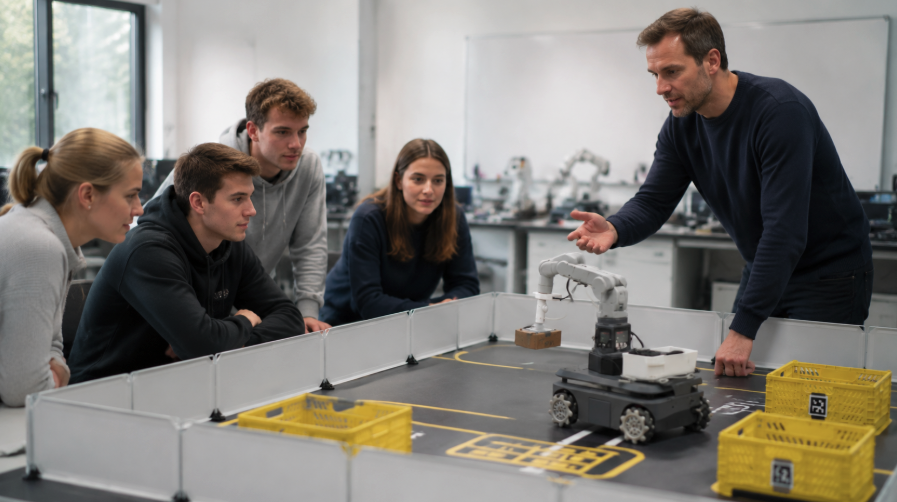
In recent years, STEM education has seen significant growth, fueled by a rising demand for practical engineering skills, artificial intelligence literacy, and interdisciplinary innovation. Despite this progress, schools, universities, and research laboratories continue to face challenges in creating effective robotics environments. Educators often struggle to integrate various components such as robotic arms, mobile platforms, sensors, and open-source software from multiple sources, complicating the development of comprehensive robotics programs. This ongoing issue highlights the need for streamlined solutions that can enhance the teaching and learning of robotics in educational settings.
RoboticsAndAutomationNews.com By Sam Francis Jun 26, 2026 Design Research Robotics AI education americas automation news
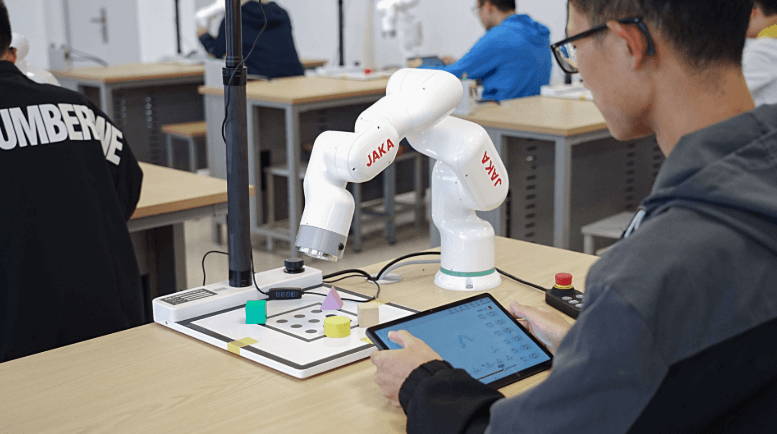
In an effort to enhance K-12 STEM education, JAKA has introduced mini robot arm solutions designed to foster critical thinking and hands-on learning among students. This initiative aims to make STEM concepts more interactive and accessible, addressing the growing need for practical educational tools. The JAKA MiniCobo, a lightweight and cost-effective robotic arm, allows students to engage in incremental, project-based activities that build their skills from simple tasks to complex programming exercises. By integrating these robotic arms into classrooms, educators can facilitate real-world applications of STEM principles, encouraging teamwork and problem-solving through projects such as assembling components and simulating industrial processes. The MiniCobo's user-friendly design ensures that teachers can easily incorporate robotics into their lessons without extensive preparation, making it suitable for daily classroom use. Safety and accessibility are prioritized in JAKA's educational solutions, which comply with strict safety standards and feature intuitive programming interfaces. This design enables students to experiment confidently while allowing teachers to focus on guiding learning objectives. By providing robust and approachable robotics technology, JAKA aims to inspire the next generation of innovators and engineers, ultimately advancing educational outcomes in STEM fields.
jaka.com By JAKA Mar 25, 2026
A newly established student club at the Massachusetts Institute of Technology (MIT) is dedicated to supporting K-12 students through hands-on STEM education. This initiative, spearheaded by alumni of the FIRST Robotics program, seeks to leverage their experiences and expertise to inspire younger students in the fields of science, technology, engineering, and mathematics. The club aims to create engaging learning opportunities that foster creativity and problem-solving skills among participants. By organizing workshops, mentorship programs, and robotics competitions, the group hopes to enhance educational enrichment and ignite a passion for STEM in the next generation. The club's formation reflects a growing commitment within the MIT community to address educational disparities and promote STEM literacy among youth.
MITNews By Elizabeth Durant | Division of Graduate and Undergraduate Education Jun 02, 2026 Clubs and activities STEM education Students Undergraduate Robotics Mechanical engineering
Saab UK recently held the South regional heat of the Global Underwater Hub’s STEM Challenge at its Fareham campus, inviting local school pupils to engage in a practical introduction to underwater engineering and marine technology. The event aimed to inspire students by providing them with hands-on experiences in a field that combines science, technology, engineering, and mathematics. Participants had the opportunity to explore various aspects of marine technology, fostering interest in potential careers in this innovative sector. The initiative underscores Saab UK's commitment to promoting STEM education and encouraging the next generation of engineers.
ROVplanet.com By ROV Planet May 01, 2026 saab stem challenge guh
MassRobotics has revealed plans for RoboBoston 2026, its ninth annual Robot Block Party, scheduled for September 26, alongside a Robotics & AI Technical Career Fair on September 25. The event will take place at Boston’s Seaport and is expected to host over 50 robotics companies, universities, and student teams, showcasing interactive exhibits and demonstrations. The significance of RoboBoston lies in its role in highlighting the region’s robotics ecosystem, uniting industry, academia, and students. Attendees will experience a variety of activities, including a Sidewalk Robot Parade and a ribbon-cutting ceremony, while exhibitors will present new technologies and research projects. MassRobotics has opened sponsorship opportunities, inviting organizations to support the event and promote STEM education and robotics innovation. Looking ahead, the Robotics & AI Technical Career Fair on September 25 aims to connect employers with technical talent in the robotics and AI sectors. Previous events have drawn over 800 job seekers, making it a valuable opportunity for both companies and candidates. No further timeline was disclosed at the time of publication.
RoboticsAndAutomationNews.com By Sam Francis Jul 17, 2026 Business Features ai careers artificial intelligence automation boston
The Salamanca City Central School District in New York is piloting a project featuring a humanoid robot teacher named Sally, developed by Realbotix. This initiative aims to assist high school students in completing summer AI and robotics courses, marking what is believed to be the first deployment of a humanoid robot teacher in an operational school district in the U.S. Sally utilizes natural language processing, facial expression feedback, and real-time classroom support, providing personalized tutoring based on students' learning data. The project is part of the Woz ED STEM curriculum, founded by Apple co-founder Steve Wozniak, to promote STEM education. However, concerns arise regarding data security and the implications of a technology company with adult entertainment origins entering the education sector. As this initiative unfolds, it raises critical questions about the role of human teachers versus robots in education. While Sally can assist with homework and answer questions, it cannot replace the emotional connections that human teachers foster. The outcome of this pilot could redefine the boundaries of educational roles and the integration of AI in classrooms.
leaderobot.com By Leaderobot Jul 16, 2026 Humanoid Robots AI in Education EdTech Robotics
The development of robotics begins long before physical assembly, relying heavily on simulations to validate designs and refine algorithms. These simulations demand significant computational resources, making system benchmarking crucial to identify hardware limitations early in the process. By measuring workstation performance under demanding workloads, engineers can establish a performance baseline that aids in spotting potential bottlenecks. Understanding how different hardware components affect simulation performance is essential for robotics development. Whether using macOS, Windows, or Linux, benchmarking helps determine if slowdowns are due to software changes or hardware limitations. Key components such as the processor, graphics card, memory, and storage play varying roles in performance, and the weakest link can dictate the overall experience. As robotics projects grow in complexity, the need for robust hardware becomes increasingly important. Engineers should focus on comprehensive benchmarking to ensure their systems can handle the demands of their simulations. No further timeline was disclosed at the time of publication.
RoboticsAndAutomationNews.com By Sam Francis Jul 17, 2026 Components Robot simulation ABB RobotStudio automation cpu delmia
On July 13, FF founder Jia Yueting announced the upgrade of FF Robotics' strategy from a 'Trinity' model to a 'Quad-Core Intelligence' ecosystem. This strategic iteration follows the launch of four major robot series in February and the completion of the 'Full-Form EAI Robot World' in June, marking a significant advancement in embodied intelligence. The upgrade introduces a new core module focused on industry productivity solutions and a developer platform, targeting four key sectors: education, industrial, security, and inspection. Jia emphasized that this shift aims to transition from standalone capabilities to a comprehensive system that addresses industry-specific pain points, facilitating the practical application of FF robots in real-world scenarios. Looking ahead, FF aims to achieve a sales target of 2000 units by the end of the year, with the Q3 launch of the first FF EAI Robot Productivity Practical League to showcase real-world applications. This initiative, alongside the sales goal, is expected to validate the effectiveness of robots as productivity tools, moving beyond mere demonstrations to practical utility.
leaderobot.com By Leaderobot Jul 13, 2026 Robotics Artificial Intelligence Industry Solutions Productivity Tools
At the 2026 World Artificial Intelligence Conference in Shanghai, Insight AI launched the world's first embodied semantic intelligence system, insightOS Semantic. This system represents a pivotal shift in the embodied intelligence industry, moving from mere demonstration capabilities to practical applications in real-world scenarios. The significance of this development lies in its comprehensive approach to embodied intelligence, which now requires not only technical prowess but also a robust operating system, scenario validation, and a thriving developer ecosystem. Insight AI aims to address the critical challenges of understanding, adaptability, and evolution in robotics, which have hindered the large-scale deployment of embodied systems. Looking ahead, Insight AI's insightOS Semantic is designed to facilitate seamless communication between humans and robots, enabling task execution through natural language. The system's architecture integrates semantic understanding with physical operation capabilities, promising to enhance the efficiency and intelligence of robots in dynamic environments. No further timeline was disclosed at the time of publication.
leaderobot.com By Leaderobot Jul 19, 2026 Embodied Intelligence Robotic Systems AI Technology Natural Language Processing
Emerson has launched the Ovation Curation Tool, a synchronization software designed for power and water control systems. This tool aims to maintain version control and change history across multiple Ovation systems and simulators, automating the management of changes between production systems and their digital twins. The introduction of the Ovation Curation Tool is significant as it addresses the challenges of keeping digital twins synchronized with live systems, especially amid workforce shortages. By improving testing and training accuracy, the tool is expected to save engineering time and facilitate faster troubleshooting, enhancing overall operational efficiency. Looking ahead, the software's ability to automatically track changes and provide an intuitive dashboard for users will be crucial for organizations seeking to optimize their control systems. No further timeline was disclosed at the time of publication.
AutomationWorld.com By (undefined) Jul 08, 2026 Factory / Digital Transformation
In mid-June 2026, the CNRS deployed ten SEAEXPLORER autonomous underwater gliders in the Ligurian Sea as part of Mission 6 under France's 2030 funding plan. This initiative aims to create a comprehensive environmental data atlas for the northwestern Mediterranean, focusing on the impacts of human activities on marine ecosystems. The gliders will operate for one month, diving to depths of 1,000 meters and equipped with sensors to monitor underwater noise and ocean currents. The deployment is significant as it represents a strategic effort by the French government to enhance industrial competitiveness and develop next-generation technologies for deep-sea exploration. By utilizing coordinated fleets of autonomous gliders and advanced sensing technologies, researchers aim to better understand the dynamics of marine ecosystems and the effects of climate change, maritime traffic, and ocean acidification. This innovative approach will facilitate the study of plankton distribution and biodiversity through methods such as environmental DNA monitoring. Looking ahead, the next phases of Mission 6 will involve additional deployments in the Gulf of Lion in 2028 to test new sensors, followed by operations in French Polynesia between 2028 and 2029. These efforts will further expand the capabilities of autonomous underwater vehicles in marine research, with no further timeline disclosed at the time of publication.
ROVplanet.com By ROV Planet Jul 01, 2026 autonomous gliders cnrs exploration mediterranean marine ecosystems
On July 22, the inaugural Beijing High School Humanoid Robot Soccer Championship concluded at Tsinghua University High School. Launched on April 11, the competition involved 55 teams from 16 districts in Beijing and Xiong'an New Area, divided into two groups: Group A with 24 teams and Group B with 31 teams. The championship aimed to integrate artificial intelligence education with practical technology application. Students not only programmed their robots but also developed algorithms, fine-tuned motion controls, and optimized visual recognition and teamwork strategies, enabling robots to make autonomous decisions during matches. The event served as a unique platform to enhance students' technological literacy and engineering skills through hands-on experience. As students watched their programmed robots navigate the field, AI transformed from a theoretical concept into a tangible reality, showcasing the potential of the next generation of engineers who have already coded their own robots at just 16 years old.
leaderobot.com By Leaderobot 3 hours ago Humanoid Robots AI Education Robotics Competitions STEM Education
Digua Robot, an affiliate of Horizon Robotics, has announced significant milestones for its Sunri S600 platform. As 2026 approaches, the company is positioning itself for mass production in embodied intelligence, aiming to tackle the three critical challenges of deploying models on robots. This development is crucial as it signifies a shift towards the industrialization of embodied intelligence, which is expected to enhance operational efficiencies and broaden the application of robotics across various sectors. The focus on overcoming deployment challenges indicates a strategic move to ensure the successful integration of advanced robotic systems into real-world environments. Looking ahead, stakeholders should monitor the progress of the Sunri S600 platform and its impact on the robotics landscape as 2026 approaches. The emphasis on addressing deployment issues will be key to the platform's success and the broader acceptance of embodied intelligence in industrial applications. No further timeline was disclosed at the time of publication.
PanDaily.com By [email protected] (Pandaily) 3 hours ago Technology
In July, Texas Tech University Health Sciences Center (TTUHSC) welcomed its first cohort of general surgery residents, who began their training with the da Vinci Surgical System. This innovative approach aims to equip new surgeons with skills comparable to those at leading institutions like Mayo Clinic and hospitals in Dallas and Houston. The training program, led by Dr. Izzy Obokare, emphasizes a systematic learning process over five years, allowing residents to master robotic surgery techniques. The da Vinci Surgical System, approved by the FDA in 2024, features a tactile feedback system that enhances the surgical experience by reducing tissue trauma and promoting quicker recovery. TTUHSC's initiative aims to provide high-quality surgical care in the Texas Panhandle, minimizing the need for residents to travel to larger cities for advanced procedures. The program also includes an open experience event for healthcare providers to witness the capabilities of robotic surgery firsthand, showcasing the arrival of cutting-edge surgical technology in rural Texas.
leaderobot.com By Leaderobot Jul 22, 2026 Robotic Surgery Medical Technology Surgical Training Healthcare Innovation
Moore Threads, a Chinese GPU developer, showcased its MTT C256 system at WAIC 2026, integrating 256 GPUs into a single data-center-scale computing unit. This innovative system employs a one-layer Scale-up network that facilitates all-to-all communication among the GPUs, all housed within two standard racks. Moore Threads claims that this network achieves sub-microsecond latency, enhancing performance significantly. The introduction of the MTT C256 system is significant as it represents a leap in GPU technology, allowing for advanced computational capabilities. The ability to train a 236-billion-parameter mixture-of-experts model using over 25 trillion tokens showcases the system's potential for handling large-scale data processing tasks. This advancement could have implications for various industries relying on high-performance computing. Looking ahead, the performance of the MTT C256 system in real-world applications will be crucial to monitor. As Moore Threads continues to innovate in GPU technology, the effectiveness of their solutions in practical scenarios will determine their impact on the market. No further timeline was disclosed at the time of publication.
TechNode.com By TechNode Feed Jul 21, 2026 News Feed
Wistron has inaugurated its first U.S. manufacturing facility in Fort Worth, Texas, covering 324,000 square feet. This plant will produce superchips integral to advanced AI systems, including the NVIDIA GB300 Grace Blackwell Ultra Superchip and the upcoming NVIDIA Vera Rubin Superchip. The opening ceremony featured NVIDIA CEO Jensen Huang and Wistron Chairman Simon Lin, emphasizing the importance of manufacturing in the AI era. The establishment of the Fort Worth plant represents a significant $700 million investment in U.S. advanced manufacturing, creating over 500 jobs with plans to expand to 1,000 by year-end. Huang highlighted the diverse job opportunities generated in various sectors, including plumbing, construction, and manufacturing. This facility aims to support the growing demand for AI infrastructure and enhance the domestic manufacturing base. Looking ahead, Wistron’s D1 facility is set to scale production to tens of thousands of boards per month, reinforcing the U.S. commitment to reindustrialization. NVIDIA's pledge to manufacture up to $500 billion in advanced AI platforms underscores the strategic importance of this facility in the broader AI landscape. No further timeline was disclosed at the time of publication.
NvidiaNews By NVIDIA Jul 21, 2026
ASELSAN showcased a wide range of integrated payloads for uncrewed aerial vehicles (UAVs) at the Farnborough International Airshow. The portfolio includes advanced electro-optics, AESA radars, electronic warfare systems, and precision-guided munitions, all aimed at improving the operational capabilities of next-generation UAVs. This presentation is significant as it highlights ASELSAN's commitment to advancing UAV technology, which is increasingly vital for modern military operations. The integration of these sophisticated payloads is expected to enhance the effectiveness and versatility of uncrewed platforms in various operational scenarios. Looking ahead, industry stakeholders should monitor ASELSAN's developments in UAV technologies and the potential adoption of these systems by military forces worldwide. No further timeline was disclosed at the time of publication.
BreakingDefense By Brittany Cianflone Jul 20, 2026 Air Warfare Sponsored Post AESA radar Air Force Aselsan Farnborough Drones
AMD has launched Helios, its inaugural rack-scale system for artificial intelligence, with Microsoft announcing its deployment in Azure data centers. This move positions AMD as a competitor to Nvidia's established AI systems, including Grace Blackwell and Vera Rubin, as it aims to capture a larger share of the AI computing market. The significance of Helios lies in its potential to disrupt Nvidia's dominance in the data center GPU market, where it currently holds over 95%. With Microsoft, Meta, OpenAI, and Oracle among its early adopters, AMD is poised to enhance its market presence, which currently stands at approximately 4.5%. The system is designed to support advanced AI applications and improve overall performance and cost efficiency. Looking ahead, AMD plans to begin shipping Helios later this year, with customizable configurations available for various applications. As major companies increasingly turn to AMD for AI acceleration, the success of Helios could significantly impact AMD's market share and revenue potential in the competitive landscape of AI technologies. No further timeline was disclosed at the time of publication.
CNBCTechnology Jul 20, 2026
The World AI Conference 2026 (WAIC 2026) showcased six significant trends in artificial intelligence, emphasizing a shift from model competition to system efficiency. Notably, the integration of robots into real factory environments marks a pivotal moment for industrial automation, indicating a growing reliance on intelligent systems. This transition is crucial as it reflects the industry's evolution towards more efficient and effective AI systems, moving beyond traditional model-centric approaches. The emergence of domestic chips reaching a tipping point further underscores the importance of localized technology development in enhancing AI capabilities. Looking ahead, stakeholders should monitor how these trends will influence the deployment of AI systems in various sectors. The increasing presence of robots in factories and advancements in chip technology could reshape operational strategies and drive innovation in the coming years. No further timeline was disclosed at the time of publication.
PanDaily.com By [email protected] (Pandaily) Jul 18, 2026 News
Nvidia has introduced its new AI model, Cosmos 3 Edge, aimed at enhancing physical AI applications in Japan. This model is designed to help systems perceive and navigate real-world environments, marking a significant step in Nvidia's strategy to penetrate the physical AI market. The expansion is part of CEO Jensen Huang's visit to Japan, where Nvidia is forming partnerships with local industrial leaders such as Fujitsu, Hitachi, and Kawasaki Heavy Industries. Huang emphasized the potential for Japan to reinvent its manufacturing sector for intelligent industries, highlighting the country's historical significance in modern manufacturing. Looking ahead, Nvidia is also targeting Japan's healthcare and biotechnology sectors, collaborating on initiatives like the Tokyo-1 AI drug discovery consortium. With Japan's AI market projected to reach $27.9 billion by 2029, Nvidia's efforts could significantly influence the landscape of AI adoption in the region. No further timeline was disclosed at the time of publication.
CNBCTechnology Jul 16, 2026
LimX Dynamics has announced that its Oli humanoid robot has successfully autonomously completed a range of household chores. This achievement utilizes the COSA 0.5 brain system, which features a three-tier S2-S1-S0 architecture, marking a significant advancement in humanoid robotics. This development is noteworthy as it positions LimX Dynamics' Oli as the second humanoid robot globally to achieve Figure-level capability in performing end-to-end household tasks. The ability to autonomously manage household chores represents a leap forward in the application of robotics in everyday life, potentially transforming how domestic tasks are approached. Looking ahead, the implications of this technology could lead to broader adoption of humanoid robots in various settings, including homes and service industries. No further timeline was disclosed at the time of publication.
PanDaily.com By [email protected] (Pandaily) Jul 16, 2026 Technology
The Taiwan Excellence Pavilion showcased 23 exhibitors presenting advanced solutions in edge AI, robotics, and smart manufacturing infrastructure. As manufacturers seek enhanced flexibility and intelligent operations, the integration of technologies across the factory floor is becoming crucial, driving demand for motion control, industrial computing, and machine vision. Taiwan's role as a global contributor in automation technologies is bolstered by its concentrated ecosystem focused on precision engineering and innovation. The Taiwan Excellence Award highlights exceptional Taiwanese products based on research, design, quality, and marketing, reflecting the nation's capability to support intelligent industrial systems. At Automate 2026, the pavilion demonstrated how foundational technologies assist OEMs and manufacturers in creating intelligent production environments. The emphasis on data-driven and AI-enabled automation solutions indicates a shift towards responsive manufacturing, where edge computing plays a vital role in real-time decision-making and advanced applications like predictive maintenance.
AutomationWorld.com By (undefined) Jul 15, 2026 Factory / Digital Transformation
OpenHarmony has reached significant milestones, surpassing 13,000 contributors and 140 million lines of code, while powering 1.3 billion devices in its ecosystem. This growth is pivotal for driving digital transformation across various sectors, including mining, power, healthcare, and government services. The expansion of OpenHarmony's ecosystem highlights its role in facilitating technological advancements and improving operational efficiencies in industries that are critical to modern society. With its extensive codebase and contributor network, OpenHarmony is positioned to influence the future of digital infrastructure. Looking ahead, stakeholders should monitor how OpenHarmony continues to evolve and adapt to the needs of diverse industries. No further timeline was disclosed at the time of publication.
PanDaily.com By [email protected] (Pandaily) Jul 13, 2026 Technology
Recently, China's Ministry of Industry and Information Technology approved the development of the first industry standard for collaborative intelligent systems, led by UBTECH Robotics. The standard, titled 'Control Interface Specifications for Embodied Collective Intelligent Systems in Industrial Applications,' aims to address interoperability issues among multi-robot systems in industrial settings, marking a significant step in standardization. This initiative is crucial as industrial production shifts from single-robot operations to collaborative multi-robot systems. The lack of unified protocols and control interfaces has hindered the scalability of collective intelligence technologies. The new standard will provide clear guidelines for task allocation, fault reporting, and security interactions, facilitating better integration of diverse robotic systems in smart factories and logistics. Looking ahead, UBTECH is also collaborating with the China Electronics Standardization Institute to develop a reference architecture for collective intelligent systems. This comprehensive framework will define key terminologies and functional modules, further solidifying the foundation for collective intelligence standards in China. No further timeline was disclosed at the time of publication.
leaderobot.com By Leaderobot Jul 10, 2026 Humanoid Robots Industrial Automation AI Standards Collective Intelligence Robotics
In a move to enhance its collaborative robotics ecosystem, Delta has announced three new partners just weeks after the Hannover Messe. This strategic expansion aims to foster continuous growth and innovation within the D-Bots framework. The partnerships are expected to leverage each company's strengths, contributing to the development of advanced robotic solutions and enhancing Delta's position in the market. The announcement underscores Delta's commitment to collaboration and technological advancement in the robotics sector.
ROBOTICSandPRODUCTION By xmlrpc Jun 08, 2026 Allgemein Cobots & MRK Newsarchiv
AAEON has announced the launch of the CEXD-INTRBL, an open robotics development system from its Embedded Computing division. This innovative platform is designed to facilitate advancements in robotics technology, providing developers with the tools needed to create and enhance robotic applications. The introduction of the CEXD-INTRBL marks a significant step in AAEON's commitment to supporting the growing field of artificial intelligence and robotics. The system aims to streamline the development process, making it easier for engineers and researchers to implement AI solutions in various robotic systems.
ROBOTICSandPRODUCTION By xmlrpc May 27, 2026 Allgemein Humanoide Robotik Künstliche Intelligenz & maschinelles Lernen Robotik
On July 11, JD Group signed a comprehensive strategic cooperation agreement with the Guangdong provincial government, focusing on nine key areas including digital economy and modern logistics. The first physical benchmark of this agreement, the RoboBase project, commenced construction in the Huangpu Science City, Guangzhou. This marks JD's first RoboBase globally, covering approximately 190,000 square meters, with completion expected by the end of 2028 and an anticipated annual output value of about 1.75 billion yuan. The RoboBase project aims to integrate high-end manufacturing, technological innovation, and ecological services, concentrating on core robotic components, complete machine manufacturing, and high-end intelligent equipment. JD's approach is unique as it positions itself as an 'industrial infrastructure operator' rather than directly engaging in robot manufacturing. This strategy is designed to support robotics companies by providing a conducive environment for their operations. Looking ahead, JD's RoboBase will facilitate long-term testing for robots across various real-world scenarios, including JD MALL and logistics parks. The project also emphasizes talent development through partnerships with vocational schools in Guangdong. No further timeline was disclosed at the time of publication.
leaderobot.com By Leaderobot Jul 13, 2026 Robotics Ecosystem High-End Manufacturing Technological Innovation Supply Chain Solutions
In July 2026, the World Artificial Intelligence Conference (WAIC 2026) was held in Shanghai, featuring the theme 'Intelligent Partners, Co-Creating the Future.' The event highlighted embodied intelligence, attracting over 200 companies, with a focus on practical applications in high-risk environments. Among the exhibitors, Yunshen Technology stood out by presenting a diverse lineup of robots, including the humanoid DR02, quadrupedal robots from the Jueying series, and wheeled robots from the Shancat series. These robots, designed for challenging scenarios like power stations and emergency situations, emphasize real-world applications rather than just aesthetics. Yunshen Technology's approach contrasts with the industry norm of developing robots in controlled environments. By deploying robots in extreme conditions, the company aims to expose and improve their capabilities, creating a unique competitive advantage. The showcased products demonstrate a clear connection between their design and the demanding operational requirements they are built to meet.
leaderobot.com By Leaderobot Jul 20, 2026 Embodied Intelligence Robotics AI Technology Automation High-Risk Environments
RevOps for robotics OEMs is evolving to unify sales, marketing, and customer success teams under a strategic framework. This integration aims to enhance customer attraction and retention, increase average order value (AOV), and maximize customer lifetime value (CLV), all while optimizing costs. Efficiency is paramount, making tech stack management a critical function of RevOps. The introduction of Go-to-Market (GTM) AI agents is transforming the tech stack, enabling improved predictive forecasting, market data analysis, and buyer intent tracking. These AI agents streamline lead routing, scheduling, and personalized outreach, allowing RevOps teams to focus on innovative strategies to drive revenue growth. The use of GTM AI APIs facilitates the development of core tech stack layers, enhancing the ability to analyze prospect interactions and identify effective sales tactics. As AI agents are integrated into intent layers, they monitor high buying intent signals and enrich prospect profiles by gathering data from various sources. This data is visualized as contact graphs, enabling targeted outreach. A practical example in the robotics OEM sector illustrates how these AI agents enhance operational efficiency and strategic decision-making, ultimately contributing to revenue preservation and growth.
RoboticsAndAutomationNews.com By Sam Francis Jul 15, 2026 AI agents Technology agentic ai ai agents artificial intelligence automation
Zhongke Shengu has introduced the BrainCSPACE system, a groundbreaking initiative designed to tackle challenges in robotics education and meet industry demands. Launched recently, this innovative system integrates real-world data with practical training to create a comprehensive closed-loop ecosystem. By focusing on talent development and improving data quality, BrainCSPACE aims to enhance robotic decision-making capabilities. This initiative not only addresses the skills gap in the robotics field but also promises a significant return on investment for both educational institutions and businesses, ensuring that they remain competitive in a rapidly evolving technological landscape.
leaderobot.com By Leaderobot Jun 12, 2026 Robotics Education Data Quality AI Systems Industrial Automation
Engineers developing distributed AI platforms are facing a new challenge known as "quiet failure," where systems appear operational but produce incorrect outcomes over time. This issue arises as autonomy in software systems increases, complicating traditional methods of monitoring and observability. In late-stage testing, engineers find that while monitoring dashboards indicate a healthy status, users report that the system's decisions are increasingly flawed. For instance, an AI assistant designed to summarize regulatory updates may continue to function technically but rely on outdated information due to a failure to update its document retrieval process. This disconnect highlights the limitations of conventional observability metrics, which focus on uptime and error rates rather than the ongoing alignment of system behavior with intended outcomes. As autonomous systems operate continuously and make decisions based on evolving contexts, engineers must shift their focus from merely ensuring component functionality to actively supervising overall system behavior. This requires the implementation of supervisory control architectures that can monitor and intervene in real-time, preventing behavior drift before it leads to significant issues. The growing prevalence of quiet failures calls for a rethinking of reliability in engineering, emphasizing the need for continuous behavioral monitoring and control. As AI systems become more autonomous, this new approach will likely extend across various domains, transforming how engineers ensure that systems not only function correctly but also remain aligned with their intended purposes over time.
IEEESpectrumAI By Varun Raj Apr 07, 2026 Software-failure Software-reliability Software-engineering Cloud-computing Autonomous-systems
Oceaneering International, a leading provider of engineered services and products for the offshore energy sector, has made a significant move by placing an initial order for at least 100 units of Exail’s latest Octans 9 Attitude Heading Referencing Systems (AHRS). This acquisition, announced recently, highlights Oceaneering's dedication to innovation and operational efficiency. By integrating the advanced AHRS technology, the company aims to bolster its capabilities in offshore survey and positioning projects, thereby enhancing its service offerings in a competitive market. The decision reflects Oceaneering's strategic focus on improving its technological resources to meet the evolving demands of the offshore energy industry.
ROVplanet.com By ROV Planet Jan 27, 2025 oceaneering exail octans 9 attitude heading referencing systems offshore operations
Claire recently engaged in a conversation with Allison Okamura, a prominent figure in the field of engineering at Stanford University, where she holds the position of Richard W. Weiland Professor. The discussion centered on the development of advanced robotic systems designed for haptic interaction, which allows users to experience touch sensations through technology. Okamura's research encompasses a wide range of interests, including haptics, teleoperation, virtual reality, medical robotics, soft robotics, rehabilitation, and education. As the Director of Graduate Studies for Mechanical Engineering at Stanford, she is at the forefront of integrating these innovative technologies into various applications, aiming to enhance user experience and interaction in both medical and educational settings. The dialogue highlights the significance of haptic technology in creating more immersive and effective robotic systems, reflecting ongoing advancements in the field.
Robohub.org By Robot Talk Jun 19, 2026
Songyan Power is making significant strides in the K12 education sector by integrating humanoid robots into learning environments. The company is partnering with educational institutions and family-oriented brands to develop a comprehensive ecosystem designed to foster children's growth through innovative educational experiences. This initiative, which emphasizes the emotional connection and interactive capabilities of humanoid robots, aims to enhance student engagement and promote a more dynamic learning atmosphere. By leveraging technology in this way, Songyan Power seeks to redefine traditional educational methods and support the evolving needs of young learners.
leaderobot.com By Leaderobot Jun 10, 2026 Humanoid Robots K12 Education AI in Education Robotics EdTech
Electromate has announced the launch of Dobot’s educational robots and accessories, now available to customers throughout Canada. This expansion, revealed on May 25, 2026, aims to support academic institutions, training centers, and research labs by providing a comprehensive ecosystem of robotic platforms designed for teaching robot programming, automation systems, and mechatronics. The Dobot educational lineup caters to various instructional levels, from K-12 to higher education. It includes entry-level platforms like the Magician Lite, which focuses on foundational coding and robotics skills, and the more advanced Dobot Magician Educational Version, which offers enhanced capabilities and accessory integration. For institutions seeking to provide advanced training, models such as the MG400 and Magician E6 are available, featuring higher payload capacities and multi-axis control suitable for industrial applications. In addition to the robots, Electromate offers a range of accessories, including electric grippers, suction cups, vision kits, and linear rail kits, enabling educators to create practical exercises that cover material handling, pick-and-place operations, and system integration. Electromate collaborates with educators to ensure that the robotic platforms meet curriculum objectives and lab requirements. With these products in stock for immediate delivery, institutions can prepare for the upcoming academic terms.
RoboticsTomorrow.com May 25, 2026
As the manufacturing sector embraces Industry 4.0, the need for robotics-ready talent has surged, prompting educational institutions to enhance their curricula with advanced hands-on laboratories. JAKA Robotics has emerged as a leading supplier for universities and vocational centers, offering collaborative robots, or cobots, that transform classroom experiences. Educators face the challenge of selecting robotic arm suppliers that balance technical sophistication with student safety and usability. JAKA's cobots stand out due to their intuitive programming features, which allow students of varying skill levels to engage with robotics without extensive training. The graphic programming and "drag teaching" capabilities enable beginners to learn kinematics and path planning without the frustration of complex coding. Safety remains a primary concern in educational settings, and JAKA addresses this with advanced collision detection technology. This feature allows their robots to halt immediately upon contact, fostering a secure environment for human-robot interaction. Moreover, JAKA's versatile application modules cater to a wide range of academic disciplines, from mechanical engineering to computer science, providing adaptable workstations for various projects. Their compact, desktop-level cobots deliver industrial-grade performance while fitting into limited classroom spaces. JAKA is committed to equipping the next generation of innovators with cutting-edge tools, exemplified by their "Plug and Play" systems like the lightweight JAKA MiniCobo. With a focus on accessibility and professional-grade reliability, JAKA Robotics aims to simplify the educational journey for students and educators alike, ensuring they are prepared for the demands of the evolving industry.
jaka.com By JAKA May 07, 2026
In recent years, high school robotics clubs have increasingly adopted educational robotic arms, such as the JAKA MiniCobo, to enhance student learning through hands-on experience with automation and programming. This versatile tool allows students to engage in various tasks, including sorting and assembly, while minimizing direct contact with potentially hazardous equipment, thereby creating a safer learning environment. The JAKA MiniCobo has become a central resource in several robotics clubs, where students have successfully programmed the arm to identify and separate components during projects. This adaptability enables students to explore multiple programming approaches and fosters collaboration as they work in teams to troubleshoot and refine their coding solutions. Educators have noted that the use of this robotic arm not only improves accuracy and efficiency but also teaches essential skills in workflow optimization and precision control, crucial for careers in engineering and STEM fields. Furthermore, the integration of the JAKA MiniCobo into extracurricular activities has significantly boosted student engagement. Students benefit from immediate feedback on their programming efforts and enjoy the creative freedom to design new tasks, simulating real-world industrial processes. This hands-on approach cultivates curiosity and confidence in technology, ultimately preparing students for future innovations. Overall, the incorporation of educational robotic arms like the JAKA MiniCobo in high school settings exemplifies the transformative potential of automation in education, equipping students with valuable skills while promoting a safe and engaging learning atmosphere.
jaka.com By JAKA Apr 23, 2026
JAKA, a leader in industrial automation and robotics, is revolutionizing technical education by integrating hands-on experience with industrial cobot systems into learning environments. This initiative aims to prepare students for future careers in manufacturing and engineering by providing practical knowledge that complements traditional theoretical studies. The company has developed training programs centered around the JAKA Pro16, an industrial cobot designed to operate in challenging environments, allowing students to engage in tasks such as palletizing, machine tending, and precision welding without damaging sensitive equipment. This hands-on approach helps learners understand the practical challenges of modern industrial settings. JAKA's modular platforms facilitate both individual and collaborative learning, enabling students to program trajectories, test automation sequences, and analyze data from integrated sensors. This immersive experience connects theoretical concepts with real-world applications, enhancing problem-solving skills and technical confidence. The goal of these educational programs is to equip students with the skills necessary for careers in manufacturing, engineering, and technology. By interacting with advanced robotics like the JAKA Pro16, students gain insights into mechanical operations, control systems, and safety protocols. JAKA also provides instructor guides and safety materials to ensure effective and secure learning. Through this commitment to integrating automation and robotics into education, JAKA is helping to bridge the gap between classroom learning and industry requirements, ultimately preparing the next generation for the evolving challenges of modern manufacturing.
jaka.com By JAKA Mar 23, 2026
Carnegie Mellon University's CREATE Lab, in collaboration with the STEM Coding Lab and the Valley School of Ligonier, is set to launch the AI Fluency Pilot Project aimed at enhancing students' understanding of artificial intelligence. This initiative seeks to equip students with essential AI knowledge and skills, fostering a deeper comprehension of the technology that increasingly influences various aspects of society. The project is expected to roll out soon, providing an innovative educational framework that integrates hands-on learning experiences. Through this partnership, the organizations aim to prepare students for a future where AI plays a pivotal role in numerous fields.
ri.cmu.edu By Mallory Lindahl Mar 06, 2026 Announcements
As artificial intelligence continues to evolve, experts are increasingly discussing its potential impact on daily life. With advancements in AI technology projected to accelerate, individuals may soon experience significant changes in their routines and interactions. These developments are anticipated to unfold over the next few years, particularly as AI systems become more integrated into various sectors, including healthcare, education, and transportation. The motivation behind this shift is rooted in the desire to enhance efficiency and improve quality of life. AI has the potential to automate mundane tasks, provide personalized recommendations, and facilitate better decision-making processes. As a result, people may find themselves relying more on AI-driven tools for everything from managing schedules to accessing information. This transformation is expected to occur through the gradual implementation of AI solutions in everyday applications. As businesses and organizations adopt these technologies, consumers will likely see an increase in AI-powered services and products, leading to a more interconnected and streamlined experience. In summary, the ongoing advancements in AI technology are set to reshape daily life in the coming years, driven by the need for greater efficiency and improved living standards. As these changes unfold, individuals will need to adapt to a new reality where AI plays an increasingly prominent role in their everyday activities.
Substack.com By Jack Clark Nov 17, 2025
BAE Systems has unveiled the Brontanax, a new collaborative combat aircraft (CCA) drone designed for the UK, during the Farnborough Airshow. The drone, comparable in size to a BAE Hawk trainer jet, aims to enhance electronic warfare and precision strike capabilities against various targets. Defence Secretary Wes Streeting emphasized the significance of Brontanax, calling it a groundbreaking moment for British defense and innovation. The introduction of Brontanax aligns with the UK’s recent announcement of the Storm Fighter CCA program, which aims to develop advanced combat aircraft. Streeting stated that Brontanax will serve as the operational concept demonstrator, with plans to have it airborne by 2027. This initiative is part of a broader strategy to position the Royal Air Force as Europe’s first sixth-generation air force, integrating uncrewed systems with crewed platforms to enhance operational effectiveness. Looking ahead, BAE Systems has indicated that Brontanax may participate in NATO’s Steadfast Defender exercise later this year. The drone's internal weapons bay is compatible with existing RAF armaments, and BAE has self-funded its development with several hundred million pounds to ensure readiness for future operational needs. No further timeline was disclosed at the time of publication.
BreakingDefense By Tim Martin and Aaron Mehta Jul 22, 2026 Air Warfare Air Force BAE Systems Brontanax CCA collaborative combat aircraft
The Bank for International Settlements has raised concerns about the reliability of fast trading systems, highlighting the growing prevalence of automated and algorithmic trading in financial markets. This shift has underscored the necessity for robust risk controls to manage the complexities associated with these trading strategies. As financial institutions increasingly rely on automated systems, the importance of thorough evaluation and development of these strategies becomes paramount. The bank emphasizes that the key to success in this environment lies in leveraging accurate data and effective risk management practices.
RoboticsAndAutomationNews.com By Sam Francis Jul 02, 2026 Business Investments algorithmic trading Automated trading systems CFD calculator Drawdown analysis
As artificial intelligence (AI) rapidly expands, it is driving a significant increase in global electricity demand, presenting urgent challenges for energy systems. Melbourne, Australia, is positioning itself as a leader in addressing these issues, with a focus on the infrastructure necessary to support AI's growth. By 2035, data centers in Australia are expected to consume up to 11 percent of the nation's electricity, raising concerns about generation and system reliability. The University of Melbourne is at the forefront of this initiative, with interdisciplinary research aimed at developing energy systems that can meet the demands of AI. The Melbourne Energy Institute is exploring how various energy technologies interact, while facilities like the Smart Grid Lab allow for real-time simulations of power systems. This integrated approach is essential for designing resilient and efficient energy systems that can adapt to new patterns of demand. Victoria's advanced energy ecosystem, which includes renewable generation and battery storage, is crucial for balancing digital growth with sustainability. The collaboration between researchers, industry, and policymakers is vital for creating future energy systems that are affordable and resilient. Looking ahead, Melbourne will host the IEEE PES Generation Transmission and Distribution Asia 2027 Conference, bringing together global experts to address the evolving challenges in power systems. This event underscores Melbourne's commitment to fostering international collaboration and innovation in energy solutions, reinforcing its role as a key player in the global energy transition.
IEEESpectrumAI By Melbourne Convention Bureau Jul 01, 2026 Artificial-intelligence Australia Energy-systems University-of-melbourne Ai-data-centers Power-grid
The North Dakota UAS Council has announced the addition of the Grand Forks Downtown Development Association (DDA) as its newest member, a move aimed at strengthening the connection between the state’s drone industry and its downtown community. This announcement was made on June 9, highlighting the council's commitment to fostering collaboration and innovation within the drone ecosystem in North Dakota. By integrating the DDA, the council seeks to enhance local economic development and promote the growth of drone-related initiatives in the region.
Dronelife.com By staff Jul 01, 2026 Drone News Drone News Feeds News State Government State Policy Autonomous Systems
Impact Subsea, a prominent player in underwater technology, has unveiled its latest innovations: the Unity Topside Control System and the seaMux Subsea Multiplexer. This announcement was made recently, highlighting the company's commitment to advancing underwater operations. The Unity Topside Control System is designed to enhance the efficiency and effectiveness of remote operations, while the seaMux Subsea Multiplexer aims to improve data transmission and communication in subsea environments. These developments are expected to significantly benefit industries reliant on underwater technology, such as oil and gas, marine research, and environmental monitoring. By integrating these advanced systems, Impact Subsea seeks to address the growing demand for reliable and efficient underwater solutions, reinforcing its position as a leader in the sector.
ROVplanet.com By ROV Planet Jun 30, 2026 impact subsea launch topside control system advanced subsea multiplexer
SAE Media Group has announced that the Unmanned Maritime Systems Technology USA (UMST USA) 2026 conference will take place in Arlington, Virginia, from September 14 to 16, 2026. This event is recognized as North America’s leading gathering focused on maritime robotics and autonomous systems. It aims to bring together senior naval leaders, government officials, and industry innovators to foster the advancement and operational integration of robotics and autonomous systems (RAS) within the maritime sector. The conference seeks to address the growing need for innovation in maritime technology, highlighting its importance for national security and economic development.
ROVplanet.com By ROV Planet Jun 23, 2026 unmanned maritime systems technology usa 2026 early bird registration events
Esh-Tech has unveiled a groundbreaking energy system that promises to revolutionize the industry, according to CEO Erex Riahi. The new system, which operates on just 4kWh, is designed to be compact and can be easily connected to vehicles. Riahi emphasized that this innovative technology is priced three to four times lower than existing laser or microwave systems, making it a more accessible option for consumers. The announcement marks a significant advancement in energy solutions, with potential implications for both personal and commercial use.
BreakingDefense By Seth J. Frantzman Jun 12, 2026 Air Warfare Global Air Force Counter UAS cUAS Drones EUROSATORY 2026
In a significant advancement for robotics, researchers are increasingly relying on virtual environments to develop and refine robots before they are deployed in the real world. This trend allows robots, such as those used in warehouses, autonomous vehicles, and humanoid designs, to undergo extensive training and testing in simulated settings. By utilizing these virtual platforms, developers can enhance the robots' navigation and operational skills without the risks and costs associated with real-world trials. This approach not only accelerates the development process but also improves the overall safety and efficiency of robotic systems. As the technology evolves, the reliance on virtual training is expected to grow, paving the way for more sophisticated and capable robots in various industries.
RoboticsAndAutomationNews.com By Sam Francis Jun 09, 2026 Computing Features Robot simulation Software automation news Autonomous robots
Winston Leung recently highlighted the significance of QNX in the fields of robotics and artificial intelligence during a discussion centered on safety, innovation, and emerging industry trends. His insights underscore the increasing importance of deterministic real-time systems in robotics, particularly as the demand for reliable and efficient technology continues to grow. This conversation, featured in a post on The Robot Report, reflects the evolving landscape of robotics and the critical role that advanced operating systems play in ensuring both safety and performance in automated systems. As industries increasingly adopt AI-driven solutions, the need for robust and responsive systems like QNX becomes paramount to meet the challenges of modern robotics.
RoboticsBusinessReview.com By Mike Oitzman Jun 05, 2026 Artificial Intelligence Business Resources News Opinion Podcast Robots / PlatformsRSF defines a common language for robot service capability, lifecycle operations, certification pathways, and service-provider networks.