Industry Briefing

A single destination for timely, editor-curated robotics news from around the world.

PSYONIC partners with ABB Robotics to apply human touch to robot dexterity

PSYONIC partners with ABB Robotics to apply human touch to robot dexterity

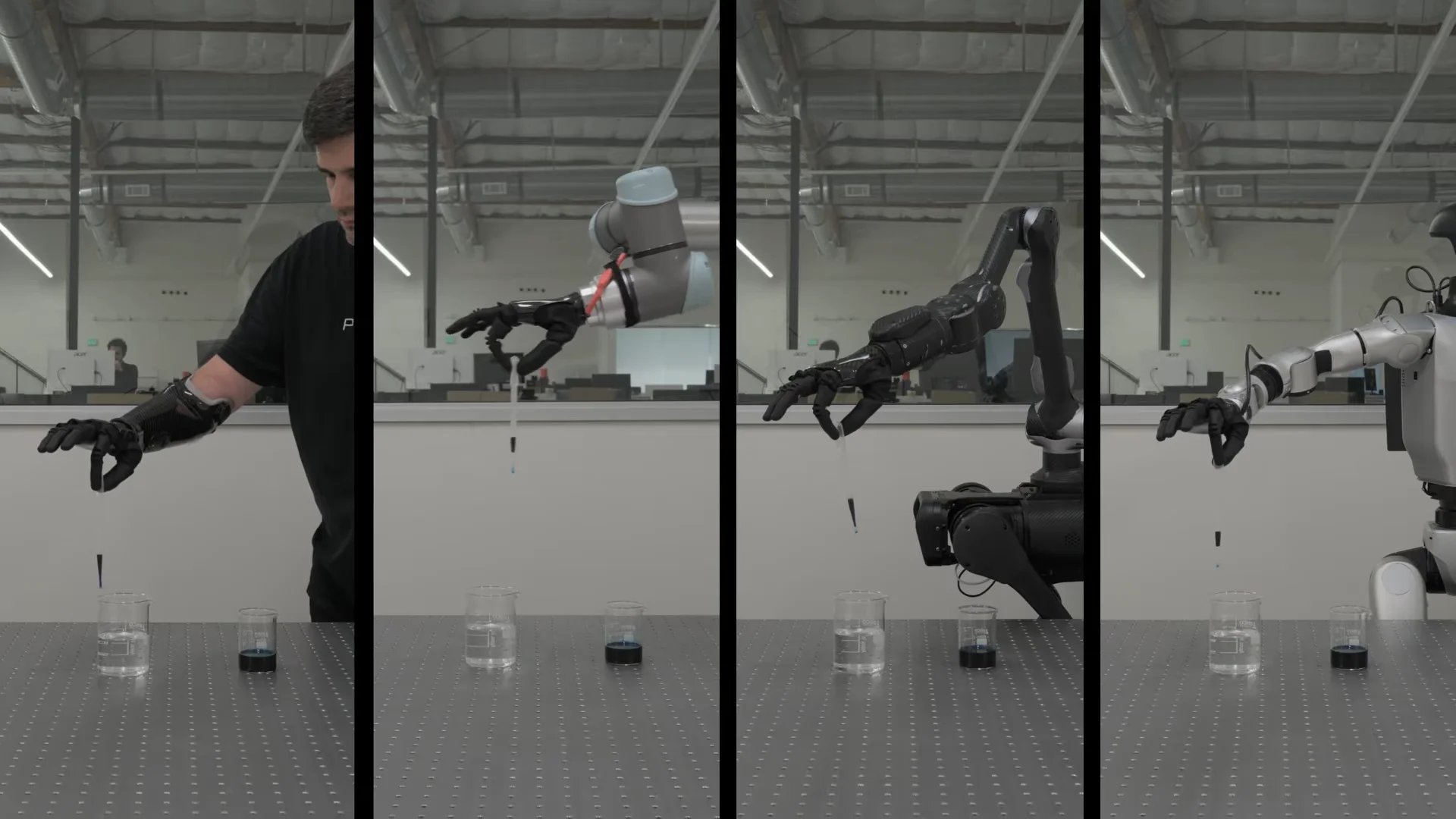
PSYONIC has announced a collaboration with ABB Robotics to enhance robotic dexterity by integrating its Ability Hand prosthetic with ABB's GoFa collaborative robot arm. This partnership aims to leverage data collected from prosthetic users to improve the robot's grasping capabilities, effectively mimicking human touch. The initiative underscores the growing intersection of robotics and prosthetics, with the goal of creating more intuitive and responsive robotic systems. The collaboration reflects a commitment to advancing technology that not only aids individuals with disabilities but also enhances the functionality of robotic devices in various applications.

Arms / Manipulators Artificial Intelligence Automotive Cobot Arms Collaborative Robots End Effectors / Grippers
New smart artificial muscle could bring human-like feedback to humanoid robot

New smart artificial muscle could bring human-like feedback to humanoid robot

A team of researchers has successfully developed an advanced artificial muscle that closely replicates the functionality of biological muscle-tendon systems. This innovative technology was created to enhance the performance and versatility of robotic systems, potentially revolutionizing fields such as prosthetics and robotics. The breakthrough was achieved through a combination of materials science and engineering techniques, allowing the artificial muscle to exhibit remarkable strength and flexibility. The research was conducted at a prominent university and has garnered attention for its potential applications in creating more lifelike and responsive robotic limbs. By mimicking the natural movement and adaptability of human muscles, this development aims to improve the quality of life for individuals relying on prosthetic devices and to advance the capabilities of robotic systems in various industries.

Artificial muscle merges sensing and movement in one structure for humanoid robots

Artificial muscle merges sensing and movement in one structure for humanoid robots

A research team has made a significant breakthrough by creating an "intelligent artificial muscle" that mimics the functions of biological muscle–tendon complexes. This innovative technology, developed recently, features liquid metal channels embedded within a liquid crystal elastomer (LCE). The artificial muscle is designed to contract when stimulated electrically, while simultaneously measuring its internal force and length in real time. This dual capability enhances its potential applications in robotics and prosthetics, providing a more responsive and adaptable solution for mimicking natural muscle behavior. The research aims to advance the field of soft robotics and improve the functionality of artificial limbs, addressing the growing demand for more sophisticated and efficient robotic systems.

Robotics
Electrofluidic fiber muscles could enable silent robotic systems

Electrofluidic fiber muscles could enable silent robotic systems

Researchers at the MIT Media Lab and Politecnico di Bari in Italy have made significant advancements in the field of robotics and prosthetics by developing new artificial muscle fibers that closely mimic the unique capabilities of natural muscles. This breakthrough addresses long-standing challenges faced by engineers in replicating the strength, rapid response, scalability, and control found in biological systems. The innovation promises to enhance the performance of robotic devices and prosthetic limbs, potentially improving their functionality and user experience. This development marks a notable step forward in creating more effective and responsive artificial muscles, which could revolutionize the way machines interact with their environments and assist individuals with mobility impairments.

Robotics
A new type of electrically driven artificial muscle fiber

A new type of electrically driven artificial muscle fiber

Researchers have developed electrofluidic fibers that replicate the natural bundling of muscle fibers, a breakthrough that could revolutionize the design of compact and silent robotic systems as well as prosthetics. This innovative technology was unveiled in a recent study aimed at enhancing the functionality and efficiency of robotic and prosthetic devices. By mimicking the structure and behavior of biological muscles, these fibers offer the potential for more responsive and adaptable machines. The advancement is particularly significant as it addresses the growing demand for quieter and more efficient robotic solutions in various applications, from medical devices to industrial automation. The research team employed advanced materials and engineering techniques to create these fibers, which could lead to a new generation of devices that are not only more effective but also more closely aligned with human movement. This development marks a promising step forward in the integration of robotics into everyday life, providing users with improved mobility and interaction capabilities.

Research Invention Robotics Bioinspiration Fluid dynamics Media Lab
From Prosthetics to Pixels: PSYONIC and NVIDIA Bridge the Robotics "Data Gap" with Real-to-Real Transfer

From Prosthetics to Pixels: PSYONIC and NVIDIA Bridge the Robotics "Data Gap" with Real-to-Real Transfer

PSYONIC has integrated its Ability Hand into NVIDIA's Isaac Lab, marking a significant advancement in robotic manipulation technology. This collaboration introduces a "real-to-real" transfer pipeline that leverages human-driven data to enhance the training of dexterous robots. By utilizing data collected up to October 2023, the initiative aims to improve the precision and effectiveness of robotic tasks, ultimately bridging the gap between human and robotic capabilities. This innovative approach is expected to accelerate the development of more sophisticated and adaptable robotic systems, paving the way for broader applications in various industries.

NVIDIA US hand PSYONIC Ability Hand
Reversible, detachable robotic hand redefines dexterity

Reversible, detachable robotic hand redefines dexterity

Researchers at the École Polytechnique Fédérale de Lausanne (EPFL) are exploring the limitations of human hand design to enhance robotic dexterity. In a study led by Celia Luterbacher, the team highlights that while human hands, with their opposable thumbs and intricate joint structures, are often viewed as the epitome of dexterity, they are not the most efficient design. The research, conducted in 2025, aims to identify the evolutionary constraints that have shaped human hands over time and to apply these insights to develop more advanced robotic hands. By analyzing the mechanics and functionality of human hands, the researchers hope to create robotic systems that can perform tasks with greater precision and adaptability. This innovative approach could significantly impact fields such as robotics, prosthetics, and automation, ultimately leading to more effective and versatile robotic applications.

This tiny implant sends secret messages to the brain

This tiny implant sends secret messages to the brain

A team of researchers has developed a fully implantable device capable of transmitting light-based messages directly to the brain. This innovative system, which utilizes up to 64 micro-LEDs to generate intricate neural patterns mimicking natural sensory activity, has been tested on mice. Remarkably, the animals were able to learn and interpret these artificial signals as meaningful information without relying on touch, sight, or sound. Conducted recently, this groundbreaking research could significantly advance the fields of prosthetics and therapeutic interventions, offering new possibilities for individuals with sensory impairments. The findings highlight the potential of light-based communication in enhancing neural function and could lead to the development of next-generation medical devices.

Giving the Robot Fingerprints: XELA Robotics Shrinks Sensors for Tesollo Hand Integration

Giving the Robot Fingerprints: XELA Robotics Shrinks Sensors for Tesollo Hand Integration

Waseda University has announced a significant advancement in tactile sensor technology, unveiling a roadmap for the development of higher-density sensors. This innovation is set to enhance the capabilities of the Tesollo DG-5F hand, a robotic device designed for improved dexterity and sensitivity. The announcement, made in October 2023, highlights the university's commitment to pushing the boundaries of robotics and sensor integration. By increasing the density of tactile sensors, researchers aim to provide more nuanced feedback, which is crucial for applications in robotics, prosthetics, and human-computer interaction. This integration is expected to lead to more responsive and adaptable robotic hands, ultimately improving user experience and functionality in various fields.

hand xela-robotics
Clone Robotics Demos Startlingly Fast Robotic Hand, Touts Neural Controller

Clone Robotics Demos Startlingly Fast Robotic Hand, Touts Neural Controller

Clone Robotics has released a new video showcasing its advanced 27-degree-of-freedom (DoF) biomimetic hand, which accurately mimics human movements with remarkable speed. This demonstration highlights the company's innovative "neural joint controller," a significant development in their ongoing Clone Alpha project. The video serves as a tangible update on the project's progress, emphasizing the potential applications of this technology in fields such as robotics and prosthetics. By integrating sophisticated control systems, Clone Robotics aims to enhance the functionality and responsiveness of robotic hands, paving the way for more lifelike interactions in various environments.

clone robotics Europe
RobotToday Initiative

Robotics needs a service framework.

RSF defines a common language for robot service capability, lifecycle operations, certification pathways, and service-provider networks.