A single destination for timely, editor-curated robotics news from around the world.

Feng Shuo, an associate professor at Tsinghua University and a notable figure in the field of artificial intelligence, has launched a new venture called Dense AI. This company aims to create a subscription-based world model specifically designed for the physics AI sector. Feng's academic credentials, highlighted by a cover paper published in the prestigious journal Nature, have garnered considerable attention for this initiative. The launch of Dense AI comes at a time when the AI industry is experiencing rapid growth, positioning the company to potentially make significant contributions to the field.
leaderobot.com By Leaderobot 12 hours ago Physics AI World Models Machine Learning Artificial Intelligence
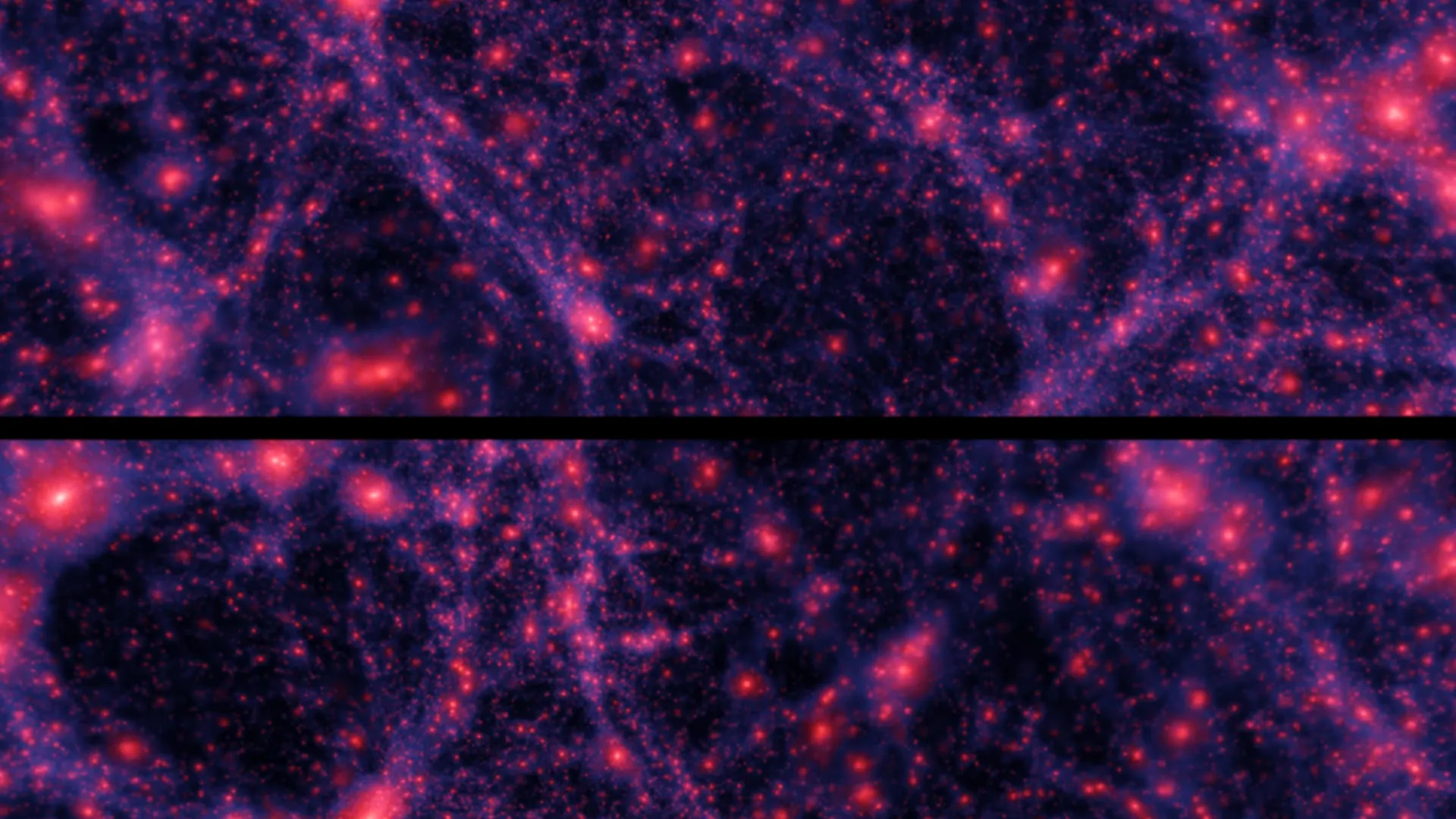
Recent research by scientists has revealed that transfer learning can significantly expedite the search for new physics in the universe, reducing the reliance on costly simulations. This innovative approach allows researchers to leverage existing data to identify potential new phenomena more efficiently. However, the study also cautions that over-reliance on familiar patterns in AI could lead to missed opportunities for discovering groundbreaking evidence. The findings underscore the importance of balancing advanced technology with the need for vigilance in the pursuit of novel scientific insights.

ScienceDaily.com Jun 11, 2026
Startup Foundation, under the leadership of former Synapse CEO Sankaet Pathak and AI research chief Professor Patrick van der Smagt, has announced plans to develop humanoid robots that utilize Deep Variational Bayes Filters to enhance their interaction with the environment. The initiative aims to revolutionize how robots learn and adapt to their surroundings. As the company sets ambitious fundraising targets to support this innovative project, experts are scrutinizing the scientific principles behind these claims, as well as the potential challenges that may arise during development. The project is positioned at the forefront of AI and robotics, promising to push the boundaries of technology and human-robot interaction.
HumanoidsDaily By [email protected] (Humanoids Daily Staff) May 10, 2025 sankaet-pathak phantom foundation
OceanSight has expanded its global dealer network by appointing six new regional channel partners for its subsidiary, Ocean Floor Geophysics (OFG). This strategic move, announced today, aims to enhance the company's market presence and improve access to its innovative geophysical solutions. The addition of these partners is expected to facilitate better service delivery and support for clients in various regions. The expansion reflects OceanSight's commitment to strengthening its distribution capabilities and meeting the growing demand for advanced oceanographic technologies.
ROVplanet.com By ROV Planet Jun 01, 2026 oceansight expansion global dealer network ocean floor geophysics
Physicists have made significant progress in harnessing artificial intelligence to not only analyze data but also to discover new laws of nature. This breakthrough was achieved by a research team that integrated a specially designed neural network with advanced 3D tracking of particles within a dusty plasma, a unique state of matter observed in various environments, from outer space to wildfires. The study, conducted recently, demonstrated the model's ability to identify hidden patterns in particle interactions, successfully capturing complex, one-way (non-reciprocal) forces with over 99% accuracy. This innovative approach has challenged and overturned long-standing assumptions regarding the behavior of these forces, potentially reshaping our understanding of fundamental physical interactions.

ScienceDaily.com Apr 23, 2026
The SEAVORIAN group, along with its subsidiaries RTSYS and NEOTEK, has announced the acquisition of MAPPEM Geophysics, a French firm renowned for its expertise in marine and underwater geophysical studies and services. This strategic move, revealed recently, aims to enhance SEAVORIAN's capabilities in the geophysical sector and expand its service offerings. The acquisition reflects SEAVORIAN's commitment to strengthening its position in the market and leveraging MAPPEM's specialized knowledge to meet growing demands in marine geophysical research. The integration of MAPPEM's advanced technologies and skilled workforce is expected to facilitate innovative solutions and improve operational efficiencies in underwater exploration and analysis.
ROVplanet.com By ROV Planet Sep 05, 2025 seavorian group acquisition mappem geophysics underwater detection technologies rtsys neotek
A new solution has been introduced that integrates artificial intelligence, robotics, and PalletizOS, aimed at enhancing throughput and streamlining palletizing operations for manufacturers. This innovative technology was showcased at a recent industry event, highlighting its potential to transform production processes. In addition to the palletizing advancements, the exhibition also featured advanced sanding and welding solutions that utilize Physics-Informed AI and 3D vision, demonstrating the growing intersection of AI and manufacturing. The developments reflect a broader trend towards automation and smart manufacturing, driven by the need for increased efficiency and productivity in the industry.
RoboticsTomorrow.com Jun 22, 2026
Researchers at the Johns Hopkins Applied Physics Laboratory are making strides in the development of agentic artificial intelligence aimed at enhancing collaborative robotic teams. During a recent presentation, they outlined the significant challenges associated with achieving autonomy, coordination, and adaptability among diverse robotic systems. To address these issues, the team introduced a scalable architecture designed to facilitate agentic behaviors in multi-robot environments. The presentation also featured demonstrations of this innovative approach, showcasing its application in hardware with a varied group of robots. Additionally, the researchers shared valuable insights gained from their ongoing research and development efforts, highlighting key challenges faced and lessons learned throughout the process. This work not only advances the field of robotics but also sets the stage for future developments in agentic AI technology.
IEEESpectrumAI By Johns Hopkins Applied Physics Laboratory May 18, 2026 Type-webinar Agentic-ai Robotics Llms
Researchers in Japan have made significant strides in addressing a critical issue affecting electric vehicles: magnetic energy loss within electric motors. This hidden energy drain has become a focal point for scientists as the demand for electric vehicles continues to grow. Utilizing an advanced AI-driven physics model, the team has gained insights into the complex and chaotic magnetic patterns found in motor materials. Their innovative approach allows them to analyze how heat and microscopic magnetic structures contribute to energy waste. This breakthrough could lead to more efficient electric motors, enhancing the performance and sustainability of electric vehicles in the future.
ScienceDaily.com May 18, 2026
Rhoda AI, a technology company based in Palo Alto, has emerged from stealth mode with the announcement of a $450 million Series B funding round. This significant investment will support the development of its innovative "Direct Video-Action" framework, which leverages hundreds of millions of internet videos to educate robots on the principles of physics. The funding aims to enhance the company's capabilities in artificial intelligence and robotics, positioning Rhoda AI at the forefront of technological advancements in these fields. The announcement marks a pivotal moment for the company as it seeks to revolutionize how machines learn and interact with the physical world.
HumanoidsDaily By [email protected] (Humanoids Daily Staff) Mar 10, 2026 DVA US rhoda-ai
Recent advancements in robotics are shifting focus from enhancing processors and mechanical designs to improving data quality, particularly through realistic training environments. This emerging field, known as Physical AI, emphasizes the creation of 3D assets and simulation environments that incorporate genuine physical properties. By accurately mimicking real-world behaviors, these simulations aim to enhance the training of robotic systems, enabling them to perform more effectively in various applications. As researchers and developers prioritize realistic data over traditional methods, the potential for breakthroughs in robotic capabilities is becoming increasingly evident. This evolution in robotics is expected to redefine how machines interact with their environments, paving the way for more sophisticated and adaptable technologies.
RoboticsAndAutomationNews.com By Sam Francis Jun 04, 2026 Artificial Intelligence Robotics ai robotics automation news Autonomous robots digital twins
Engineers at Cornell University have unveiled an innovative robotic system that mimics the behavior of flowing liquids. This groundbreaking development, announced in October 2023, aims to enhance the versatility and adaptability of robots in various applications. By incorporating principles of fluid dynamics, the team has created a robot capable of navigating complex environments with unprecedented ease. The motivation behind this project stems from the desire to improve robotic mobility and functionality, particularly in scenarios where traditional rigid robots struggle. The researchers utilized advanced algorithms and soft materials to enable the robot to change shape and move fluidly, allowing it to overcome obstacles and traverse challenging terrains. This new robotic system has the potential to revolutionize fields such as search and rescue, environmental monitoring, and even medical applications, where flexibility and adaptability are crucial. The team's findings highlight the importance of interdisciplinary approaches in robotics, merging concepts from engineering, biology, and physics to create more efficient and capable machines.
InterestingEngineering.com By Neetika Walter May 20, 2026
Researchers at the University of Pennsylvania have developed a groundbreaking hybrid light-matter particle that has the potential to significantly enhance artificial intelligence computing efficiency while reducing energy consumption. This innovative advancement could pave the way for the replacement of traditional electronic computing methods with more efficient light-based technologies. The research, which highlights the intersection of physics and computer science, aims to address the growing demand for faster and more sustainable computing solutions, particularly in the field of AI. By harnessing the unique properties of light and matter, the team believes this new approach could transform how data is processed, leading to faster and more energy-efficient systems.
ScienceDaily.com May 18, 2026
Researchers at Carnegie Mellon University’s School of Computer Science have developed a groundbreaking approach to training artificial intelligence by utilizing simulated physics environments instead of relying on traditional static text data. This innovative system, known as Breakdown Sim2Reason, generates an unlimited supply of high-quality training data from virtual worlds, significantly enhancing the AI's ability to reason in real-world scenarios. The advancements achieved through this method have shown promise in solving complex physics problems, demonstrating the potential for AI to think more like a physicist. This research aims to transform the way AI learns and interacts with physical concepts, paving the way for more sophisticated applications in various fields.
ri.cmu.edu By Mallory Lindahl Apr 14, 2026 Research
Companies across various industries are increasingly leveraging industrial AI, digital twins, AI physics, and accelerated AI infrastructure to enhance their design, simulation, and optimization processes. This technological shift allows organizations to refine products, processes, and facilities in a virtual environment before actual construction begins. By adopting these advanced tools, businesses aim to improve efficiency, reduce costs, and accelerate time-to-market for new innovations. The integration of these technologies is seen as a crucial step in staying competitive in a rapidly evolving market, enabling firms to make data-driven decisions and optimize their operations effectively.
NvidiaNews By NVIDIA Mar 12, 2026
Researchers have achieved a significant breakthrough in computing by developing neuromorphic computers that mimic the human brain's architecture. This advancement enables these computers to solve complex equations related to physics simulations, a task previously reserved for traditional supercomputers that consume vast amounts of energy. The development, announced in October 2023, promises not only to create more powerful and energy-efficient computing systems but also to enhance our understanding of brain function and information processing. By leveraging the brain's computational methods, scientists aim to unlock new potentials in both technology and neuroscience.
ScienceDaily.com Feb 14, 2026
In Berkeley, California, researchers at the Lawrence Berkeley National Laboratory are utilizing an AI agent to enhance high-stakes physics experiments at the Advanced Light Source (ALS) particle accelerator. This innovative technology aims to improve the efficiency and accuracy of experiments conducted at the facility, which is renowned for its cutting-edge research in particle physics. The deployment of the AI agent marks a significant advancement in the integration of artificial intelligence within scientific research, as it assists scientists in analyzing complex data and optimizing experimental conditions. This initiative, launched in October 2023, reflects the growing trend of leveraging AI to accelerate discoveries in the field of physics and beyond. By streamlining processes and providing real-time insights, the AI agent is expected to contribute to groundbreaking findings at the ALS, further solidifying its position as a leader in particle acceleration research.
NvidiaNews By NVIDIA Jan 08, 2026
Researchers at Duke University have developed a groundbreaking artificial intelligence system capable of distilling complex systems into simple, readable rules. This innovative AI analyzes the evolution of various systems over time, effectively condensing thousands of variables into concise equations that accurately reflect real-world behavior. The technology has broad applications across multiple fields, including physics, engineering, climate science, and biology. By providing a clearer understanding of systems where traditional equations are either absent or overly complicated, this new method aims to enhance scientific comprehension and facilitate advancements in these disciplines.
ScienceDaily.com Dec 22, 2025
A team of researchers has developed a groundbreaking model of the Milky Way that tracks over 100 billion stars individually by integrating deep learning with high-resolution physics. This innovative approach, unveiled recently, addresses a significant challenge in galactic modeling by teaching artificial intelligence how gas behaves following supernovae, which has traditionally been a major computational hurdle. The resulting simulation operates hundreds of times faster than existing methods, marking a significant advancement in the field of astrophysics. This development not only enhances our understanding of the galaxy but also paves the way for more detailed and efficient astronomical research.
ScienceDaily.com Nov 16, 2025
A recent study published in the Journal of Field Robotics highlights advancements in autonomous robotic systems designed for agricultural applications. Researchers from various institutions collaborated to develop innovative algorithms that enhance the efficiency and precision of farming robots. The findings, released in early October 2023, demonstrate how these technologies can significantly improve crop monitoring and management. The study was conducted across multiple farms in the Midwest, where the team tested the robots' capabilities in real-world conditions. By utilizing advanced sensors and machine learning techniques, the robots were able to identify crop health issues and optimize resource usage, such as water and fertilizers. This approach not only aims to increase agricultural productivity but also addresses sustainability concerns in farming practices. The motivation behind this research stems from the growing need for efficient food production methods to meet the demands of a rising global population. As traditional farming faces challenges such as labor shortages and environmental impacts, the integration of autonomous systems presents a viable solution. The researchers emphasized that the successful implementation of these technologies could lead to a transformative shift in how agriculture is practiced, ultimately benefiting both farmers and consumers alike.
JournalofFieldRobotics By Zhentao Xie, Qinchuan Li, Xiaolong Zhou, Yabin Xu Jun 05, 2026 RESEARCH ARTICLE
A recent study published in the Journal of Field Robotics highlights advancements in robotic technology aimed at enhancing agricultural efficiency. Conducted by a team of researchers from various institutions, the study was released in May 2026 and focuses on the integration of autonomous robots in farming practices. The research addresses the growing need for sustainable agricultural solutions in response to increasing global food demands and labor shortages. By employing advanced sensors and machine learning algorithms, the robots are designed to optimize planting, monitoring, and harvesting processes, thereby reducing resource waste and improving crop yields. The study was carried out in diverse agricultural settings, showcasing the robots' adaptability to different environments and crop types. Through extensive field trials, the researchers demonstrated how these autonomous systems can operate effectively, even in challenging conditions, while significantly minimizing human intervention. This innovative approach not only aims to boost productivity but also seeks to promote environmentally friendly practices in agriculture, aligning with global sustainability goals. The findings suggest that the implementation of such robotic technologies could revolutionize the agricultural sector, making it more resilient and efficient in the face of future challenges.
JournalofFieldRobotics By Rocco Galati, Tomoyasu Nakano, Genya Ishigami, Giulio Reina Apr 08, 2026 RESEARCH ARTICLE
Researchers are tackling the complexities of long-horizon motion forecasting for multiple autonomous robots, a task made difficult by non-linear interactions among agents and the accumulation of prediction errors over time. This initiative, which aims to enhance trajectory forecasting, is particularly relevant for applications such as travel time prediction, prediction-guided planning, and surrogate simulation. By developing efficient forecasting methods, the team seeks to improve the reliability and accuracy of autonomous systems in dynamic environments. The work is ongoing, with implications for various fields that rely on advanced robotics and automation.
amazon.science By Amazon Science Dec 31, 2025 Machine learning
An Argentinian-led scientific expedition aboard the Schmidt Ocean Institute’s R/V Falkor (too) has successfully deployed advanced technologies to gather comprehensive data on the Malvinas ocean current and its interaction with submarine canyons. This initiative aims to enhance understanding of the region's plankton blooms, which are crucial for sustaining Argentina’s rich marine biodiversity and fishing industry. Notably, these extensive plankton blooms are significant enough to be detected from space. The expedition underscores the importance of marine research in preserving the ecological balance and supporting local economies reliant on fishing.
ROVplanet.com By ROV Planet Nov 20, 2025 schmidt ocean institute r/v falkor (too) ocean science servicio de hidrografía naval conicet
NASA is set to conduct an in-orbit demonstration of its innovative AstroPix gamma-ray sensor, a cutting-edge pixel-based detector designed to enhance the study of gamma-ray bursts and active galaxies. This significant event is scheduled to take place in the near future as part of NASA’s ongoing efforts to advance astrophysical research. The AstroPix sensor aims to provide unprecedented insights into cosmic phenomena, which could deepen our understanding of the universe. By utilizing this advanced technology in space, NASA hopes to gather critical data that will inform future missions and studies in astrophysics. The demonstration marks a pivotal step in harnessing new detection methods to explore the mysteries of high-energy astrophysical events.
AZOrobotics.com Jun 23, 2026
Visual Components, a leader in 3D manufacturing simulation and robot offline programming, has unveiled its latest software, Visual Components 5.1. This significant update aims to assist manufacturers in navigating the increasing complexity of autonomous production environments. Released recently, the new version features enhanced physics simulation for greater accuracy and scalable robot orchestration capabilities. These advancements are designed to streamline operations and improve efficiency in manufacturing processes, responding to the industry's evolving demands for automation and precision.
RoboticsAndAutomationNews.com By Sam Francis Jun 11, 2026 Computing News Robot simulation Software AGV simulation AMR simulation
A recent software release has empowered manufacturers to simulate hundreds of Autonomous Mobile Robots (AMRs) and Automated Guided Vehicles (AGVs) with enhanced dynamic collision avoidance capabilities. This update significantly boosts performance, achieving speeds up to ten times faster than previous versions. The integration of updated PhysX technology further enhances the realism of physics simulations, providing a more accurate representation of real-world scenarios. This advancement is expected to streamline operations in various manufacturing environments, allowing for more efficient planning and deployment of robotic systems. The release, which reflects the latest developments in simulation technology, aims to meet the growing demand for automation in the manufacturing sector.
kuka.com By KUKA Jun 11, 2026
Physicists at the Max Planck Institute of Quantum Optics (MPQ) have successfully reinforced a critical measurement related to quantum mechanics, enhancing our understanding of the fundamental principles governing the behavior of particles at the quantum level. This significant advancement was achieved through a series of precise experiments conducted over the past year at the institute's facilities in Garching, Germany. The researchers aimed to address longstanding questions in the field, specifically focusing on the interactions between light and matter. By employing advanced techniques in quantum optics, they were able to achieve unprecedented accuracy in their measurements, which could have far-reaching implications for future technologies, including quantum computing and secure communication systems. The findings, which were published recently in a leading scientific journal, underscore the importance of continued research in quantum physics and its potential to revolutionize various industries.
InterestingEngineering.com By Munis Raza May 21, 2026
Researchers at Cornell University have unveiled a groundbreaking 3D computational model designed to decode complex physical phenomena. This innovative model, which was developed over the past year, aims to enhance our understanding of various scientific processes by simulating intricate interactions within physical systems. The research team, led by a group of physicists and engineers, conducted extensive experiments and simulations to refine the model's accuracy and applicability. The development of this model is particularly significant as it addresses longstanding challenges in the field of physics, providing a tool that can potentially revolutionize how scientists approach problem-solving in areas such as material science, fluid dynamics, and even climate modeling. By leveraging advanced algorithms and high-performance computing, the researchers were able to create a more precise representation of physical interactions, which could lead to new discoveries and innovations. This work not only showcases the capabilities of modern computational techniques but also underscores the importance of interdisciplinary collaboration in advancing scientific knowledge. The findings of this research are expected to be published in a leading scientific journal, contributing to ongoing discussions and developments in the field.
InterestingEngineering.com By Mrigakshi Dixit May 05, 2026
A groundbreaking deep-sea neutrino detector is currently under construction, aimed at revolutionizing our understanding of the universe. This ambitious project, which is set to enhance scientific research significantly, will utilize advanced positioning technology provided by the underwater technology firm Sonardyne. The collaboration between scientists and Sonardyne is expected to ensure the detector's precise placement in the challenging underwater environment. As the project progresses, it promises to contribute valuable insights into fundamental questions about cosmic phenomena, potentially reshaping our knowledge of particle physics and astrophysics. The initiative highlights the growing intersection of technology and scientific exploration, as researchers strive to unlock the mysteries of the universe.
ROVplanet.com By ROV Planet Apr 20, 2026 sonardyne fetch deep-sea neutrino telescope
Dassault Systèmes is revolutionizing the manufacturing industry by integrating NVIDIA’s Physical AI with its DELMIA Virtual Twin technology. This innovative collaboration aims to transition from traditional static automation to advanced autonomous software-defined systems. The new systems are designed to "learn" the laws of physics prior to the production of the first part, enhancing efficiency and precision in manufacturing processes. This development reflects a significant shift in how companies approach automation, emphasizing the importance of adaptive and intelligent systems in modern production environments. The integration is expected to set a new standard in the industry, enabling manufacturers to optimize their operations and improve overall productivity.
roboticstomorrow-Robotics Mar 02, 2026
The humanoid robotics industry is grappling with a significant challenge as AI video generators, such as ByteDance’s Seedance 2.0, reach unprecedented levels of realism in physics and lighting. This advancement has led to a "crisis of truth," where distinguishing between genuine technological milestones and high-fidelity fakes is becoming increasingly difficult. As these AI tools evolve, the implications for authenticity in robotics and related fields raise concerns about trust and verification in technological advancements. The situation underscores the urgent need for clear standards and methods to differentiate between real and artificially generated content, as the lines blur between innovation and imitation.
HumanoidsDaily By [email protected] (Humanoids Daily Staff) Feb 20, 2026 Unitree Robotics
NVIDIA's founder and CEO, Jensen Huang, has joined forces with Dassault Systèmes CEO, Pascal Daloz, to establish a partnership aimed at developing a shared industrial AI architecture. This collaboration, announced recently, seeks to integrate virtual twins with physics-based AI, a move that promises to transform the fields of design and engineering. The initiative is positioned to redefine how industries approach innovation and efficiency, leveraging advanced technologies to enhance product development and operational processes. By combining their expertise, both companies aim to push the boundaries of what is possible in industrial applications, ultimately driving progress in various sectors.
NvidiaNews By NVIDIA Feb 03, 2026
Walt Disney Imagineering has announced the development of an innovative robotic snowman, set to debut in 2026. This free-roaming, physics-based creation aims to showcase advanced engineering and the capabilities of specialized artificial intelligence. The project emphasizes the importance of personality and expression in robotics, reflecting a growing trend in technology that seeks to create machines that resonate emotionally with audiences. Through this initiative, Disney aims to enhance the interactive experience for visitors, blending cutting-edge technology with beloved character traits.
HumanoidsDaily By [email protected] (Humanoids Daily Staff) Nov 28, 2025 Walt Disney ImagineeringRSF defines a common language for robot service capability, lifecycle operations, certification pathways, and service-provider networks.
Excepteur sint occaecat cupidatat non proident