

Industry Briefing
A single destination for timely, editor-curated robotics news from around the world.
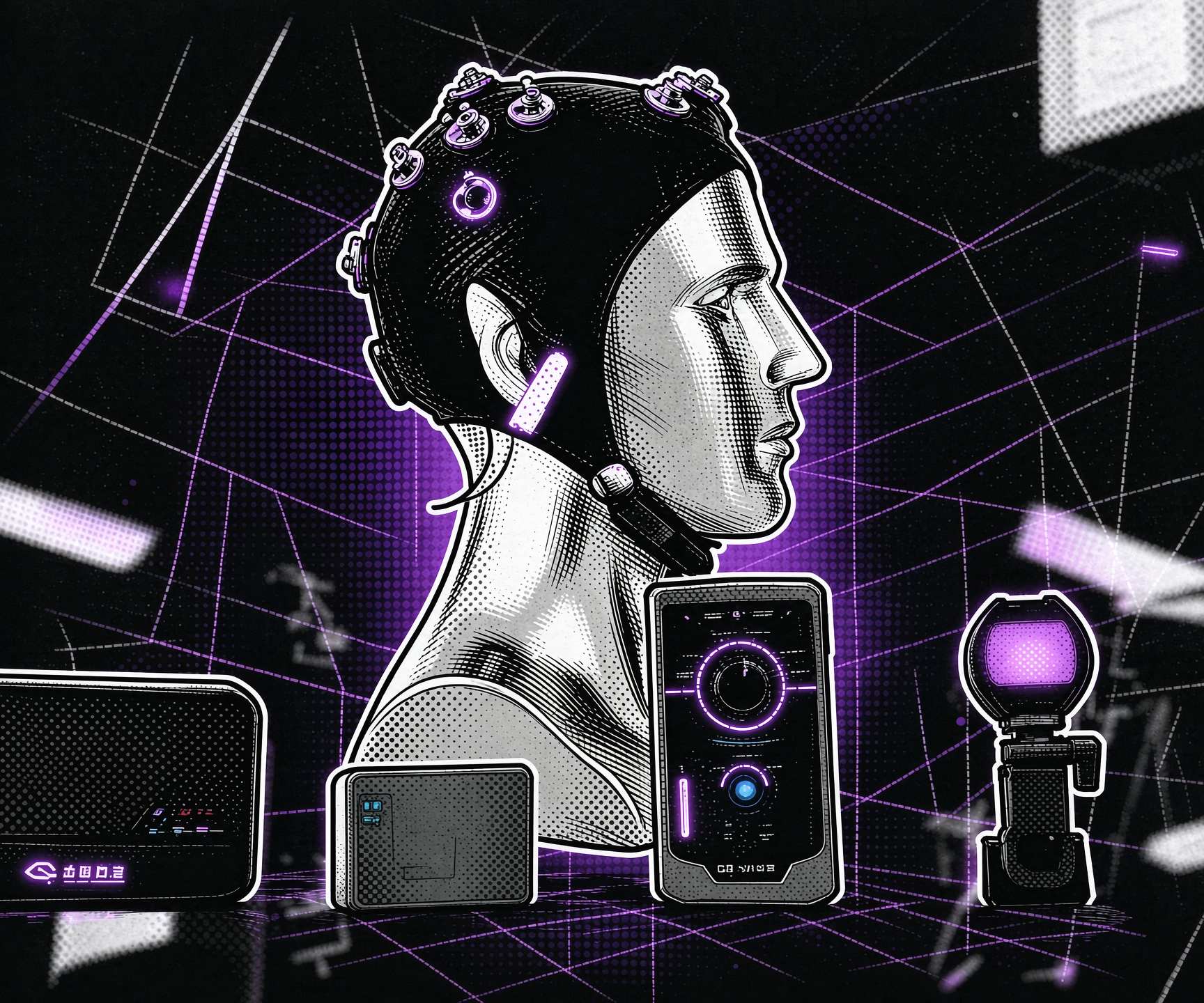
Brain-Computer Interface Funding Surpasses 7 Billion Yuan in Six Months, Non-Invasive Solutions Lead Market
In the first half of 2026, funding for brain-computer interface (BCI) technology exceeded 7 billion yuan, with over 60 financing events reported. Non-invasive solutions dominate the market, accounting for 86% of the total, while invasive and semi-invasive solutions make up the remaining 14%. The Chinese government has recognized BCI as a key investment area, integrating it into future industry development plans. The significance of this funding surge lies in the growing interest and investment in BCI technologies, particularly non-invasive methods that offer safety and cost-effectiveness. Major players in the market include Qiangnao Technology and Weisi Medical, which are advancing non-invasive solutions. The Chinese government has also prioritized BCI in its work reports, indicating a strong commitment to fostering innovation and development in this field. Looking ahead, the BCI industry is expected to continue its rapid growth, with the medical sector projected to account for 56.4% of total demand. By 2030, the global market for medical applications of BCI is anticipated to reach $40 billion, with further growth expected to exceed $145 billion by 2040. No further timeline was disclosed at the time of publication.
Brain-Computer Interfaces Healthcare Technology Non-Invasive Solutions AI Research Market Trends
Huachao Shenkong Raises $20 Million for Non-Invasive Brain-Machine Interfaces with Ultrasound and AI
Huachao Shenkong, founded by Li Xin in Shanghai in 2025, has successfully secured 200 million yuan (approximately $20 million) in Pre-A funding. This round was led by Sequoia China and Yunqi Capital, with participation from several other investors. The company aims to develop non-invasive brain-machine interfaces (BMIs) utilizing ultrasound and AI technologies, addressing a growing demand for safer alternatives to invasive BMIs. The significance of this funding lies in Huachao's focus on non-invasive solutions, which expand the potential user base and application scenarios compared to invasive methods. Li Xin emphasizes that the technology has matured, and the market demand has become clearer, making this an opportune time for development. The company has made advancements in precision and response time for ultrasound applications, achieving a localization accuracy of under 1 millimeter. Looking ahead, Huachao Shenkong plans to roll out products in three main lines: research, clinical applications, and consumer enhancements. Their current focus is on research, with systems already deployed in laboratories for various cognitive studies. Future applications may include treatments for conditions such as Parkinson's disease and Alzheimer's, as well as consumer products aimed at enhancing cognitive functions like sleep and focus. No further timeline was disclosed at the time of publication.
Brain-Machine Interfaces Neurotechnology AI Ultrasound Technology Healthcare Innovation
Huachao Shenkong Raises 200 Million RMB in Pre-A Funding for Non-Invasive Brain-Computer Interface Development
Huachao Shenkong, a non-invasive AI brain-computer interface company, has successfully completed a Pre-A funding round, raising 200 million RMB. This funding was led by Sequoia China and Yunqi Capital, with participation from several other investors. The funds will be allocated towards product development, talent acquisition, clinical research, and AI infrastructure enhancement. This funding round is significant as it reflects a shift in the brain-computer interface industry from conceptual investments to a focus on commercialization. In the first half of 2026, domestic financing in the brain-computer interface sector exceeded 60 instances, totaling over 7 billion RMB, surpassing the entire year of 2025. The industry is witnessing advancements in both invasive and non-invasive technologies, with low-intensity transcranial focused ultrasound emerging as a leading non-invasive approach. Looking ahead, Huachao Shenkong aims to establish a comprehensive technology system encompassing writing, reading, and decoding brain signals. The company plans to launch various product lines targeting research, clinical applications, and consumer markets. No further timeline was disclosed at the time of publication.
Brain-Computer Interfaces Neurotechnology AI Medical Devices
Former OpenAI Researcher Joins Conduit to Develop Non-Invasive Brain-Machine Interface
On August 6, Naomi Bashkansky, a 23-year-old former OpenAI researcher, announced her new role at the startup Conduit, just two weeks after leaving OpenAI. As a founding researcher, she will focus on developing a non-invasive brain-machine interface that translates thoughts into text without the need for surgery or implanted electrodes. This innovative approach aims to capture the semantic intent of individuals before they verbally express or type their thoughts, potentially revolutionizing human-computer interaction. The vision of Conduit is ambitious, with many research questions still in a 'greenfield' state, allowing Bashkansky to engage deeply in data collection and model training. Founded in 2024 in San Francisco, Conduit has a small core team, including co-founders Rio Popper and Clem von Stengel, who bring unique perspectives on human-computer interaction and AI. As the company progresses, the integration of brain signals with AI technology will be a key area to watch.
Brain-Machine Interfaces Neural Decoding AI Technology Startups
Founder Develops Non-Invasive Voice Device After Losing His Voice to Cancer
Konrad Zieliński, who lost his voice to cancer, has developed a non-invasive speaking device through his startup, Uhura Bionics. This innovation aims to provide laryngectomees with a more emotional and expressive way to communicate, moving beyond traditional robotic devices. The significance of Zieliński's work lies in its potential to transform the lives of individuals who have undergone laryngectomy. By offering devices that allow for emotional expression, Uhura Bionics addresses a critical gap in the market, with an estimated $2 billion potential for laryngectomy-related devices. Looking ahead, Zieliński plans to enhance the devices with higher-pitched voice options and personalization features. Currently marketed as wellness devices, Uhura Bionics aims to achieve Class I medical device classification to facilitate insurance reimbursement, which could broaden access for users. No further timeline was disclosed at the time of publication.
Biotech & Health Startups Startup Battlefield 200
Exploring Non-Invasive Ultrasound Brain-Computer Interfaces for Anxiety and Depression Treatment
A recent salon focused on anxiety and depression, part of a series initiated by the Shanghai Science and Technology Exchange Center, discussed non-invasive ultrasound brain-computer interfaces (BCIs) as potential new treatment avenues. Experts from various fields, including psychiatry and AI engineering, examined the complexities of emotional disorders, highlighting the need for precise identification and intervention strategies. The World Health Organization reported that in 2023, approximately 470 million people globally suffer from anxiety disorders and about 322 million from depression. The discussion emphasized that these conditions are not caused by a single mechanism, and effective treatment requires understanding the diverse psychological and neurological processes involved. The potential of ultrasound technology to target multiple brain areas simultaneously was underscored as a promising approach to treatment. Looking ahead, experts noted that the field of brain-computer interfaces is rapidly evolving, with significant investments and research underway. The need for multi-center, large-sample studies to validate treatment efficacy was highlighted, along with the importance of ethical considerations and collaboration between medical and engineering sectors. No further timeline was disclosed at the time of publication.
Brain-Computer Interfaces Mental Health Technology Non-invasive Treatments AI in Healthcare
University of Queensland Develops Noninvasive Muscle Radar for Wearable Robotic Devices
Researchers at the University of Queensland have created innovative noninvasive sensors that measure muscle forces, paving the way for advancements in wearable robotic mobility devices. These ultra-wideband radar sensors detect electromagnetic changes in muscles during contraction, enabling unprecedented data collection methods. This development is significant as it opens new avenues for enhancing the functionality and control of robotic limbs, potentially improving mobility for individuals with disabilities. The ability to measure muscle forces noninvasively could lead to more intuitive and responsive robotic systems that better mimic natural movement. Looking ahead, the implications of this technology could extend beyond mobility devices, influencing various applications in rehabilitation and assistive technologies. No further timeline was disclosed at the time of publication.
Robotics
University of Queensland Develops Non-Invasive Sensors for Wearable Robotic Limbs
Researchers at the University of Queensland have developed new non-invasive sensors that measure muscle forces. This innovation unlocks new possibilities for wearable robotic mobility devices, enhancing their functionality and user experience. The development of these sensors is significant as it paves the way for improved integration of robotics with human movement. By accurately measuring muscle forces, these sensors can enable more responsive and adaptive robotic limbs, potentially transforming mobility solutions for individuals with disabilities. Looking ahead, the impact of these sensors on the design and functionality of wearable robotic devices will be crucial. No further timeline was disclosed at the time of publication.

Starmind's Orbital Compute vs. Terrestrial Data Centers: Analyzing Resource Advantages
Starmind's orbital compute technology presents a significant advantage over traditional ground-based data centers by eliminating constraints related to land, water, and grid permitting. While terrestrial data centers are currently cheaper and faster to construct, with U.S. data center spending reaching $85.3 billion in 2026, Starmind's approach focuses on addressing the growing resource limitations faced by hyperscale facilities. The significance of Starmind's technology lies in its ability to sidestep the increasing challenges of land and water usage. For instance, a 100 MW data center can consume approximately 530,000 gallons of water daily for cooling, while Starmind's AI1 utilizes deployable liquid radiators that require no water. This structural advantage could resonate with investors as the demand for AI computing continues to escalate, potentially leading to annual water withdrawals of up to 1.7 trillion gallons by 2027. Looking ahead, Starmind's next milestones include the launch of AI1 prototypes scheduled for early 2027. However, the technology's claims regarding cooling efficiency and operational reliability remain unverified until real flight data is available. As the industry evolves, the competition between orbital and terrestrial solutions will become increasingly relevant, particularly in the context of resource management and sustainability.
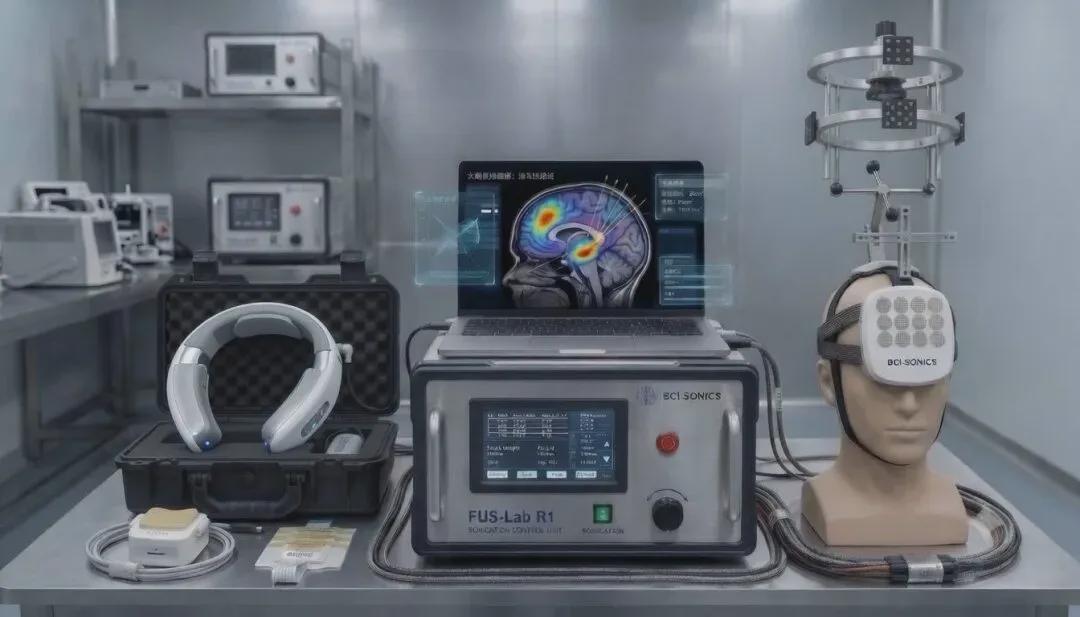
AI-Driven Ultrasound Technology Enables Non-Invasive Brain Access: BCI-Sonics Secures $14 Million in Seed Funding
BCI-Sonics, a startup focused on artificial intelligence and ultrasound brain-machine interfaces, has successfully secured around $14 million in seed funding to enhance its groundbreaking technology. The funding will support the development of a non-invasive technique that utilizes low-intensity focused ultrasound to access deep brain regions, potentially revolutionizing clinical applications in neurology. With a robust engineering team dedicated to precision and efficiency, BCI-Sonics is set to make significant strides in the field of brain stimulation therapies.
Brain-Machine Interfaces Ultrasound Technology Neuroscience Medical Devices AIRobotics needs a service framework.
RSF defines a common language for robot service capability, lifecycle operations, certification pathways, and service-provider networks.
Join the RobotToday community on LinkedIn
Daily robotics news, in-depth analysis, conference highlights, and discussions with professionals worldwide.







