

Industry Briefing
A single destination for timely, editor-curated robotics news from around the world.

Surge in North American Robotics Orders in Q2 Driven by Non-Automotive Sectors
In the second quarter of 2026, North American companies ordered 8,940 robots valued at $622 million, marking a 4.3% increase in order quantity and a 21.3% rise in order value compared to the same period in 2025. This shift indicates a significant structural change in the robotics market, moving away from a reliance on the automotive sector. The automotive industry, historically the backbone of the North American robotics market, saw a 25% decline in robot orders from vehicle manufacturers in the first half of 2026. In contrast, non-automotive sectors such as semiconductors, life sciences, and food are emerging as new growth drivers, with semiconductor orders increasing by 35% and life sciences by 32%. Notably, non-automotive clients accounted for 56% of all robot orders in Q2 2026. Collaborative robots played a crucial role, with 2,774 units ordered, valued at $114 million, and significant penetration in the life sciences and semiconductor sectors. No further timeline was disclosed at the time of publication.
Industrial Robotics Non-Automotive Growth Semiconductors Life Sciences Collaborative Robots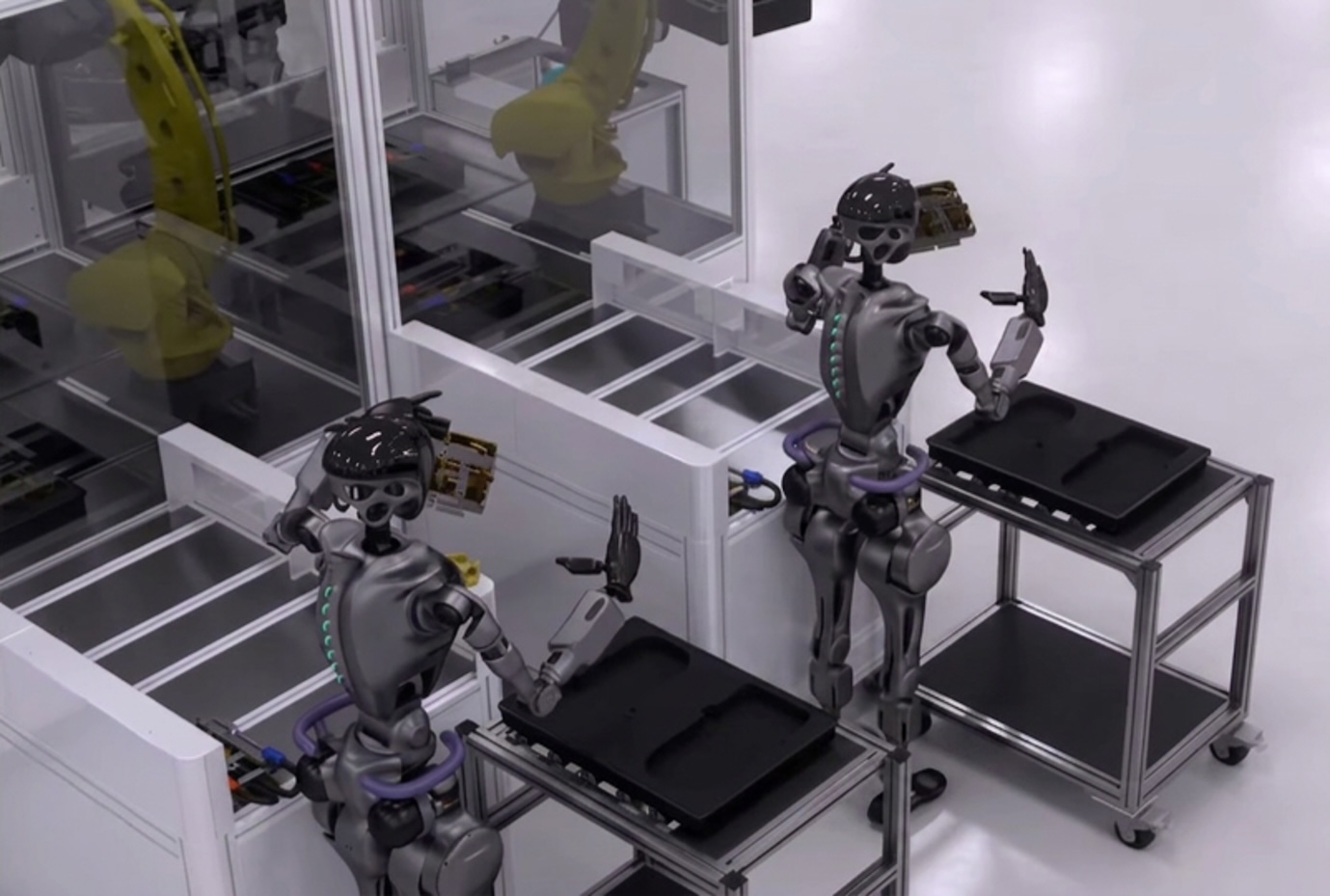
SpaceX Proposes 1 Million AI Satellites to Address Ground Data Center Constraints
On January 30, 2026, SpaceX filed with the FCC to launch up to 1 million AI compute satellites, positioning orbital data centers as a solution to the increasing demand for AI computing power. Ground data centers are facing significant challenges, with energy consumption projected to reach approximately 1,050 TWh in 2026, making them the fifth-largest electricity consumer globally. The demand for new data center capacity is outpacing the growth of power generation infrastructure, leading to a critical bottleneck in the grid system. The significance of this initiative lies in the structural constraints faced by ground data centers, including power delivery limitations, high water consumption, and local opposition to new projects. The Uptime Institute's 2026 outlook identifies power as the primary constraint on data center growth, with capacity clearing prices in the PJM grid skyrocketing to $329.17/MW, driven by data center expansion. Additionally, cooling requirements are becoming increasingly unsustainable, with facilities consuming vast amounts of water, further complicating their operational viability. Looking ahead, SpaceX's orbital AI compute initiative aims to circumvent these challenges by leveraging the advantages of space, such as continuous solar power and minimal local opposition. The first AI prototypes are expected to launch in early 2027, with operational deployments planned for 2028. No further timeline was disclosed at the time of publication.

Starmind's Satellite Technology Achieves 880 Billion Liters in Annual Water Savings
Starmind has announced that its satellite technology can save approximately 880 billion liters of cooling water annually at full scale. This figure is equivalent to the annual household water use of around 6.5 million Americans. The technology operates by utilizing a closed-loop liquid cooling system that eliminates the need for water during its operational life, contrasting sharply with traditional ground data centers that consume vast amounts of water for cooling. The significance of this achievement lies in the growing water consumption crisis faced by data centers, particularly as AI expansion drives demand. In 2025, U.S. data centers consumed nearly one trillion liters of water, highlighting the urgent need for sustainable solutions. Starmind's approach not only addresses direct water usage but also avoids indirect water consumption associated with electricity generation, marking a substantial shift in how computing can be conducted in a resource-efficient manner. Looking ahead, Starmind's deployment strategy includes a projected buildout of 100 GW of orbital compute per year, which could displace an additional 735 billion liters of ground water demand annually. The first tranche of 10,000 satellites is already operational, offsetting approximately 8.8 billion liters of water per year. No further timeline was disclosed at the time of publication.

SpaceX's $1.75 Trillion Valuation Driven by Starmind's Future Potential
Starmind is a pivotal element in SpaceX's estimated $1.75 trillion IPO valuation, despite currently generating no confirmed revenue. The stock price reflects optimistic projections regarding AI infrastructure growth, which Starmind has yet to substantiate. As of early July 2026, SpaceX's stock has decreased from its 52-week high of $225.64 to around $150, indicating market skepticism about future execution. The significance of Starmind lies in its potential to transform SpaceX's revenue model beyond traditional launch services. Goldman Sachs has shifted its focus from Starlink subscriber growth to the prospects of AI revenue, including orbital computing, as a cornerstone of SpaceX's long-term valuation. This marks a substantial change in how analysts view the company's growth trajectory, necessitating rates exceeding its historical 33% growth. Looking ahead, the credibility of Starmind as a growth narrative will be crucial for maintaining investor confidence. Analysts have noted a considerable divergence in price targets, reflecting uncertainty about the value of the Starmind and xAI initiatives. No further timeline was disclosed at the time of publication regarding specific milestones for these projects.

Robot Orders Hold Steady in Q1 2026 as Demand Broadens Across Non-Automotive Industries
Recent data from A3 indicates significant growth in sectors such as life sciences, electronics, food, and collaborative robots, even as the automotive original equipment manufacturer (OEM) market experiences a cyclical downturn. This trend highlights the resilience and adaptability of these industries amid challenges faced by the automotive sector. The report, released in October 2023, underscores the ongoing demand for innovation and automation in various fields, suggesting that companies are increasingly investing in technology to enhance productivity and efficiency. The findings reflect a broader shift in market dynamics, where certain sectors continue to thrive despite fluctuations in others, pointing to a diversified economic landscape.
Robotics needs a service framework.
RSF defines a common language for robot service capability, lifecycle operations, certification pathways, and service-provider networks.
Join the RobotToday community on LinkedIn
Daily robotics news, in-depth analysis, conference highlights, and discussions with professionals worldwide.







