

Industry Briefing
A single destination for timely, editor-curated robotics news from around the world.

SkyeBrowse Launches Crash Analysis Tools and Drone-Based Crowd Counting Features
SkyeBrowse has unveiled new tools designed for vehicle crash analysis and crowd estimation using drone imagery. The update introduces Impact, a multi-vehicle collision review tool, and Crowd Counter, which is now integrated into the SkyeBrowse Flight App on the DJI RC Pro. These enhancements aim to streamline the workflow for public safety teams by transforming drone and camera footage into 3D models for effective crash documentation and analysis. The significance of these tools lies in their potential to improve the efficiency of public safety operations. Crush Analysis allows for detailed damage assessment by aligning scanned vehicles with 3D reference models, measuring damage at six points, and calculating collision metrics. The Claims tool aids in reviewing photos and suggests necessary repairs, while the new Impact tool facilitates a comprehensive review of multi-vehicle collisions, including speed estimates and animated replays. Looking ahead, SkyeBrowse's tools are expected to empower more personnel within public safety agencies to participate in crash reviews without relying solely on specialized mapping experts. The Crowd Counter feature is available for enterprise users, providing unlimited counts, while Crush Analysis and Claims will remain free until October 31, 2026, after which they will be included in specific service models.
Applications Drone News Drone News Feeds First Responder Mapping News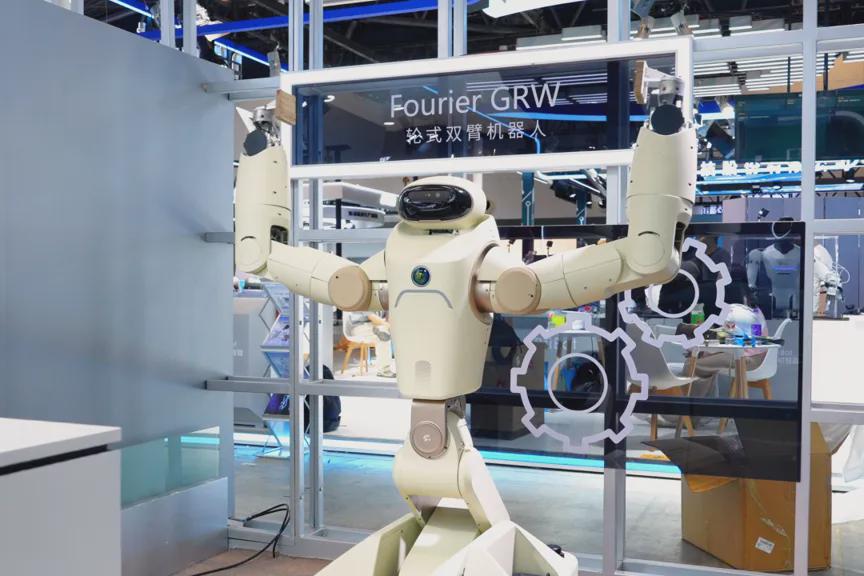
Fourier Launches GRW Wheel-Based Dual-Arm Robot for Industrial Applications
At the 2026 World Artificial Intelligence Conference, Fourier unveiled its first wheel-based dual-arm robot, the GRW. This robot is designed for high-frequency, general auxiliary tasks in automotive manufacturing, warehousing logistics, and 3C electronics, marking a shift from mere demonstrations to practical applications in robotics. The introduction of the GRW is significant as it addresses the fundamental question of how embodied intelligence can be effectively integrated into various industries. The Chinese market for wheel-based dual-arm robots is projected to exceed 1.8 billion yuan in 2026, with a year-on-year growth of approximately 350%, indicating a strong demand for such solutions. Looking ahead, the GRW is positioned as an auxiliary interactive service robot, focusing on alleviating human fatigue in repetitive tasks. With a stable load capacity of 16 kilograms, it meets the weight requirements of typical industrial applications, covering about 80% of the demands in automotive parts handling and logistics. No further timeline was disclosed at the time of publication.
Industrial Robots Warehouse Automation Dual-Arm Robots AI Robotics
JD.com Unveils Comprehensive AI Industrialization Strategy with Open-Source AI Models
JD.com founder Richard Liu announced the company's initiative to eliminate technology barriers by opening its full-stack self-developed AI to global partners. This move is part of JD's broader strategy to enhance its logistics capabilities and foster collaboration in the AI sector. The company's significant investment in research and development, which increased by 53.2% in the first half of the year, underscores its commitment to building the world's largest embodied data collection center. By open-sourcing its EgoLive and JoyAI models, JD.com aims to drive innovation and efficiency in logistics through advanced robotics. Looking ahead, JD.com is set to deploy its robots across logistics operations, enhancing its service capabilities. No further timeline was disclosed at the time of publication.

U.S. Drone Manufacturing Boosted by $820 Million Conditional Loan to Performance Drone Works
The United States is set to enhance its domestic drone manufacturing capabilities following a conditional loan commitment of up to $820 million to Performance Drone Works (PDW) from the Department of War’s Office of Strategic Capital. This funding aims to reduce reliance on foreign supply chains for critical drone components, addressing a significant vulnerability in the industry. The proposed financing is intended to bolster U.S. production capacity for essential technologies such as propulsion systems, power electronics, and flight-control hardware. By manufacturing these components domestically, PDW aims to support not only military applications but also future public safety and commercial uses, reflecting a broader effort to strengthen the U.S. defense industrial base amid rising demand for unmanned systems. As the proposed financing remains conditional and subject to further requirements, the initiative underscores the strategic importance of drone manufacturing for national security. The U.S. aims to build secure domestic supply chains to maintain technological competitiveness as militaries increasingly depend on autonomous systems across various domains. No further timeline was disclosed at the time of publication.
Innovation Military
Humanoid Secures $152 Million in Series A Funding for Industrial Robotics Development
Humanoid, a London-based AI and robotics company, has successfully raised $152 million in Series A funding, achieving a post-money valuation of $1.35 billion. This funding increases the total amount raised to $270 million, enabling the company to offer early access to its HMND 01 Alpha Wheeled robot, a bimanual mobile manipulator powered by the KinetIQ AI framework. The significance of this funding lies in Humanoid's ambition to transform humanoid robots from innovative concepts into practical industrial tools. CEO Artem Sokolov emphasized the rapid progress made in just two years, highlighting partnerships with leading industrial firms and a strong project pipeline. The funding will accelerate development and deployment efforts, positioning Humanoid at the forefront of the evolving robotics landscape. Looking ahead, Humanoid plans to leverage this investment to enhance its technology and expand its customer base. The company is already working with early access customers and has established partnerships with industry leaders like Schaeffler AG and Robert Bosch GmbH, which will aid in manufacturing and strategic consulting. No further timeline was disclosed at the time of publication.
Artificial Intelligence Humanoids Investments Manufacturing Markets / Industries News
NVIDIA and DeepMind Lead Robotics Simulation Debate with New Industrial Applications
The field of embodied intelligence is witnessing a fierce debate over the best approach to training robots for industrial applications. One faction advocates for simulation-based training, leveraging structured environments to generate synthetic data, while the opposing view emphasizes the necessity of real-world data to handle complex physical interactions and unpredictable scenarios. Key players include NVIDIA, DeepMind, and Intrinsic, each with unique strategies and technologies. NVIDIA's Omniverse platform and Isaac Sim engine exemplify the simulation approach, enabling comprehensive digital twins of factories for training and optimization. Their collaboration with BMW on a digital twin project in Hungary showcases the potential of synthetic data in logistics and robotic movements. However, challenges remain in achieving the necessary fidelity for force control and physical interactions, prompting NVIDIA to seek partnerships with companies like Hexagon Robotics. Conversely, DeepMind's use of the MuJoCo physics engine has demonstrated that pure simulation can achieve industrial-grade precision in specific tasks, such as sorting with known rigid models. Yet, this method's effectiveness is limited to scenarios with minimal contact and force control. Intrinsic aims to transform simulation into a comprehensive development tool for industrial robots, focusing on lowering barriers for small manufacturers. The ongoing challenge of the SIM2REAL gap remains a critical factor in the success of these approaches.
Robotics Industrial Automation Simulation Technology AI
NIST launches MEP pilot program to strengthen industrial base
The National Institute of Standards and Technology (NIST) is launching a new initiative aimed at enhancing the adoption of additive manufacturing technologies for aerospace components while simultaneously developing a domestic supply chain for critical minerals. This program, which is set to invest approximately $20 million in each pilot project, underscores the government's commitment to bolstering the aerospace sector and ensuring a reliable source of essential materials. By focusing on these two key areas, NIST aims to support innovation and competitiveness within the industry, addressing both technological advancements and supply chain vulnerabilities. The initiative reflects a strategic response to the growing demand for advanced manufacturing solutions and the need for secure access to critical resources.
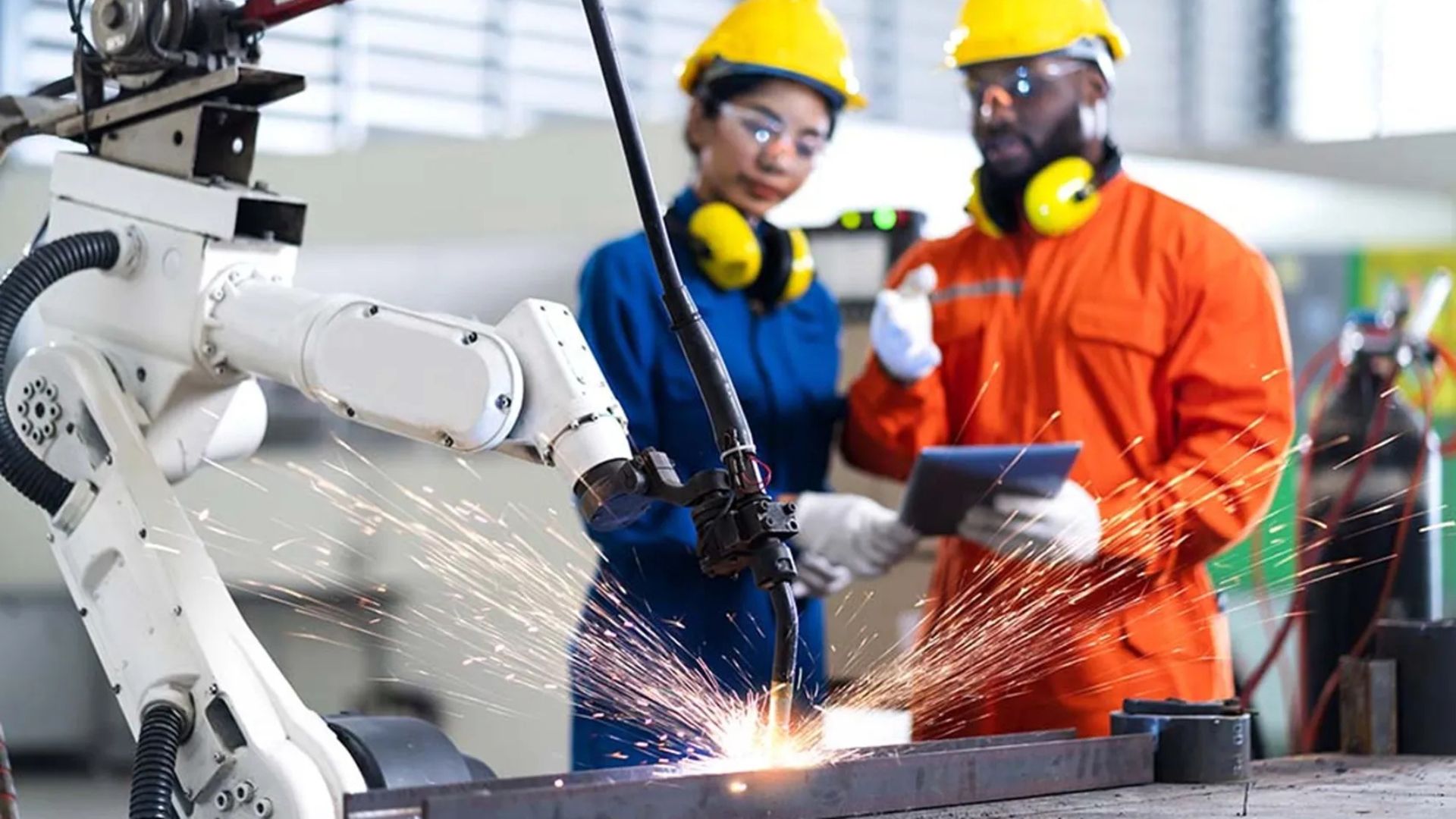
New vision-based safety tech lets industrial robots work safely near humans
Sensory Robotics has achieved safety certification for its innovative system that enables industrial robots to operate autonomously in various environments. This significant milestone was announced recently, marking a crucial step forward in the integration of advanced robotics into industrial applications. The certification process involved rigorous testing and evaluation to ensure that the system meets stringent safety standards, reflecting the company's commitment to enhancing workplace safety and efficiency. By allowing robots to function independently, Sensory Robotics aims to streamline operations and reduce the risk of accidents in manufacturing settings. The certification not only positions the company as a leader in the robotics field but also opens new opportunities for businesses looking to adopt automated solutions.
AI and Robotics
How Drone-Based Construction Progress Monitoring Is Driving Smarter Industrial Workflows
In a significant advancement for the construction industry, drone-based monitoring is being implemented to enhance transparency across projects. This innovative approach allows all stakeholders, including site foremen and remote investors, to access the same high-resolution digital twin of the construction site. By providing a unified visual representation, the technology aims to eliminate uncertainty and guesswork traditionally associated with construction progress and management. This initiative is part of a broader trend towards integrating advanced technologies in construction, with the potential to improve efficiency and accountability. As the industry continues to evolve, the adoption of drone monitoring is expected to play a crucial role in shaping the future of construction practices.

Real‐Time Terrain Traversability Analysis and Mapping for Autonomous Robotics in Dynamic Environments: Fusing Appearance‐ and Geometry‐Based Approaches
In a recent study published in the Journal of Field Robotics, researchers explored advancements in robotic technologies aimed at enhancing agricultural efficiency. The study, which appears in the May 2026 issue, highlights innovative approaches to integrating robotics into farming practices to address labor shortages and improve crop yields. Conducted by a team of experts in robotics and agriculture, the research was carried out in various agricultural settings to assess the effectiveness of these technologies in real-world applications. The findings suggest that the implementation of autonomous robots can significantly streamline farming operations, reduce costs, and increase productivity. This research is particularly timely as the agricultural sector faces increasing challenges due to a declining workforce and the need for sustainable practices. The study emphasizes the potential of robotics to transform the industry, paving the way for smarter, more efficient farming solutions.
RESEARCH ARTICLE
Efficient Inverse Kinematics Solution for Industrial Robotic Arms: NR Iterative Based on IDBO‐BPNN Prediction
In May 2026, the Journal of Field Robotics published a significant study examining advancements in robotic technology, particularly focusing on autonomous navigation systems. The research, conducted by a team of engineers and scientists, highlights innovative algorithms that enhance the ability of robots to navigate complex environments without human intervention. This study was carried out at various testing sites, including urban landscapes and rugged terrains, to assess the robots' performance in real-world scenarios. The motivation behind this research stems from the growing demand for autonomous systems in various industries, such as agriculture, construction, and disaster response. By improving navigation capabilities, the team aims to increase the efficiency and safety of robotic operations in challenging conditions. The findings indicate that these new algorithms can significantly reduce the time and resources required for robots to complete tasks, thereby offering potential cost savings and improved outcomes for businesses. The study's implications are far-reaching, suggesting that enhanced autonomous navigation could lead to broader adoption of robotic technologies across multiple sectors. As industries continue to seek innovative solutions to improve productivity and reduce risks, this research represents a crucial step forward in the integration of robotics into everyday applications.
RESEARCH ARTICLE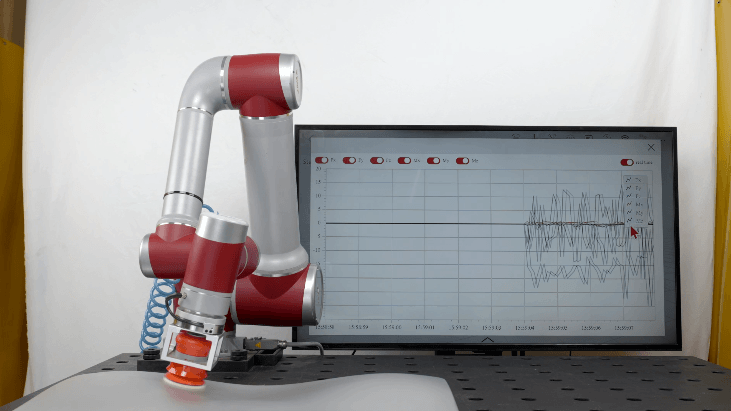
Industrial Cobot Price Analysis: Total Cost of Ownership (TCO) vs. Traditional Robotics
JAKA, a leader in automation solutions, emphasizes the importance of evaluating the total cost of ownership (TCO) when considering investments in industrial collaborative robots (cobots). Unlike traditional robotic systems that require extensive installation and specialized programming, JAKA's cobots offer flexibility and efficiency, significantly reducing labor costs and workspace requirements. This approach allows for rapid redeployment across production lines, enhancing long-term financial and operational benefits for businesses seeking cost-effective automation. The JAKA Pro16 Polishing and Grinding solution exemplifies the adaptability of industrial cobots, ensuring consistent processing precision and reducing defect rates. Its reprogrammable system enables quick adjustments for different workpieces, thereby shortening product modification cycles and minimizing the need for additional equipment. Furthermore, by taking over hazardous tasks, these robots enhance workplace safety by reducing direct human interaction with dangerous machinery. JAKA highlights that the TCO of cobots is influenced by their low maintenance requirements and operational efficiency. Unlike traditional robotics, which often involve complex setups and ongoing technical support, JAKA’s systems are designed for intuitive operation and seamless integration. Their modular design allows for future upgrades, extending service life and providing continuous value while minimizing downtime and maintaining consistent production quality. In conclusion, JAKA advocates for a comprehensive evaluation of automation solutions that goes beyond initial costs. By focusing on TCO, businesses can better appreciate how industrial cobots enhance operational efficiency, safety, and adaptability, ultimately leading to a scalable and efficient production environment.

Real‐Time Detection of Undesired Human Interventions in Robotic Work Cells Using a Convolutional Neural Network‐Based Novel Architecture and Reliability Analysis With Explainable Artificial Intelligence
A recent study published in the Journal of Field Robotics highlights advancements in autonomous robotic systems designed for agricultural applications. Researchers from various institutions conducted the study to explore how these technologies can enhance efficiency and productivity in farming practices. The findings, released in early October 2023, indicate that the integration of robotics in agriculture not only streamlines operations but also addresses labor shortages faced by the industry. The research was carried out in diverse agricultural settings, showcasing the adaptability of robotic systems to different crops and farming techniques. By employing sensors and artificial intelligence, these robots can perform tasks such as planting, monitoring crop health, and harvesting with precision. The motivation behind this innovation stems from the need to increase food production while minimizing environmental impact and labor costs. As farmers face growing challenges from climate change and a declining workforce, the study emphasizes the potential of robotics to transform traditional farming methods. The researchers advocate for further investment in robotic technologies to ensure sustainable agricultural practices and improve overall food security. This study marks a significant step towards the future of farming, where automation plays a crucial role in meeting the demands of a growing global population.
RESEARCH ARTICLERobotics needs a service framework.
RSF defines a common language for robot service capability, lifecycle operations, certification pathways, and service-provider networks.
Join the RobotToday community on LinkedIn
Daily robotics news, in-depth analysis, conference highlights, and discussions with professionals worldwide.







