

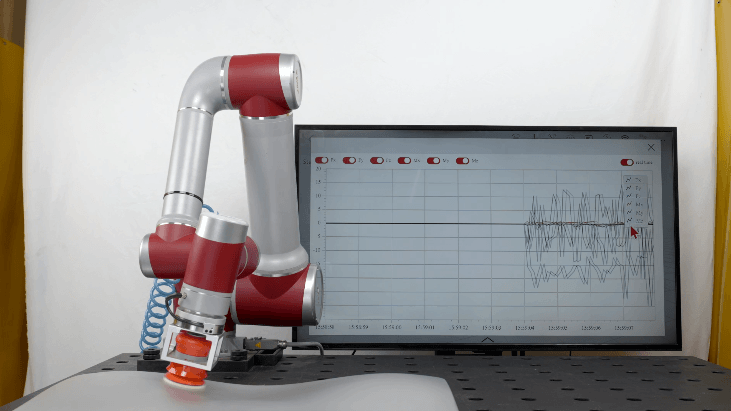
JAKA, a leader in automation solutions, emphasizes the importance of evaluating the total cost of ownership (TCO) when considering investments in industrial collaborative robots (cobots). Unlike traditional robotic systems that require extensive installation and specialized programming, JAKA's cobots offer flexibility and efficiency, significantly reducing labor costs and workspace requirements. This approach allows for rapid redeployment across production lines, enhancing long-term financial and operational benefits for businesses seeking cost-effective automation.
The JAKA Pro16 Polishing and Grinding solution exemplifies the adaptability of industrial cobots, ensuring consistent processing precision and reducing defect rates. Its reprogrammable system enables quick adjustments for different workpieces, thereby shortening product modification cycles and minimizing the need for additional equipment. Furthermore, by taking over hazardous tasks, these robots enhance workplace safety by reducing direct human interaction with dangerous machinery.
JAKA highlights that the TCO of cobots is influenced by their low maintenance requirements and operational efficiency. Unlike traditional robotics, which often involve complex setups and ongoing technical support, JAKA’s systems are designed for intuitive operation and seamless integration. Their modular design allows for future upgrades, extending service life and providing continuous value while minimizing downtime and maintaining consistent production quality.
In conclusion, JAKA advocates for a comprehensive evaluation of automation solutions that goes beyond initial costs. By focusing on TCO, businesses can better appreciate how industrial cobots enhance operational efficiency, safety, and adaptability, ultimately leading to a scalable and efficient production environment.






















Leave a comment