Industry Briefing
A single destination for timely, editor-curated robotics news from around the world.

Singapore Launches Home Team Humanoid Robotics Centre for Public Safety Training
Singapore's Home Team Science and Technology Agency has inaugurated the Home Team Humanoid Robotics Centre, a 29,000-square-foot facility aimed at developing humanoid robots for public safety roles. The center will focus on training robots for tasks such as hazardous-material handling and post-blast investigations, with the first operational humanoid expected by 2028. This initiative is significant as it addresses the need for advanced robotics in public safety, an area that has seen less development compared to commercial humanoid applications. The center will collaborate with various partners, including ST Engineering and Singtel RE:AI, to enhance AI infrastructure and ensure the robots are equipped to assist human officers in demanding environments. Looking ahead, the Home Team Humanoid Robotics Centre will support the entire development cycle of embodied AI systems, emphasizing the importance of specialized training data for public safety applications. No further timeline was disclosed at the time of publication.
Humanoids National Strategies Physical AI AI Home Team HTX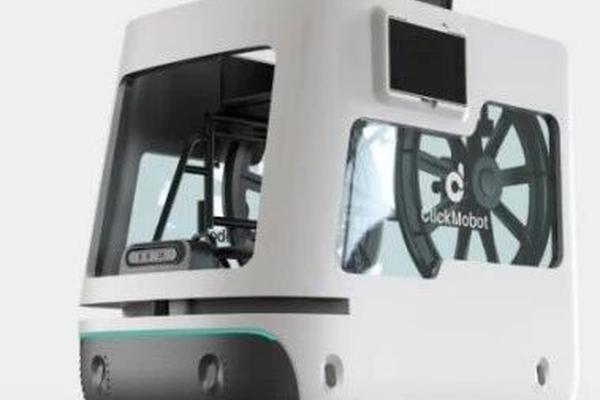
Tsinghua and CAS teams collaborate with West China Hospital to develop a home care transport robot.
Shenzhen-based Kolidian Technology Co., Ltd. has recently secured strategic financing led by Lihe Kechuang, with participation from the Jiangsu Zhongke Intelligent Science and Technology Application Research Institute. This funding will primarily support product development, team expansion, and commercialization efforts. Kolidian focuses on AI and robotics in the eldercare sector, offering products designed for home companionship and rehabilitation. The company has developed a proactive companionship robot for home use and a rehabilitation transport robot in collaboration with Sichuan University’s West China Hospital. Both products have completed prototype development and are moving towards small-scale production and commercialization. As China's population ages, the silver economy is emerging as a significant market, with projections suggesting it could exceed 30 trillion yuan by 2035. The national strategy to actively address aging demographics is driving growth in the eldercare robotics sector. The GR-150 rehabilitation transport robot, designed for medical and eldercare institutions, utilizes advanced navigation and sensor fusion technology to assist patients with mobility. Kolidian's second-generation home companionship robot integrates health monitoring, emotional support, cognitive assistance, and safety features. It can interact with users, detect falls, and provide alerts, while also offering multimedia capabilities. The company aims to finalize product design by the third quarter of 2026 and begin small-scale production by the fourth quarter, with plans for revenue generation by 2027. The founding team, led by Wang Yuheng, combines expertise from prestigious institutions, positioning the company to capitalize on the growing demand for intelligent eldercare solutions. Investors view Kolidian as a promising player in the intersection of the silver economy and embodied intelligence.
Robotics needs a service framework.
RSF defines a common language for robot service capability, lifecycle operations, certification pathways, and service-provider networks.
Join the RobotToday community on LinkedIn
Daily robotics news, in-depth analysis, conference highlights, and discussions with professionals worldwide.