Industry Briefing
A single destination for timely, editor-curated robotics news from around the world.
Concerns Rise Over Violence in Fighting Robots at Trade Shows Like IFA 2026
At the IFA 2026 in Berlin, fighting robots captured significant attention, particularly the EngineAI T800 humanoid robot, which mimicked boxing moves. CNET's Katie Collins expressed deep concerns about the implications of showcasing such robots, especially as they are increasingly associated with violence in entertainment. The presence of aggressive robots raises questions about public perception of risk, especially as autonomous robots are already used in military applications. Collins highlighted the troubling normalization of violence through entertainment, noting that while robots like the T800 can engage in combat scenarios, their safety measures and decision-making capabilities remain uncertain. This contrasts sharply with strict safety protocols observed in industrial settings, where robots pause operations when humans enter their work zones. The disparity raises alarms about the potential dangers of allowing aggressive robots to interact freely with the public. The article argues that while technology may enable the creation of violent autonomous machines, it does not justify their production or display as harmless entertainment. Collins calls for a reevaluation of the safety culture within the robotics industry, emphasizing the need for responsible public engagement with these technologies. No further timeline was disclosed at the time of publication.
Fighting Robots Robot Safety Entertainment Technology AI Ethics
Humanoid Robots Struggle in Real Firefighting Tasks: Only 3 of 23 Succeed
On August 16, the finals of the second World Humanoid Robot Games Emergency Management Firefighting Group took place in Beijing, where 23 teams tested their humanoid robots in real firefighting scenarios. Unlike last year's controlled environment, this year's competition featured real flames and unpredictable weather conditions, posing significant challenges for the robots. The competition involved three tasks: identifying two types of simulated hazardous materials, shutting off three different valves, and using a fire extinguisher to put out a fire. Only three teams successfully completed their tasks, highlighting the difficulties robots face in dynamic environments. The UniX AI team noted that environmental factors like rain and light affected their robot's performance, which was slower than human firefighters. The event underscored the industry's ongoing challenges, with teams employing VR headsets for remote control and utilizing advanced joint modules. Despite the limited success, officials emphasized the importance of these trials as foundational steps toward enabling robots to assist humans in real-world emergency situations. No further timeline was disclosed at the time of publication.
Humanoid Robots Firefighting Technology Emergency Response Robotics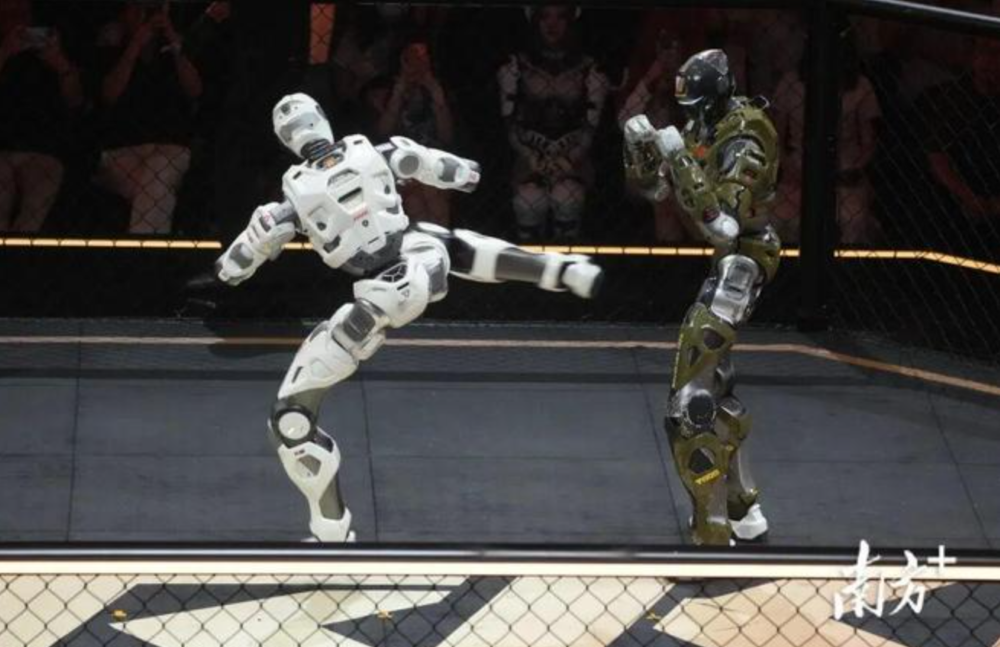
Humanoid Robots Compete for Championship Belt in Global Fighting League
On July 16, the inaugural match of the Universal Robot Combat League (URKL) took place at the Nanshan Sports Center in Shenzhen, featuring 32 teams from around the world competing with the T800 humanoid robot. The championship belt, weighing 10 kilograms and valued at approximately 10 million yuan, is awarded to the winning team. This event is significant as it showcases the advanced capabilities of humanoid robots in dynamic combat scenarios, where they must accurately perceive, predict, and respond to opponents in real-time. The competition serves as a testing ground for the robots' structural integrity and algorithm efficiency, allowing developers to refine their designs and reduce potential failure rates in commercial applications. Looking ahead, the data collected from these matches will enhance AI decision-making capabilities, pushing humanoid robots beyond static demonstrations to dynamic autonomous responses. As the competition concludes, it will contribute to the evolution of foundational technologies and commercial frameworks, positioning Guangdong as a leading hub in the global robotics industry.
Humanoid Robots Robotics Competitions AI Technology Robotics Development
Four-legged detection robots for safe firefighting operations
Researchers at TU Graz have developed an advanced detection robot capable of identifying hazardous substances, designed to assist fire services during high-risk operations. This innovative technology serves as a remote-controlled advance guard, enhancing safety and efficiency in emergency situations. A recent study highlights the potential integration of this high-tech tool into fire service teams, demonstrating its effectiveness in supporting personnel on the ground. By employing the robot, fire services can better manage dangerous environments, ultimately aiming to protect both responders and the public.
Robotics
Humanoid Robots Enter the Fighting Ring: A New Era of Combat Sports
Humanoid robots are making their mark in the combat arena, transitioning from viral brawls to organized tournaments that showcase their advanced capabilities. This evolution in robotic technology is capturing the attention of audiences and enthusiasts alike, offering a fresh and exciting form of entertainment. The rise of these robotic competitors is driven by advancements in artificial intelligence and engineering, which enable them to perform complex maneuvers and engage in strategic combat. As these events gain popularity, they are being held in various locations, drawing crowds eager to witness the future of entertainment unfold. The integration of humanoid robots into competitive fighting not only highlights technological progress but also raises questions about the future of sports and entertainment in a rapidly evolving digital landscape.
Unitree Robotics EngineAI REK humanoid-agilityRobotics needs a service framework.
RSF defines a common language for robot service capability, lifecycle operations, certification pathways, and service-provider networks.
Join the RobotToday community on LinkedIn
Daily robotics news, in-depth analysis, conference highlights, and discussions with professionals worldwide.