

Industry Briefing
A single destination for timely, editor-curated robotics news from around the world.

Looktech Unveils AI Glasses Featuring Brain-Computer Interface for Monitoring Emotions and Fatigue
At a recent exhibition in France, Looktech introduced a groundbreaking product, claiming to be the world's first consumer-grade AI glasses equipped with a brain-computer interface. These glasses not only provide visual and auditory capabilities but also interpret the user's thoughts through embedded EEG sensors that collect brainwave data in real-time. The AI analyzes this data to assess emotional states, fatigue levels, and even conduct preliminary brain health monitoring. This innovation signifies a shift in smart glasses from merely being external displays to becoming personal companions that can interact with the brain. In addition to brainwave monitoring, the glasses offer all-day health tracking, such as sunlight exposure reminders for vitamin D intake and alerts to stretch the neck when the user looks down for too long. Weighing less than 30 grams and featuring carbon fiber arms, the glasses have a more refined aesthetic, resembling traditional eyewear rather than typical smart glasses. The introduction of brain-computer interfaces in consumer devices presents new opportunities for proactive health management. However, challenges remain regarding privacy, accuracy, and ethics, particularly in the collection and analysis of physiological data. As Looktech's product indicates, the future of smart glasses may involve them becoming an extension of human sensory perception.
AI Glasses Brain-Computer Interface Health Monitoring Wearable Technology
Zhongke Xinzhi Completes Angel Round Funding for Emotion Perception AI Development
Zhongke Xinzhi, a company specializing in embodied intelligent emotional cognition models, has announced the completion of its angel round funding. The investment, led by Shanghai Xinzhi Enterprise Management Partnership, will primarily support the technological iteration of cross-modal emotion perception models, the mass production of smart hardware, and the development of standardized perception modules. This funding is significant as it enables Zhongke Xinzhi to advance its core technology, which integrates visual, auditory, behavioral, and physiological signals to produce a clinical-level 'empathy index' and multidimensional mental state perception. This breakthrough allows for a more nuanced understanding of emotions, moving beyond simple binary labels like 'happy' or 'sad' to recognize complex emotional states, enhancing the emotional intelligence of robots. Looking ahead, Zhongke Xinzhi aims to commercialize its technology through self-developed hardware such as smart rings and companion robots, initially targeting emotional companionship for consumers. The ultimate goal is to establish an 'emotion-level' ecological infrastructure that transforms not only human-robot interaction but also the very essence of companionship itself. No further timeline was disclosed at the time of publication.
Emotion AI Robotics Human-Robot Interaction Machine Learning
Tombot's AI-Driven Robotic Dog Receives Over 23,000 Preorders for Senior Emotional Support
Tombot, a robotics company based in Los Angeles, has announced the completion of a $7 million Series A3 funding round led by Caduceus Capital Partners and Wavemaker 360. This brings the company's total funding to over $13 million, with more than 23,000 preorders for Jennie, an AI-driven robotic Labrador puppy, already secured before product delivery. The significance of Jennie lies in its potential to address the growing issue of loneliness among seniors, particularly those suffering from dementia and mild cognitive impairment. With over 300 million individuals globally affected by these conditions, Tombot aims to provide a medical-grade emotional support device that requires no feeding, walking, or maintenance, thus offering a viable companionship option for the elderly. Looking ahead, Tombot's focus will be on continuous updates to Jennie's behavior and voice commands through an accompanying mobile app. The response from investors and the market indicates a serious consideration of robotic companions as a solution to the pressing challenges of aging populations and caregiver shortages. No further timeline was disclosed at the time of publication.
Emotional Support Robots Elderly Care Technology AI Companions Robotics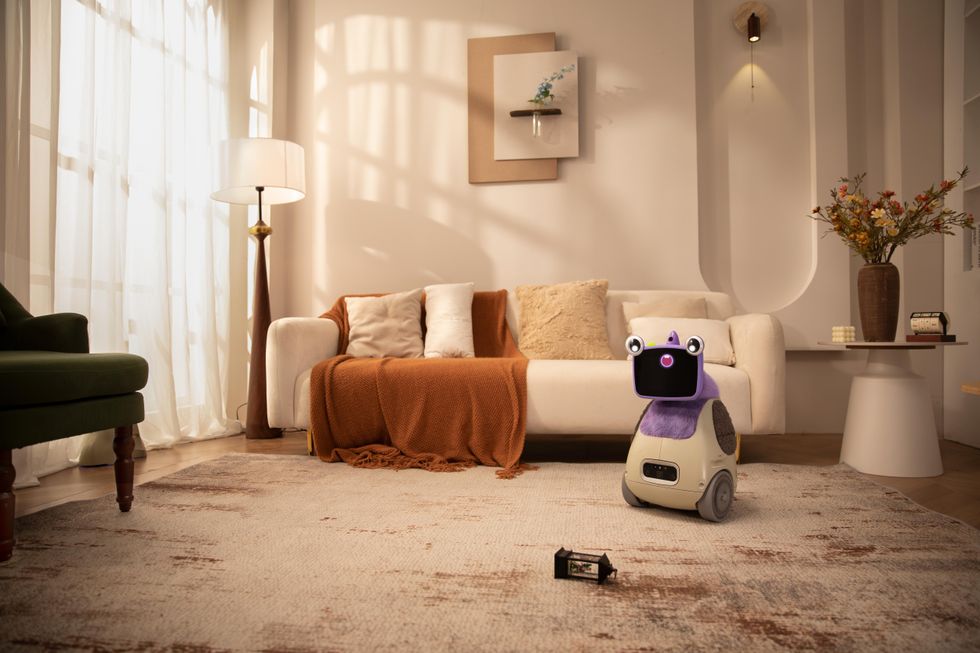
Ollobot's OlloNi SS1 Redefines AI Companion Robots for Emotional Connection
Ollobot's OlloNi SS1 is a new generation of AI companion robots designed to address loneliness and emotional needs in modern households. Unlike earlier models, which were limited in functionality, the SS1 employs proactive interaction and emotional intelligence to provide companionship for various demographics, including the elderly, children, and single professionals. The significance of the OlloNi SS1 lies in its ability to create a sense of presence and emotional support, filling gaps left by traditional communication tools. With the global AI companion market projected to grow from $48 billion in 2026 to $318 billion by 2033, Ollobot's innovative approach positions it at the forefront of this expanding industry. Looking ahead, the evolution of the OlloNi SS1 through over-the-air updates and its integration into family activities will be crucial to its success. As the demand for emotional support in technology increases, Ollobot's focus on familiarity and long-term coexistence may set a new standard for companion robots in the future.
Social-robots Human-robot-interaction Computer-vision Companion-robots Multimodal-ai Ai-robots
Visual Language Models Train Robots to Read Human Emotions
A recent study led by Seung Chan Hong at the University of Melbourne explores the emotional capabilities of collaborative robots as they increasingly work alongside humans. Published on May 18 in IEEE Robotics and Automation Letters, the research investigates how robots can better understand human emotions through contextual cues, beyond just facial expressions. Involving 40 volunteers, the study trained a vision language model (VLM) to interpret emotions based on video interactions where robots handed objects to humans. The VLM outperformed traditional AI systems, scoring 0.86 in emotional accuracy compared to 0.77 for conventional methods. This improvement is attributed to the VLM's ability to consider the entire context of interactions rather than isolated facial expressions. In a follow-up experiment, participants interacted with a robot that was programmed to make an error, receiving either an emotionally adaptive apology or a standard one. The majority preferred the adaptive response, but trust in the robot diminished after it failed to complete its task, highlighting that emotional responses cannot compensate for a lack of functionality. While the VLM effectively recognized emotions from a third-party perspective, its accuracy dropped when compared to participants' self-reported feelings, indicating that robots still struggle to fully understand human emotions. The findings suggest that while emotional adaptivity is valuable, the primary concern for users remains the robot's competence in performing tasks.
Robotics Journal-watch Ai-models Emotion-recognition
Papergames bets on emotional AI robots, virtual gaming characters could go physical
Chinese gaming company Papergames has announced its foray into the AI companion robot sector by posting several job openings related to AI robotics on various recruitment platforms. Among the positions available are roles for an AI robotics structural lead, hardware engineer, and product manager with a focus on hardware supply chains. This strategic move reflects the company's intention to enhance the emotional value of its offerings, signaling a significant shift in its business direction. The recruitment efforts indicate Papergames' commitment to developing innovative technologies that integrate artificial intelligence with robotics, aiming to create products that resonate with users on a deeper emotional level.
Up and Comers Content and entertainment Gaming Highlight NewsRobotics needs a service framework.
RSF defines a common language for robot service capability, lifecycle operations, certification pathways, and service-provider networks.
Join the RobotToday community on LinkedIn
Daily robotics news, in-depth analysis, conference highlights, and discussions with professionals worldwide.







