

Industry Briefing
A single destination for timely, editor-curated robotics news from around the world.
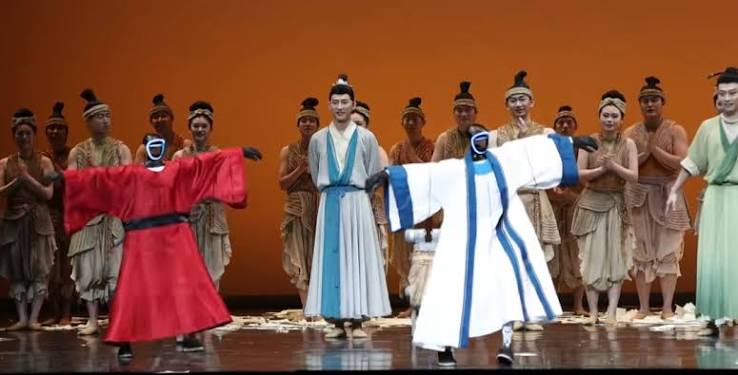
TianGong Robot Collaborates with Human Dancers at Beijing Art and Technology Week
The TianGong robot showcased its dancing abilities alongside human performers during the opening of the Second Beijing Art and Technology Week. According to reports from Beijing Daily, the robot's movements were described as smooth and human-like, captivating many onlookers. This performance highlights the robot's transition from industrial applications to cultural and artistic contexts. Unlike fixed trajectory movements in factories, dance requires continuous, varied, and rhythmic actions that must synchronize with human dancers. The process involved motion capture technology to collect data from human dancers, which was then transmitted to the TianGong robot for learning and rehearsal. The Second Beijing Art and Technology Week aims to merge art and technology, showcasing the robot's capabilities in a public cultural space. The success of the TianGong robot in this performance indicates its advanced motion control and balance algorithms. Future developments to watch include the potential for regular dance performances and the robot's ability to consistently replicate its stage presence.
Robotics Motion Capture Cultural Performance AI Dance Technology
ByteDance Investigates Autonomous Driving Technology for Unmanned Logistics Solutions
ByteDance is currently investigating autonomous driving technology aimed at unmanned logistics, as reported by Chinese media. This initiative is being developed by the world model team within Seed, ByteDance's AI research unit, and is linked to Volcengine’s automotive industry line. The significance of this exploration lies in ByteDance's commitment to advancing large model research, which includes initial forays into physical AI. However, the company has clarified that it does not intend to establish a smart driving business, indicating a focus on research rather than commercial deployment. Looking ahead, it will be important to monitor ByteDance's developments in this area, particularly how their research may influence the logistics sector. No further timeline was disclosed at the time of publication.
News Feed
SpaceX's Starmind Plans 1 Million AI Satellites Amid Collision Risks
SpaceX has announced its ambitious Starmind project, which aims to deploy 1 million AI satellites in orbits between 500 and 2,000 km. This initiative, confirmed by Elon Musk on June 23, 2026, follows a merger with xAI, valuing the combined entity at $1.25 trillion. The satellites will function as orbital data centers, processing AI workloads powered by solar arrays and linked by optical lasers. The significance of Starmind lies in its potential to add 100 gigawatts of AI compute capacity annually, contingent on the successful operation of the Starship launch system. However, the project raises concerns regarding space debris, as the current orbital environment is already congested, with a 20% increase in collision risk reported since 2024. The European Space Agency has highlighted that the density of debris in low Earth orbit is now comparable to that of active satellites, complicating the operational landscape for new entrants like Starmind. Looking ahead, the first operational orbital AI deployments are targeted for 2028, with test launches expected in early 2027. However, the project faces scrutiny regarding its impact on space debris, as even a 1% failure rate could significantly increase the number of uncontrollable objects in orbit, exacerbating existing risks. No further timeline was disclosed at the time of publication.
Robotics needs a service framework.
RSF defines a common language for robot service capability, lifecycle operations, certification pathways, and service-provider networks.
Join the RobotToday community on LinkedIn
Daily robotics news, in-depth analysis, conference highlights, and discussions with professionals worldwide.






