

Industry Briefing
A single destination for timely, editor-curated robotics news from around the world.

Automakers Transition from Vehicles to Bipedal Robots Amidst Competitive Landscape
Automakers are shifting their focus from traditional four-wheeled vehicles to bipedal robots, marking the beginning of a competitive race in productivity within the physical world. By 2026, the year anticipated for mass production of humanoid robots, over 20 automotive companies have entered this sector, including Tesla, XPeng, and Chery, transitioning from conceptual showcases to tangible production phases. This shift is significant as it introduces substantial funding and supply chain expertise into the humanoid robotics industry, embedding the concept of mass production into its framework. Tesla is leading the charge with its Optimus robot, aiming for a production capacity of 1 million units annually by 2026, while XPeng plans to launch its IRON series robots by the end of 2026, targeting a monthly output of over 1,000 units. Looking ahead, the market is expected to see over 100,000 humanoid robots produced in China by 2026, with forecasts from institutions like Nomura and Morgan Stanley predicting shipments of 40,000 to 50,000 units. However, automakers face challenges in transitioning from standardized vehicle production to the more complex and fragmented requirements of humanoid robotics, necessitating advancements in technology and product reliability.
Humanoid Robots Automotive Innovation Robotics Manufacturing AI Technology
PaXini Unveils PX-FOOTRIX, the First Multi-Dimensional Tactile Sensor for Bipedal Robots
PaXini has officially launched the PX-FOOTRIX, the world's first multi-dimensional tactile sensor designed for bipedal robots. This innovative product utilizes a pioneering 6D Hall array tactile sensing technology to provide comprehensive three-dimensional force perception and six-dimensional force/moment sensing, enabling robots to accurately understand ground features and adapt their gait in real-time. The introduction of PX-FOOTRIX is significant as it enhances the ability of bipedal robots to navigate complex real-world terrains, moving beyond simple walking capabilities to a deeper understanding of how to walk. This advancement is crucial for applications in industrial manufacturing, logistics, and public services, where robots must adjust their movements based on varying ground conditions. Looking ahead, the PX-FOOTRIX is set to redefine robotic gait perception and control. With its ability to deliver rich tactile feedback and support dynamic gait optimization, it promises to improve the stability and safety of robotic movements in diverse environments. No further timeline was disclosed at the time of publication.
Bipedal Robots Tactile Sensors Robotics Technology AI Sensor Technology
Unitree Robotics Achieves 18,000 Bipedal Humanoid Robots Produced by July 2026
Unitree Robotics has announced a significant milestone, reporting the production of approximately 18,000 bipedal humanoid robots as of July 2026. This achievement highlights the company's rapid manufacturing capabilities and positions it as a key player in the competitive humanoid robotics market. The announcement is particularly noteworthy as it emphasizes the distinction between bipedal humanoids and other robot types, framing Unitree's focus on pure bipedal locomotion amid competition with AGIBOT, which recently captured a 44% market share. This strategic positioning aims to reinforce Unitree's identity as a leading producer of bipedal machines. Looking ahead, Unitree's production success comes at a time of significant momentum, bolstered by its recent IPO and strategic investments. However, the company faces challenges due to geopolitical factors affecting imports, particularly in the U.S. market. No further timeline was disclosed at the time of publication.
Unitree Robotics Market China
Agility Robotics Unveils Digit 5 and Explores Wheeled Robot Designs
In mid-September, Agility Robotics launched its fifth-generation humanoid robot, Digit 5. The company, which has been developing bipedal robots for over a decade, has seen its flagship product, Digit, deployed in various facilities including Amazon and Toyota Canada. According to the company, it has achieved continuous commercial deployment for nearly three years. The exploration of wheeled designs was confirmed by co-founder and Chief Robotics Officer Jonathan Hurst, who noted that while the company is investigating various robot forms to meet different operational environments, bipedal robots are expected to remain the solution for many scenarios as their safety and reliability improve. Hurst emphasized that the goal is to enable robots to operate in more environments quickly, although it is too early to determine if a wheeled version of Digit will be released. Digit 5 features significant design changes, including a switch from bird-like legs to human-like legs, allowing it to squat and lift loads of up to 50 pounds. Hurst stated that this capability is sufficient for single-person handling tasks in OSHA-regulated areas. The robot's ability to operate without fixed safety zones and its involvement in standard-setting for industrial mobile robots are crucial for its integration into workplaces, as current humanoid robots often operate in isolated areas, limiting their value.
Bipedal Robots Wheeled Robots Industrial Automation Robot Safety Standards
A Brain-First Approach: Why This Company is Now Developing Bipedal Robots
On June 2, Starry Sea Technology unveiled its latest bipedal humanoid robot, Kengo, alongside the advanced G0.5 model. This launch underscores the company's dedication to utilizing embodied intelligence to tackle real-world productivity challenges, representing a notable departure from the conventional hardware-first focus in robotics. Kengo is engineered to navigate complex environments, highlighting Starry Sea Technology's innovative approach to the future of robotics.
Bipedal Robots Embodied Intelligence Robot Development AI Technology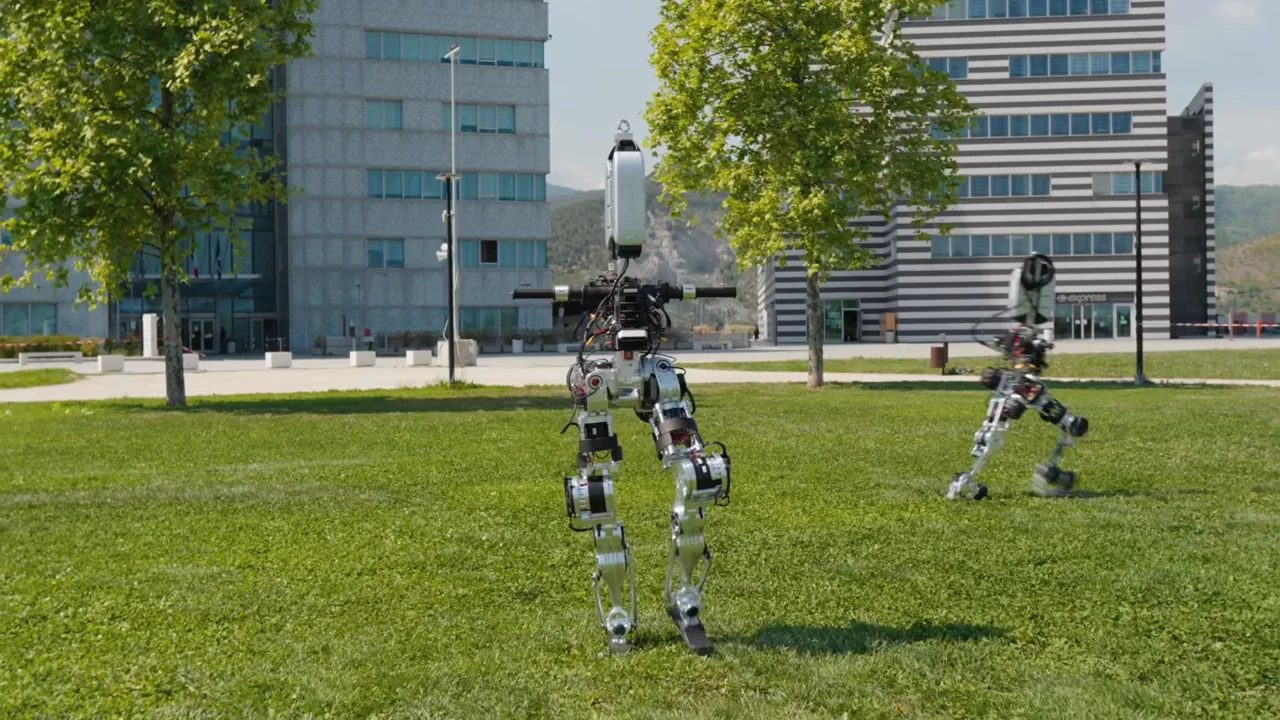
Generative Bionics Unveils Bipedal Robots, Partners with Italdesign for Production
Generative Bionics has showcased two new bipedal robot prototypes capable of navigating outdoor environments. CEO Daniele Pucci revealed that these robots were designed and sent to batch production within three months, utilizing 'Physical AI' for motor control and reinforcement learning for movement. This development is significant as it marks a step towards the industrialization of the GENE.01 humanoid platform, following a strategic partnership with Italdesign. This collaboration aims to transition the prototype into a pre-series product, focusing on replicable design and enhancing the human-robot interface with proprietary artificial skin. Looking ahead, Generative Bionics plans to announce a Chief Production & Industrialization Officer in June 2026 to facilitate scaling up production. Initial tests for the GENE.01/W variant are set for late 2026, indicating a strong push towards deploying humanoid welders in European shipyards, supported by Italdesign's manufacturing expertise.
Generative Bionics EuropeRobotics needs a service framework.
RSF defines a common language for robot service capability, lifecycle operations, certification pathways, and service-provider networks.
Join the RobotToday community on LinkedIn
Daily robotics news, in-depth analysis, conference highlights, and discussions with professionals worldwide.







