

Industry Briefing
A single destination for timely, editor-curated robotics news from around the world.

UK Civil Aviation Authority's New Vision for BVLOS Drone Operations in Airspace
The UK Civil Aviation Authority has unveiled its Airspace Architecture Concept of Operations, aiming to transition Beyond Visual Line of Sight (BVLOS) drone operations from isolated trials to widespread commercial use across UK airspace. Published on July 30, 2026, the document outlines how drones and other airspace users can operate routinely at scale, emphasizing the need for integrated commercial operations rather than bespoke approvals. This initiative is part of the CAA’s Airspace Modernisation Strategy and Future of Flight programme, which recognizes the current limitations of BVLOS flights that rely on dedicated airspace arrangements. The Concept of Operations builds on the UK BVLOS Roadmap and introduces five key technology and process pillars, including electronic detection systems, conflict-avoidance systems, reliable communication links, digital traffic management services, and information sharing among operators and air traffic services. The CAA envisions a future where drone technology can deliver significant economic and societal benefits, with target use cases including faster inspections of critical infrastructure and support for emergency services. As technology evolves, the CAA expects the document to adapt, paving the way for a more integrated airspace system that maintains safety standards while fostering innovation. No further timeline was disclosed at the time of publication.
Drone News Drone News Feeds News aerial infrastructure inspection Airspace Architecture Concept of Operations Airspace Modernisation Strategy
Panmnesia and Meta Propose New Architecture for Coordinated AI Data Center Operations
Panmnesia, in collaboration with Meta, has proposed a new architecture that enables AI data centers to function more like a unified computer rather than a collection of separate machines. This design utilizes Compute Express Link (CXL) to connect CPUs, AI accelerators, and memory across racks, addressing the challenges posed by the increasing complexity of AI models that require extensive data exchange. The significance of this architecture lies in its potential to enhance latency predictability and overall efficiency in data centers. By extending the CXL domain beyond individual racks, the proposed system allows resources to operate as a coordinated unit, significantly reducing unpredictable delays in data movement. This could lead to a substantial decrease in round-trip latency, from microseconds to several hundred nanoseconds, which is crucial for large AI workloads that depend on the collective performance of multiple accelerators. Looking ahead, the architecture could revolutionize how computing resources collaborate within data centers. With the ability to connect a greater number of accelerators and memory devices, the proposed system not only improves performance but also minimizes the impact of individual device failures. No further timeline was disclosed at the time of publication.
AI and Robotics
ANRA Technologies Surpasses 55,000 Commercial Drone Operations Per Month, Demonstrating Growing Demand for Digital Airspace Infrastructure
A leading drone platform has announced that it now facilitates over 1,800 commercial drone operations beyond visual line of sight each day. This significant milestone encompasses a variety of applications, including delivery services, critical infrastructure monitoring, utility management, and public sector missions. The increase in operational capacity reflects the growing demand for advanced drone technology in various industries, driven by the need for efficient and effective solutions. The platform's capabilities enable businesses and government agencies to leverage drones for tasks that require extended range and precision, ultimately enhancing operational efficiency and safety. The announcement comes as the drone industry continues to evolve, with advancements in technology and regulatory frameworks supporting the expansion of drone usage in everyday operations.
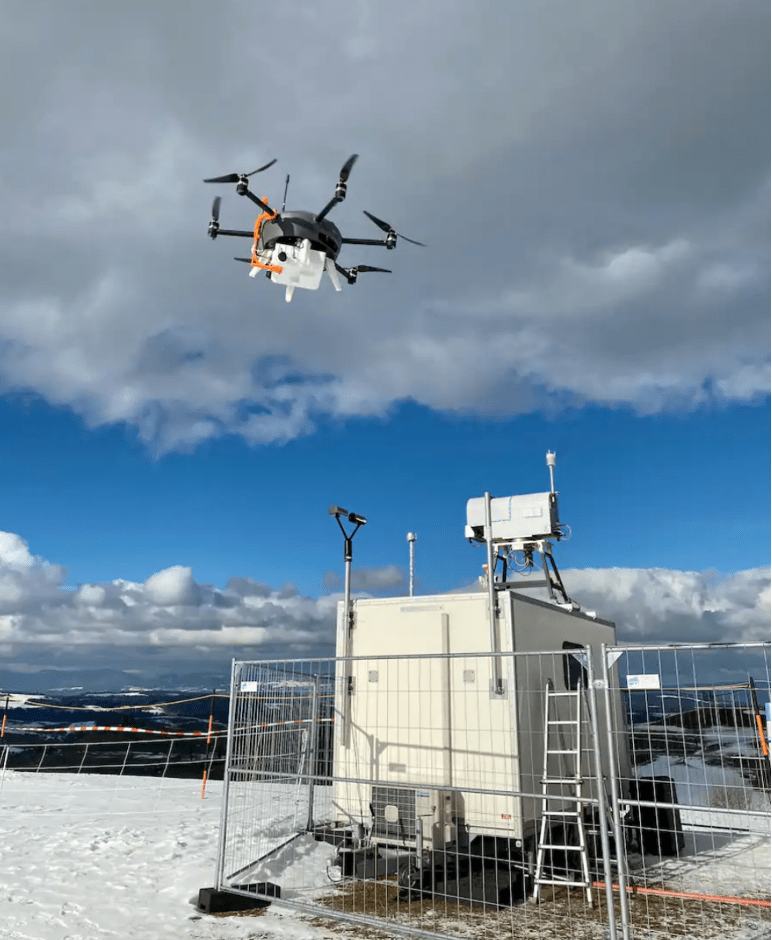
Project ULTRA Aims to Normalize Drone Operations in Shared Airspace
At the AUVSI XPONENTIAL 2026 conference in Detroit, officials from the Federal Aviation Administration (FAA), the Department of Defense (DoD), and various industry partners announced a collaborative initiative aimed at normalizing drone operations within the National Airspace System (NAS). This effort, referred to as Project ULTRA, seeks to develop scalable systems for unmanned aircraft systems (UAS), logistics, and counter-UAS coordination. The initiative is part of a broader strategy to enhance the integration of drones into shared airspace, addressing both operational efficiency and safety concerns. By leveraging the Grand Forks test environment, stakeholders are working to establish protocols and technologies that will facilitate the seamless coexistence of drones and traditional aircraft, ultimately promoting innovation in the aviation sector.
BVLOS DL Exclusive Drone News Drone News Feeds FAA NewsRobotics needs a service framework.
RSF defines a common language for robot service capability, lifecycle operations, certification pathways, and service-provider networks.
Join the RobotToday community on LinkedIn
Daily robotics news, in-depth analysis, conference highlights, and discussions with professionals worldwide.






