

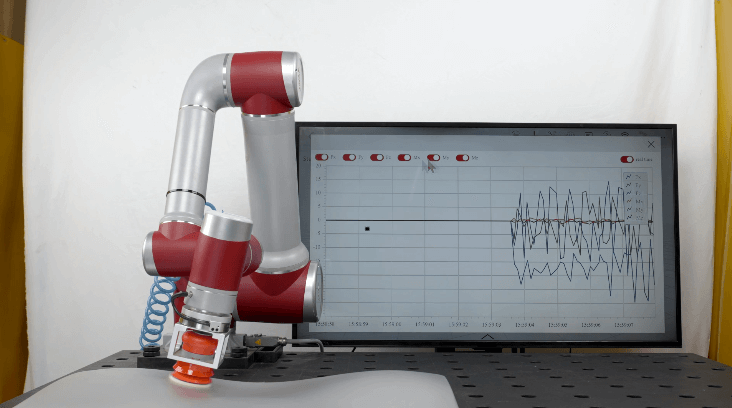
Manufacturing facilities are increasingly turning to integrated cobot solutions to address persistent challenges in precision tasks and product variability. JAKA, a leader in this field, has developed a system that combines collaborative robots with machine vision to enhance environmental awareness and adaptability. This innovative approach allows for precise operations, such as polishing, where robots can adjust their actions based on real-time visual feedback.
The integration of machine vision significantly improves process consistency, especially when dealing with non-uniform parts. By guiding the robot to identify part location, orientation, and surface geometry, the system can adapt pressure, speed, and patterns to minimize defects and enhance product quality. This closed-loop control mechanism is crucial for achieving high equipment effectiveness across production batches.
Moreover, these integrated systems facilitate rapid changeovers and flexible production, essential for high-mix, low-volume manufacturing. The vision component enables a single robotic cell to recognize different product models, reducing changeover times from hours to minutes by eliminating the need for extensive manual adjustments. This flexibility allows for efficient handling of diverse tasks, including assembly and inspection, without compromising cycle times.
Additionally, the integration generates valuable process data, transforming cobots into connected nodes within the factory's data ecosystem. This data stream supports predictive maintenance and continuous improvement, enabling engineers to refine quality and efficiency over time. As factories seek to enhance quality, agility, and operational intelligence, the adoption of vision-guided cobot solutions represents a strategic advancement in modern manufacturing.
























Leave a comment