

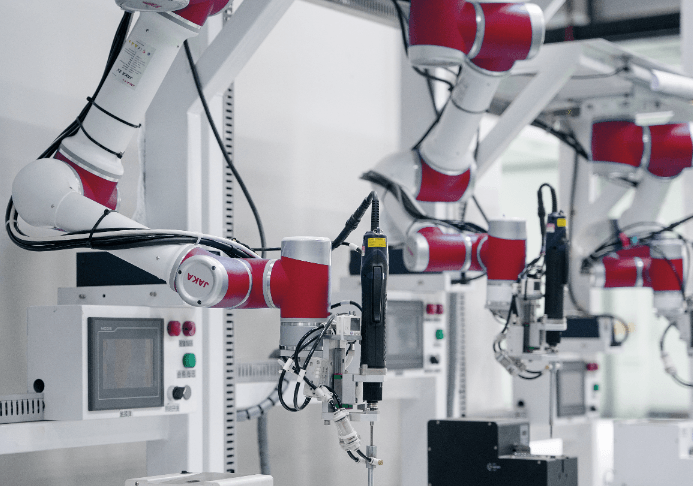
JAKA, a leader in modern manufacturing automation, highlights the critical differences between servo arm robot systems and traditional stepper motor arms, emphasizing the importance of understanding these distinctions for optimizing production lines. Many clients struggle with misconceptions about these technologies, particularly regarding their operational capabilities. Unlike stepper motors, which function on fixed increments, servo arm robots utilize feedback control for precise and adaptive motion, making them ideal for high-precision assembly tasks where accuracy is paramount.
The JAKA S5 system exemplifies the advantages of servo technology, offering enhanced adaptive assembly that minimizes workpiece loss and boosts productivity. While stepper motor arms are reliable for repetitive tasks, they lack the real-time correction capabilities of servo systems, which adjust continuously to maintain precision under varying load conditions. This is particularly beneficial in applications like polishing, where uniform surface finishes are crucial.
Additionally, the S5's lightweight design allows for quick integration into existing production lines, supporting small-batch and multi-variety production—an essential feature in today's fast-paced manufacturing environment. In contrast, stepper motor systems often require more extensive setup and are less adaptable to line changes.
Price considerations also play a significant role in system selection. Although stepper systems may seem more affordable initially, servo solutions often prove more cost-effective over time due to their efficiency, reduced downtime, and consistent precision. JAKA aims to educate manufacturers on these factors, advocating for the adoption of servo technology to enhance productivity and quality in automation processes.






















Leave a comment